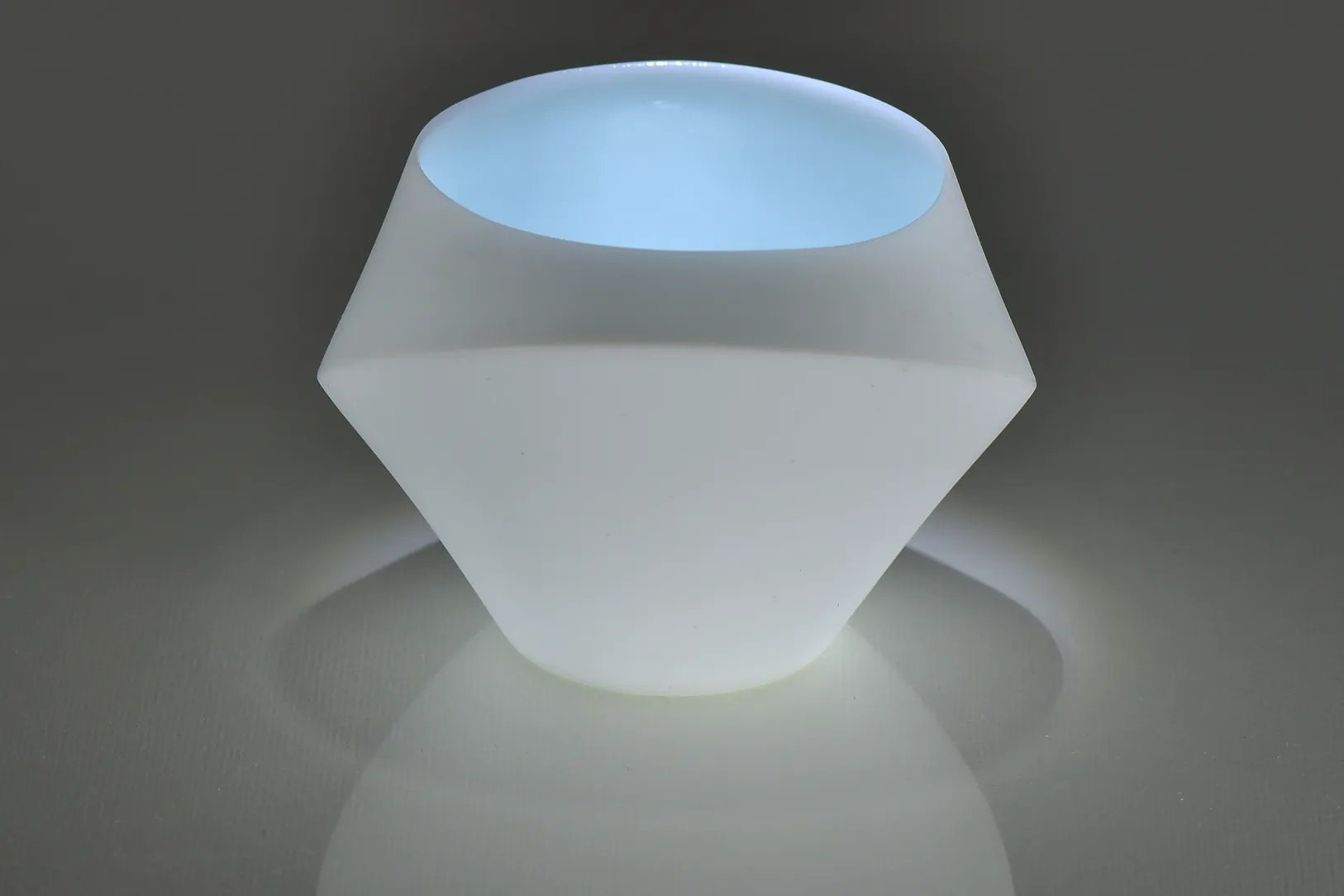
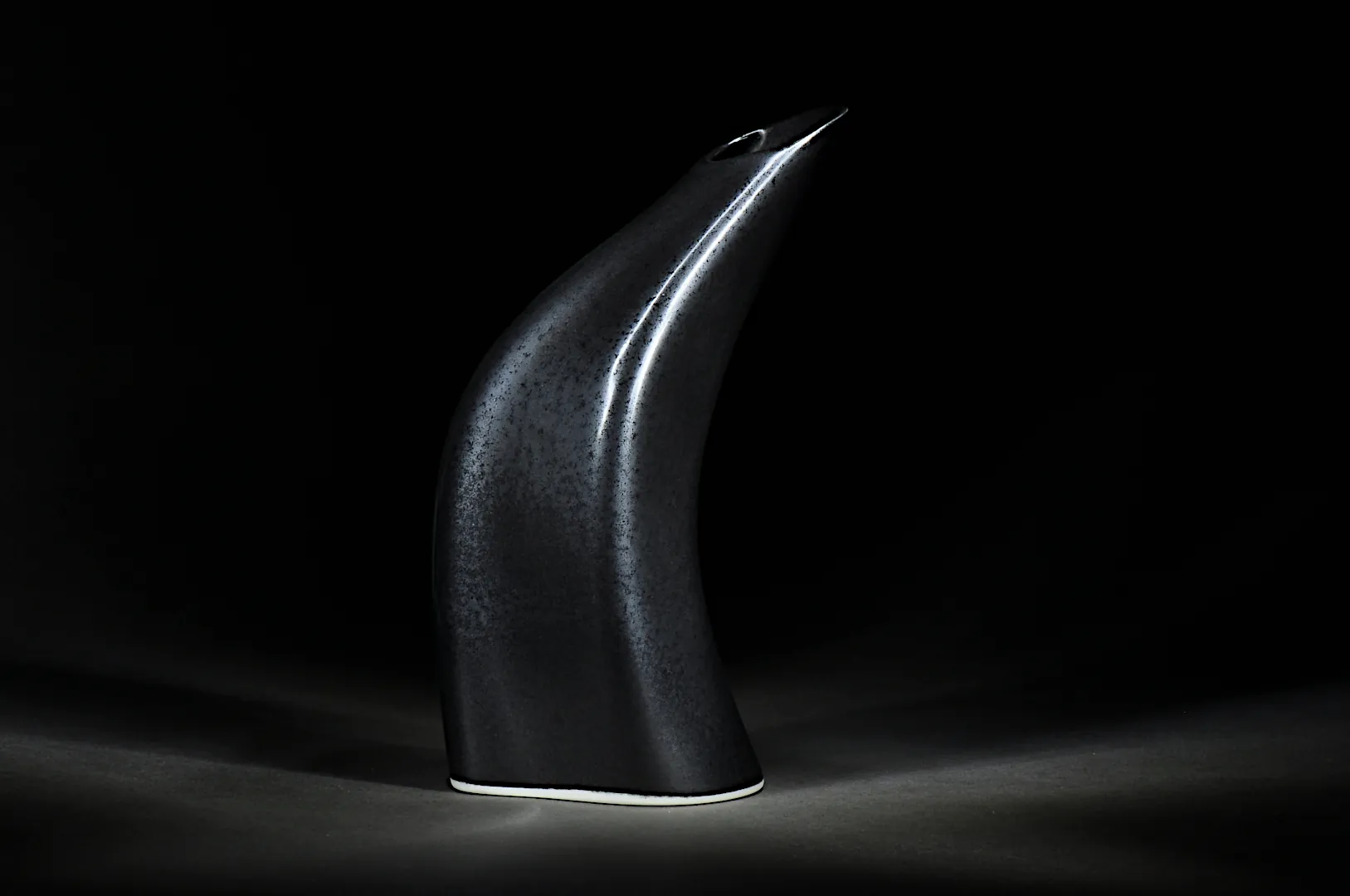
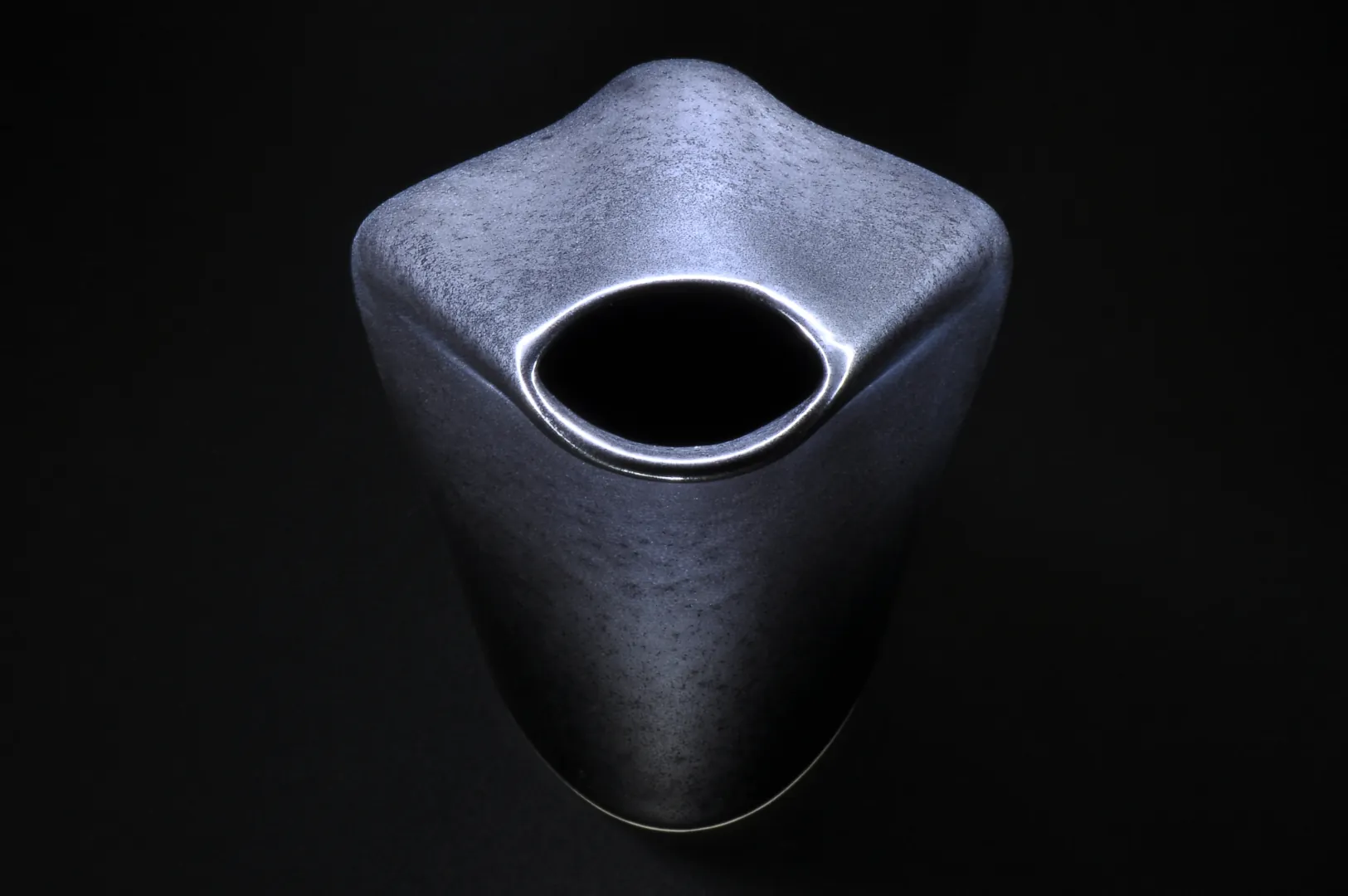
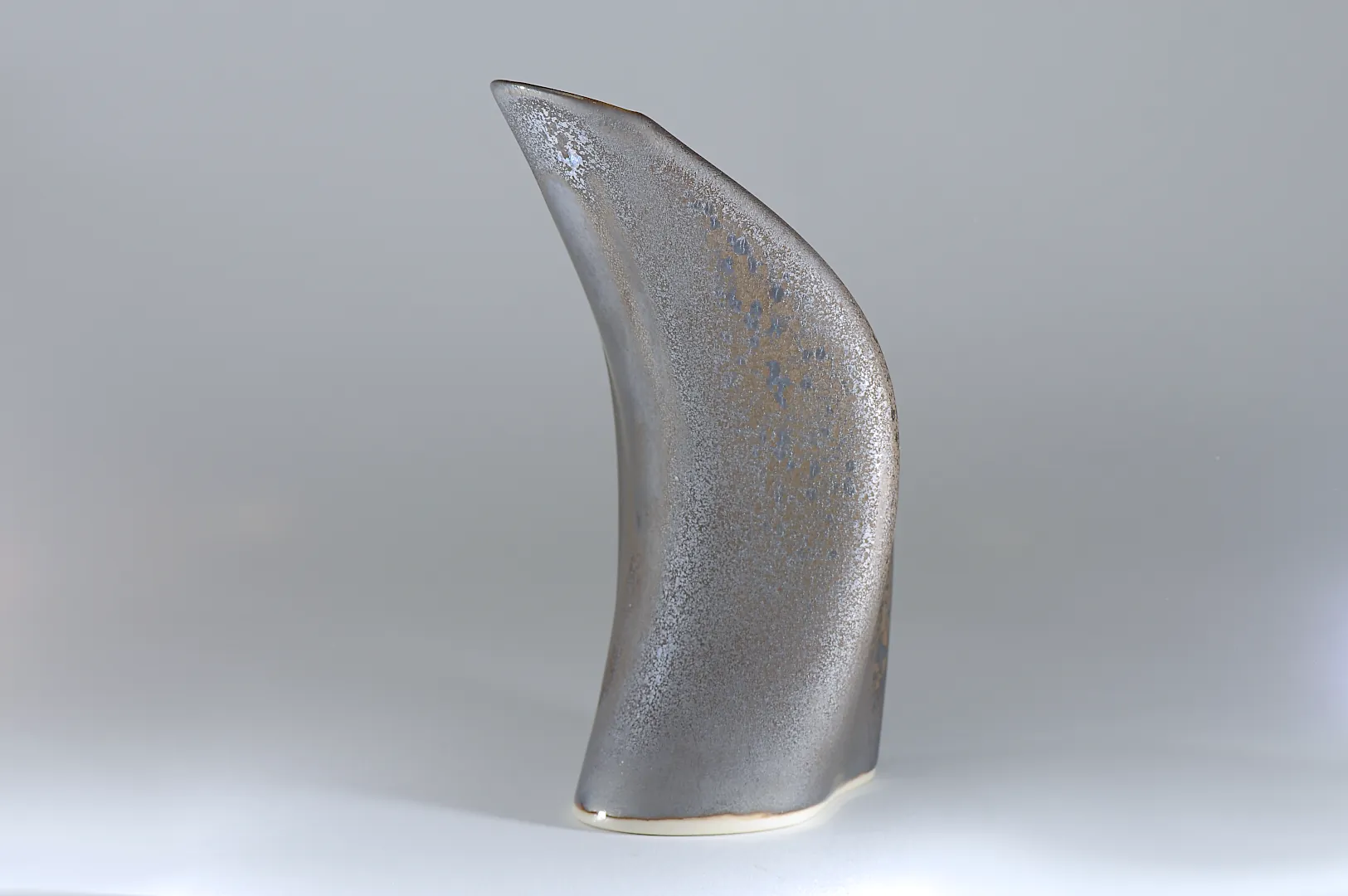
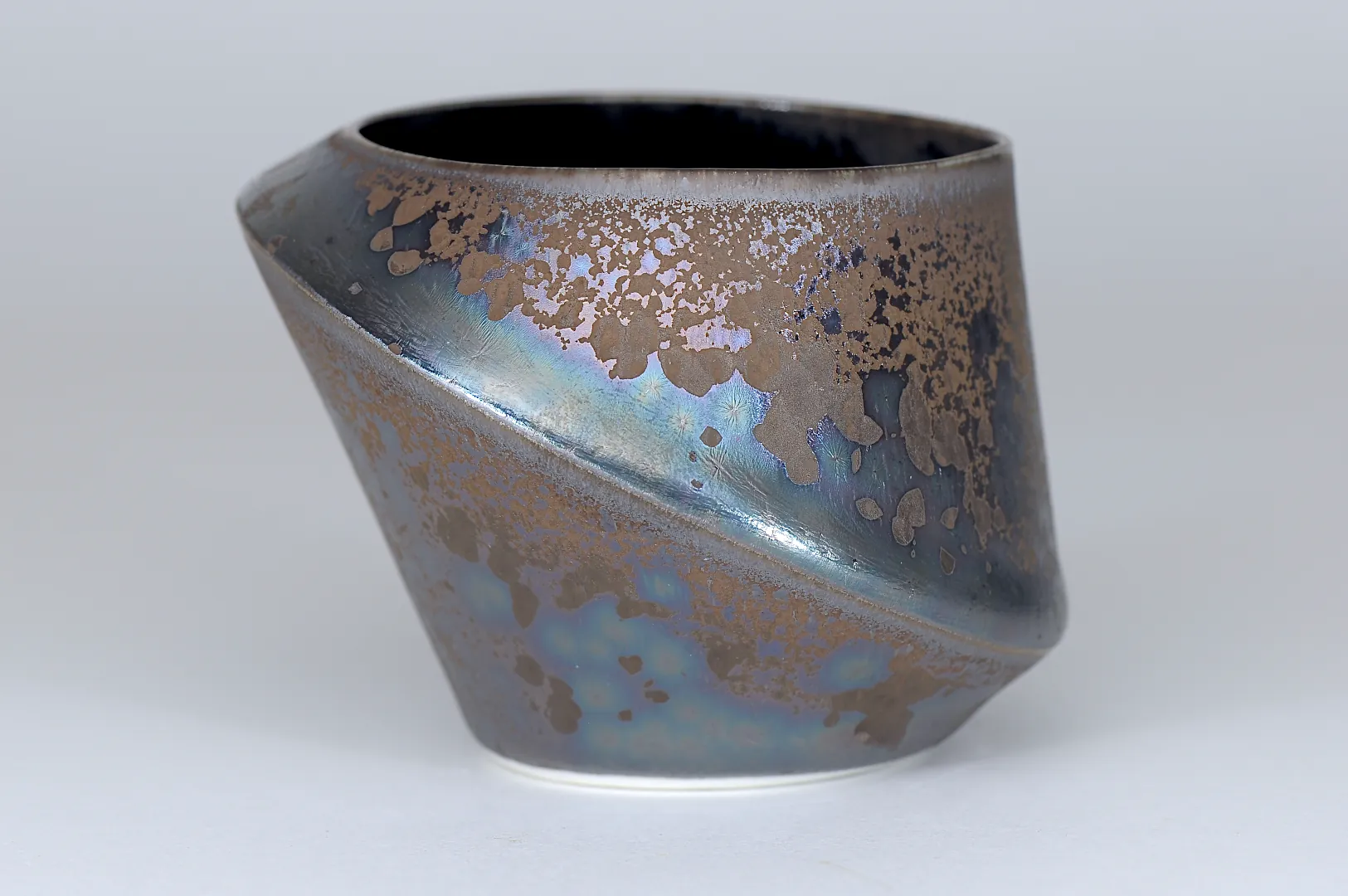
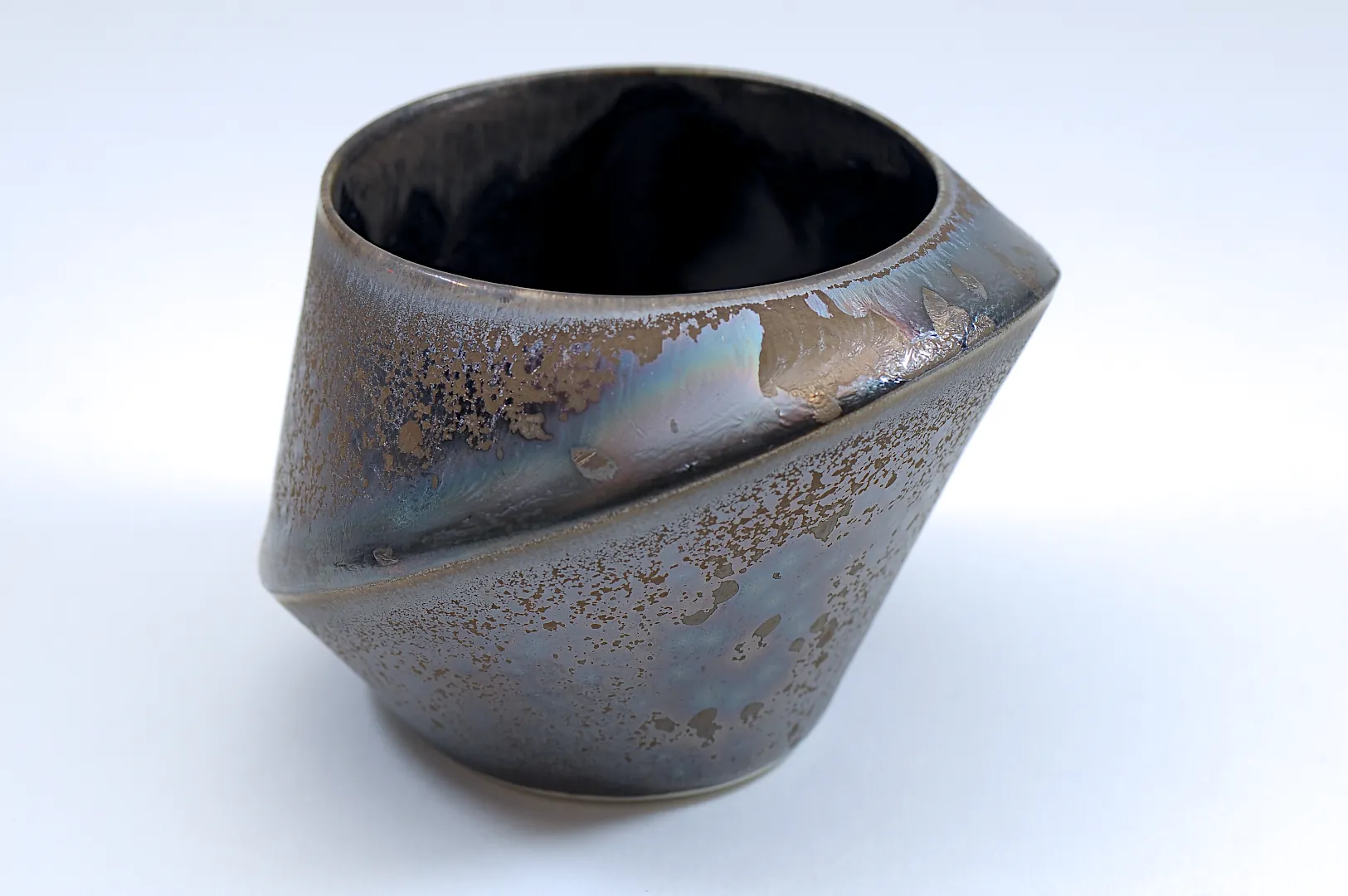
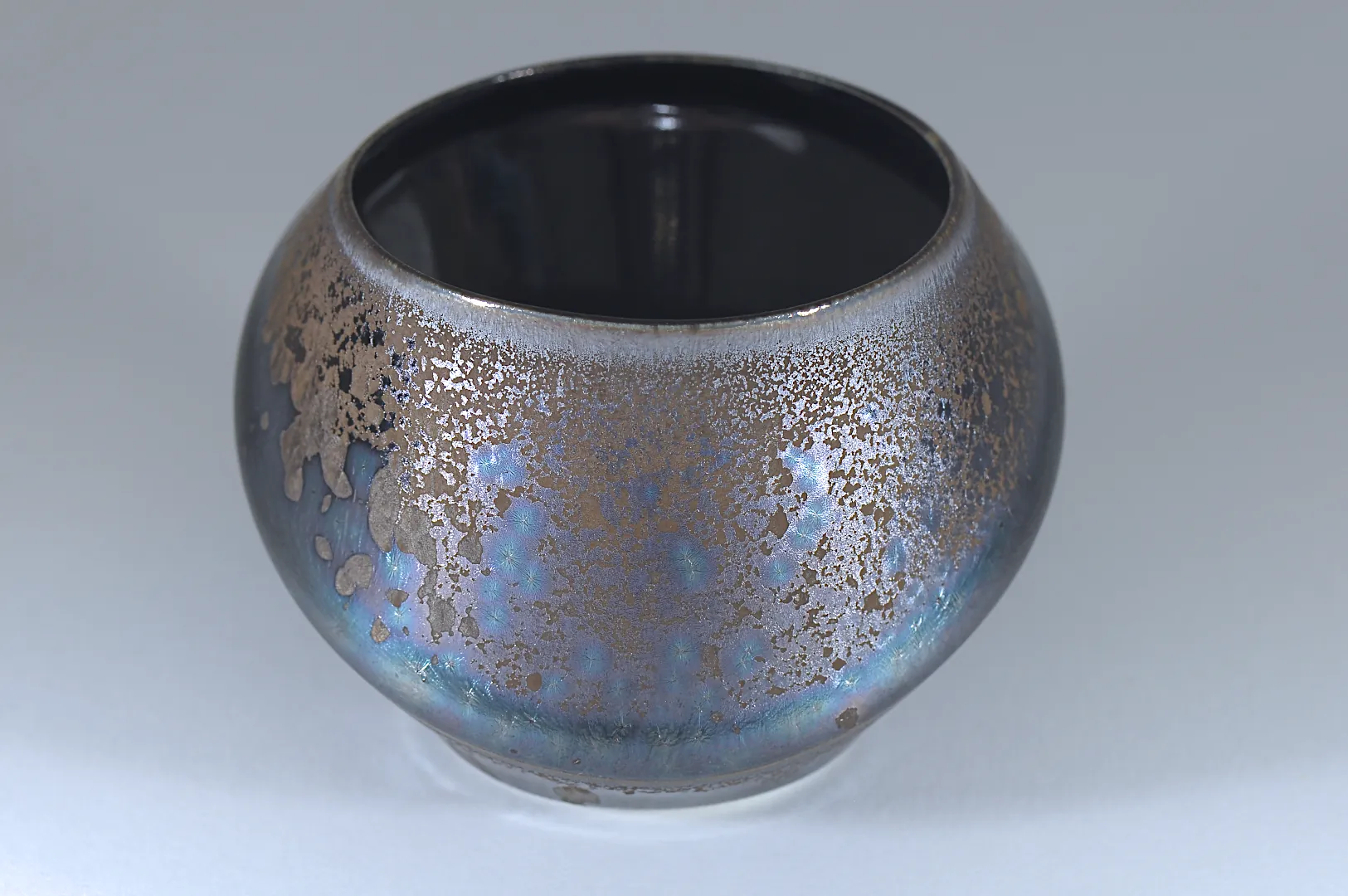
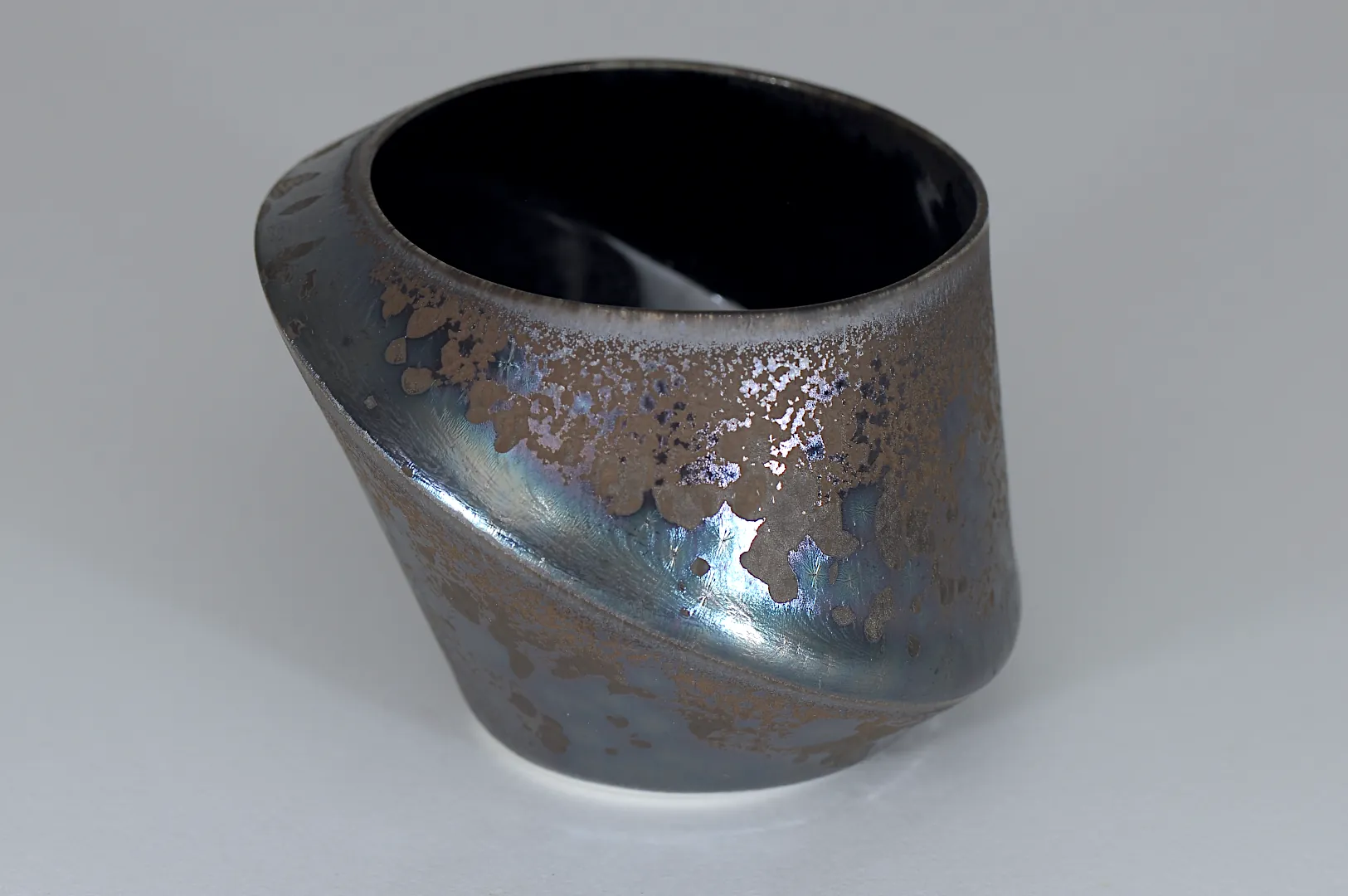
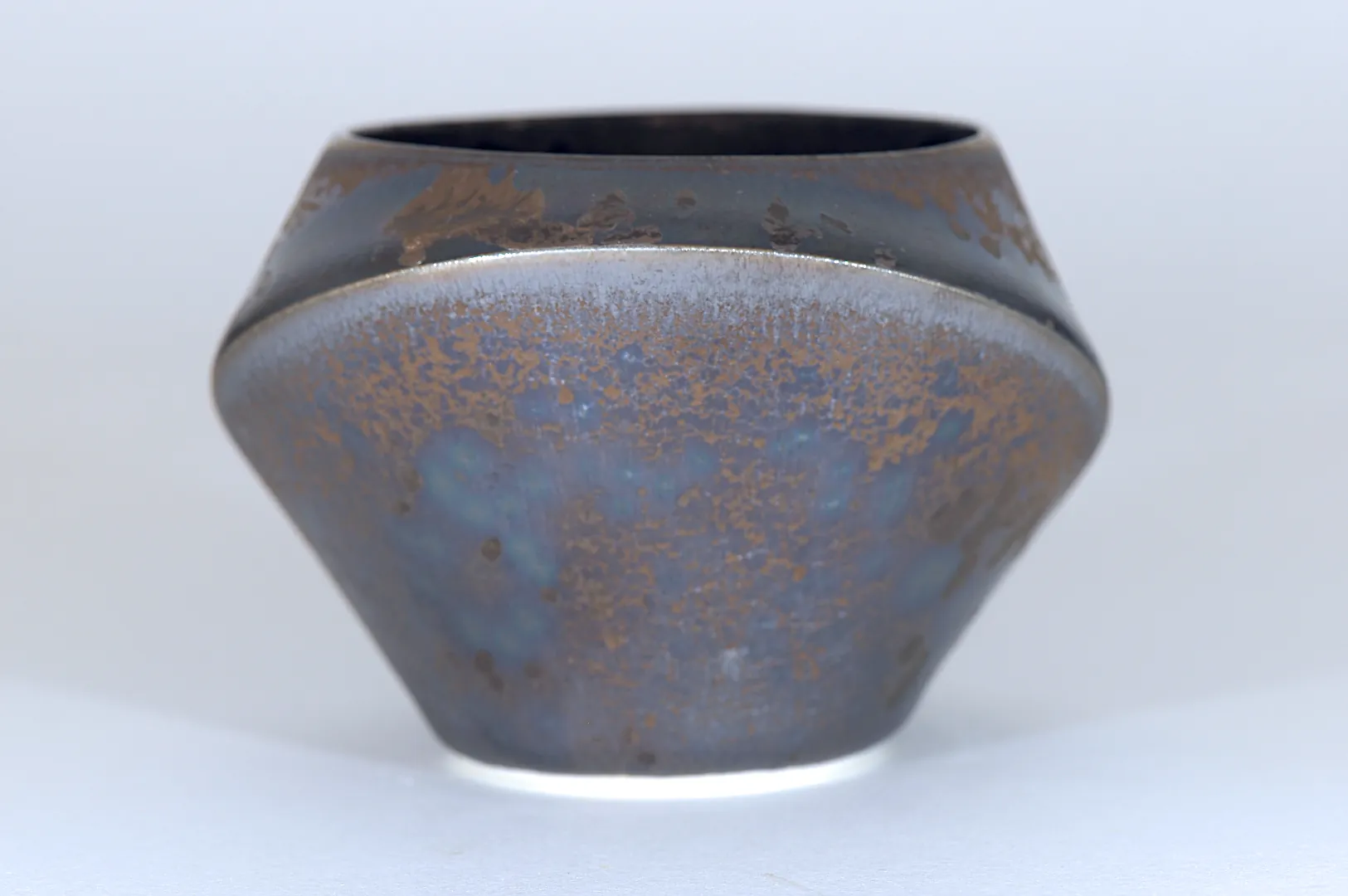
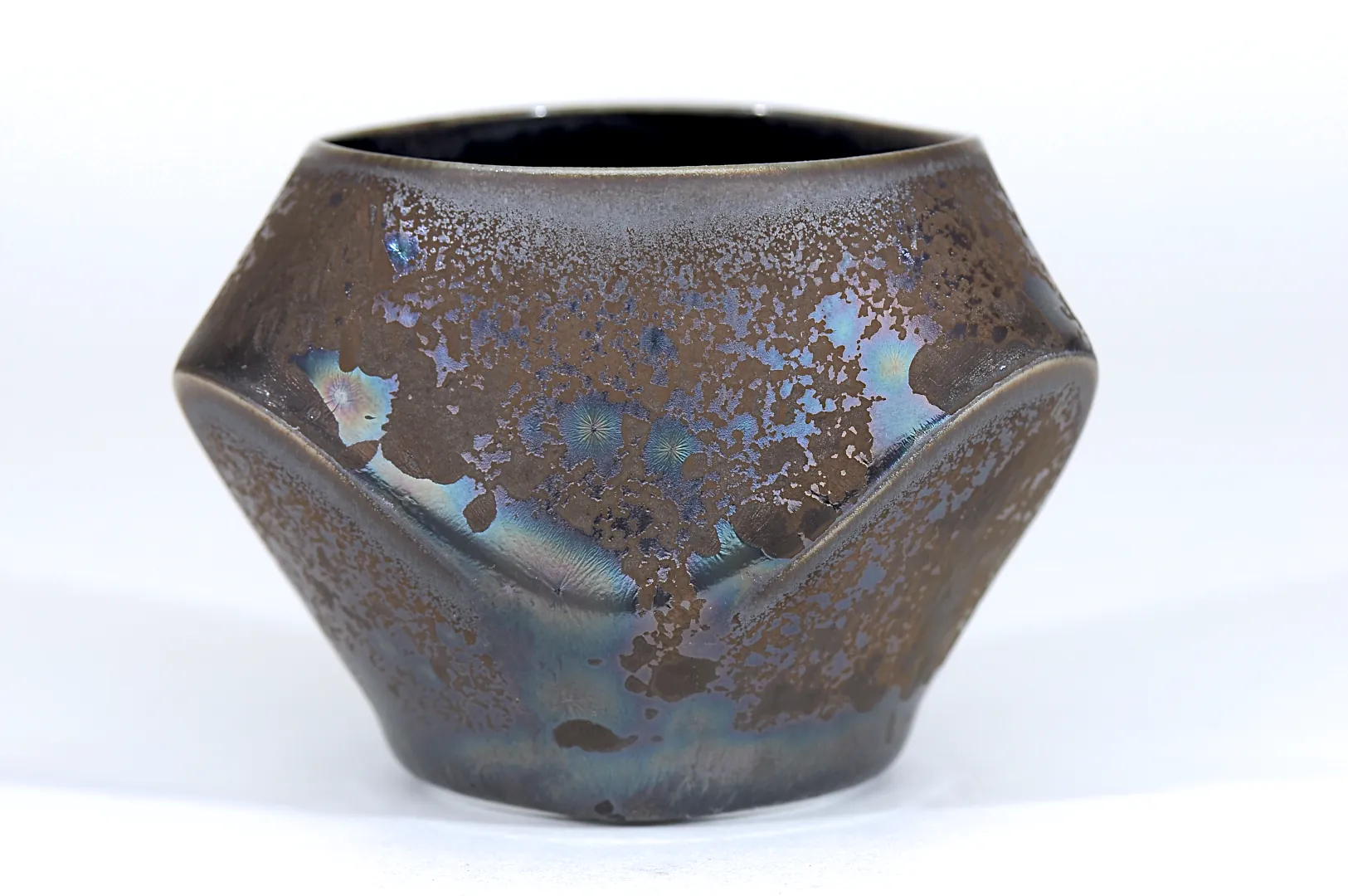
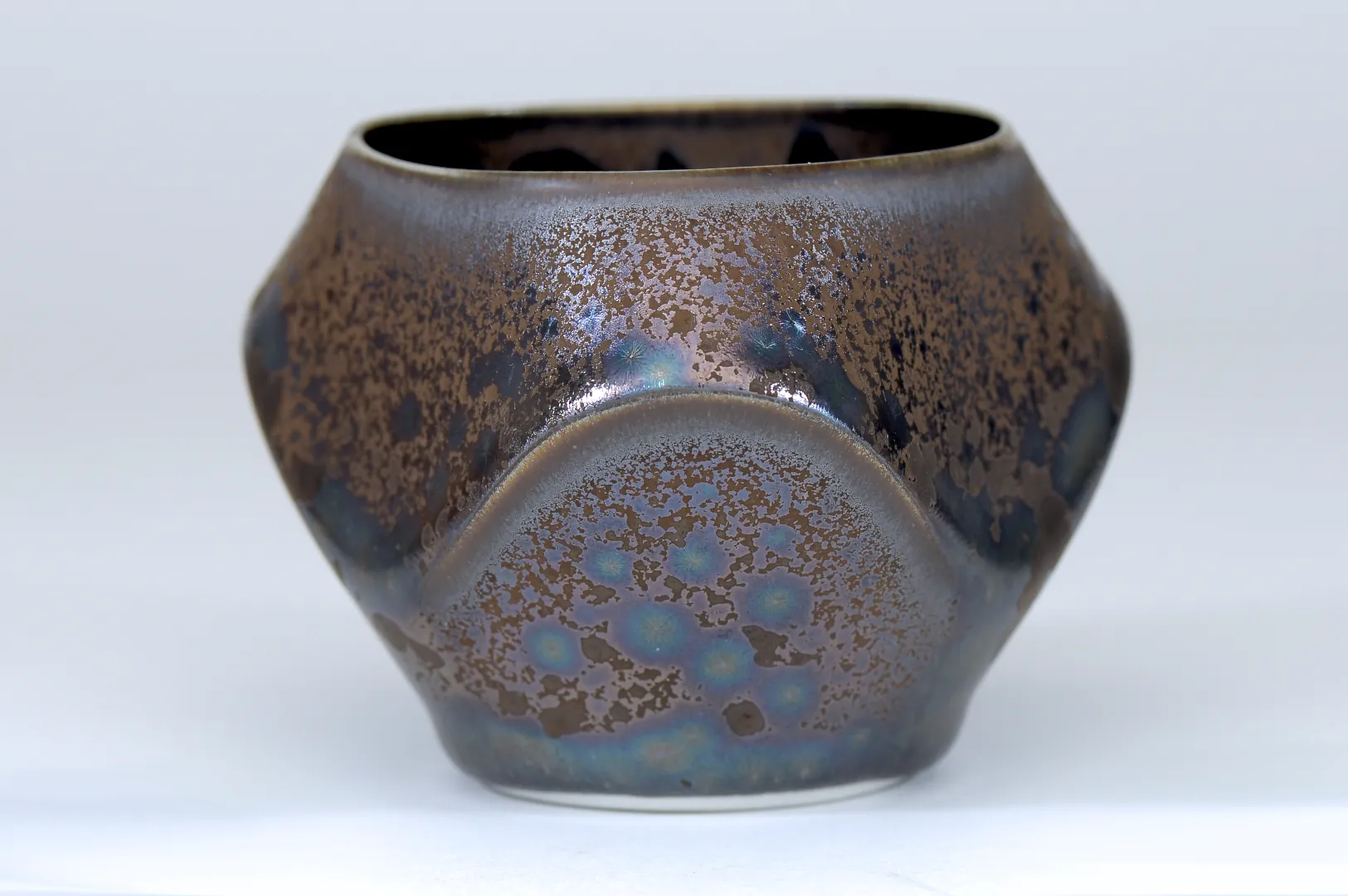
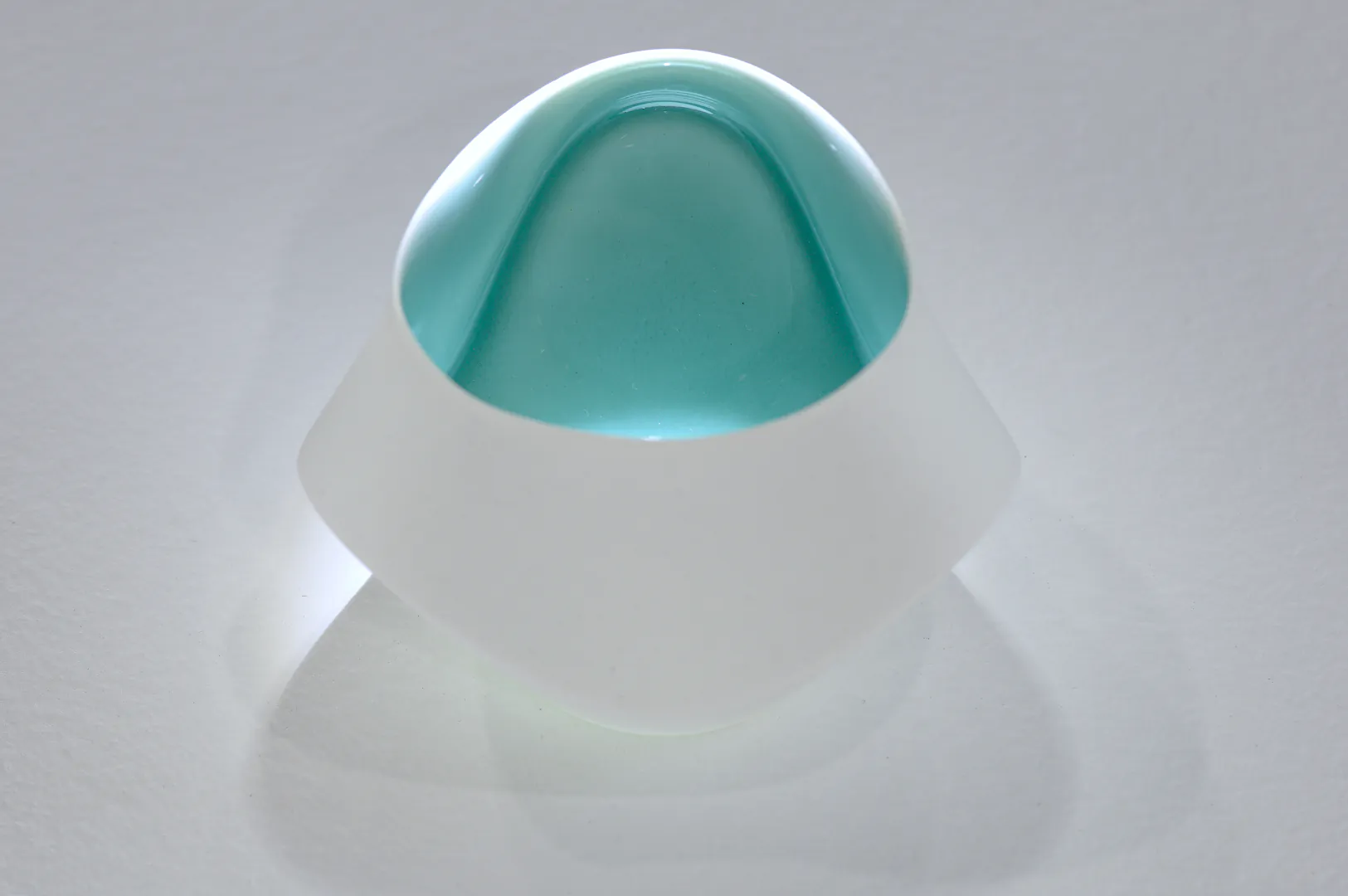
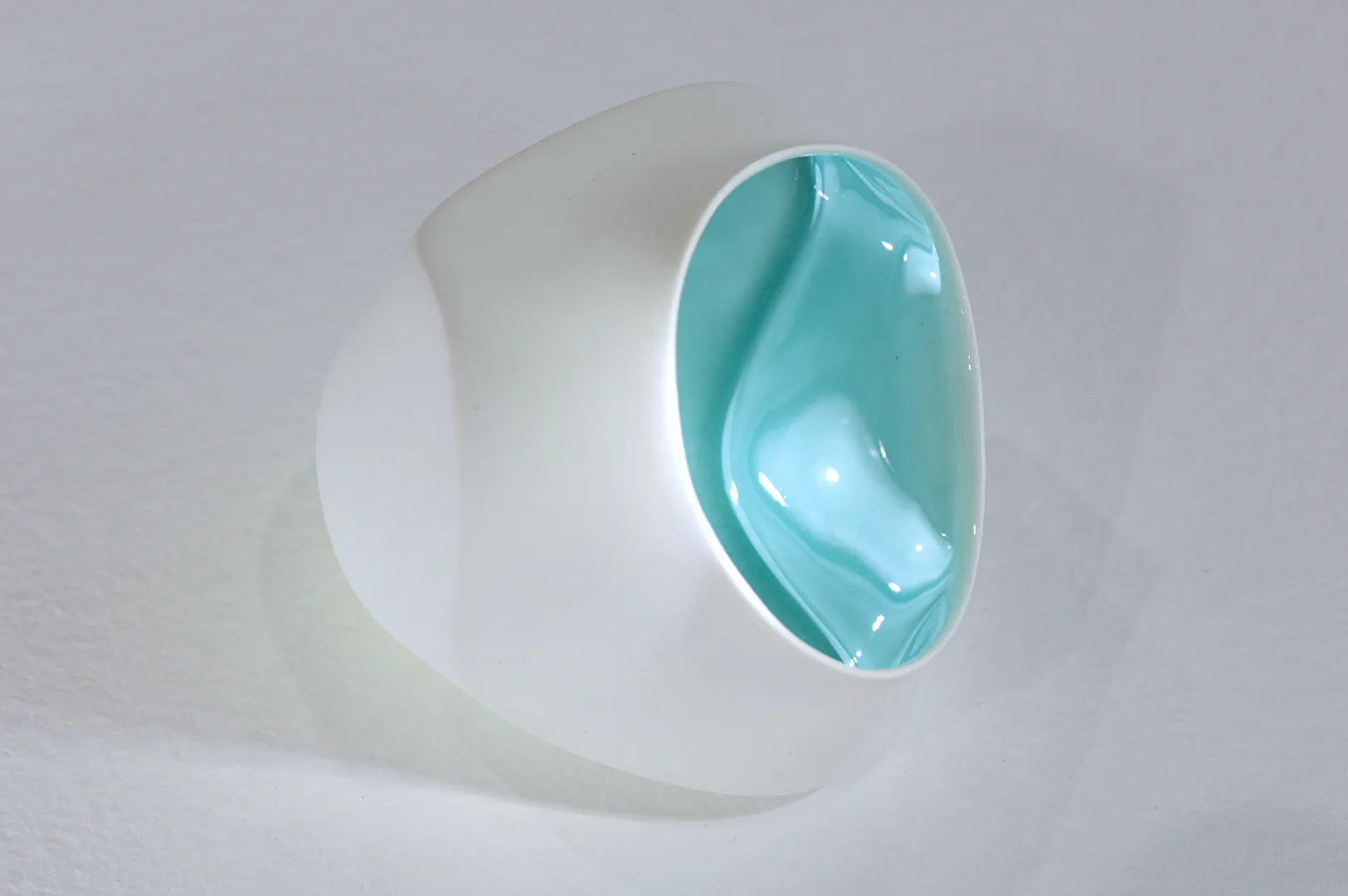
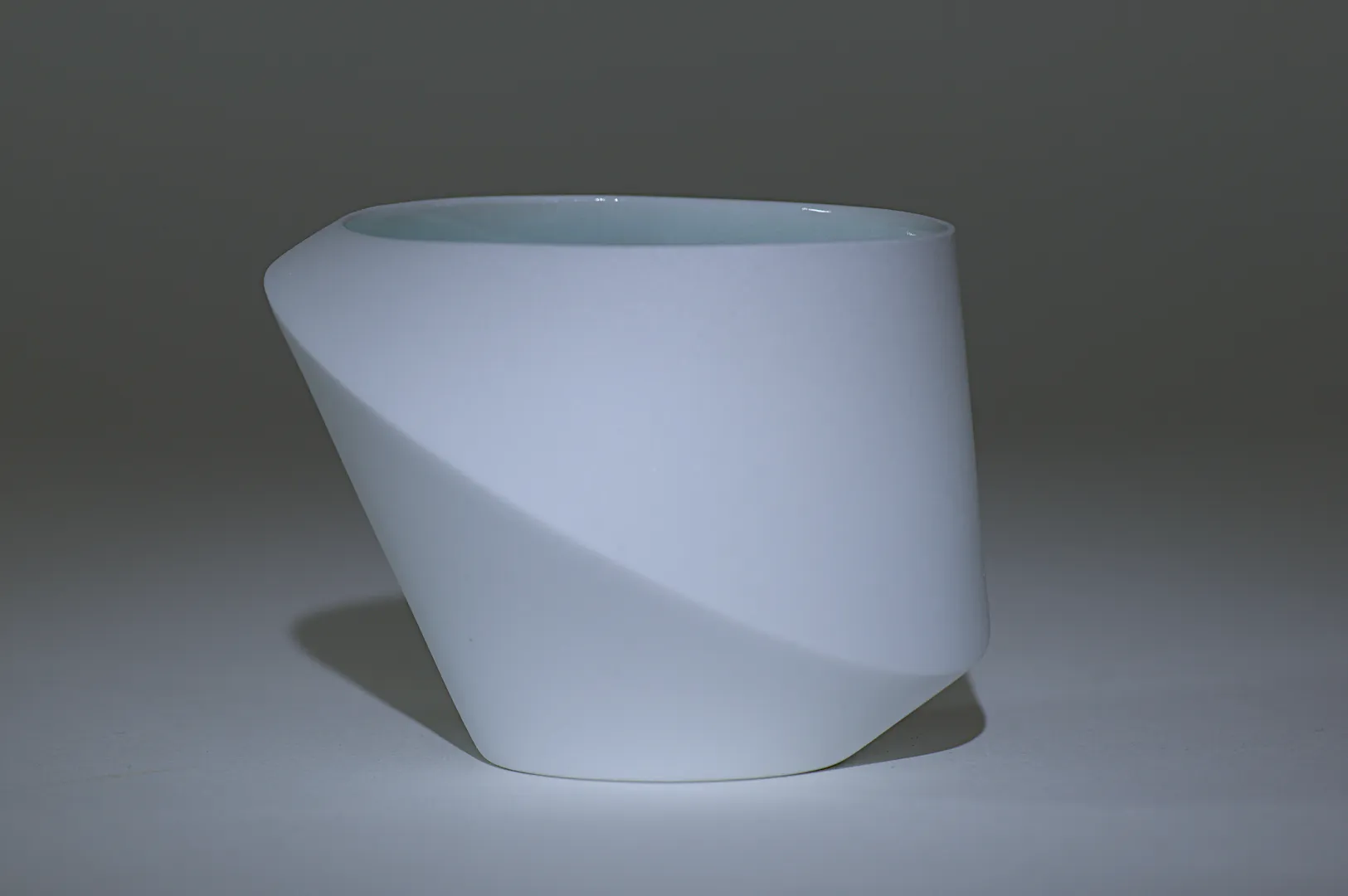
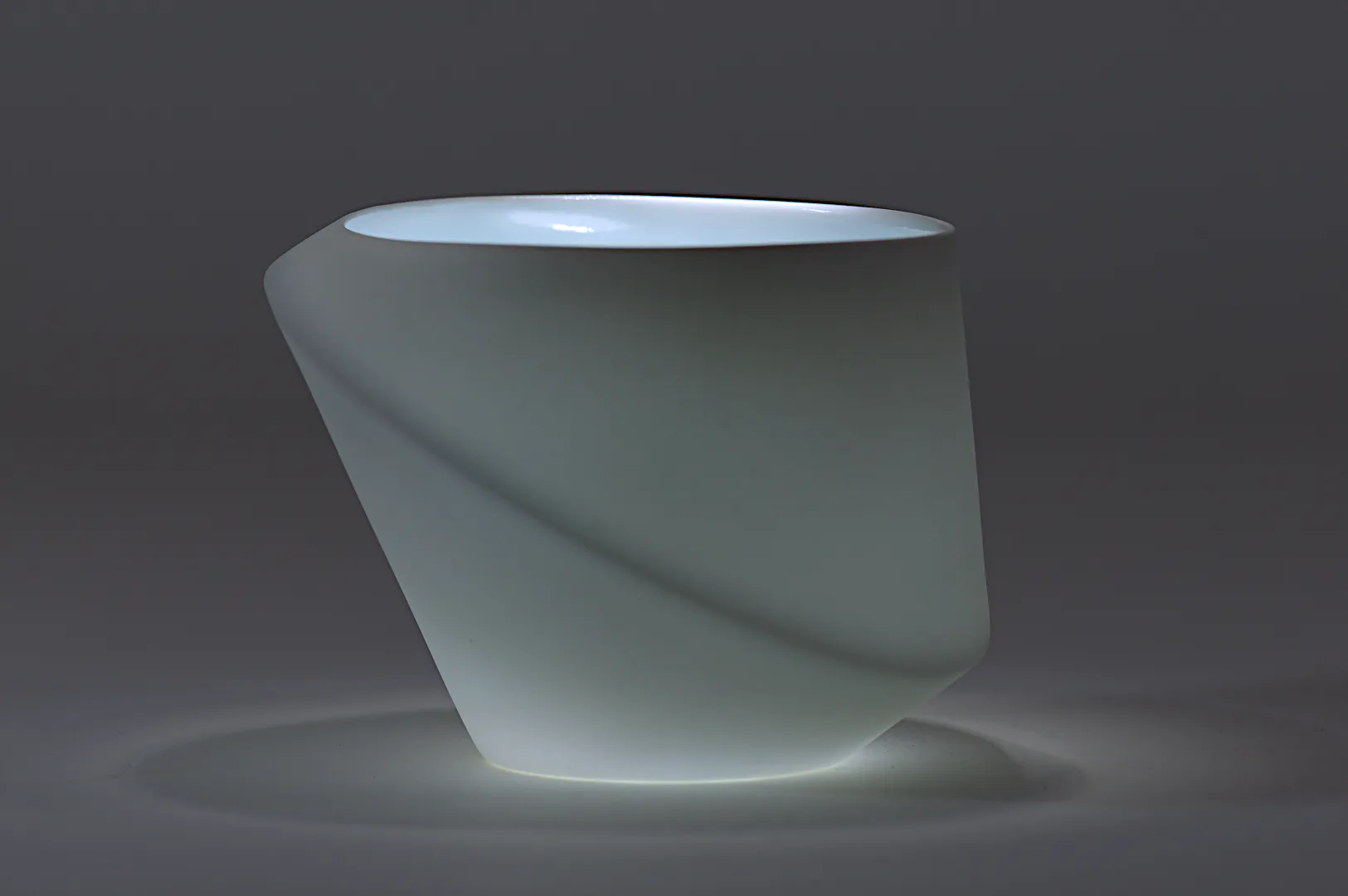

Sake Cup Wave : : 3D Modelling of Source Object
Parametric Design
In 2007 I began to to create 3 dimensional forms in 3D modelling software to achieve the precise geometric yet organic forms I sought. I researched rapid prototyping to realise the forms I had generated and experimented with different rapid prototyping technologies to produce these series of works.
Biomimesis - 5 Sculptural Forms
Flask and Cups based on the form of a tripod
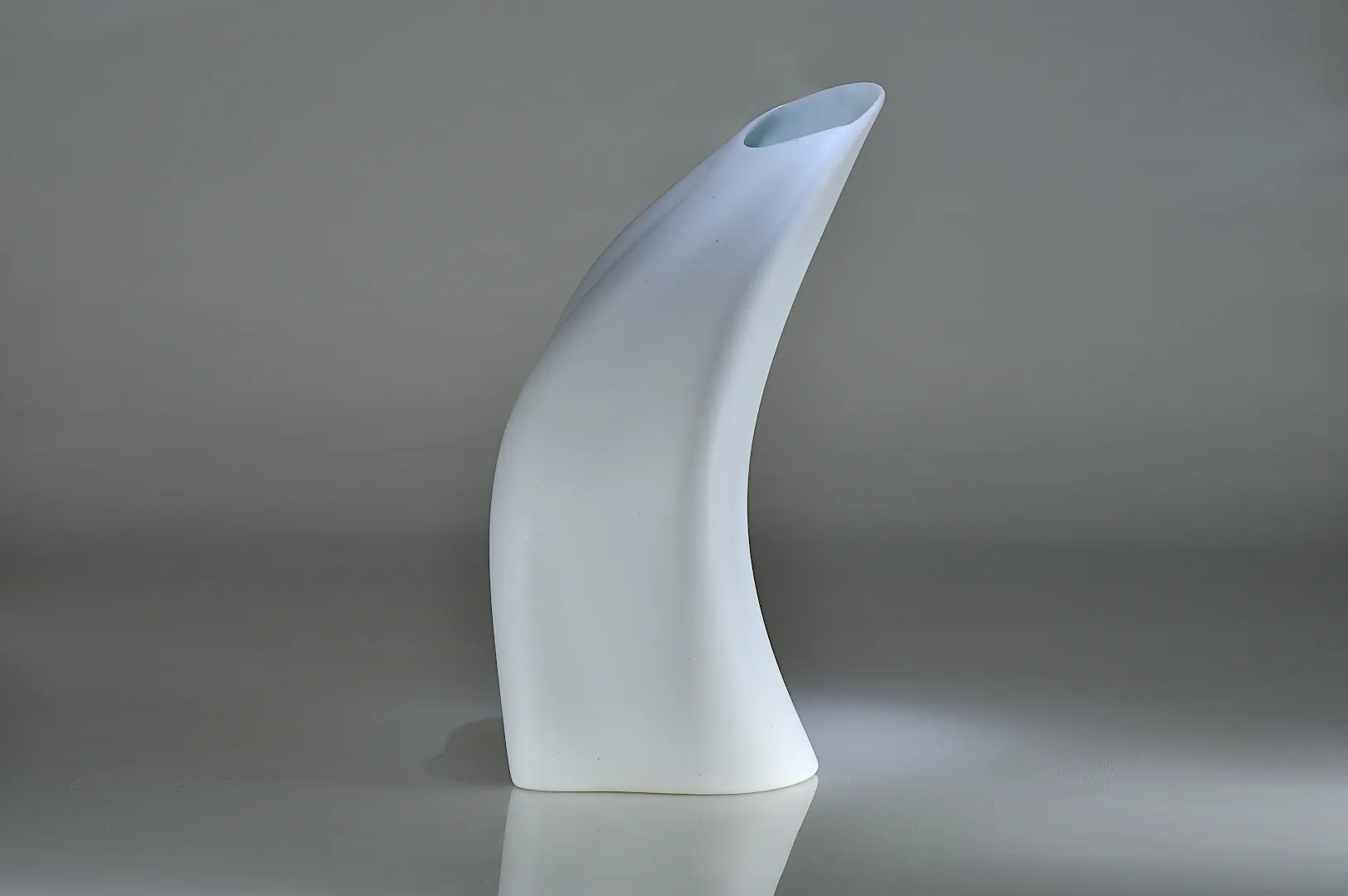
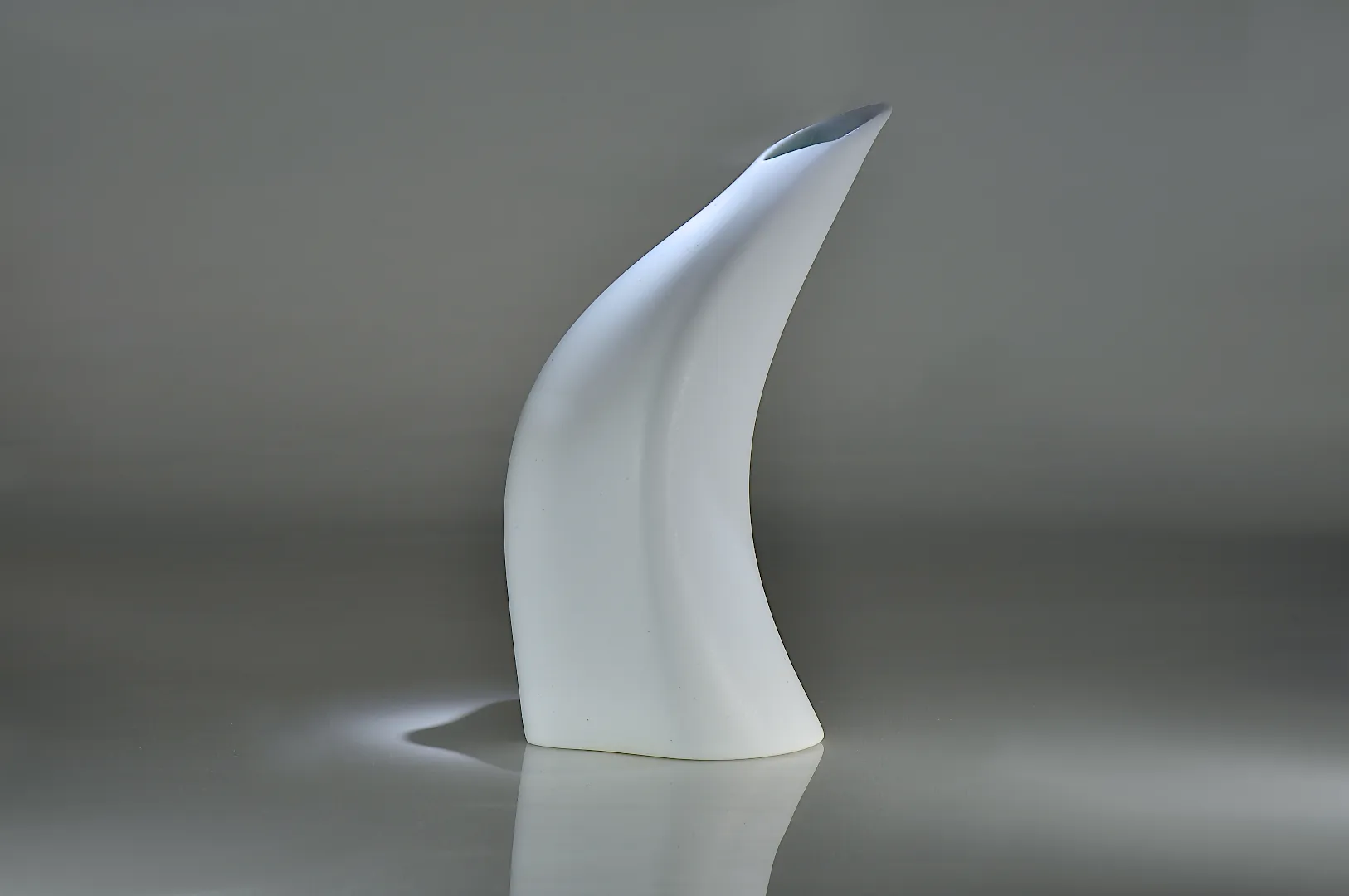
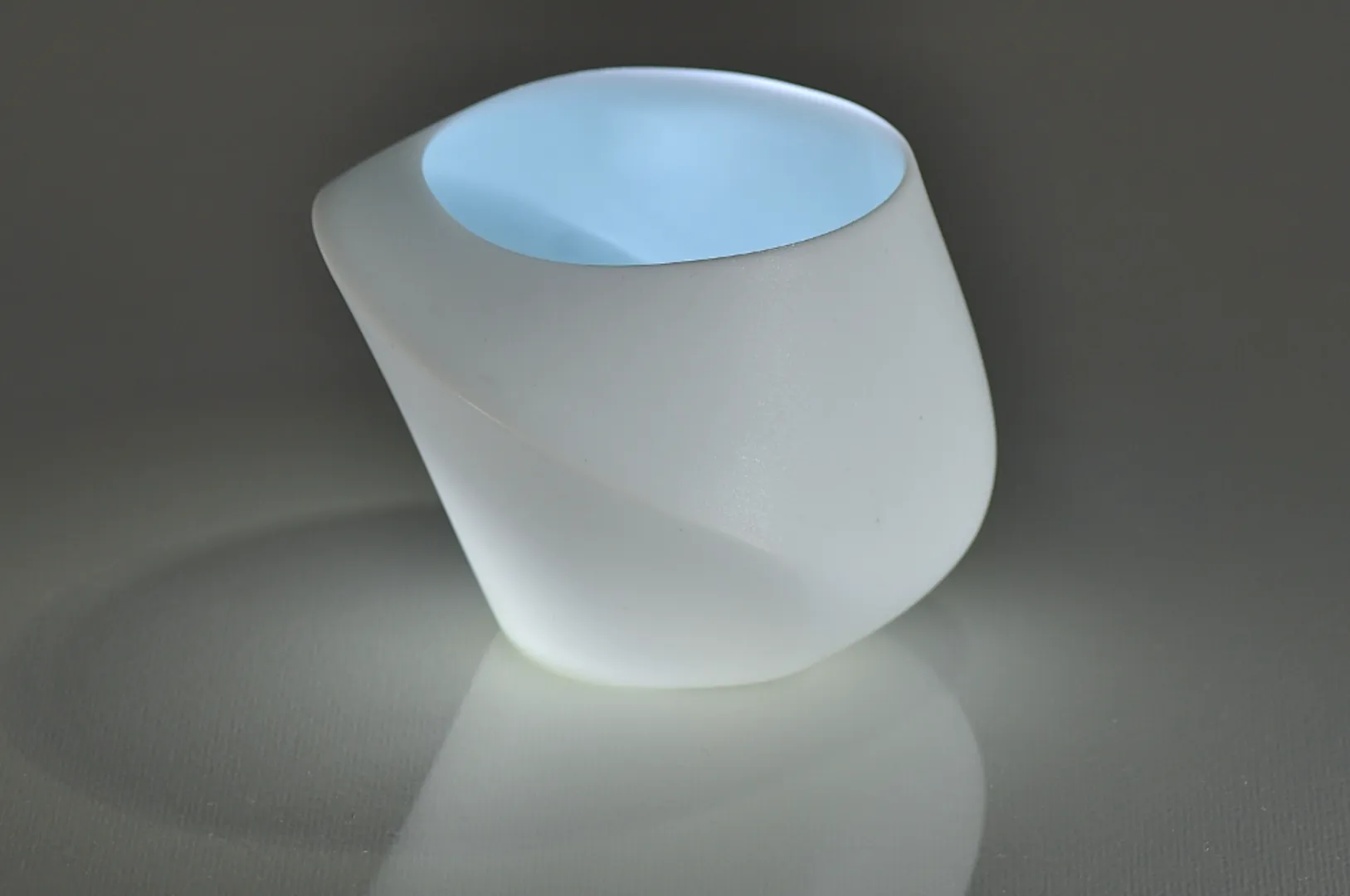
Flask Arc and Cups Wave, Cone and Orbit
Hybrid Flasks and Cups
The Design Process
A simple object such as a cylinder is created in a virtual space. The object consists of lines connecting points known as vertices to form a 3D mesh. A single point (vertex), line (edge) or face (polygon), or groups of these may be selected and manipulated to alter the shape. The object is manipulated in realtime so transformations are immediately seen and can be undone or saved. Once the object is completed it is sent to a 3D printer, where it can be printed in an appropriate material from plastics or metals to aggregates for printing buildings. The printed object can then be used to make plaster moulds for use in a slip casting process to create an object in ceramic.
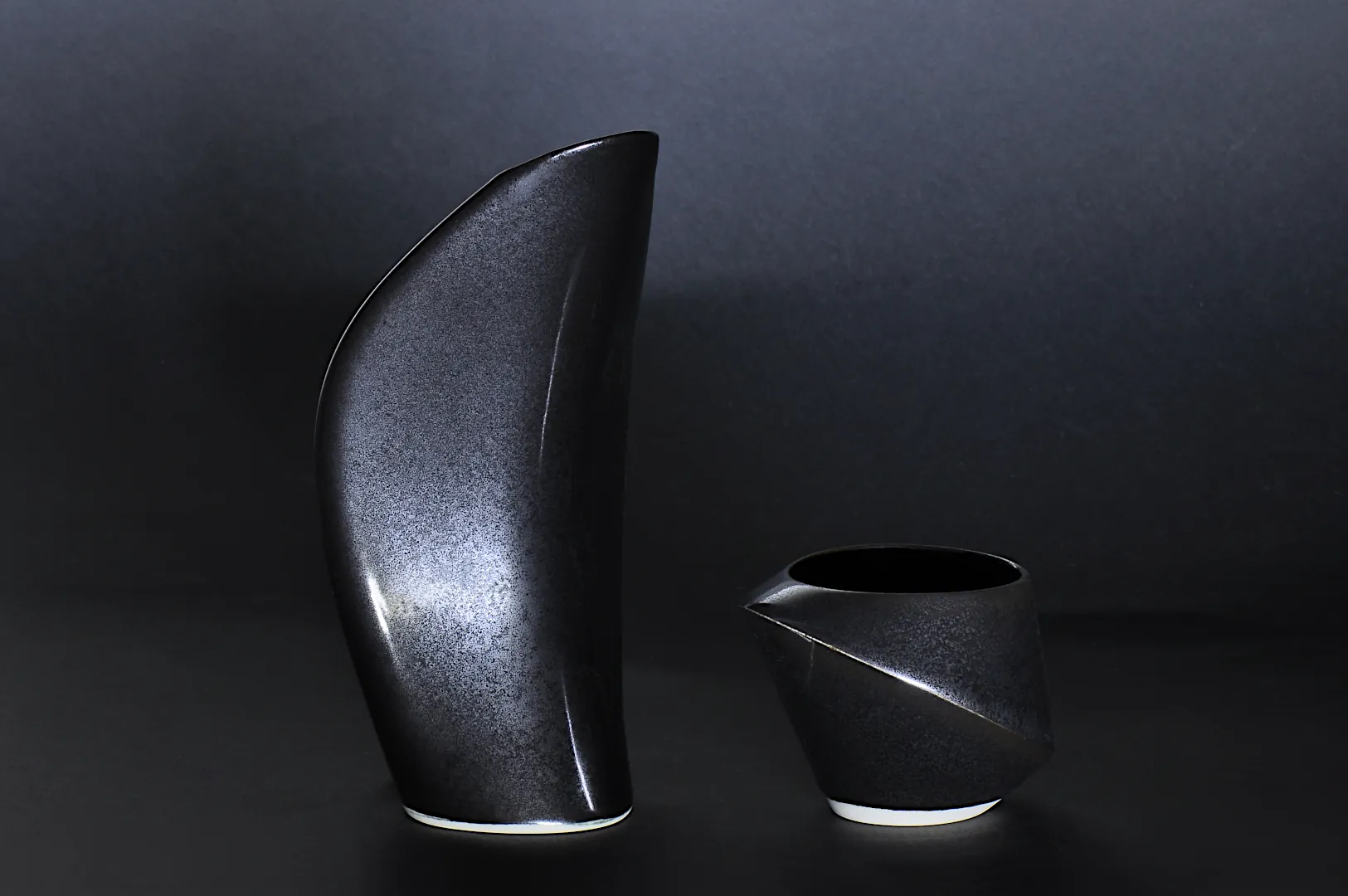
Flask Arc and three Cups: Orbit, Wave and Cone
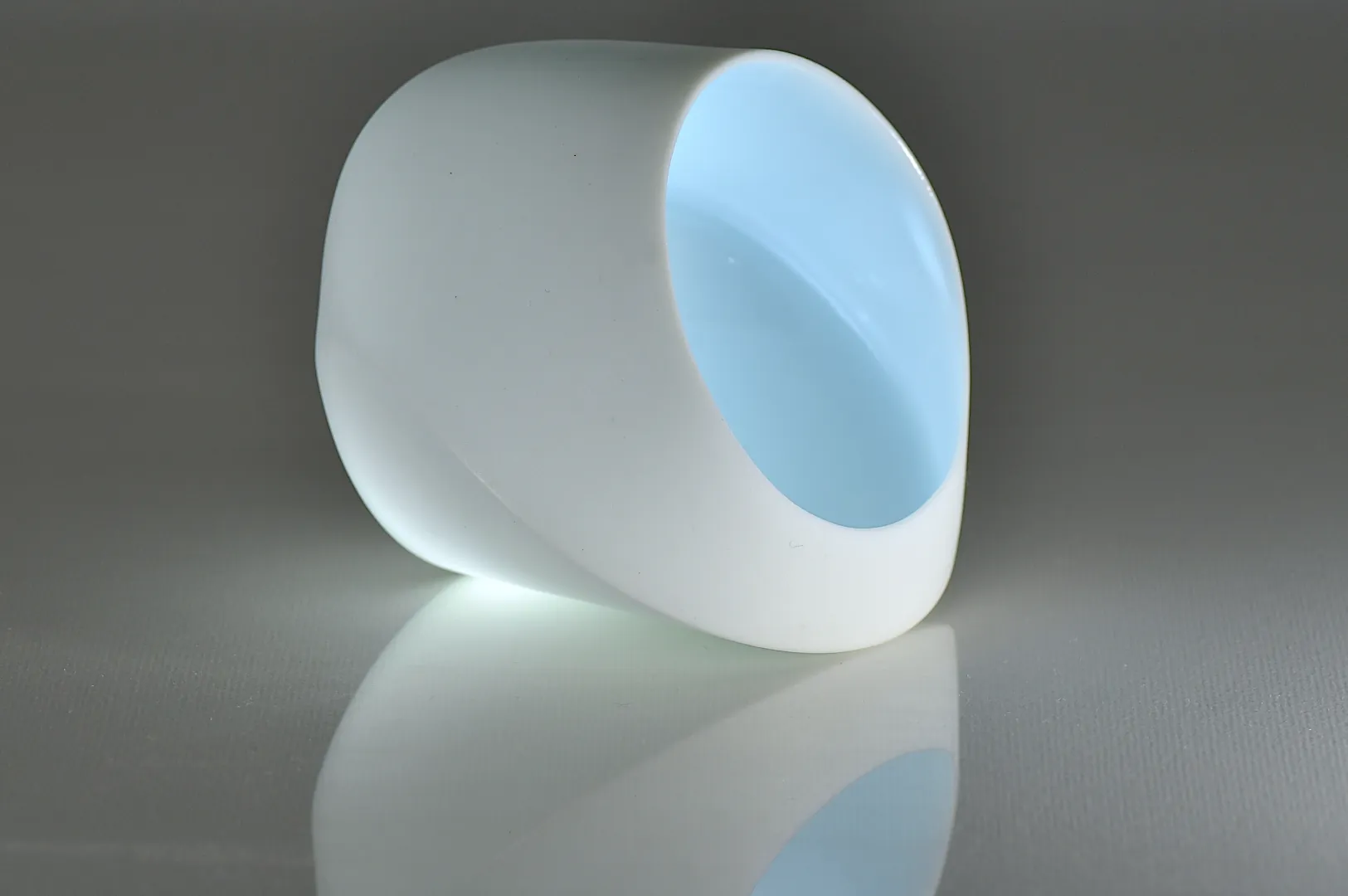
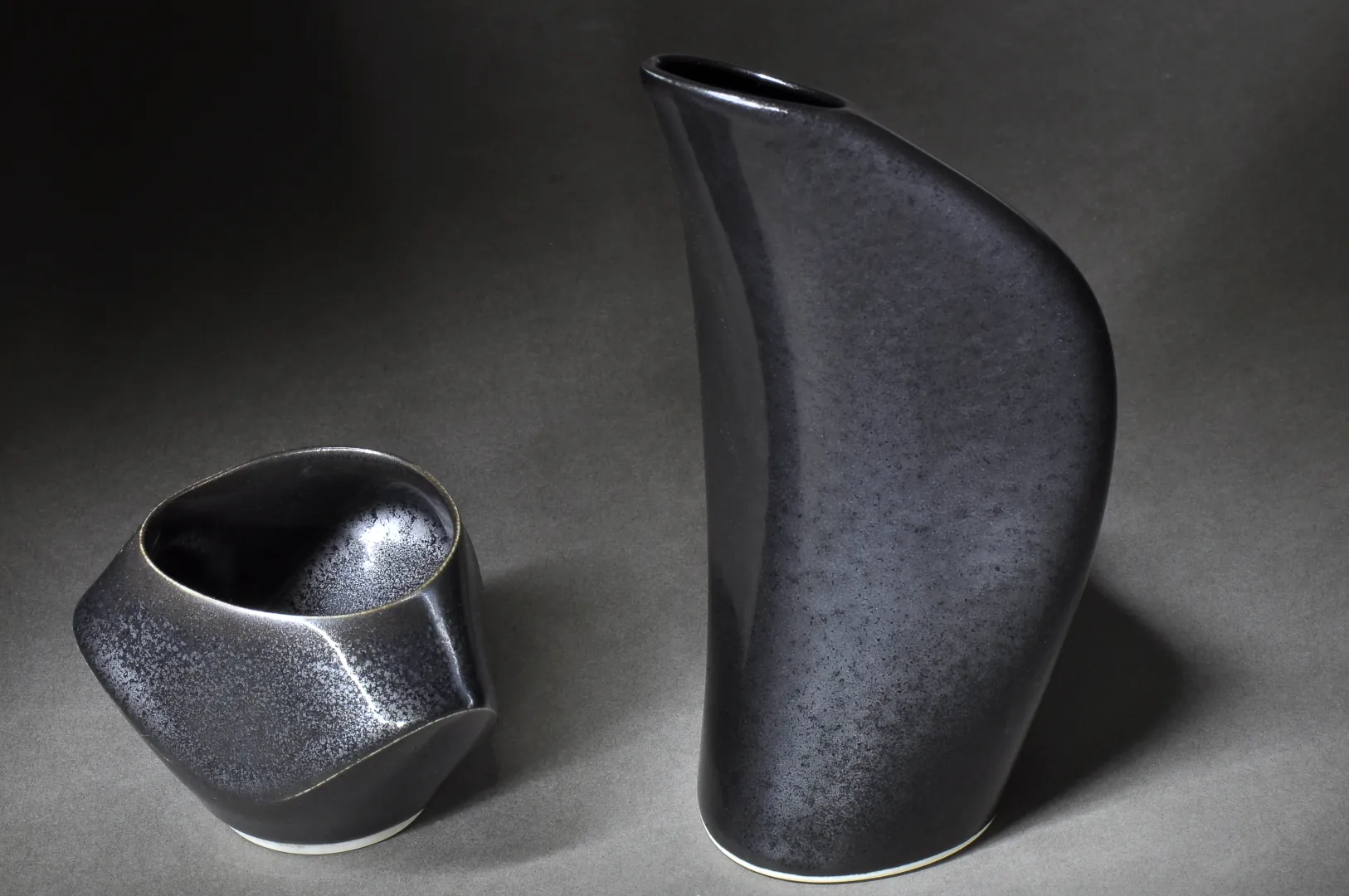
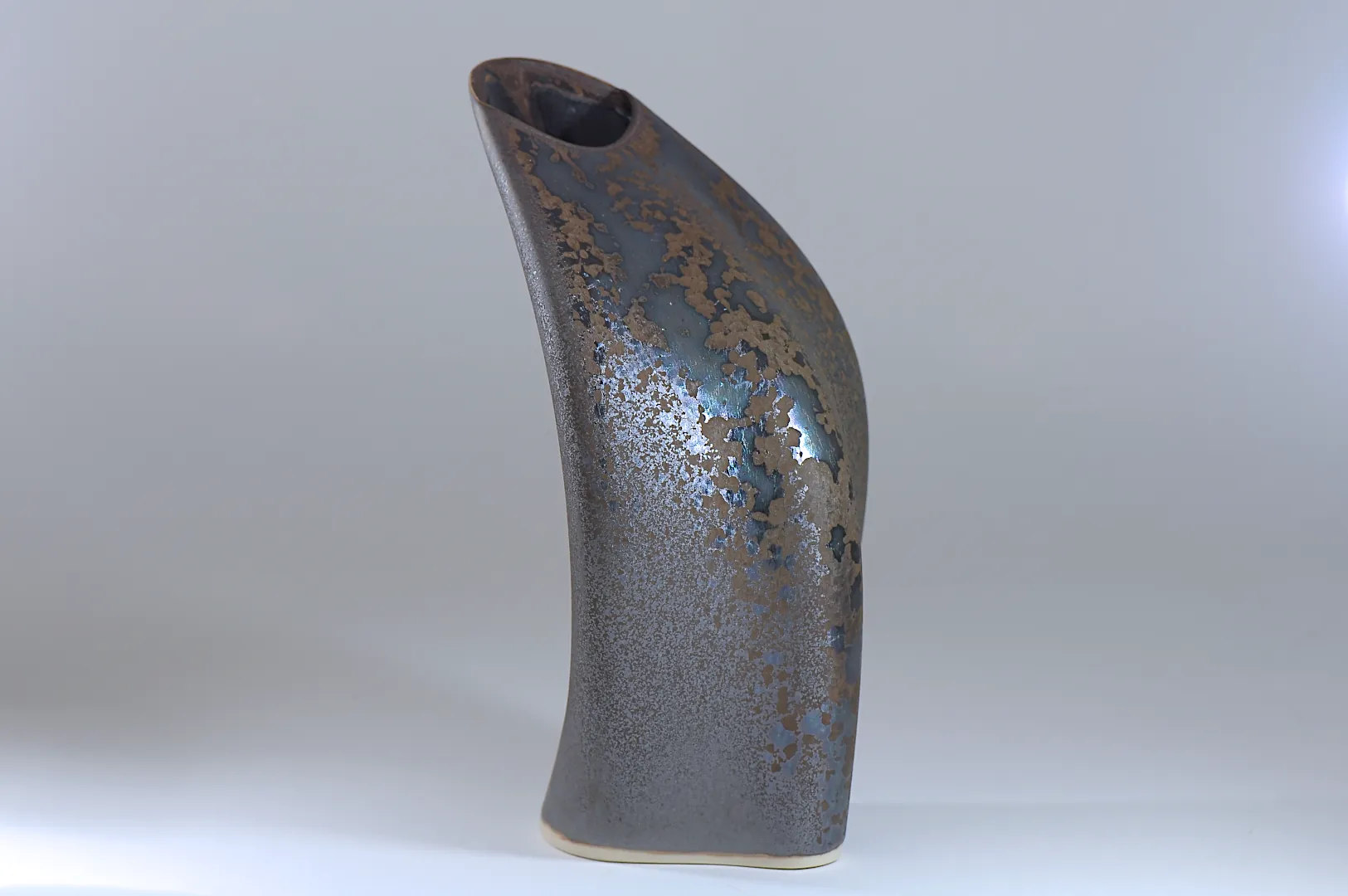
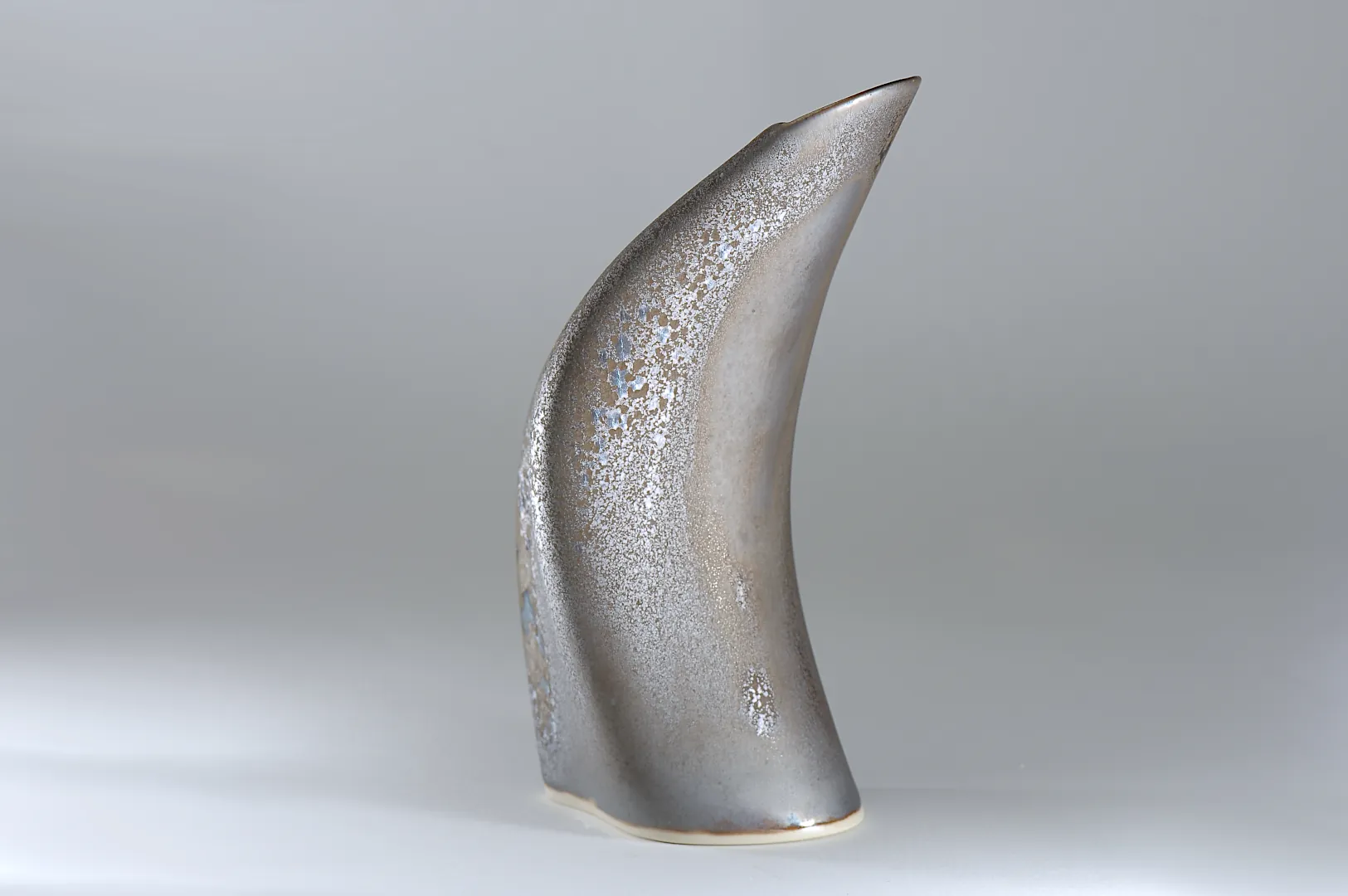
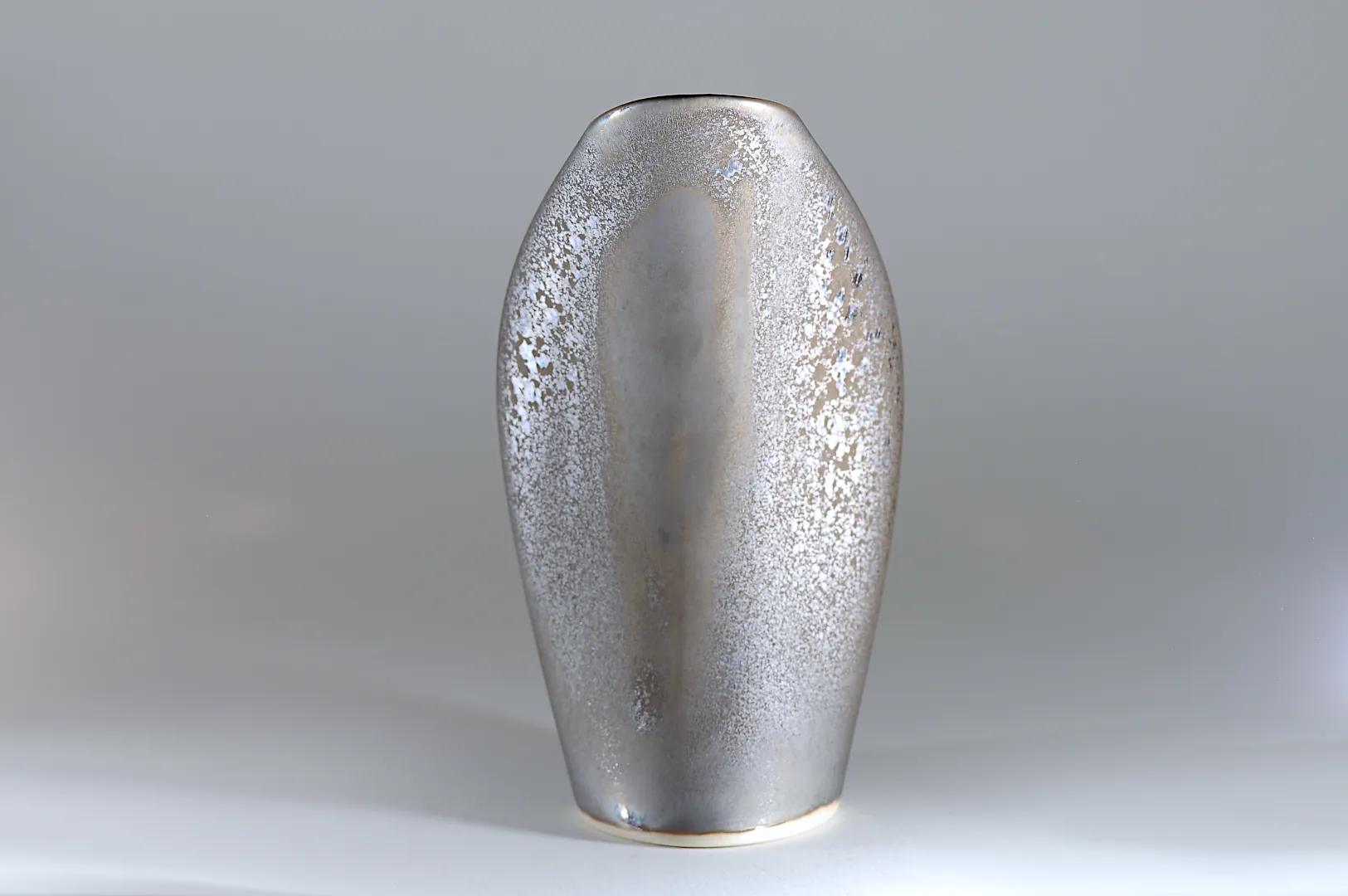
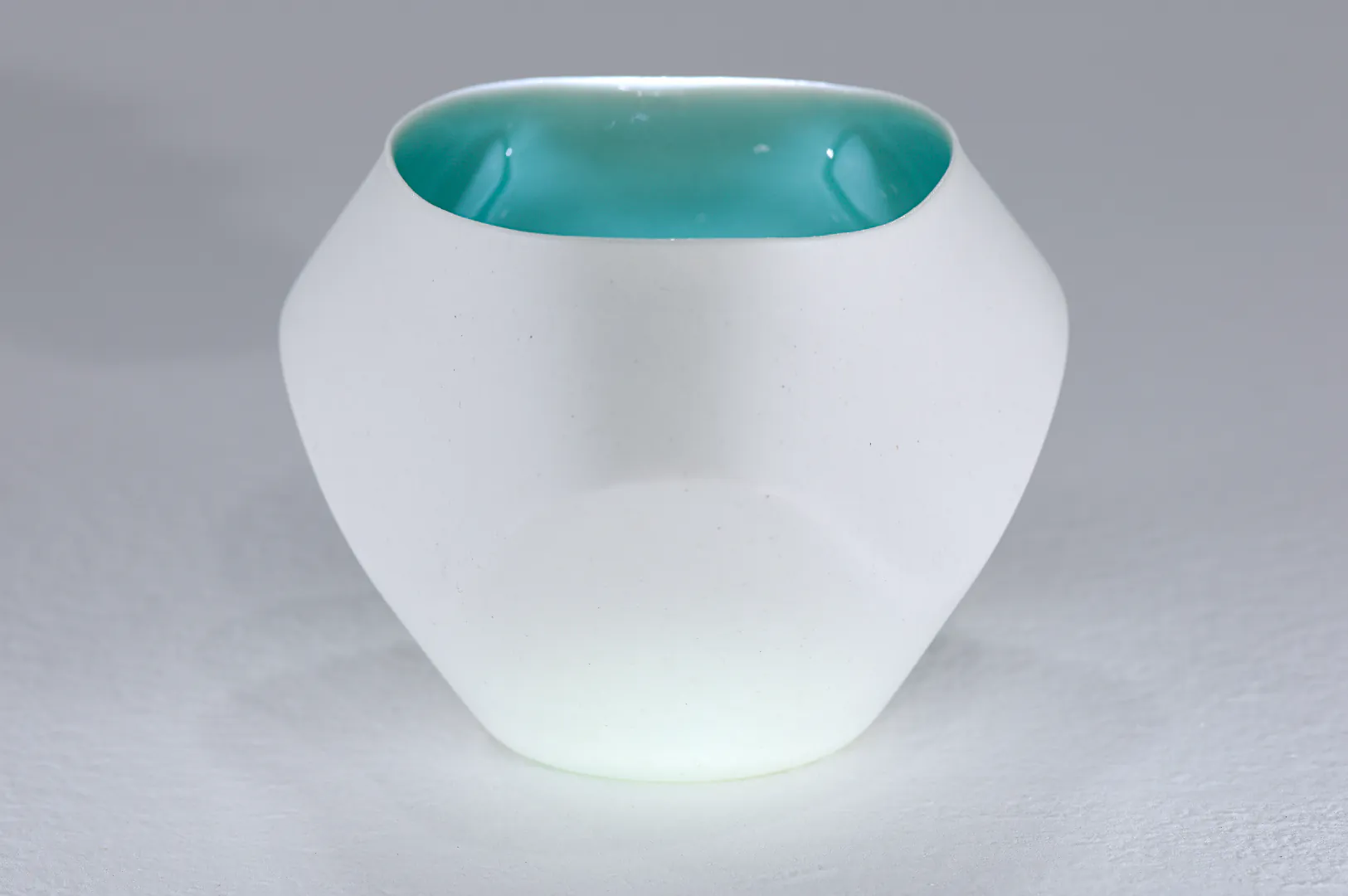
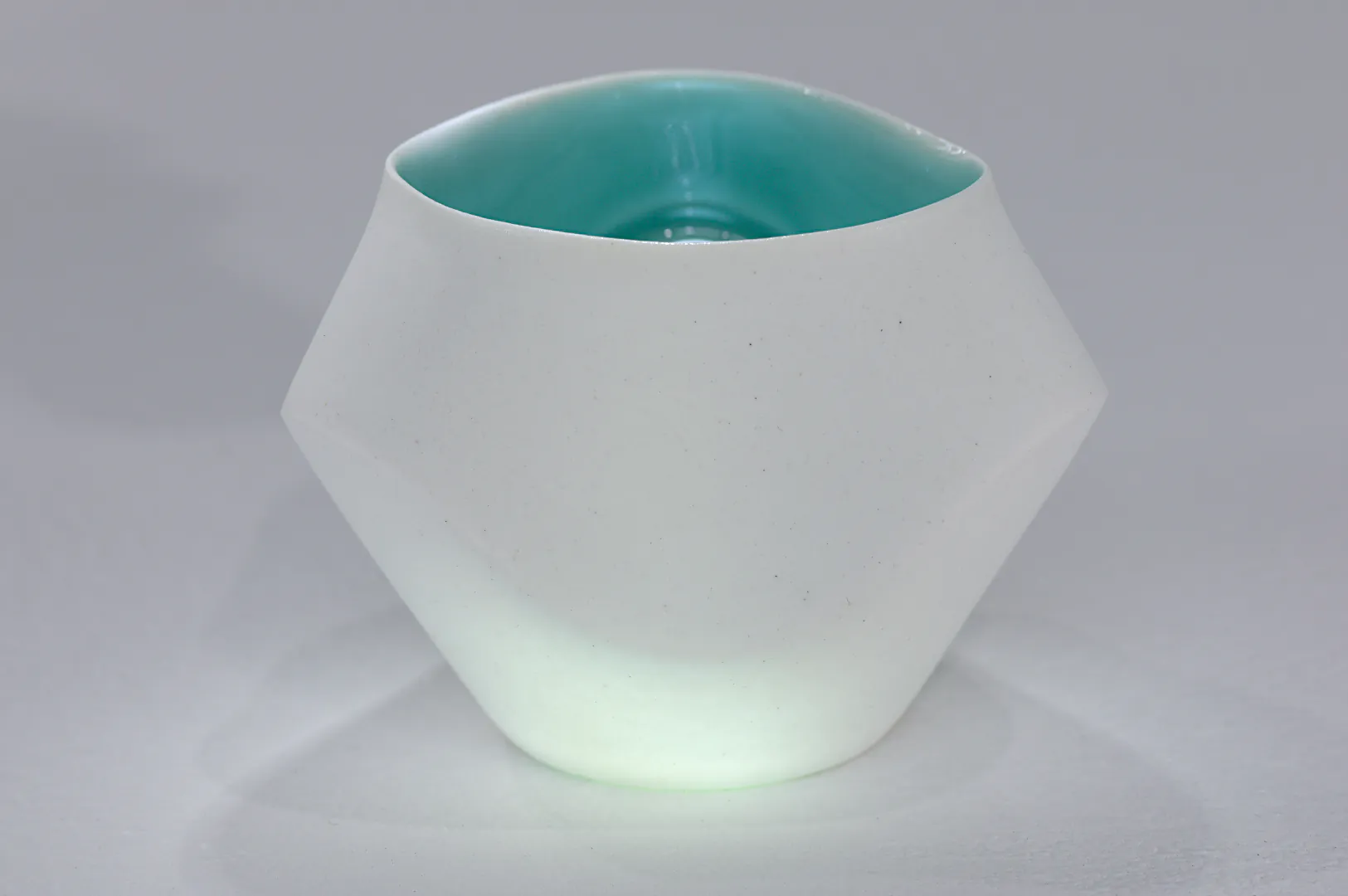
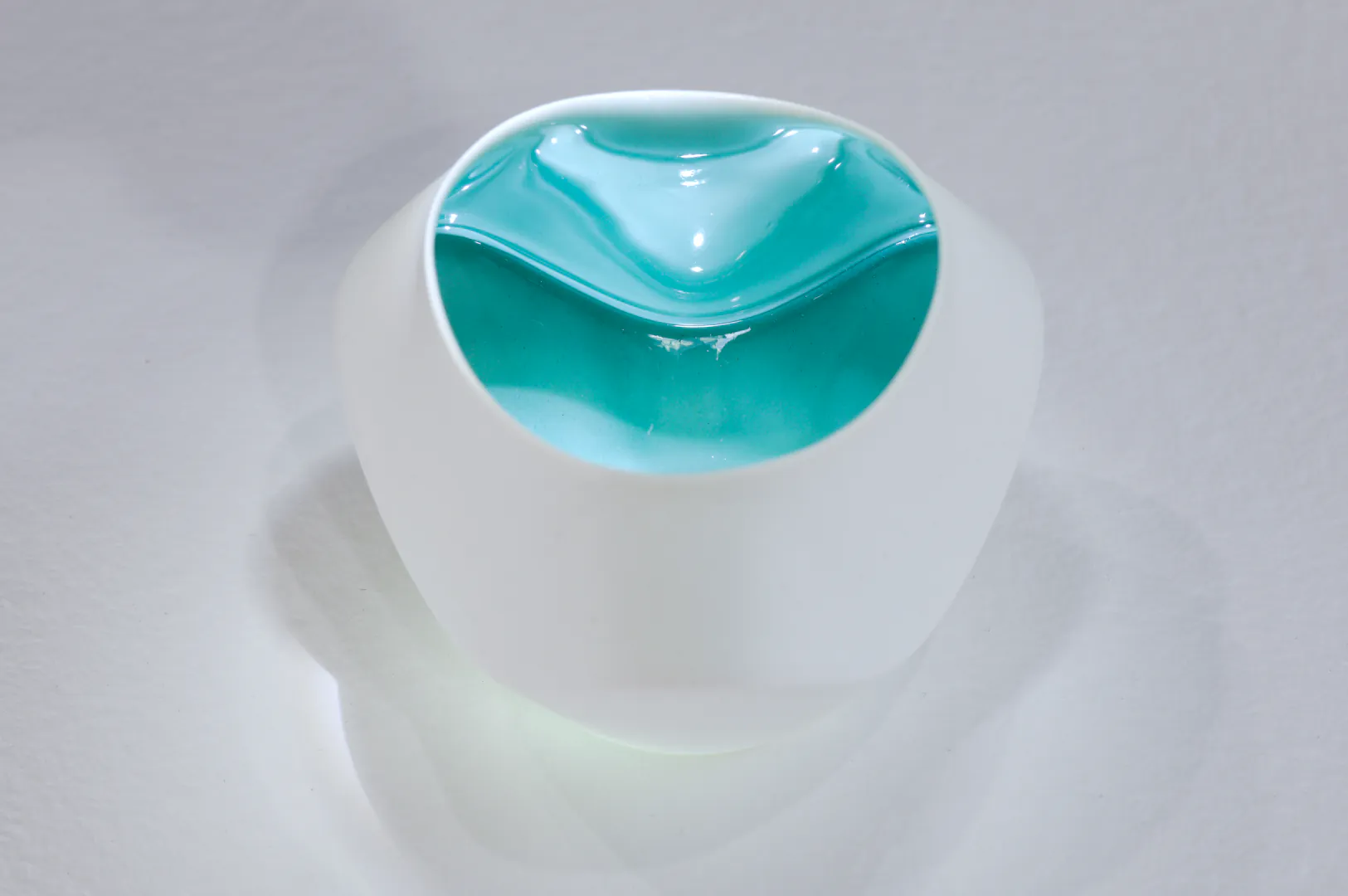
This translucent Southern Ice porcelain sake set created in 2012 consists of a flask, Arc, and three cups, Orbit, Wave and Cone. The forms of the vessels are informed by earlier works and continue the curvilinear theme with precise curving edges. The cups are 7cms in diameter and 5.5cms high. The flask is 16cms high, 7.5cms deep, 9cms wide and holds 300ml. The walls are approximately 2mm thick. The pieces are light and translucent, yet have the strength and durability afforded by this fine world-class porcelain.
The sake set is also available in a carbon trap shino glaze.

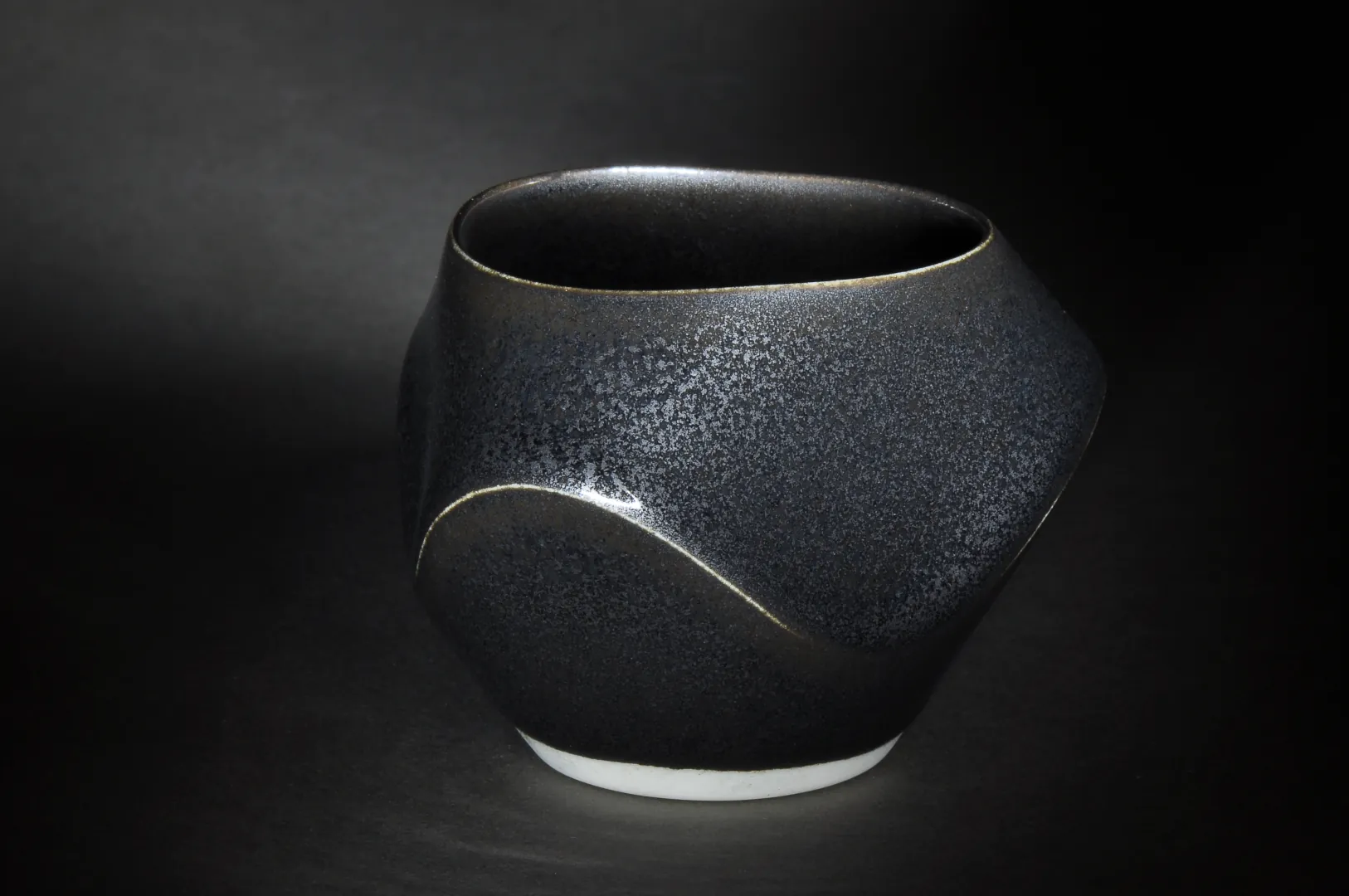
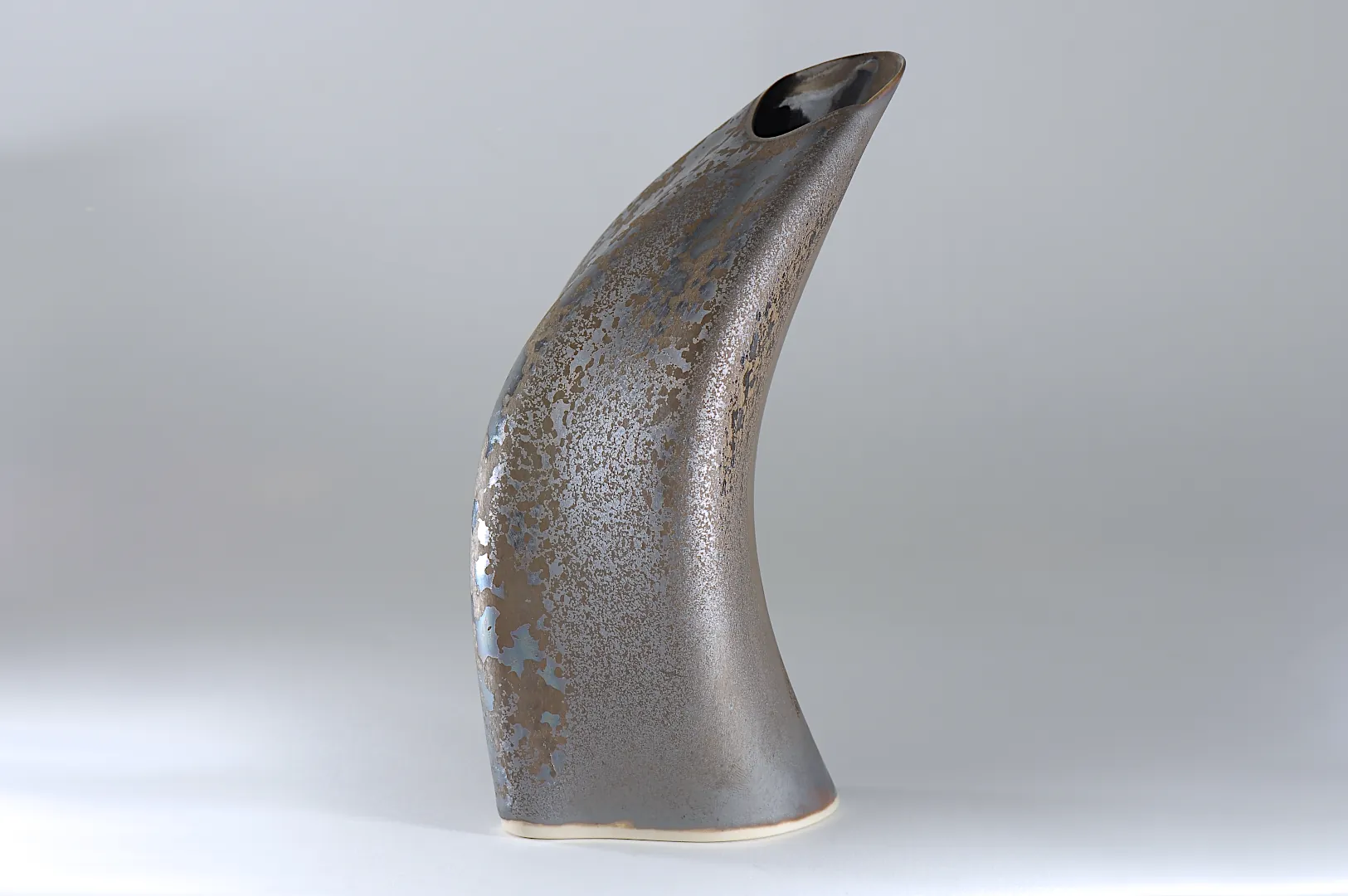
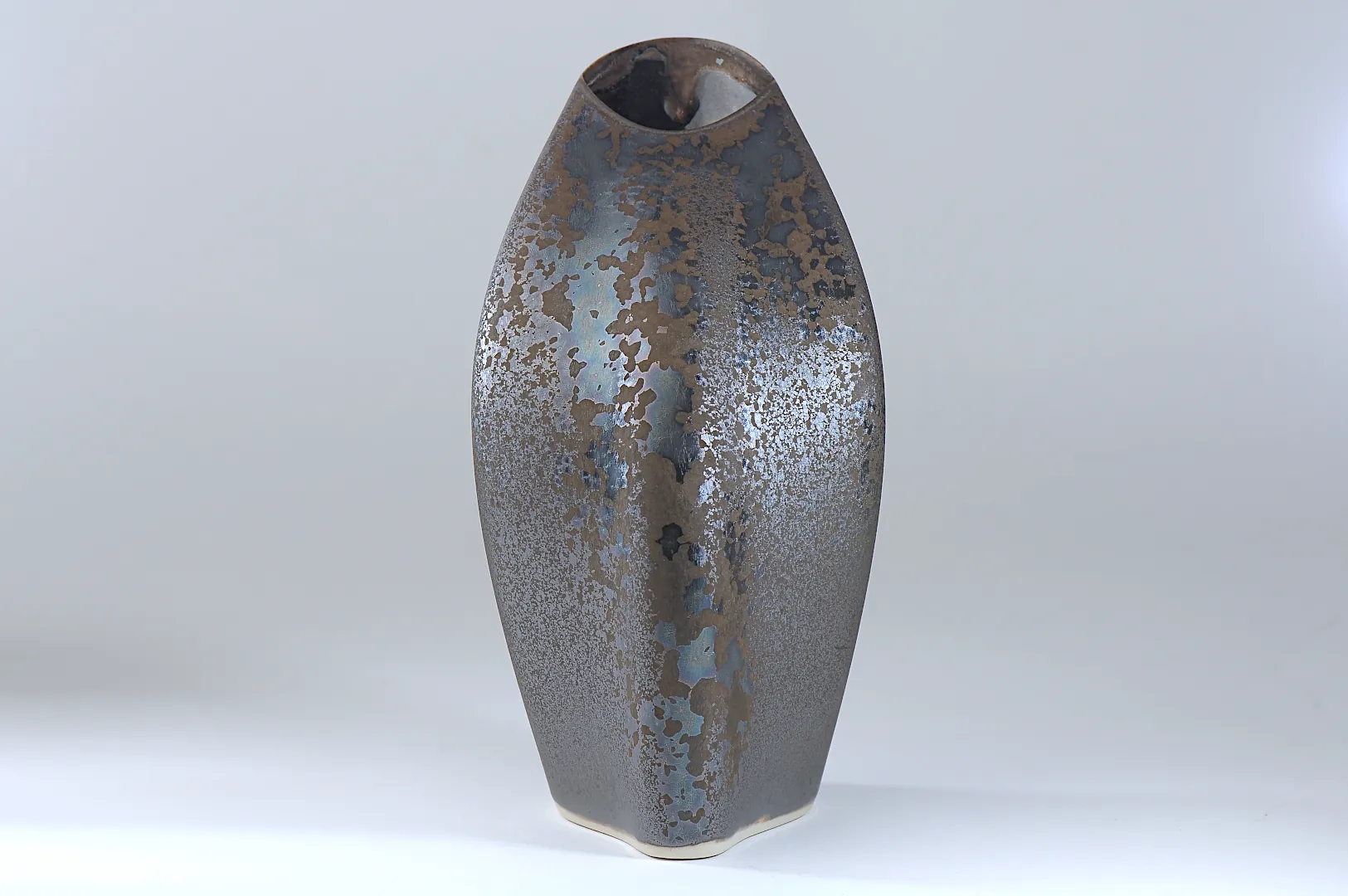
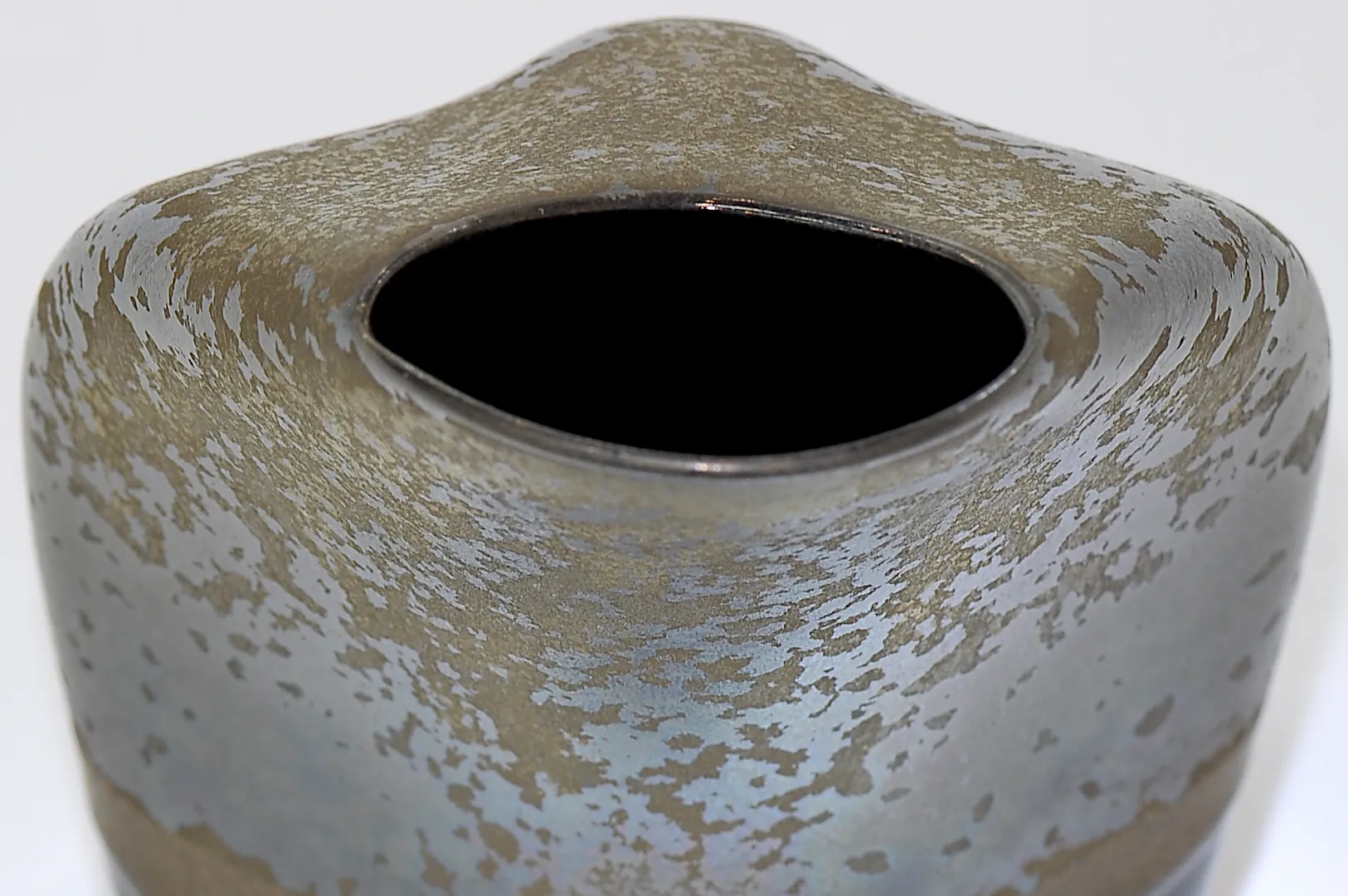
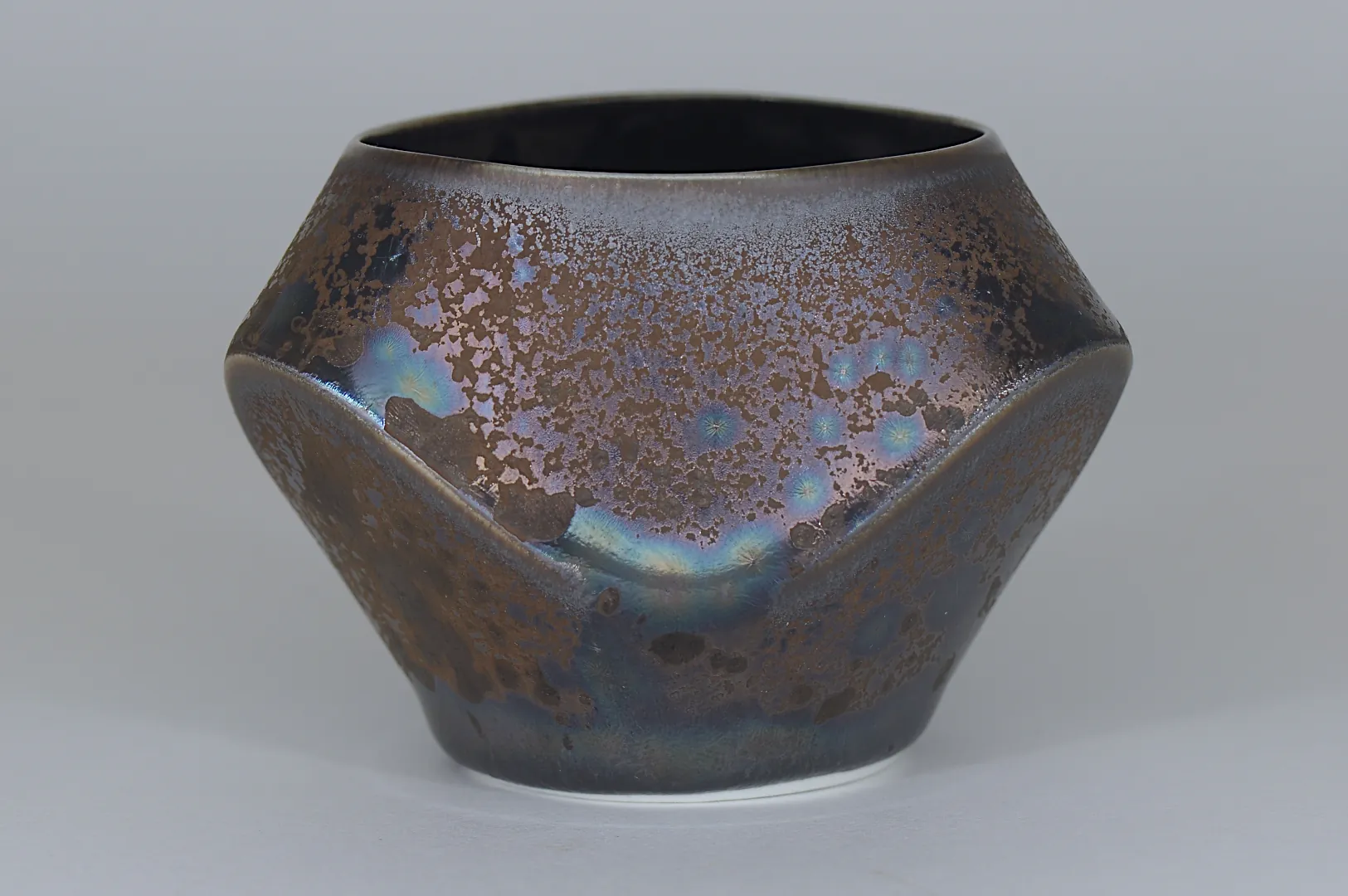
Sake Cup Wave : : Porcelain with Iridescent Crystalline Glaze
Southern Ice Porcelain
All of these works have been slip cast using Southern Ice porcelain. For more images and further information on the nature, origins and qualities of porcelain, including Southern Ice porcelain, see the Southern Ice porcelain page.
Surface Finishes
I have used several surface finishes for these works including the following:
Qingbai Glaze
The ice blue glaze is an authentic Qingbai achieved through the addition of small amounts of red iron oxide to a feldspathic glaze fired in reduction to 1300°C, which, under the right conditions, produces this translucent ice blue. The exterior surface is unglazed and hand polished giving a very tactile quality with a slight sheen.
Gloss Blue-Black Crystalline Glaze
The gloss blue black crystalline glaze is achieved through a fairly thick application of glaze and a long firing in oxidation firing the kiln down to slow down the cooling so crystals may grow in the molten glaze.
Iridescent Crystalline Glaze
This glaze is achieved through the inclusion of a number of metal oxides which form iridescent crystals as the glaze is molten when firing in oxidation to 1280°C.
Best of Show Award
April 2013: Winner Best of Show award in The Rotary Art Spectacular, The Riverside Centre, Brisbane.
"It is rare that a small sake set can wrestle attention away from some 460 pieces of art, but Peter Biddulph’s perfectly formed work did just that at this year’s Rotary Art Spectacular."
The judges for the 2013 Spectacular were Helen Grant (Editor, Australian Artist Magazine), Maureen Hansen (Professional Artist/Curator & Director, Wesley Hospital Collection), and Michael Wardel (Coordinator, Logan Art Gallery).

