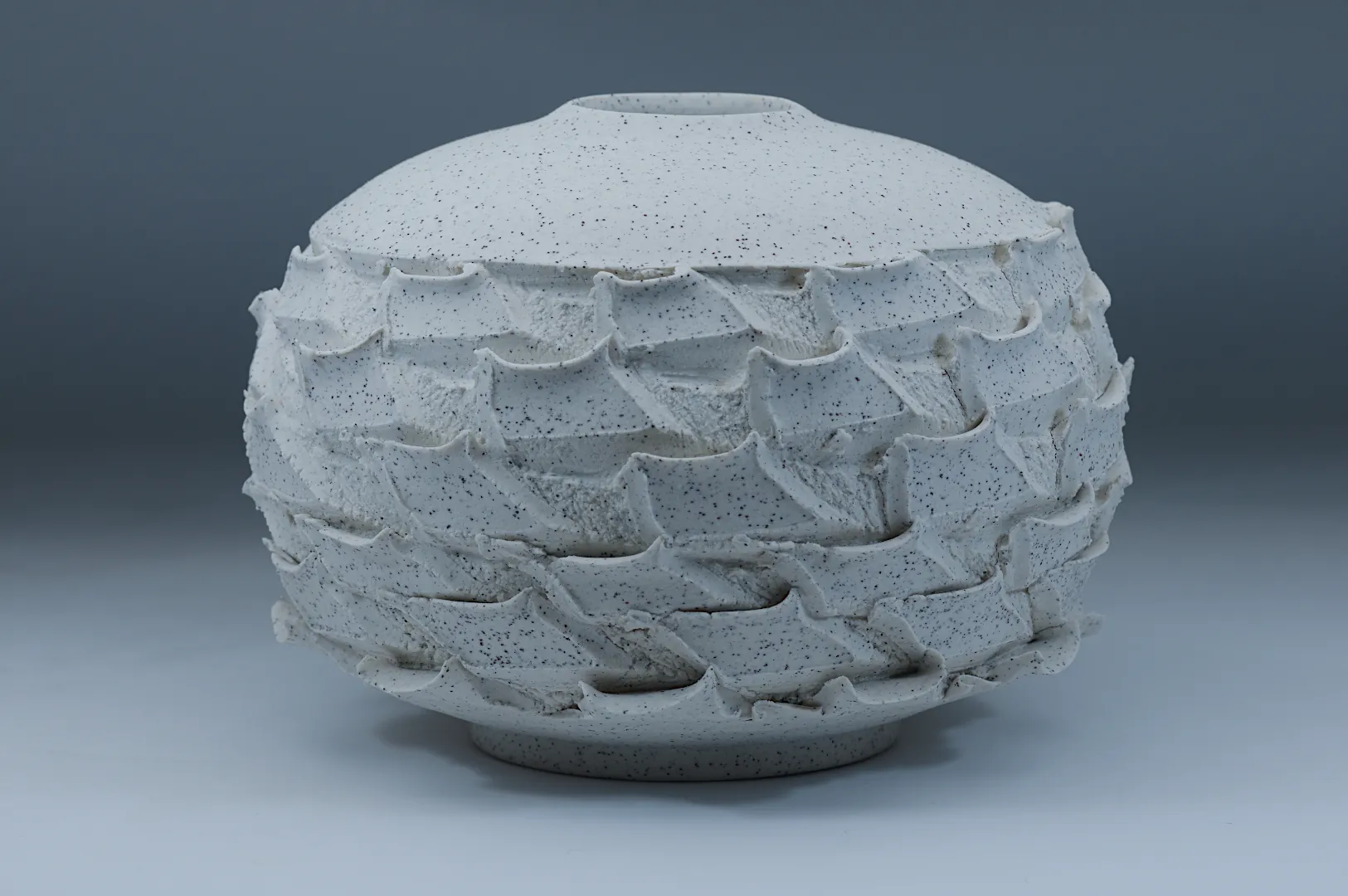
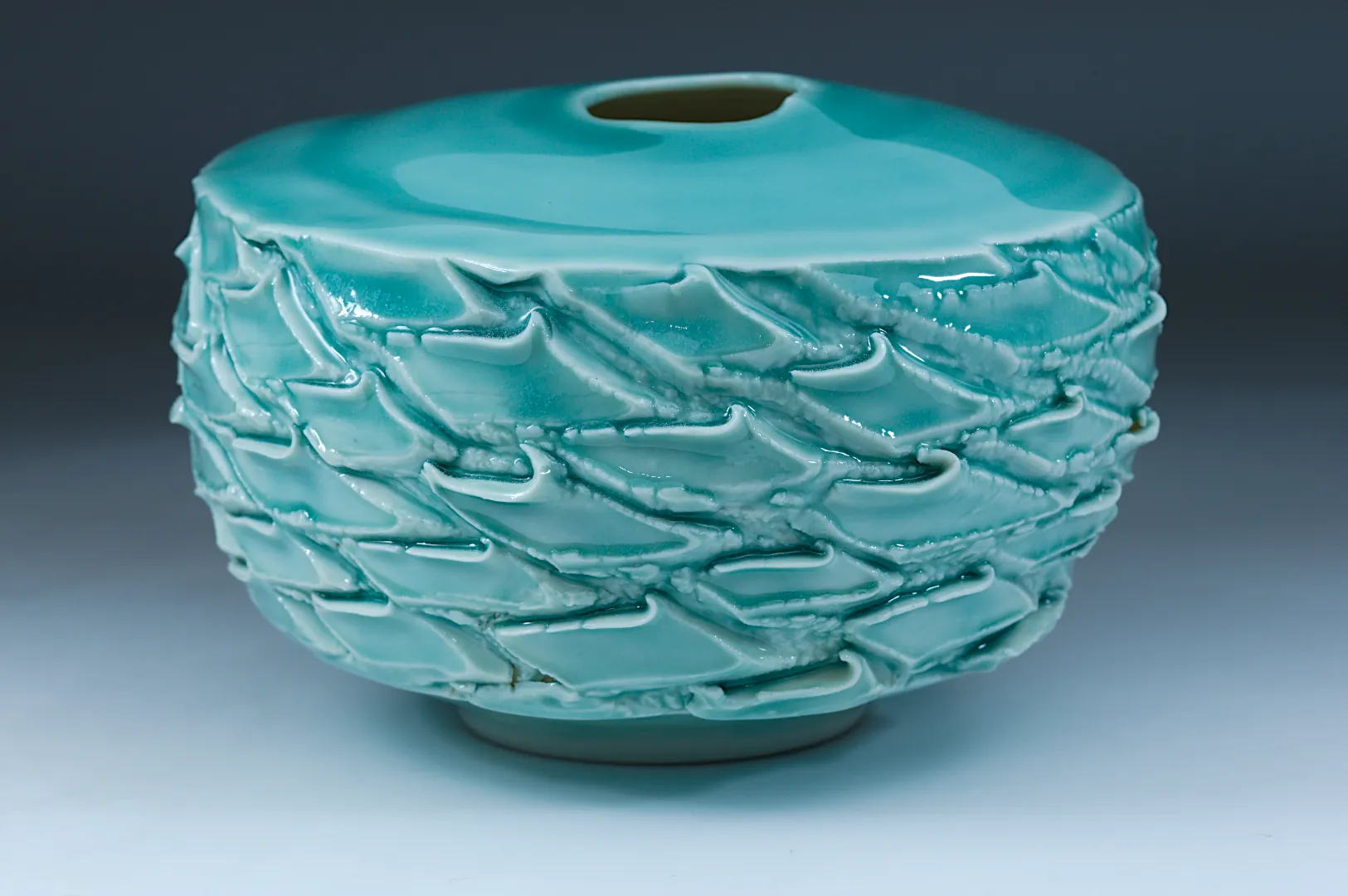
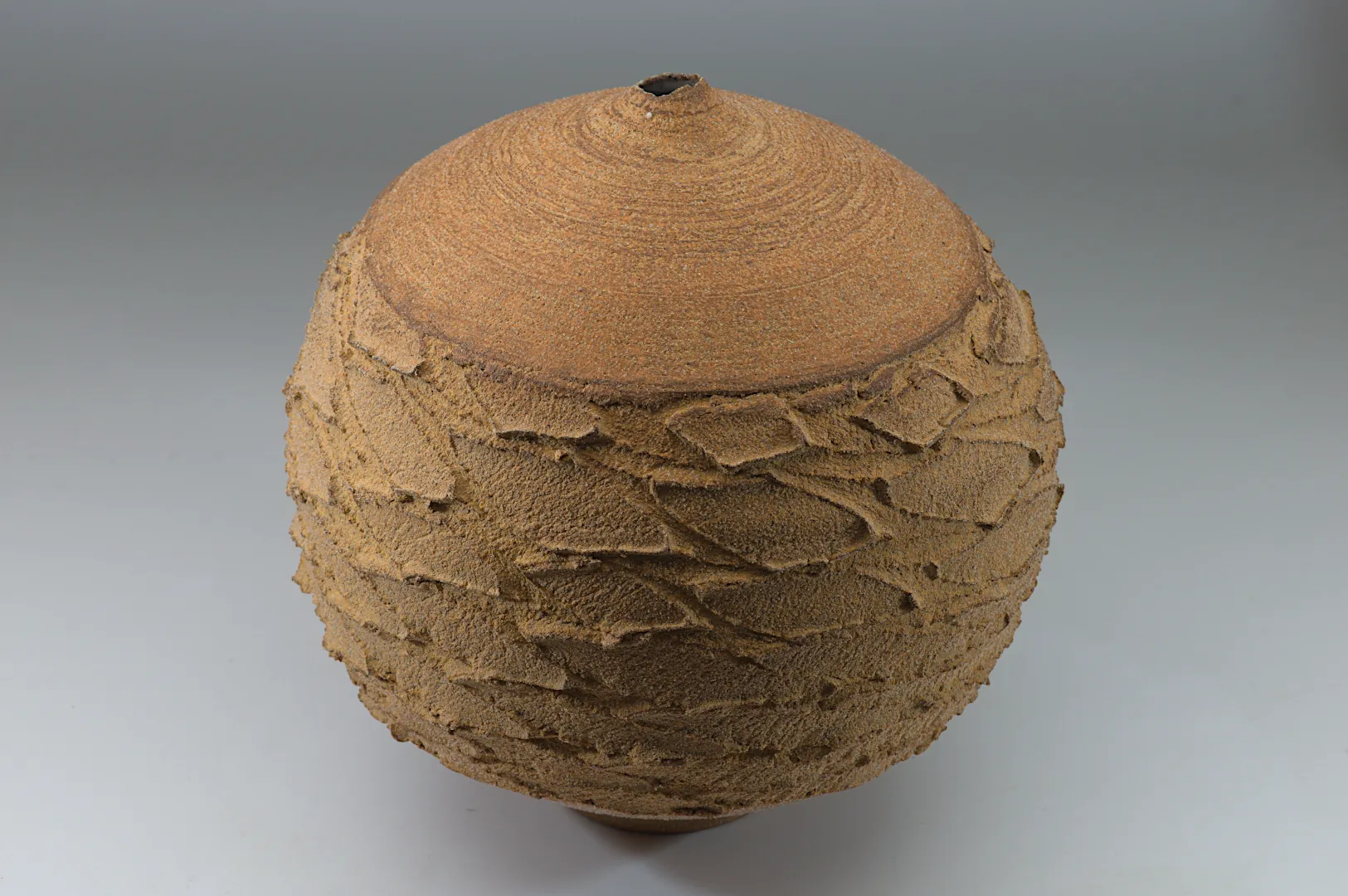
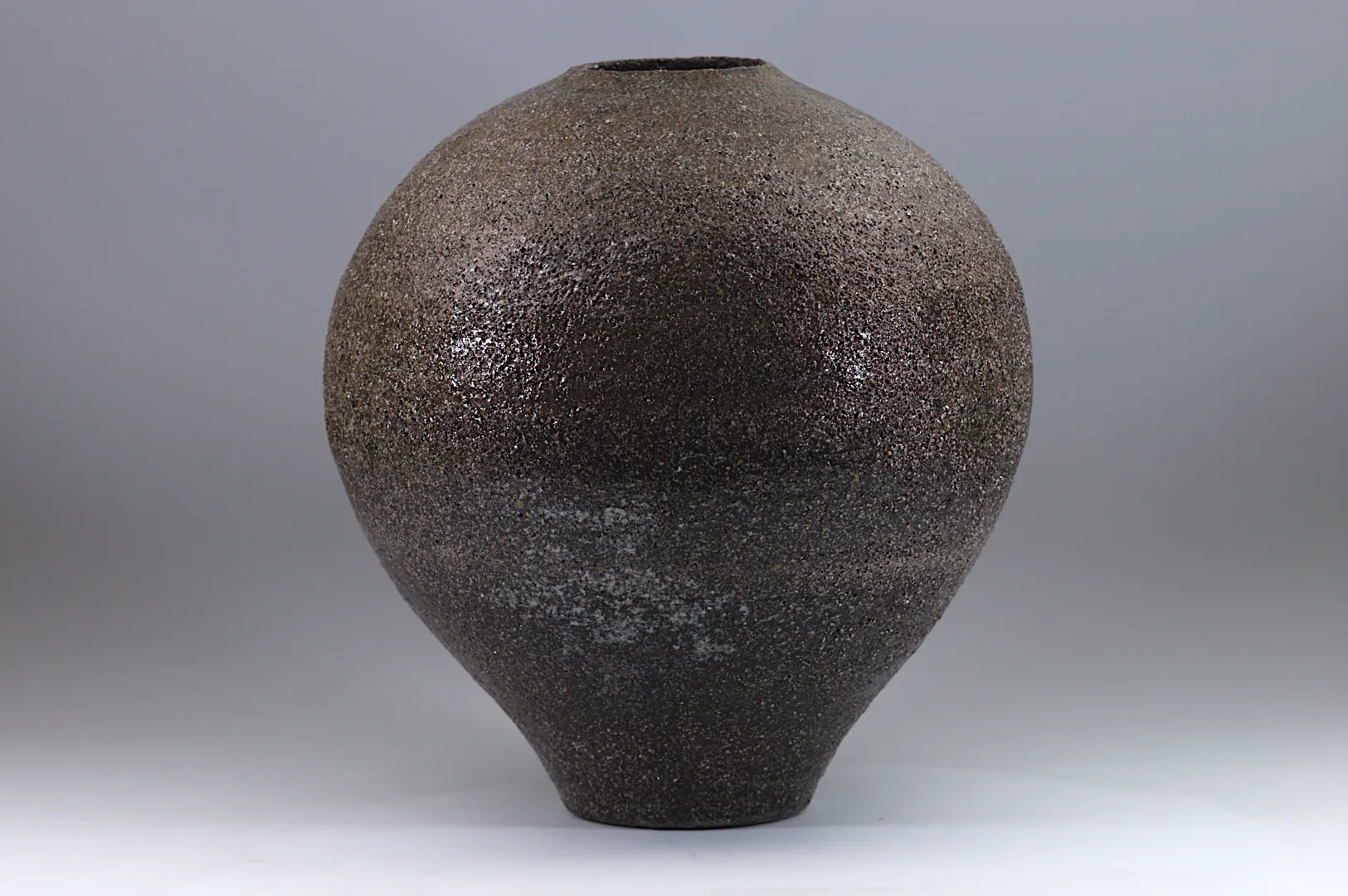

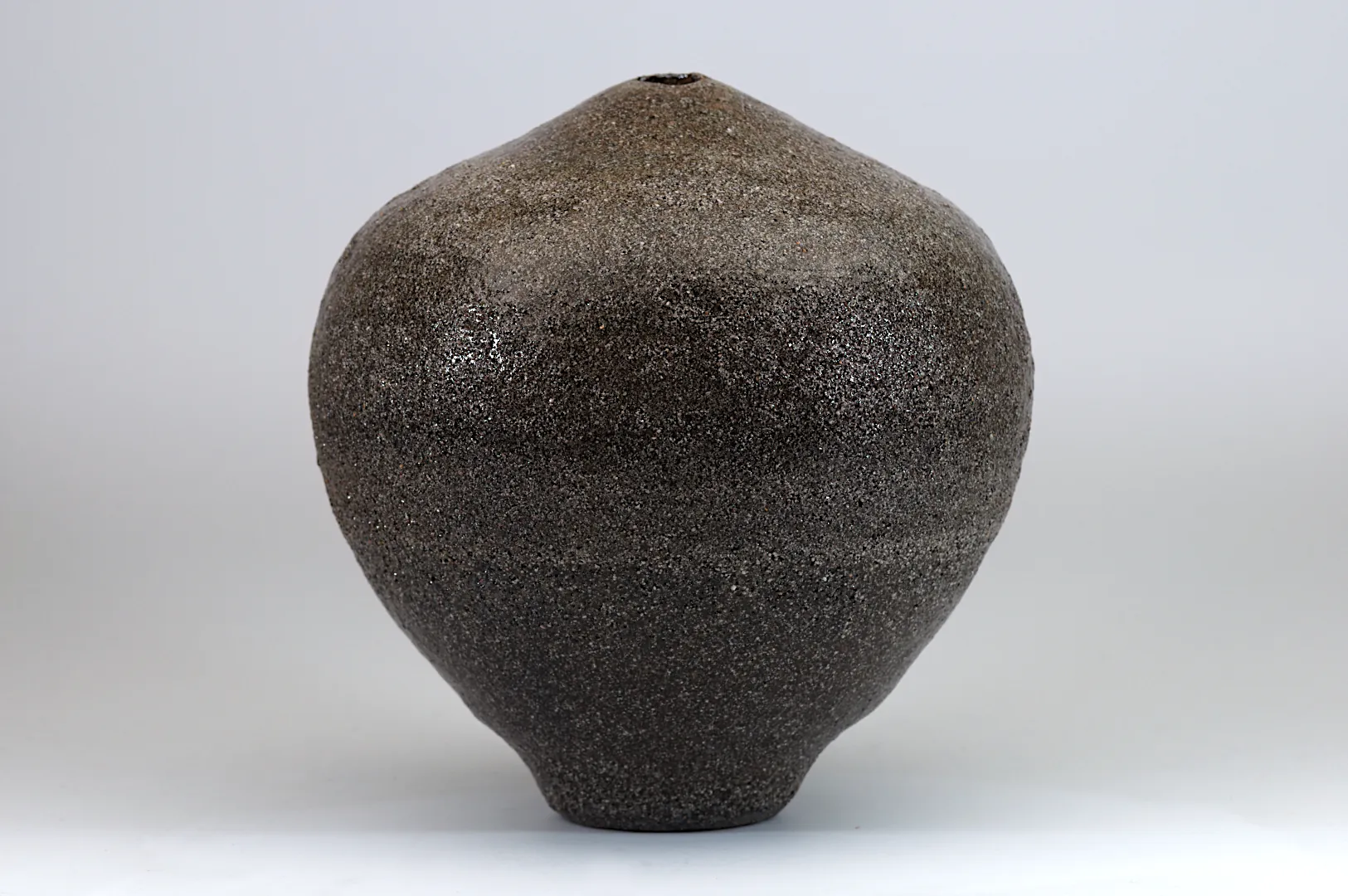
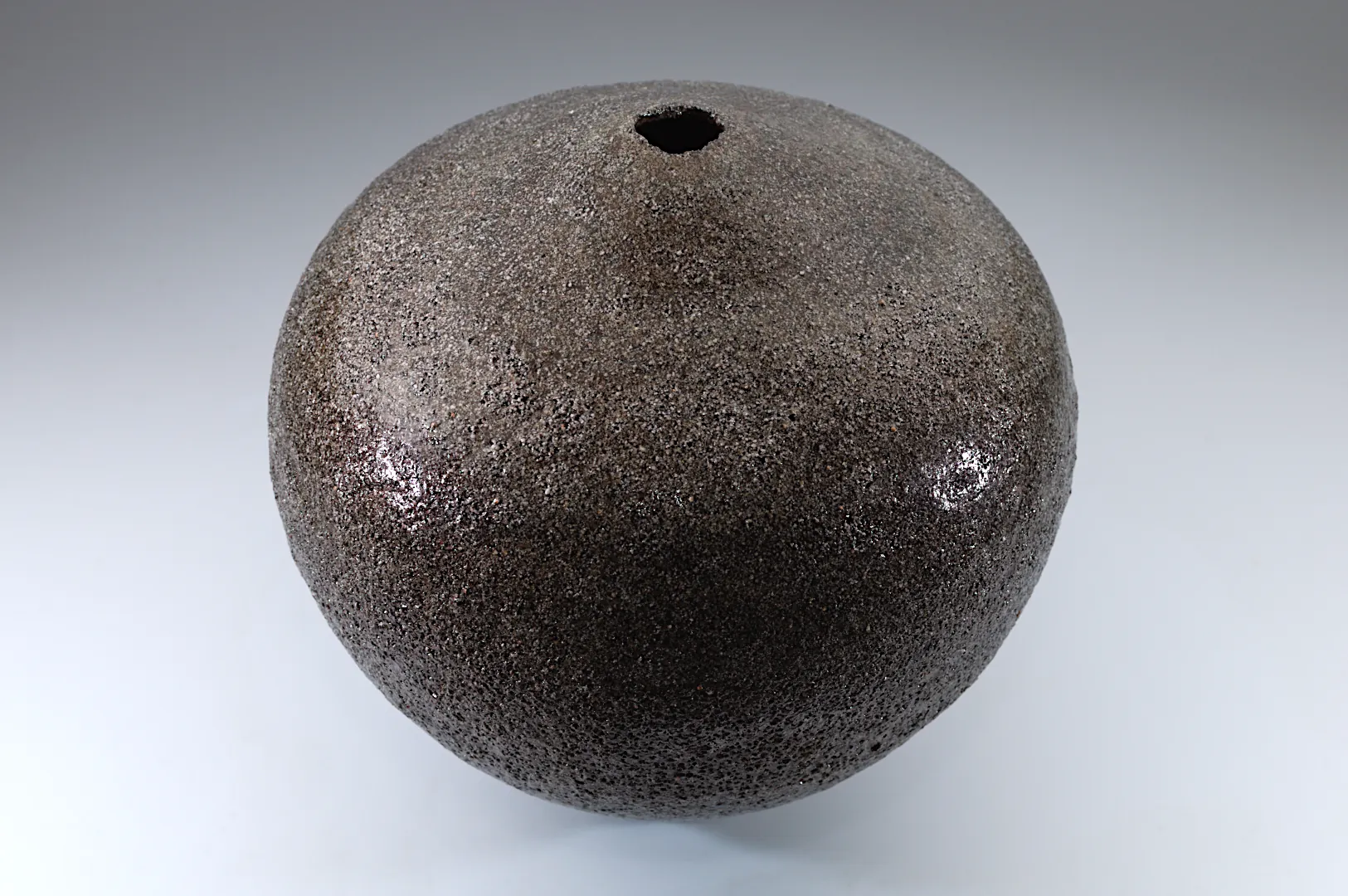
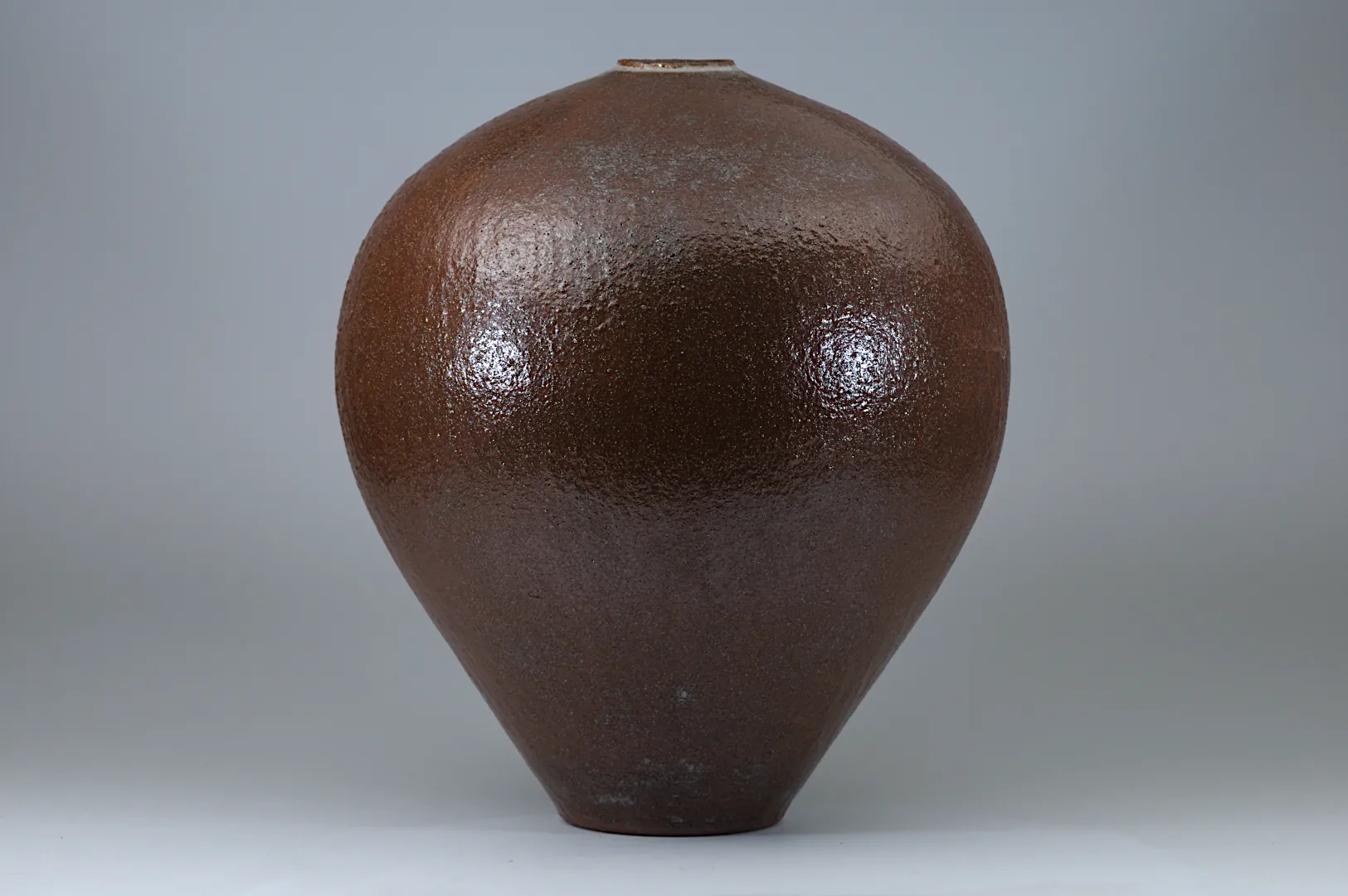
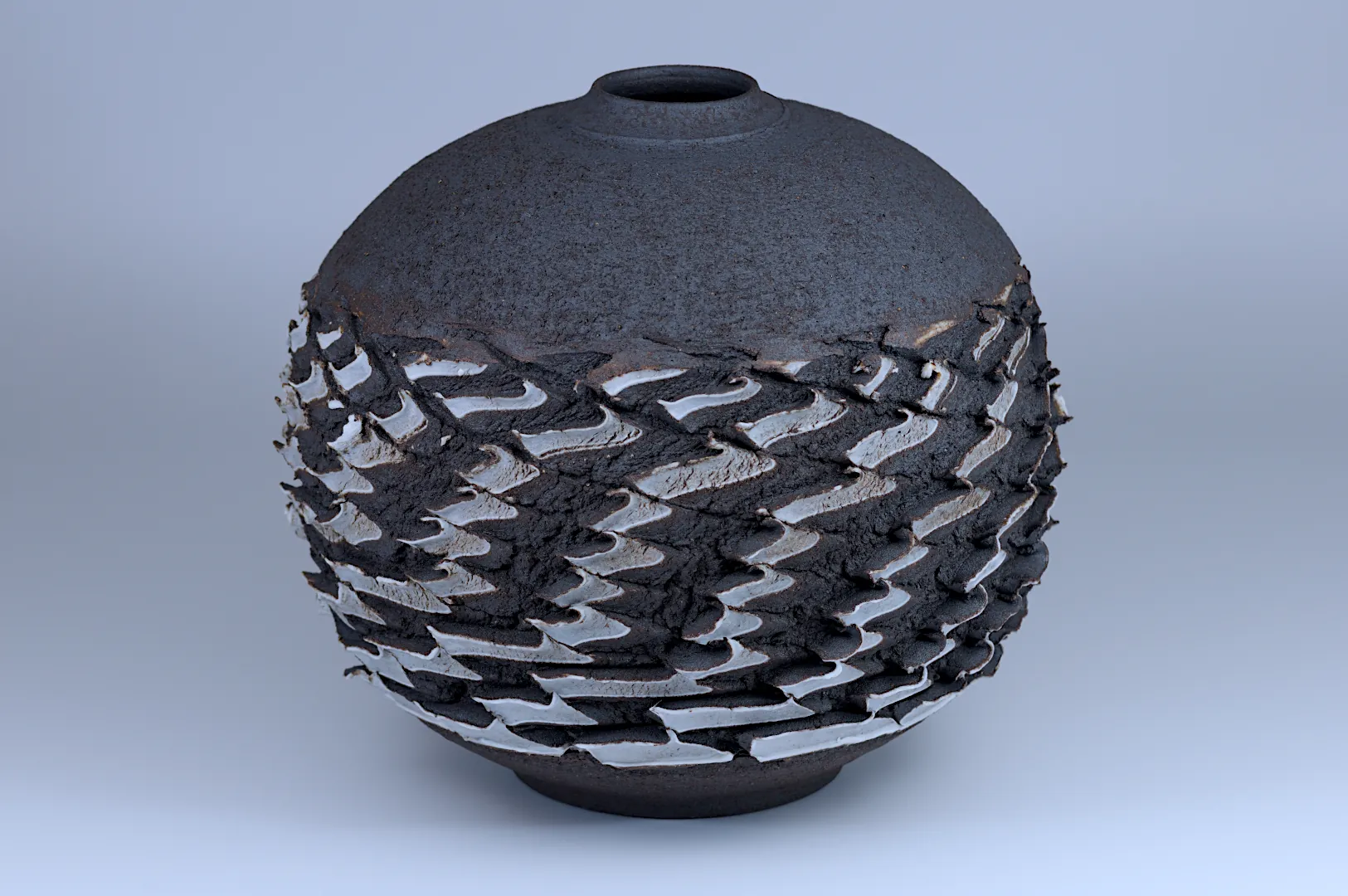
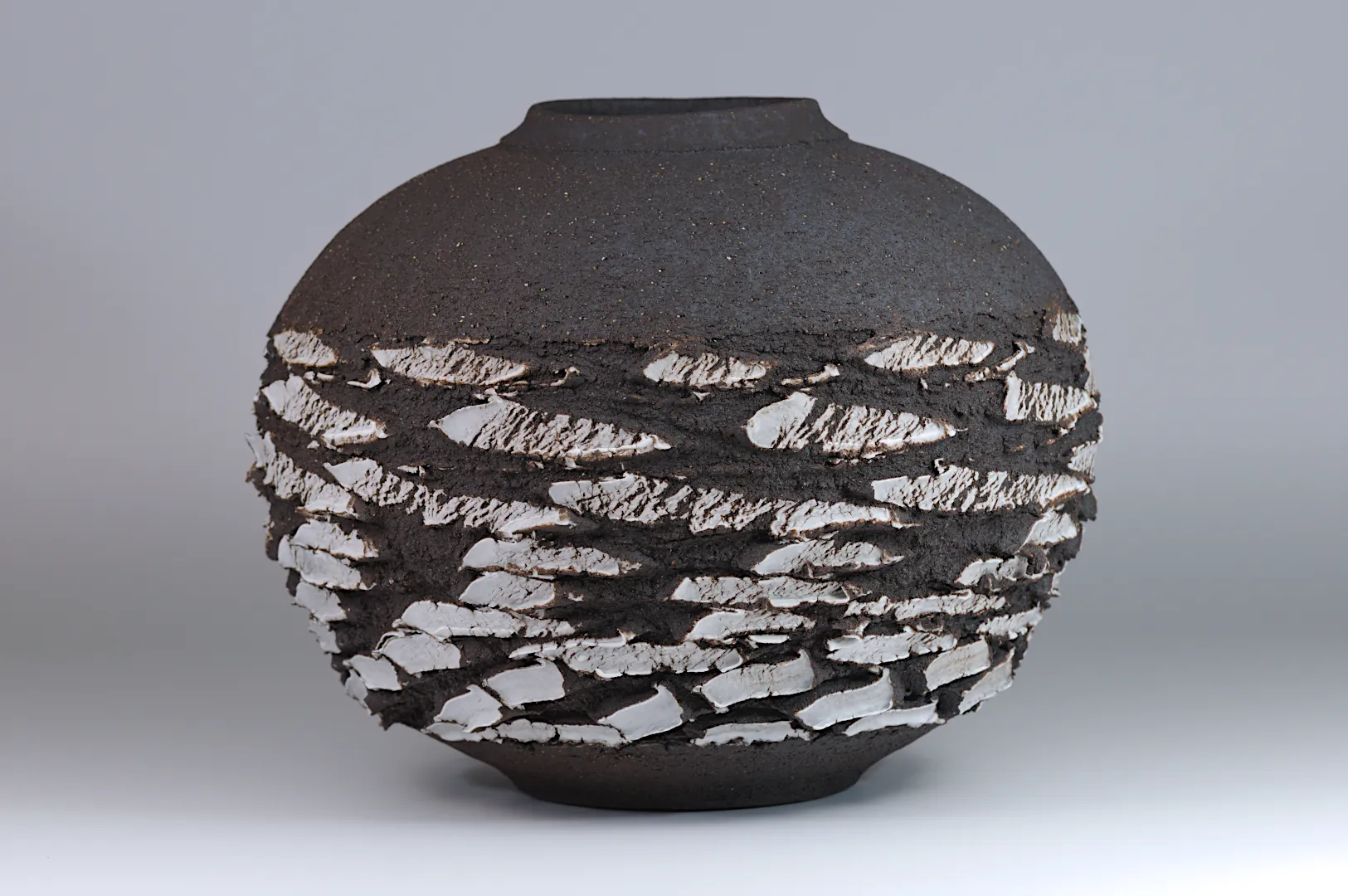
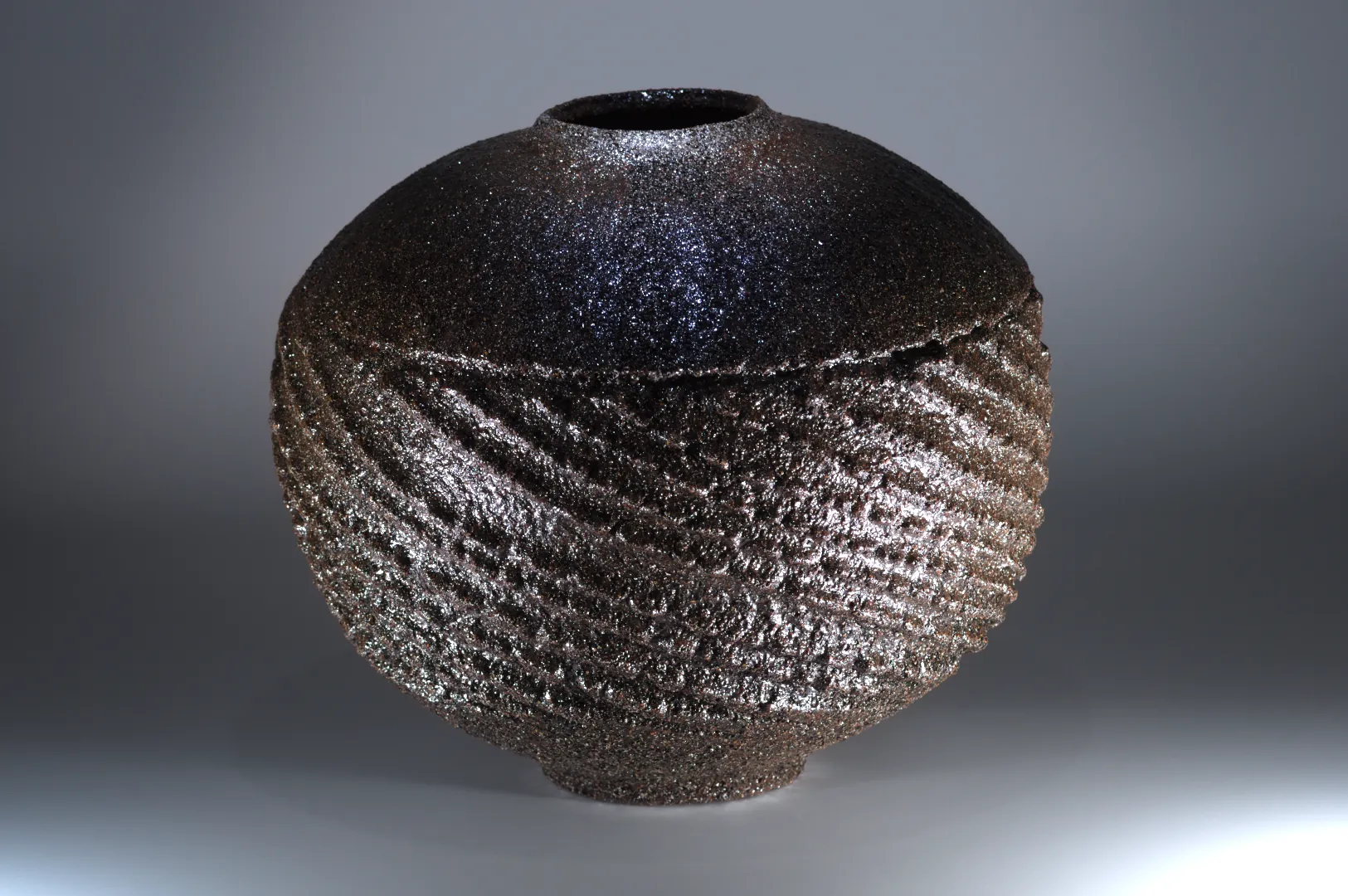
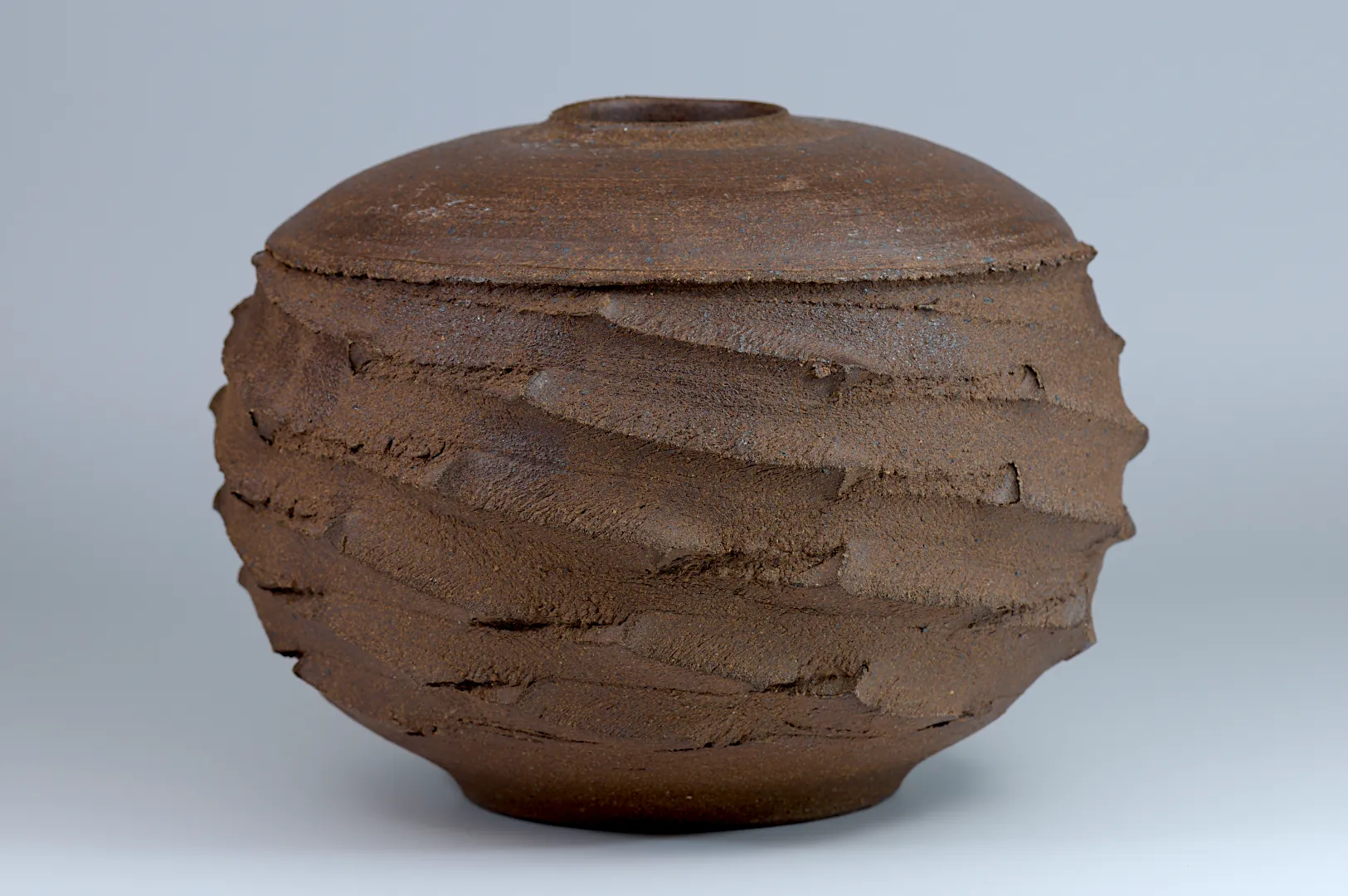
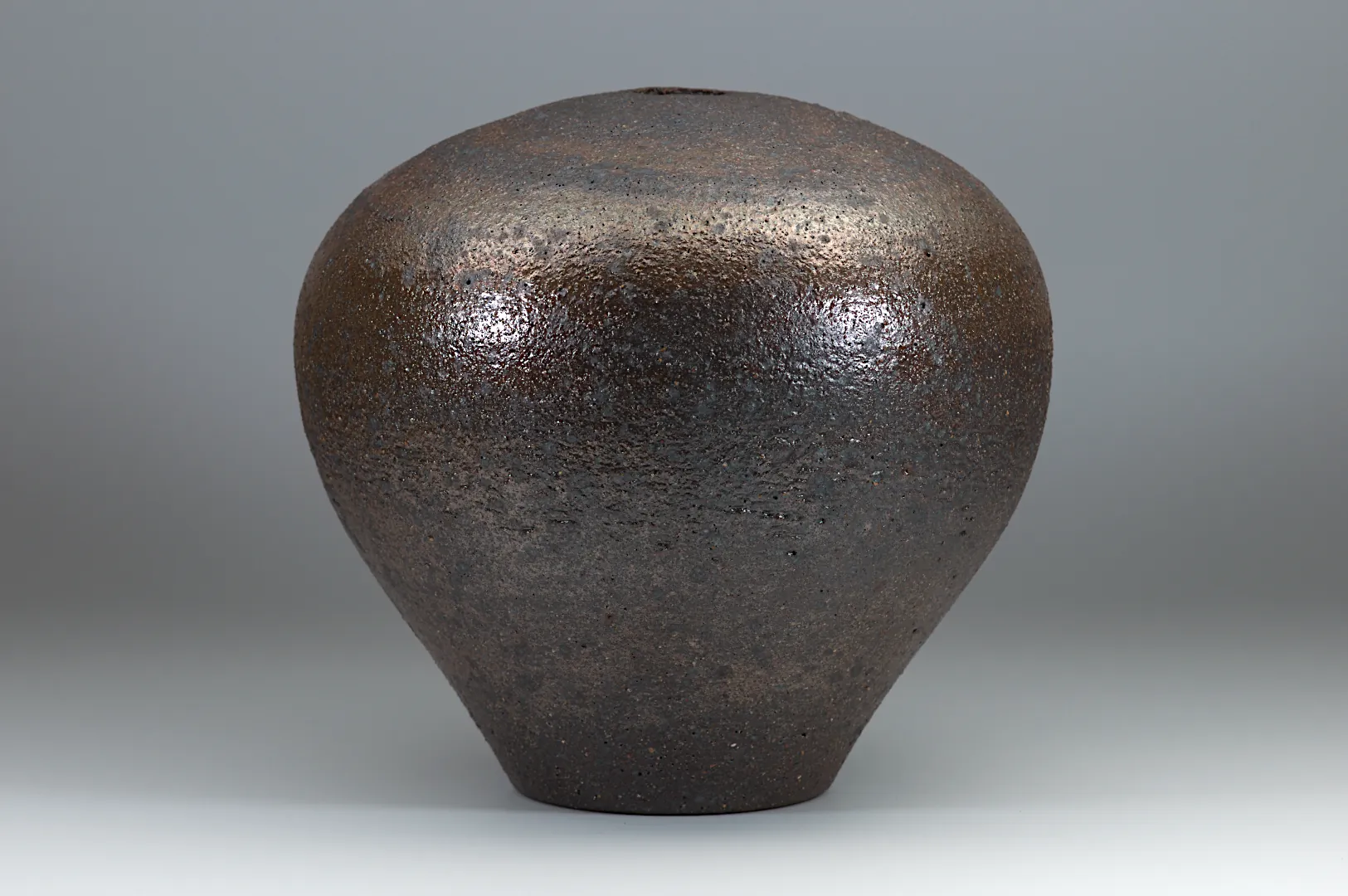


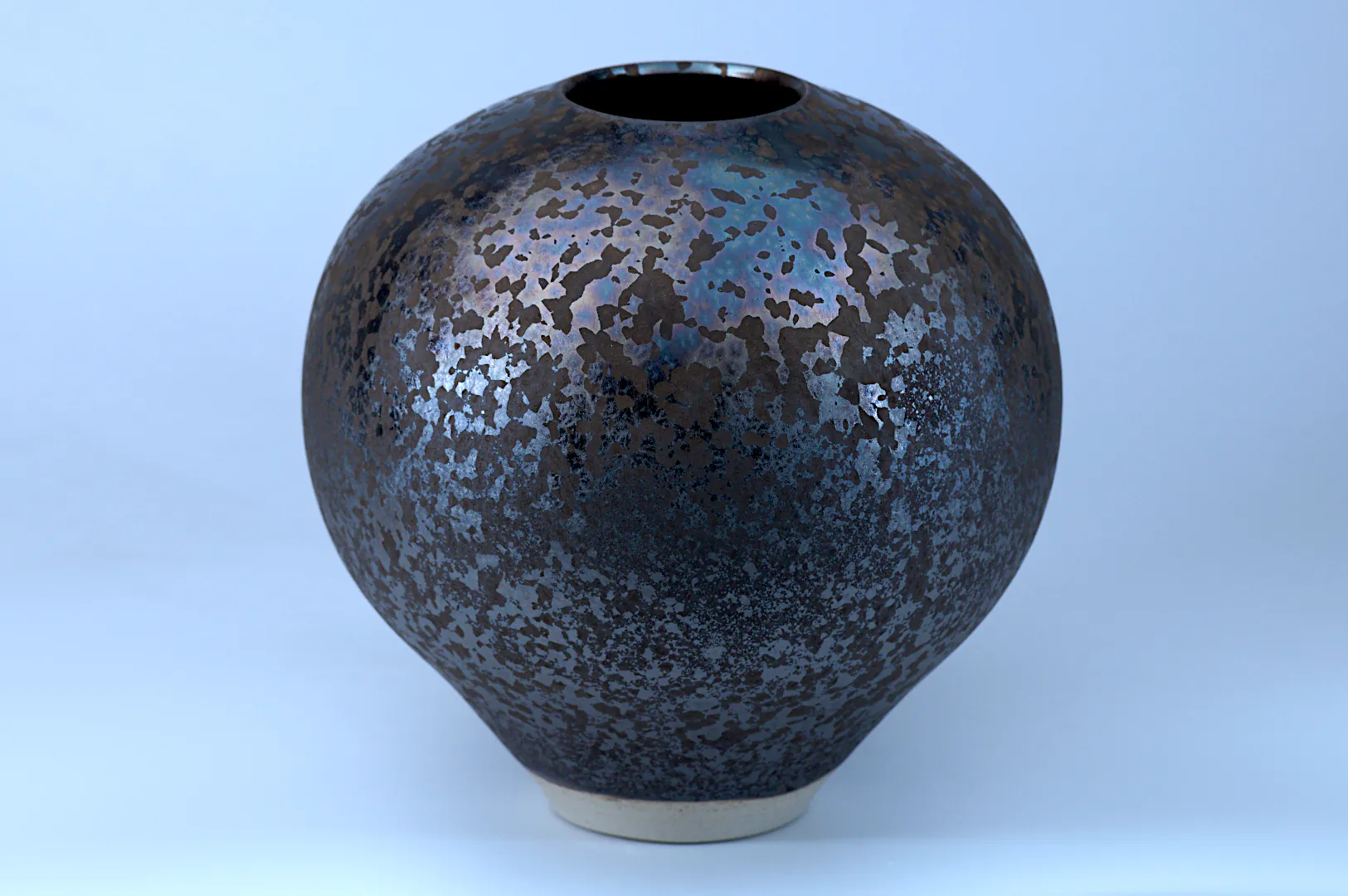
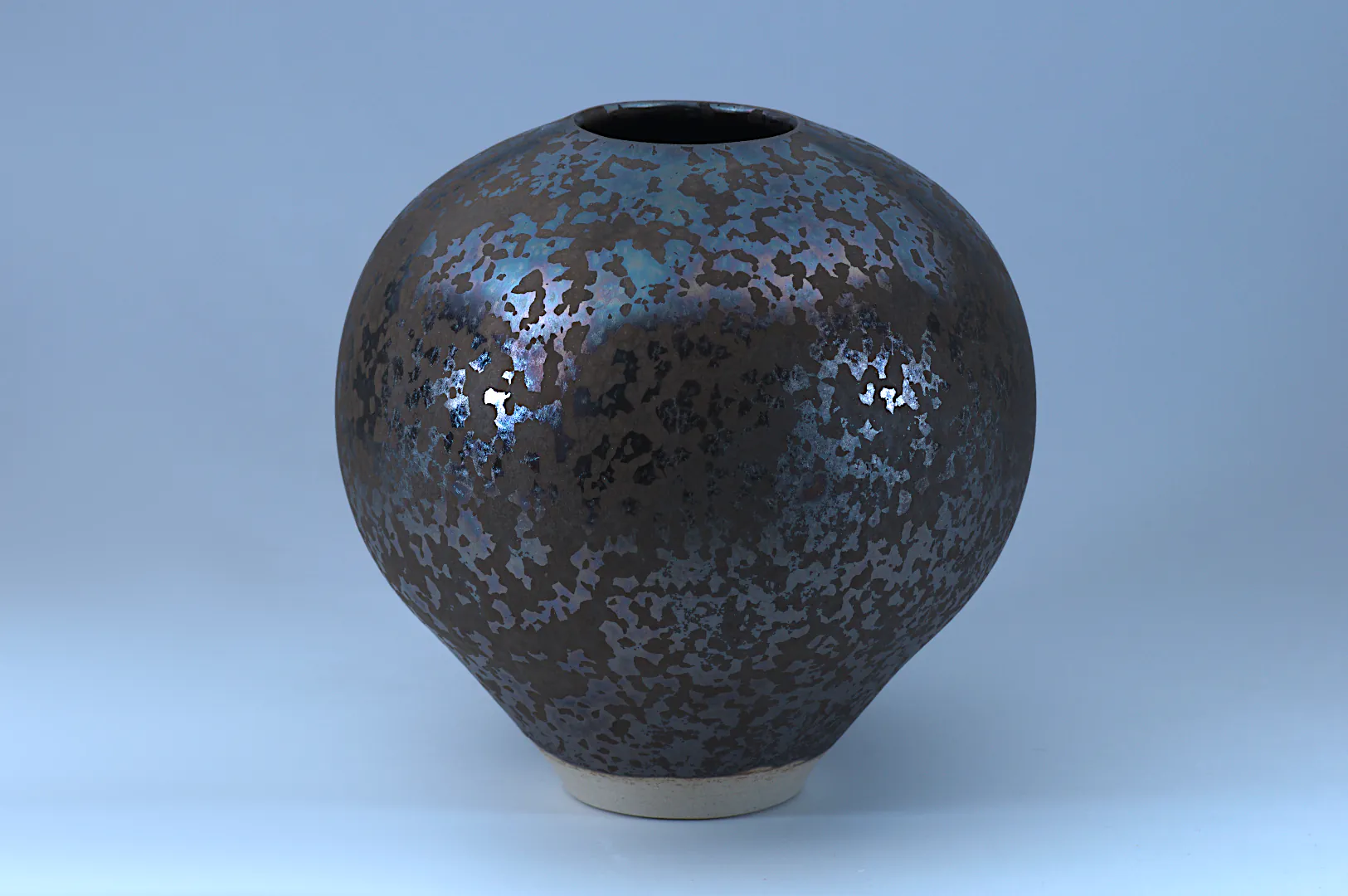
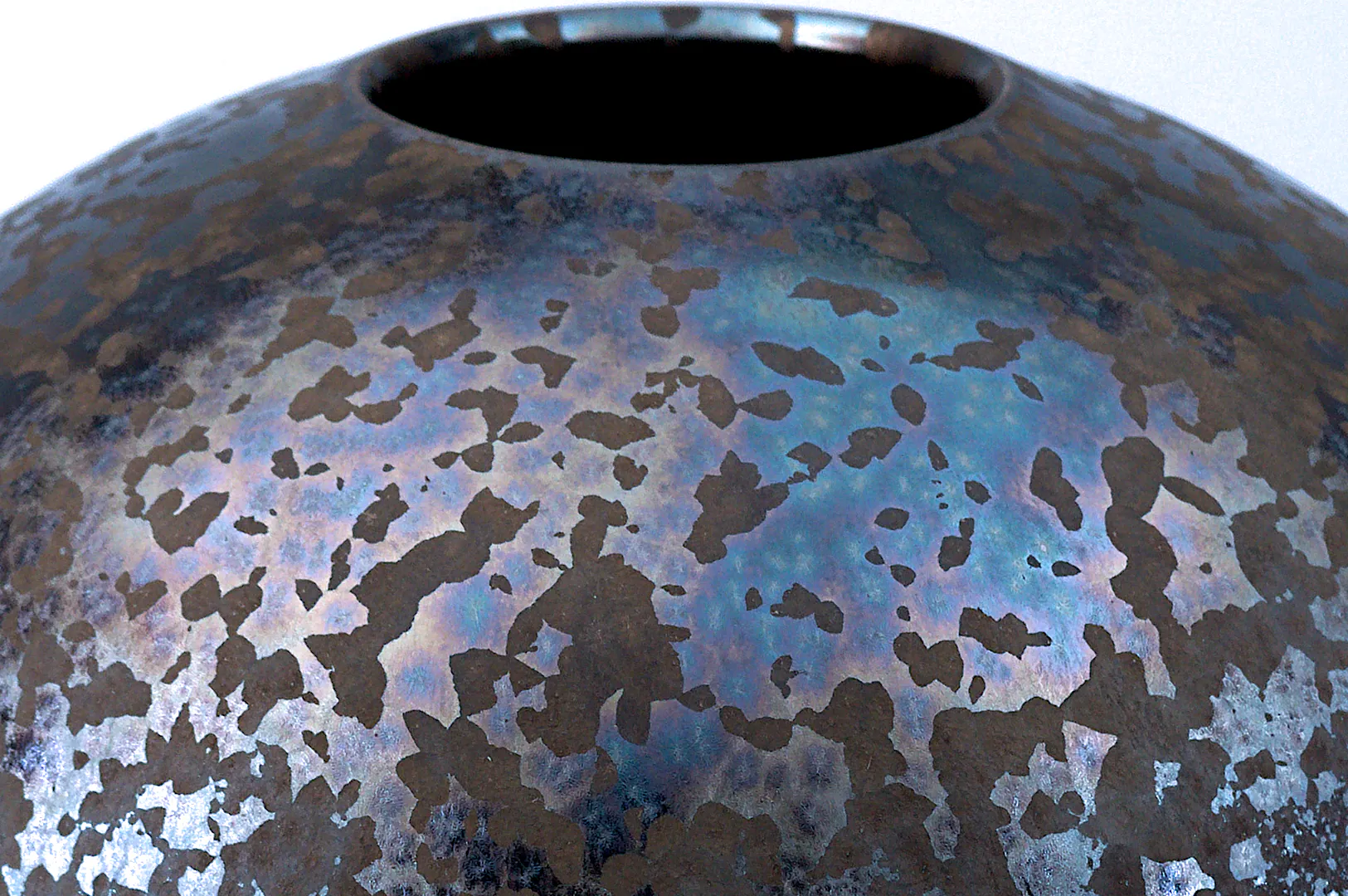
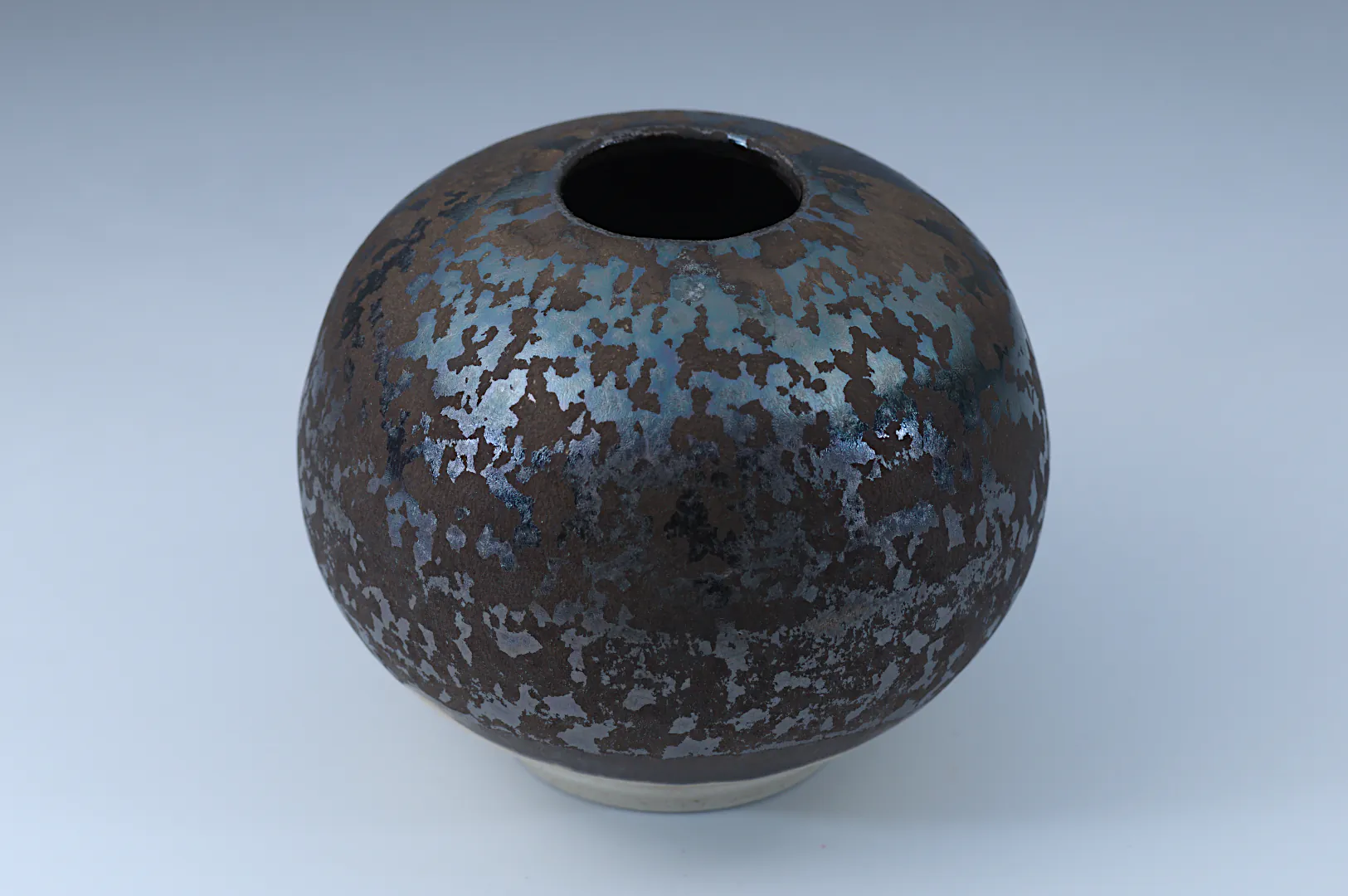
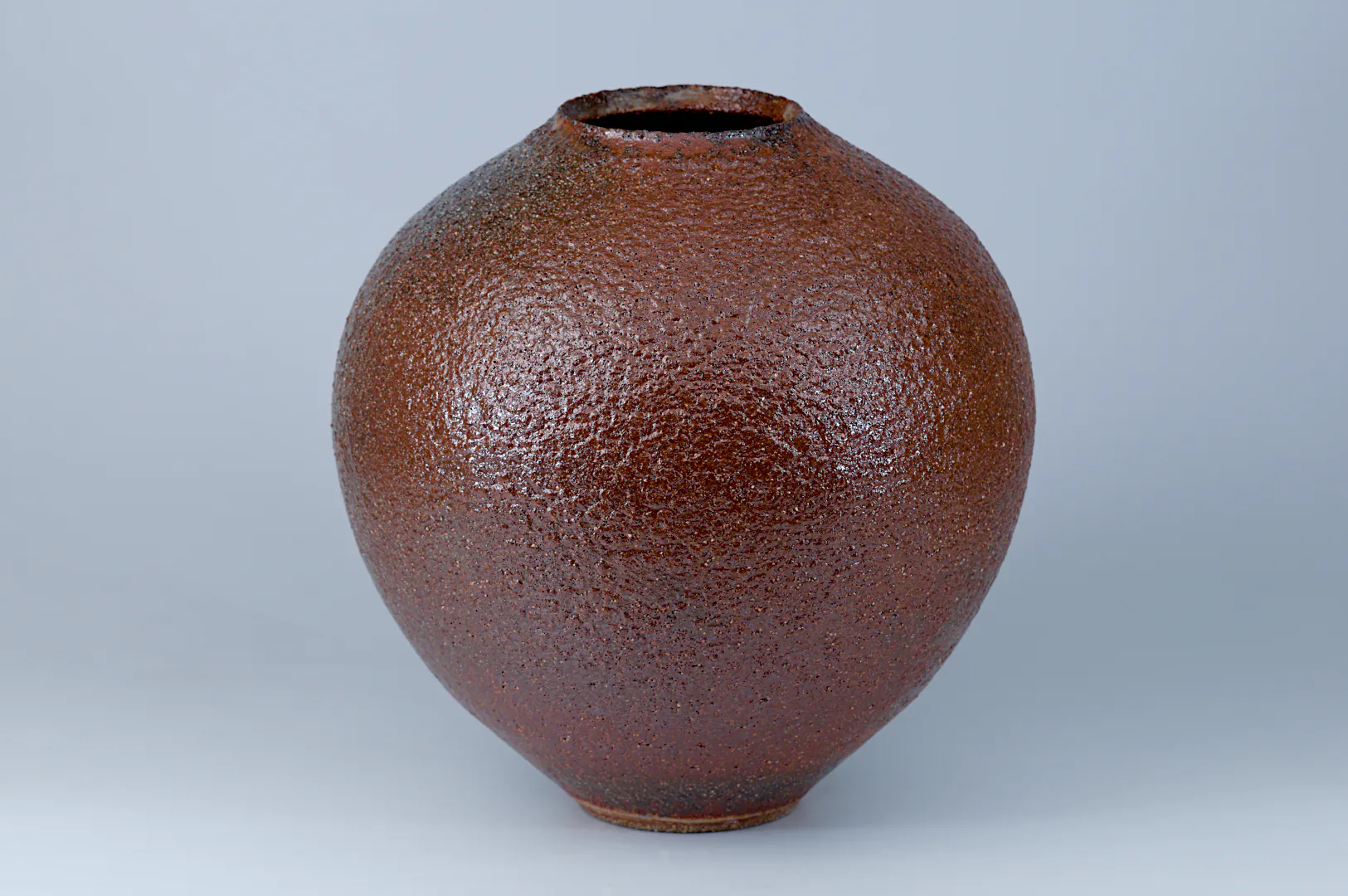
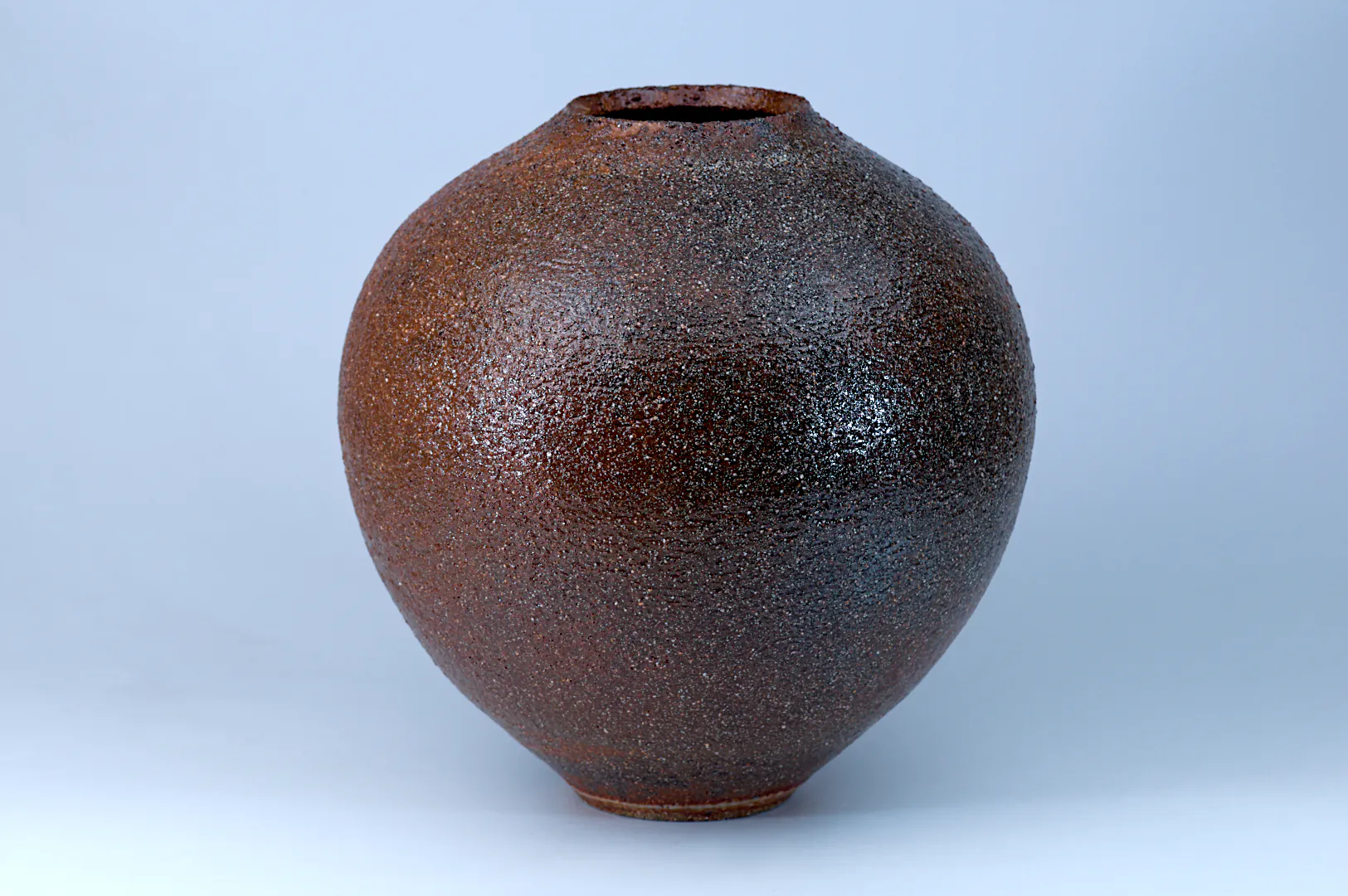
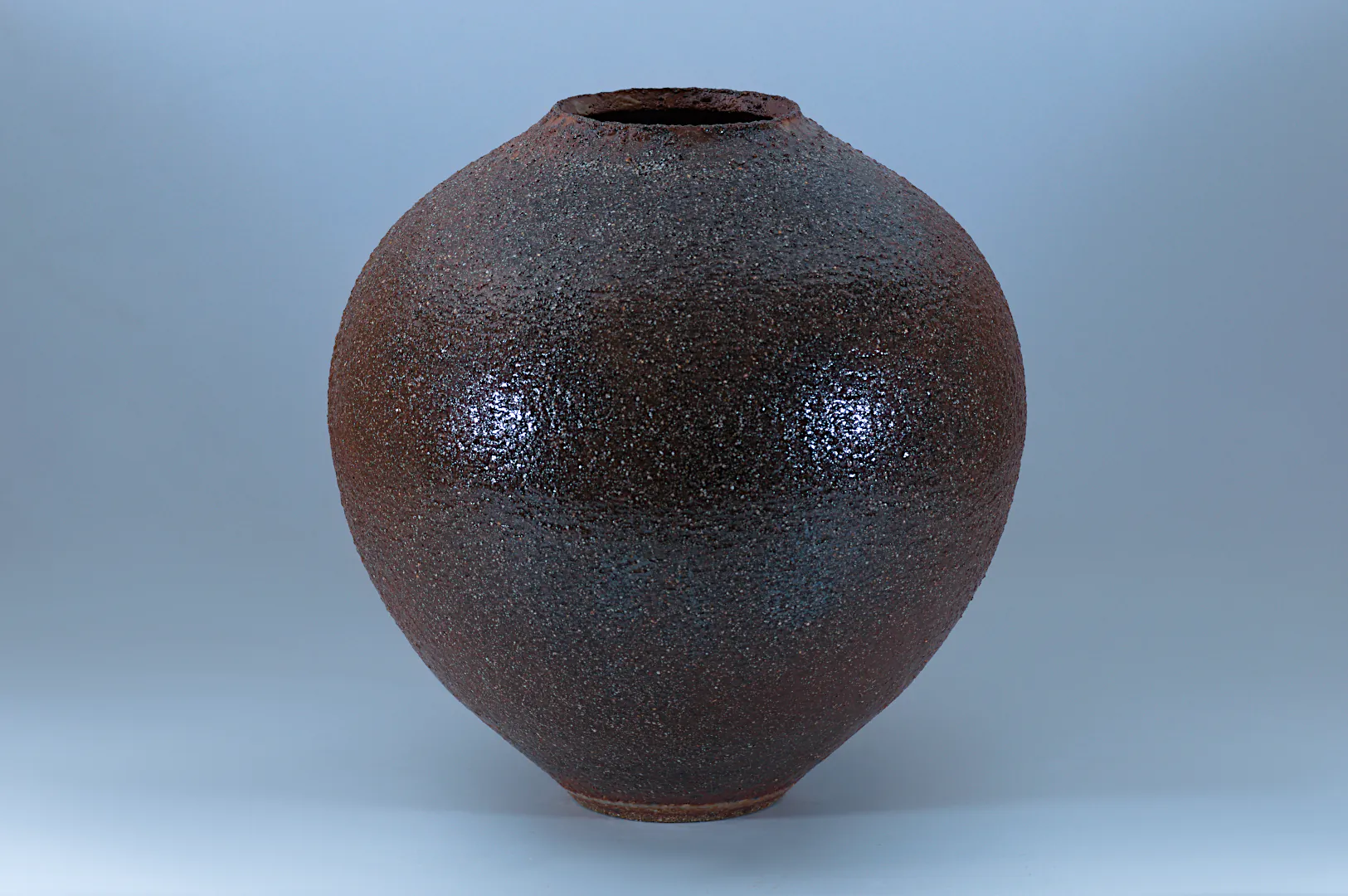
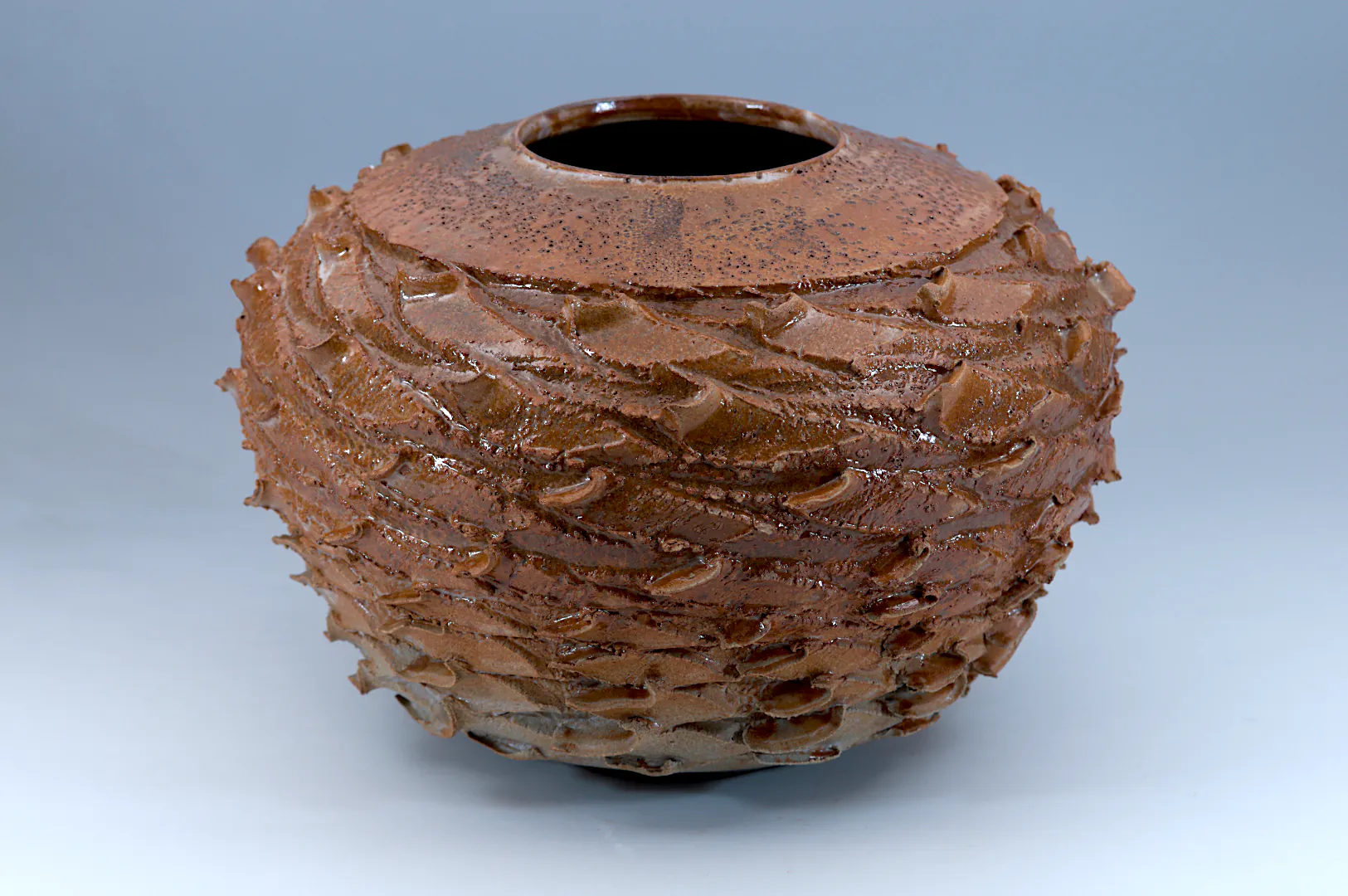
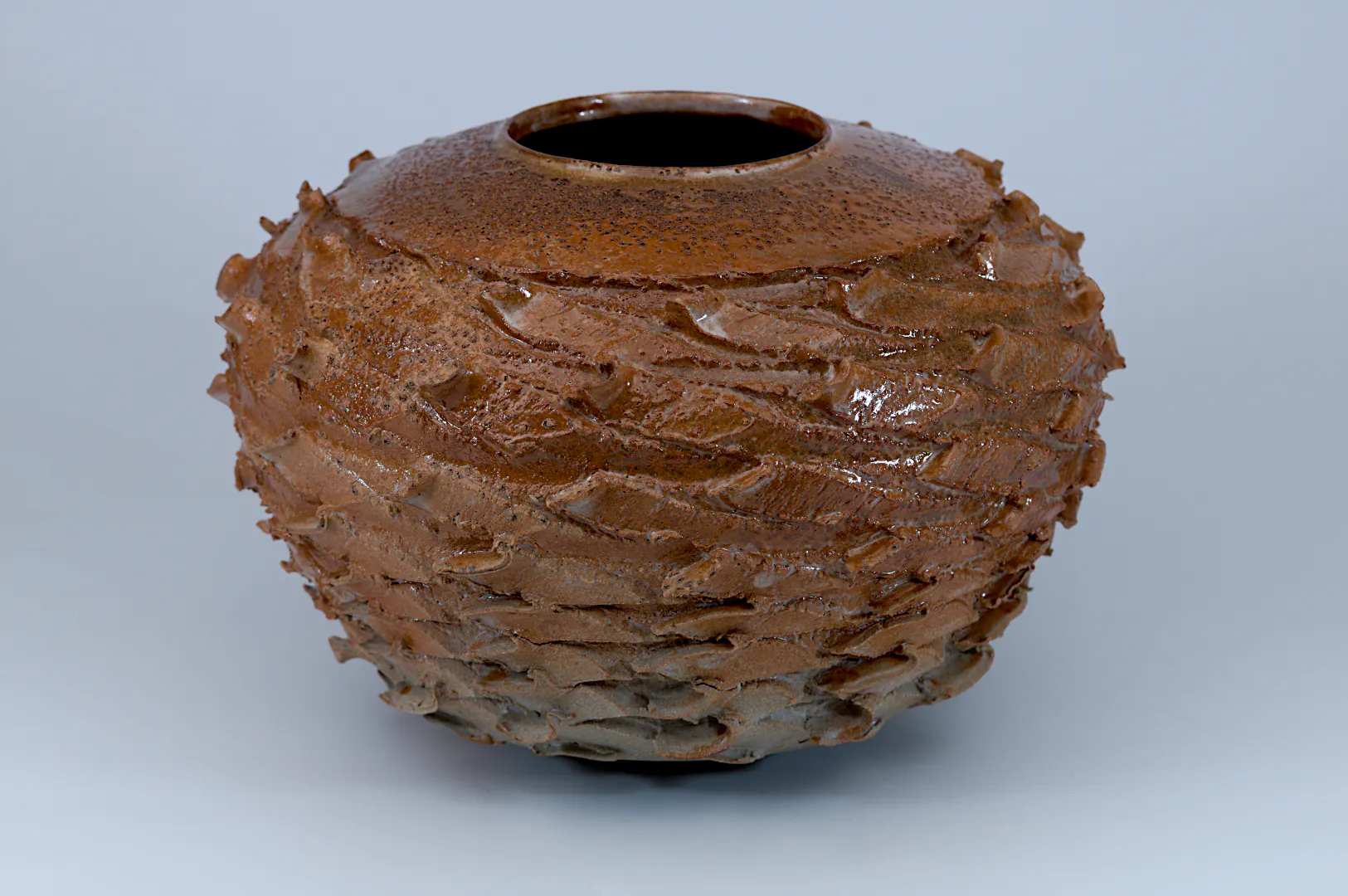
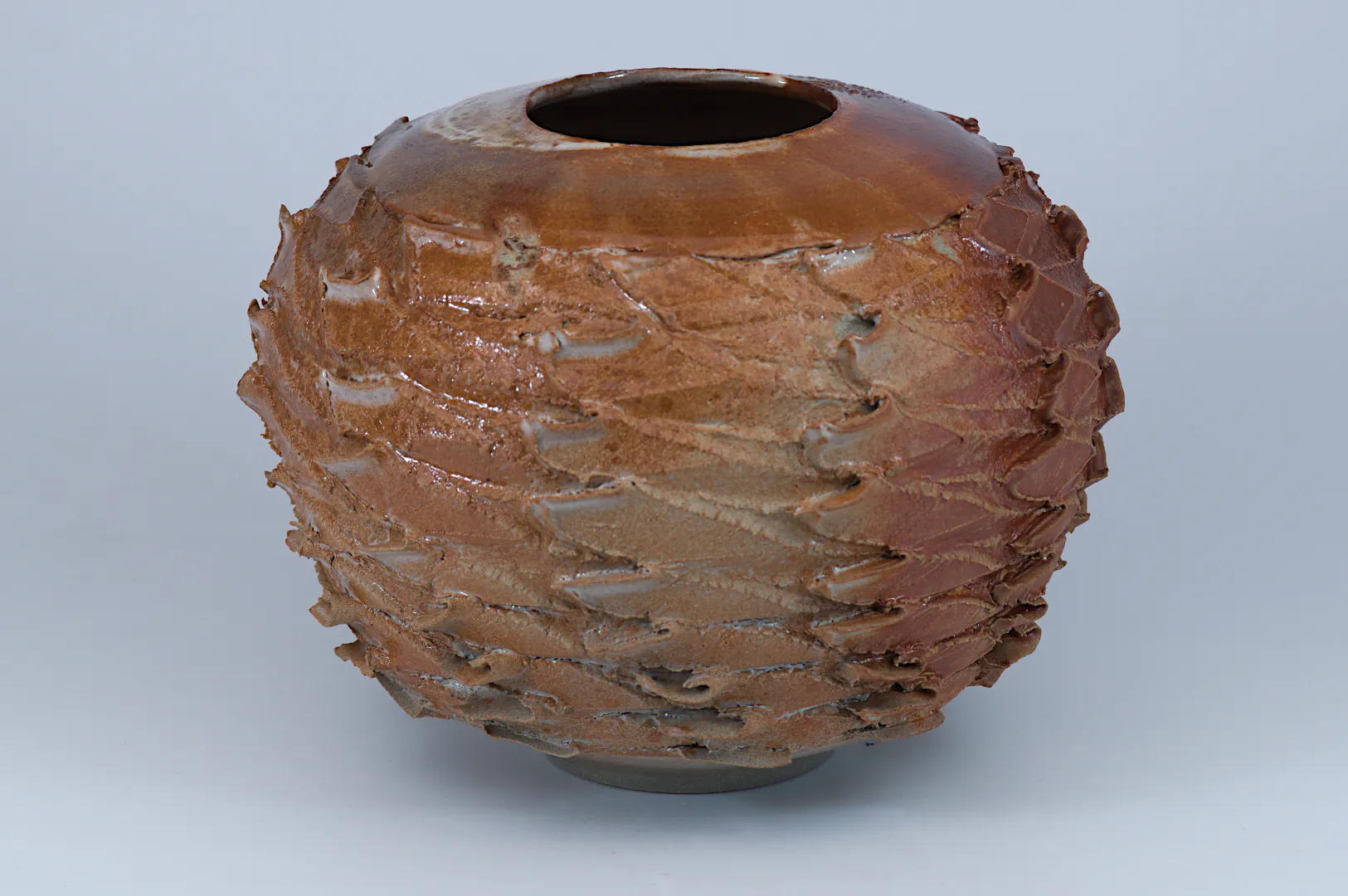
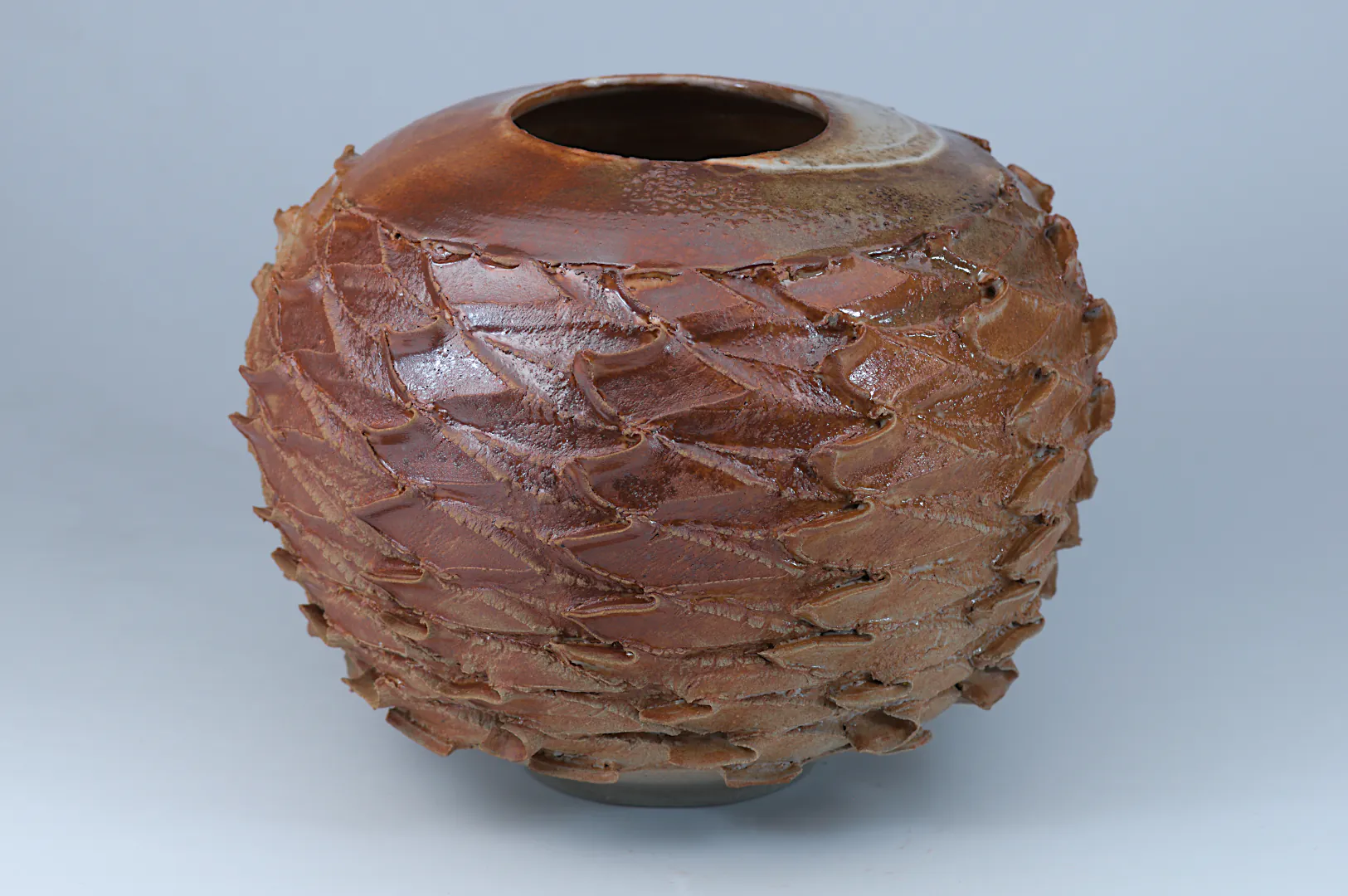
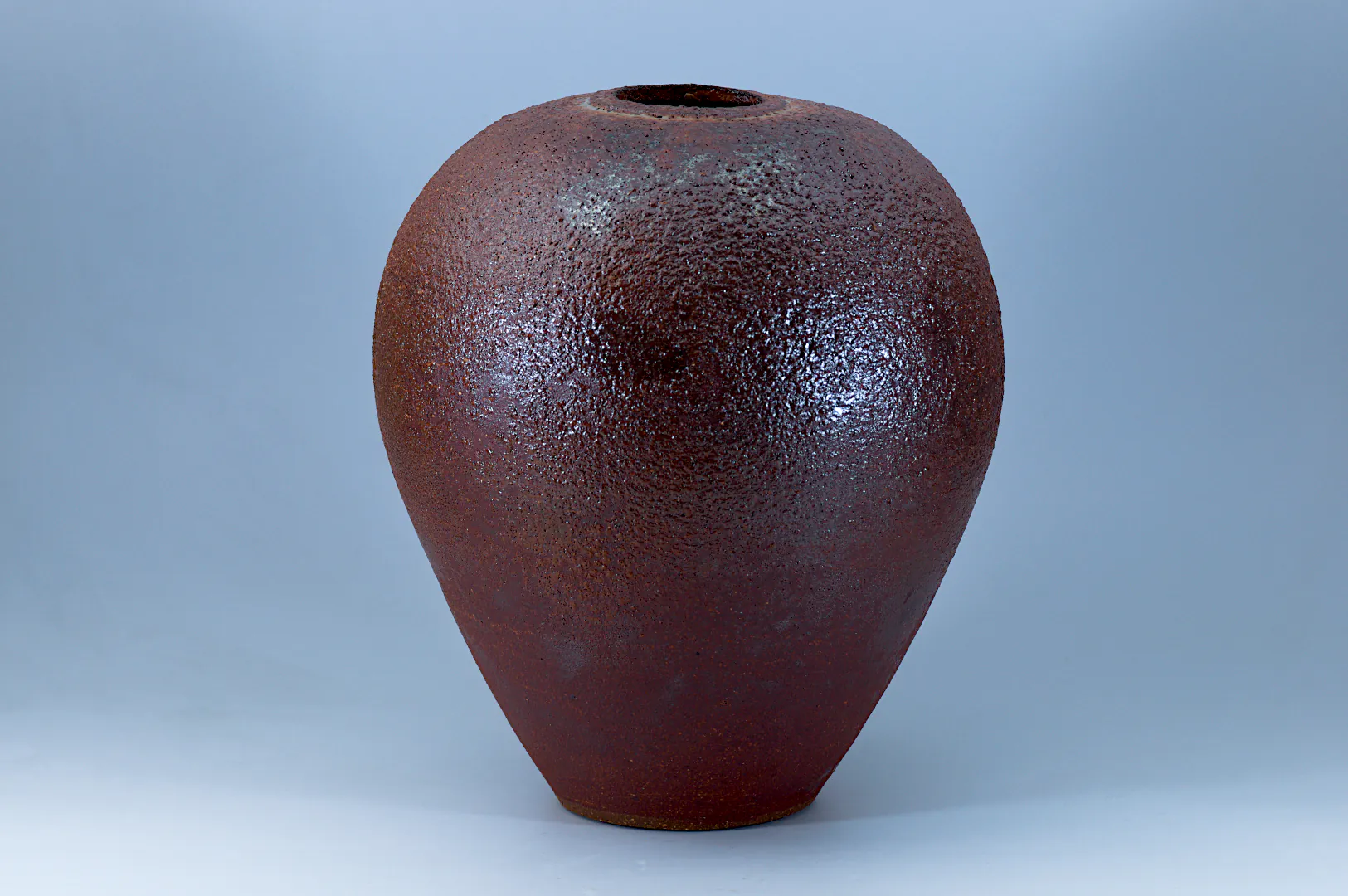
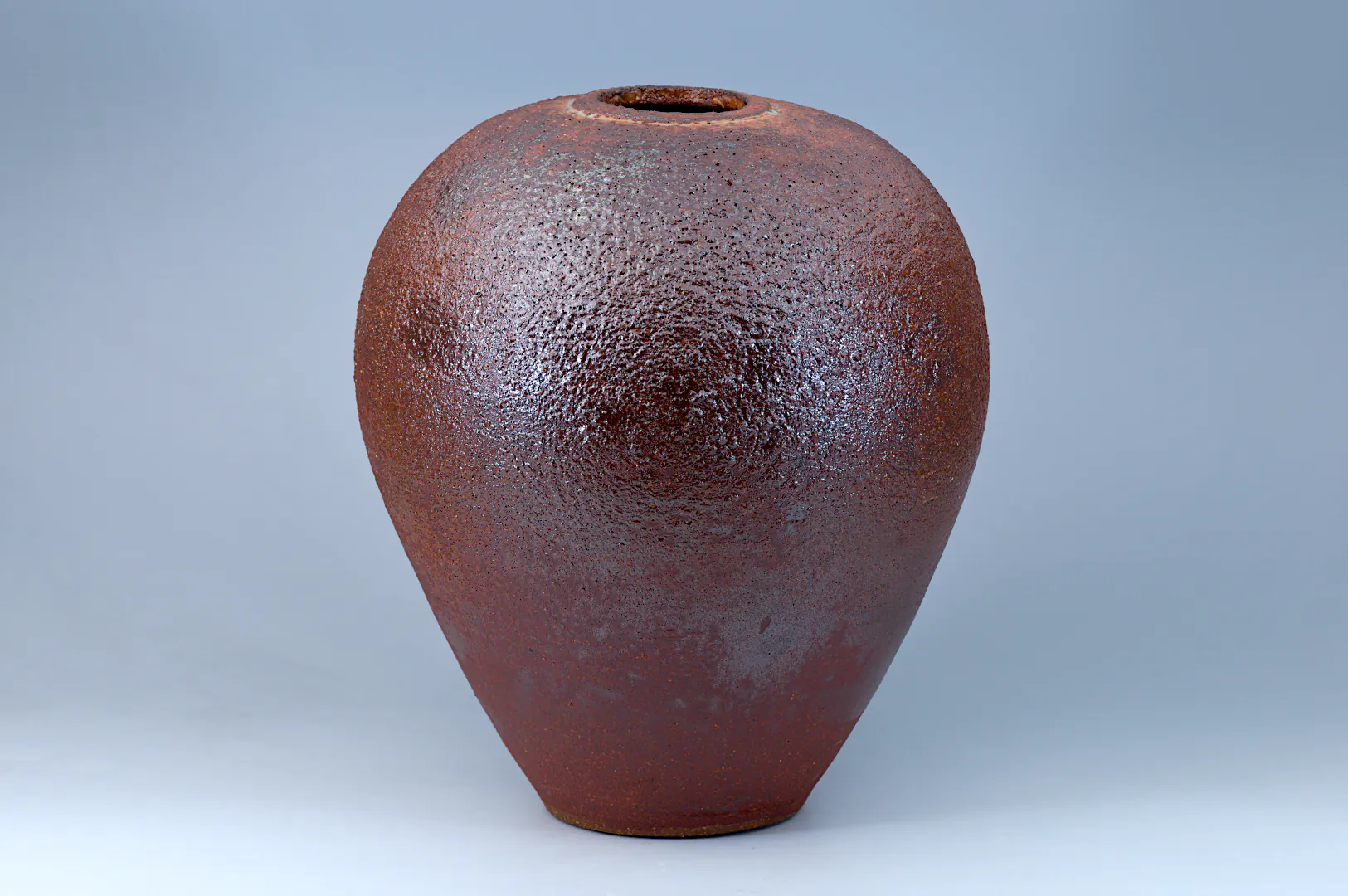
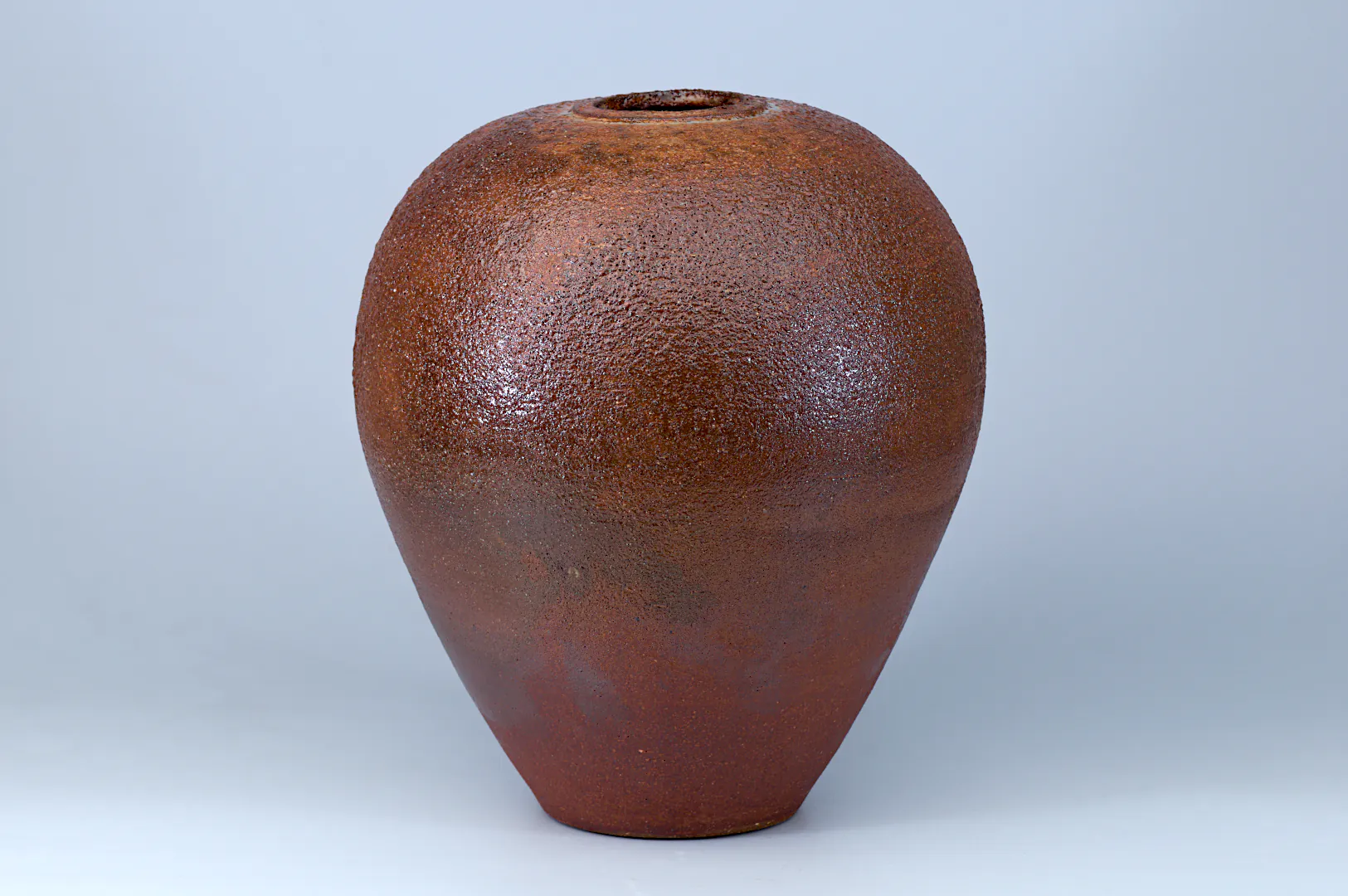
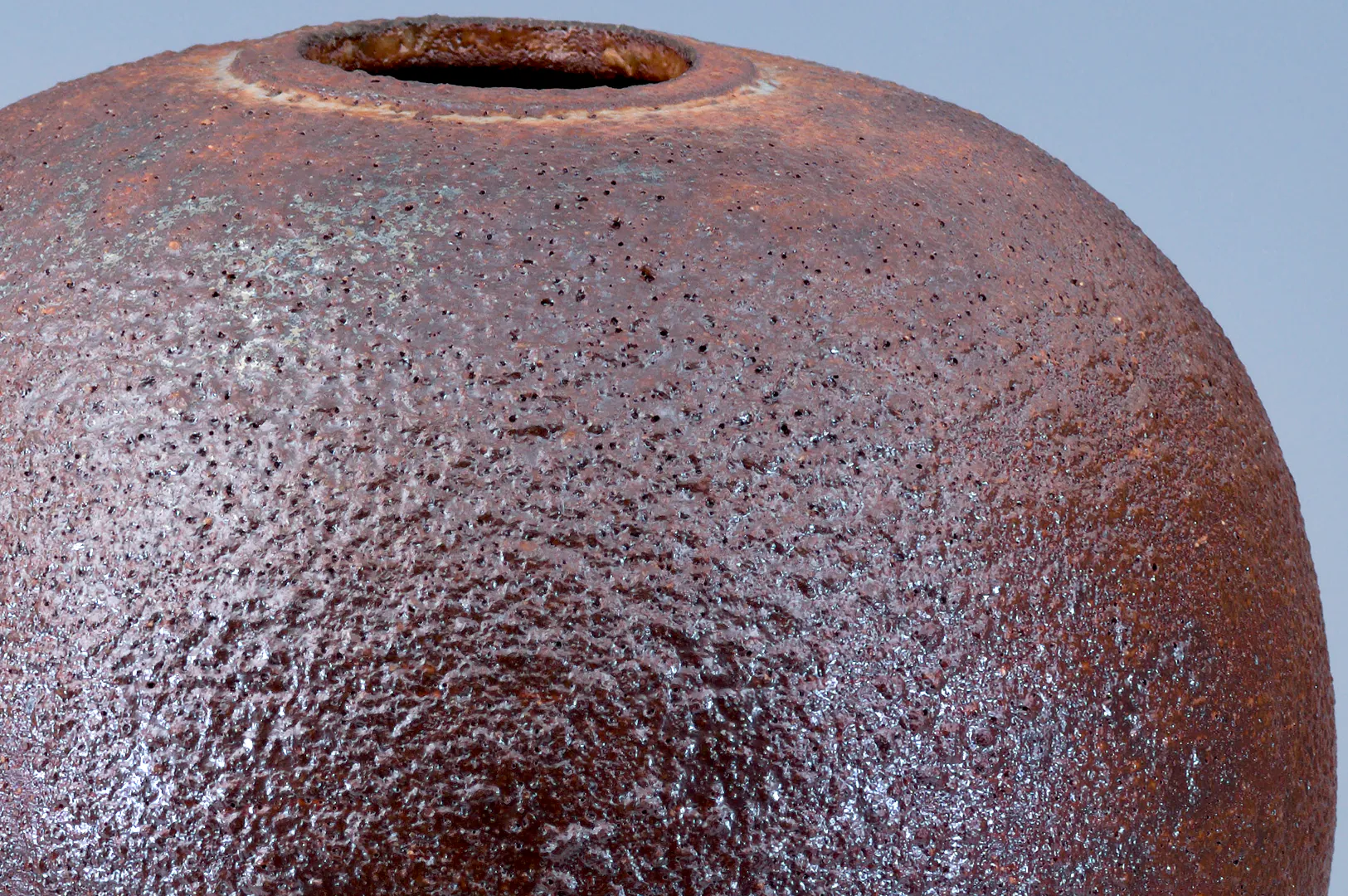
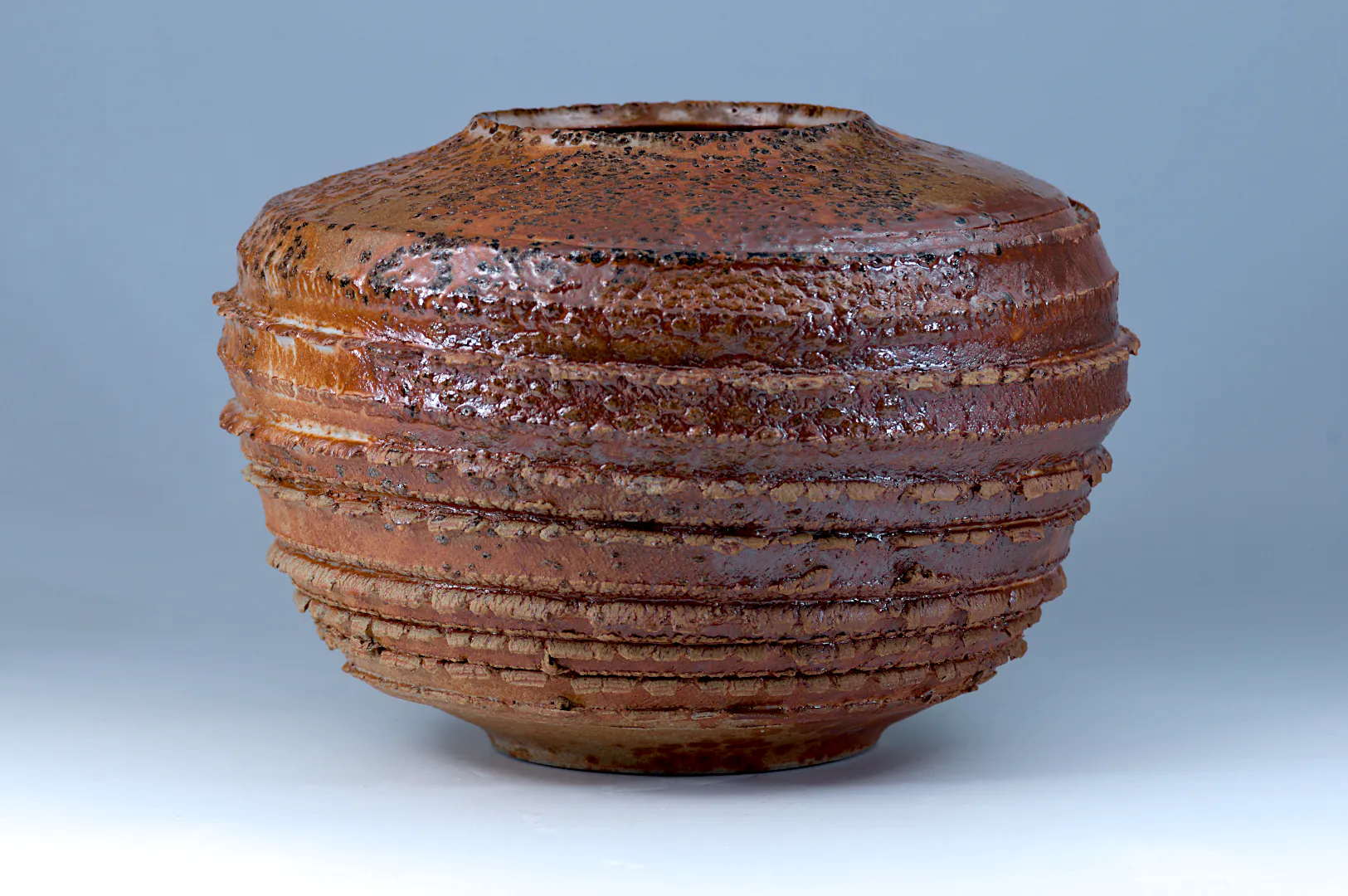
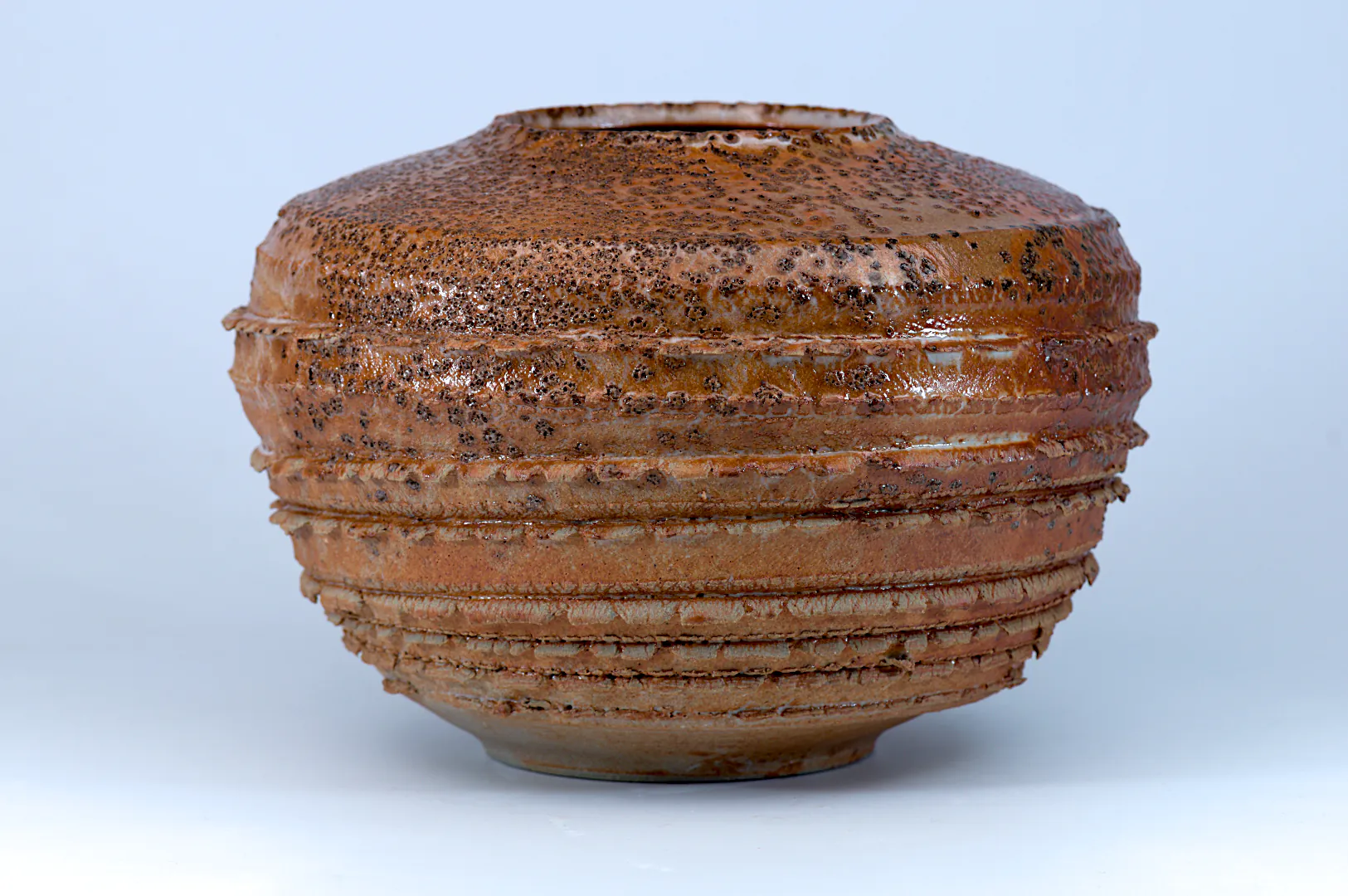
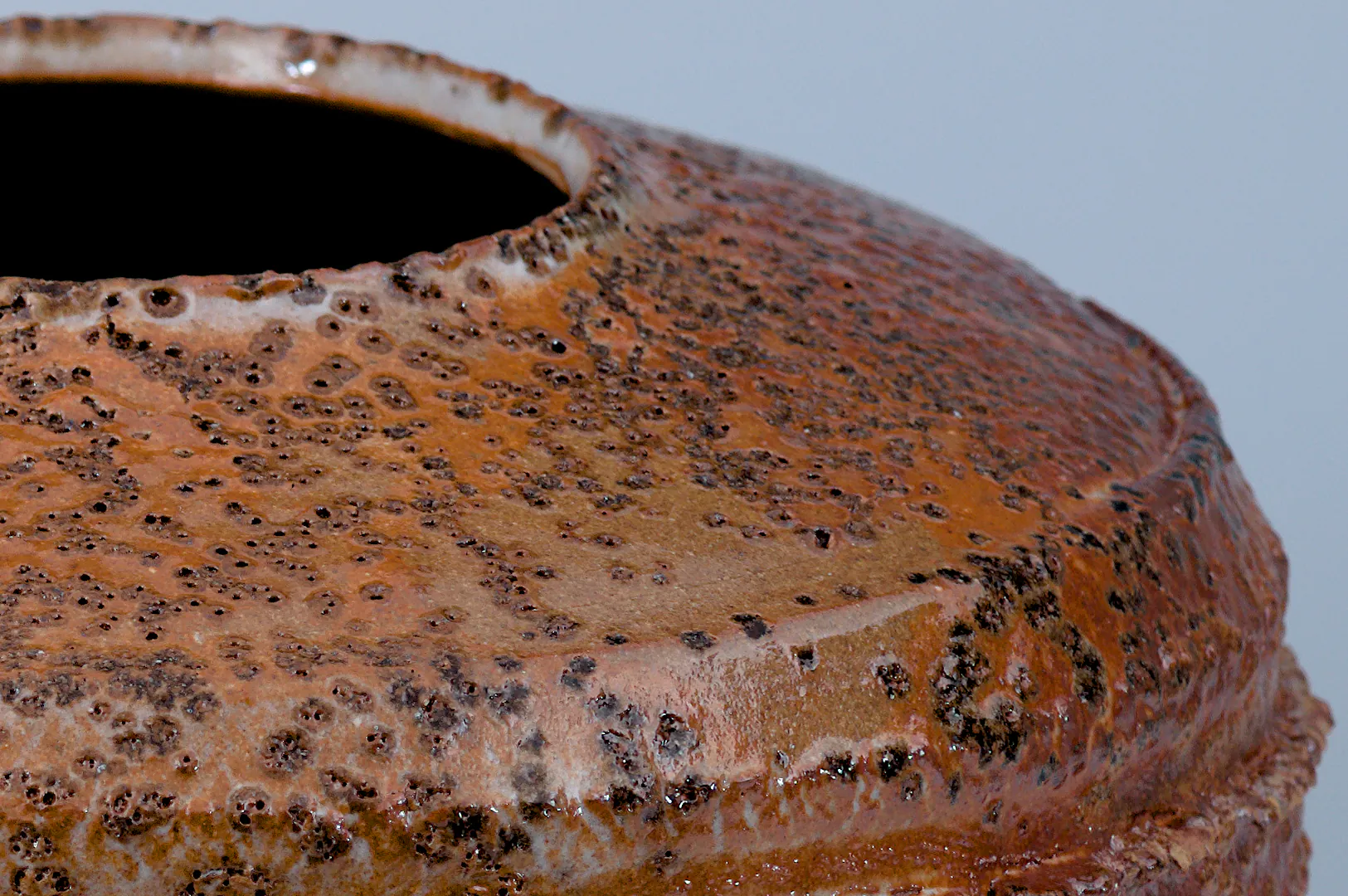
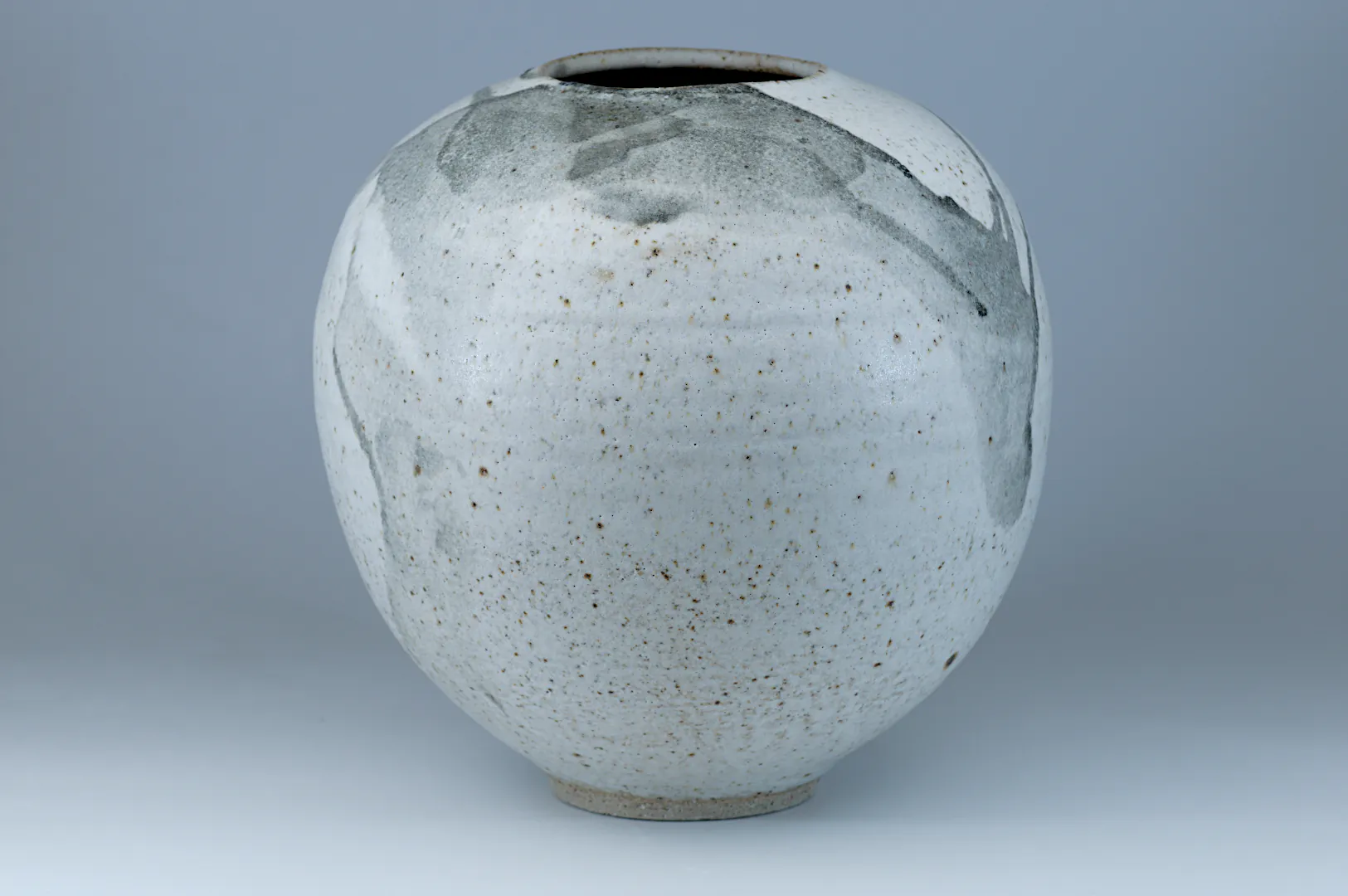
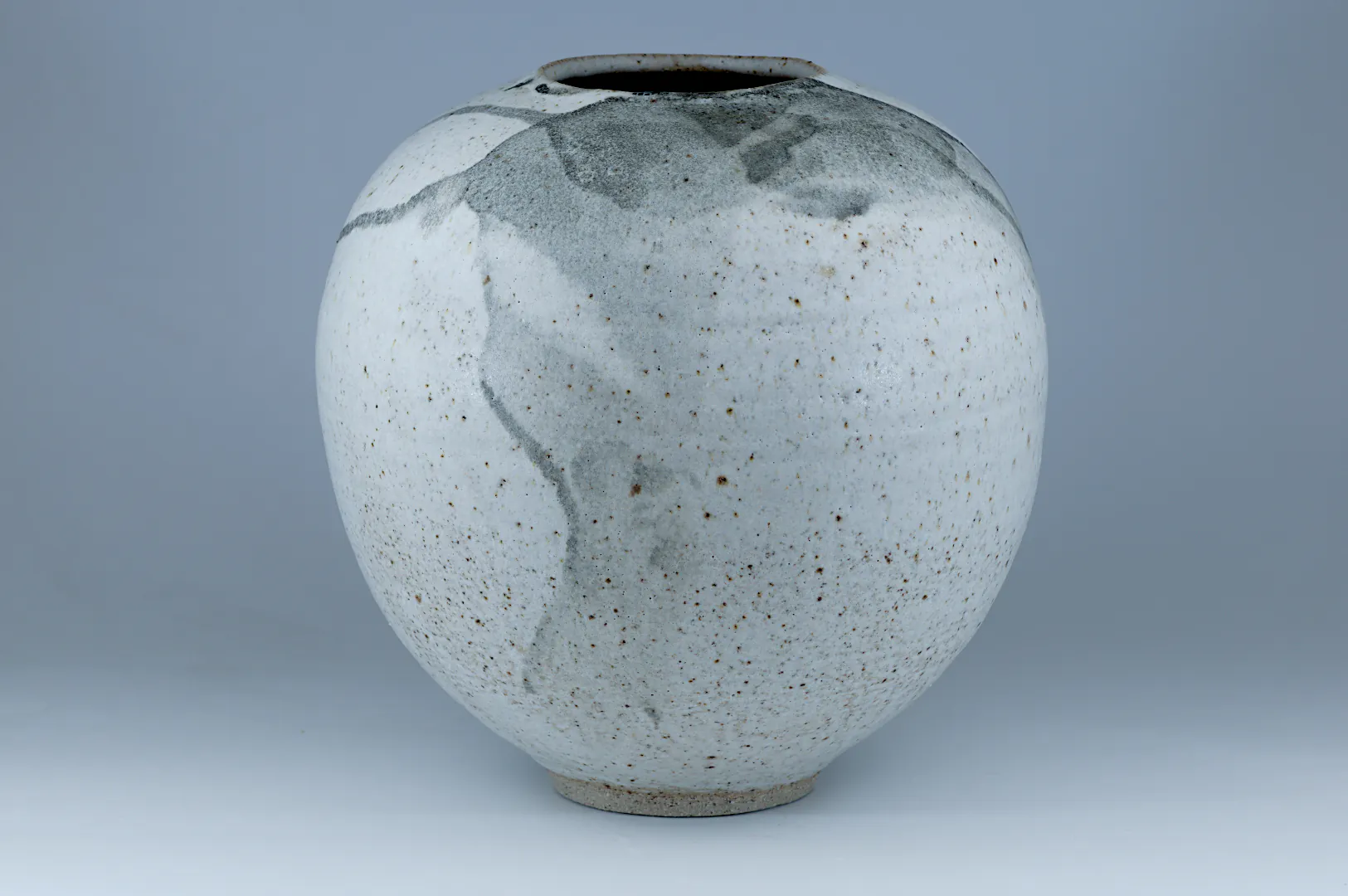
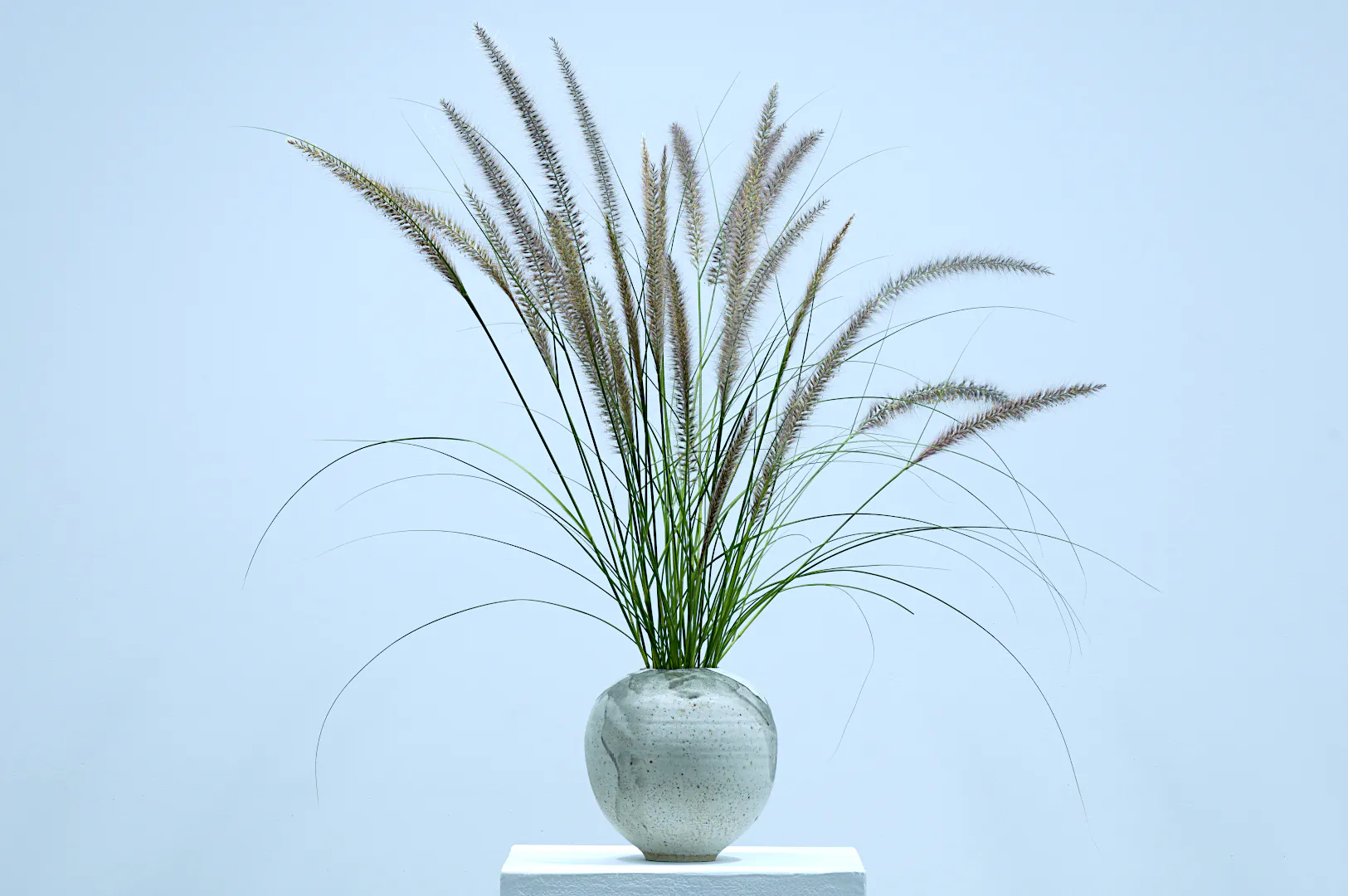
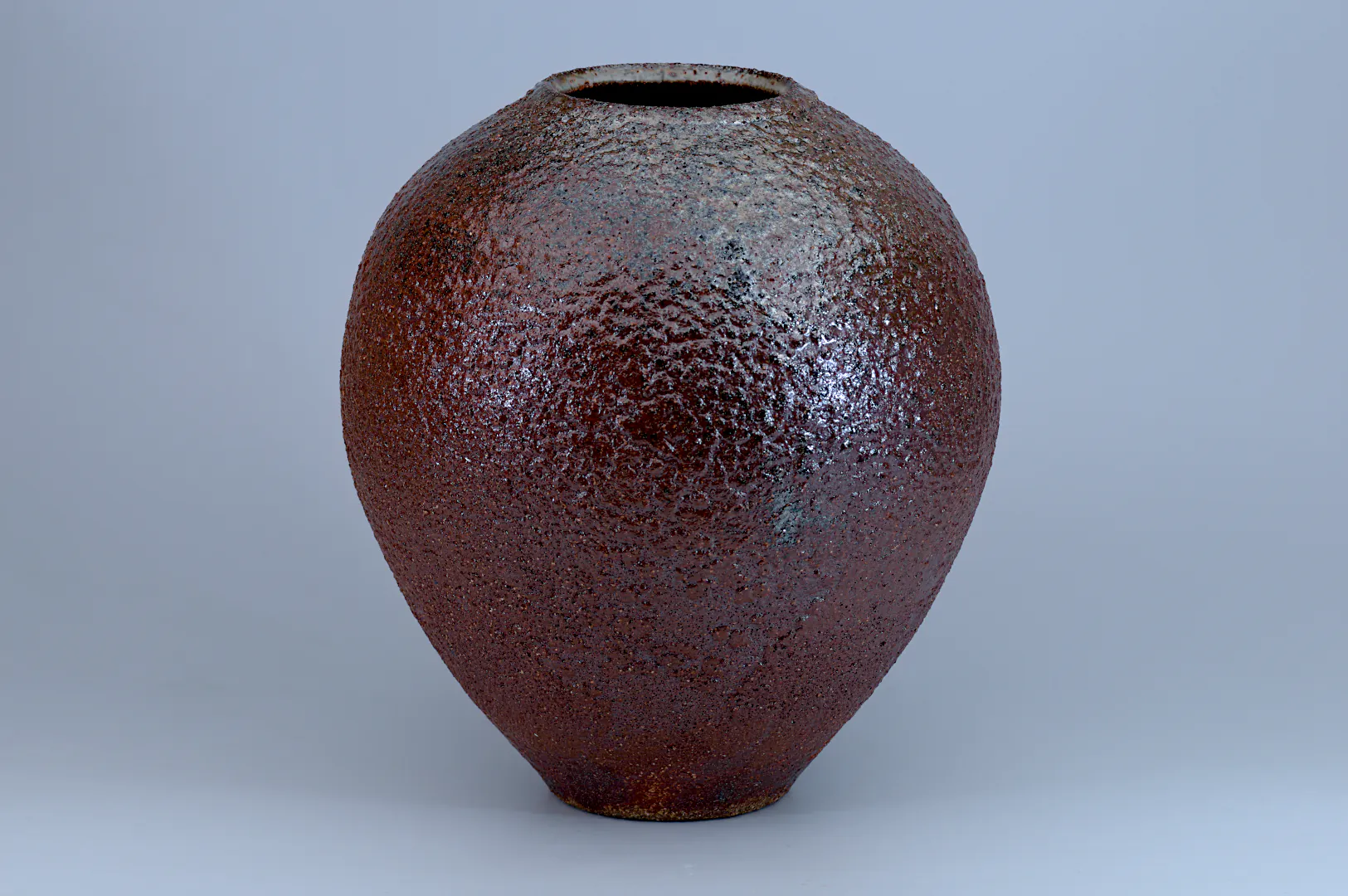
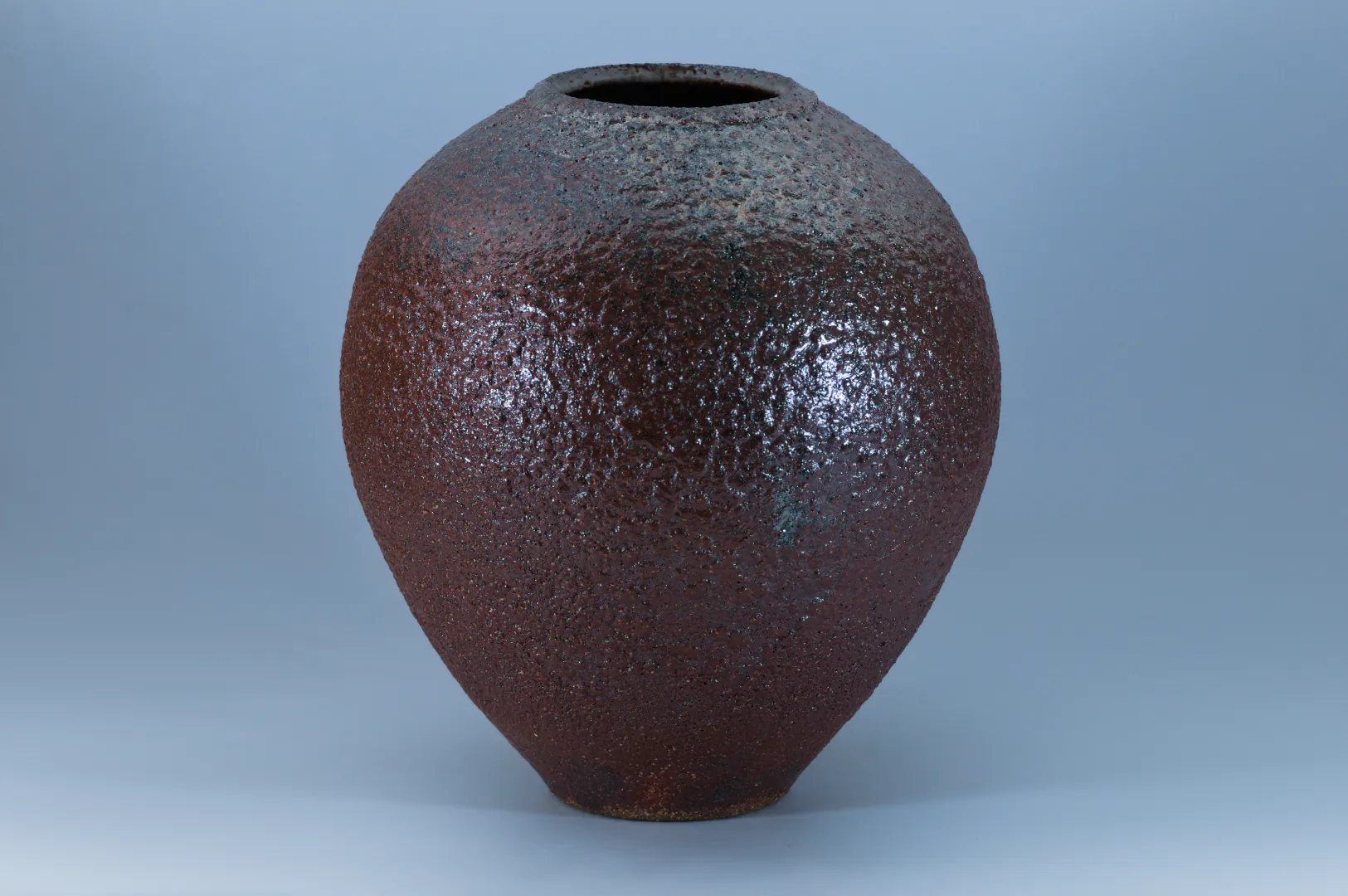
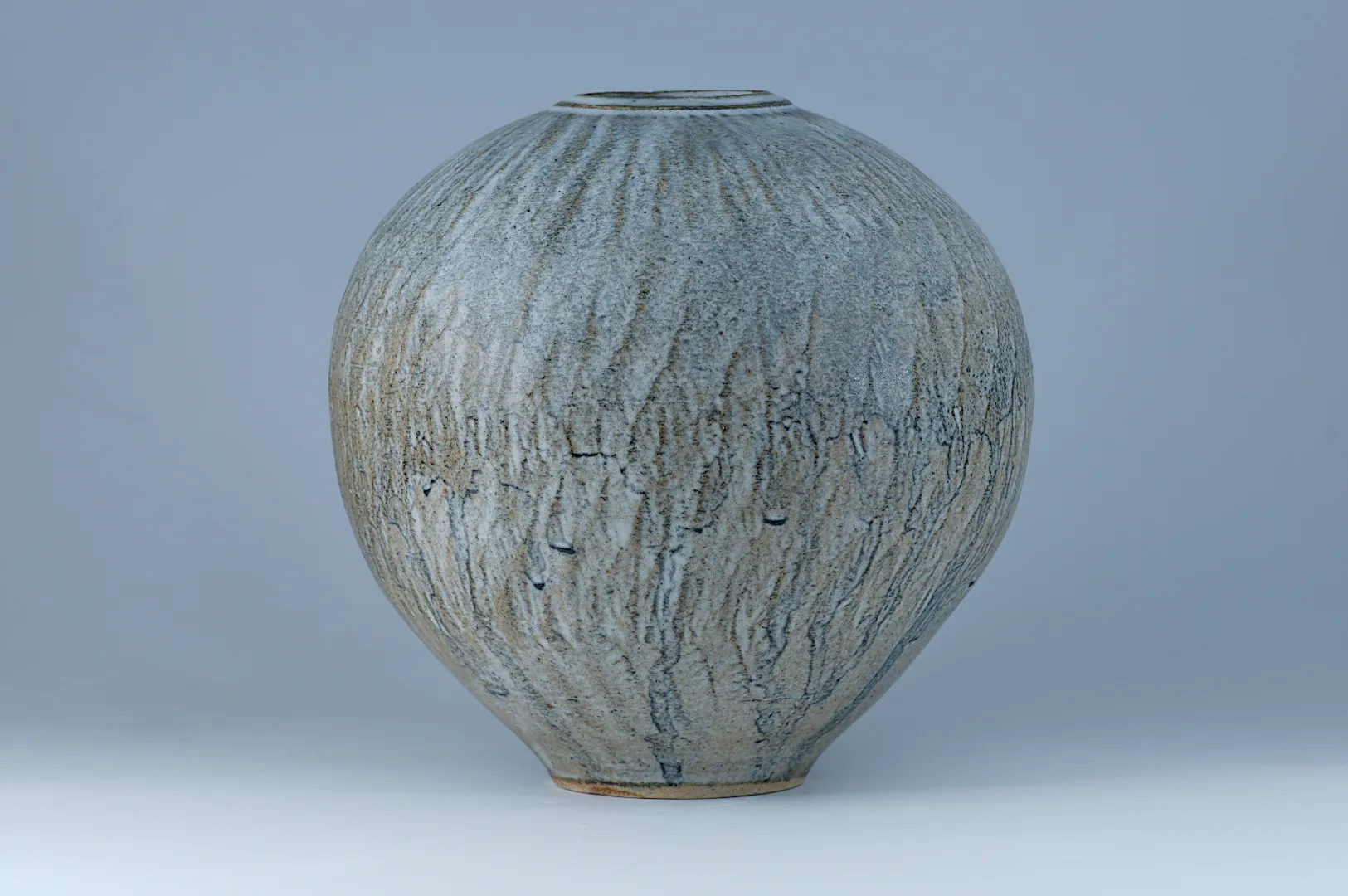
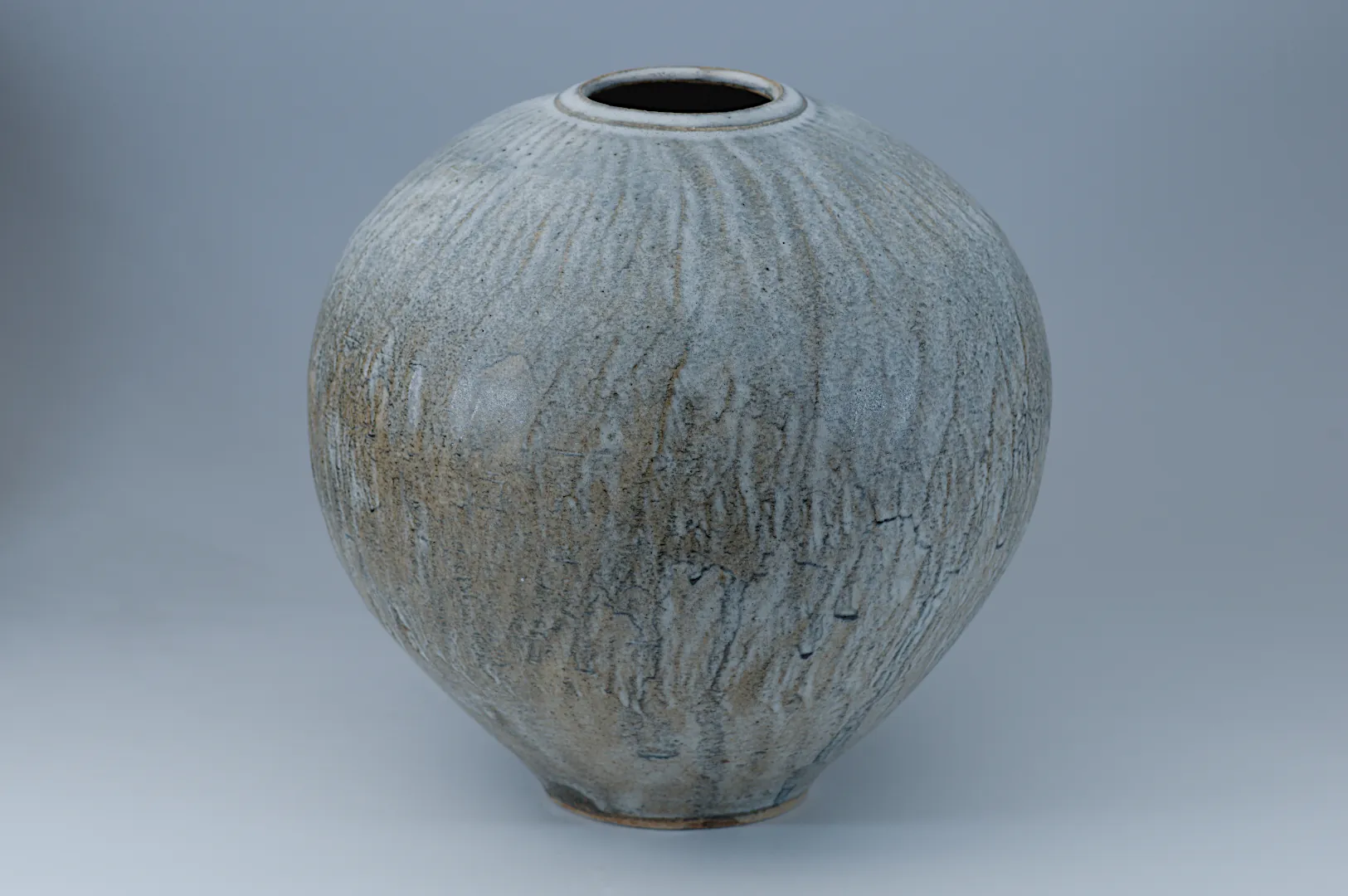
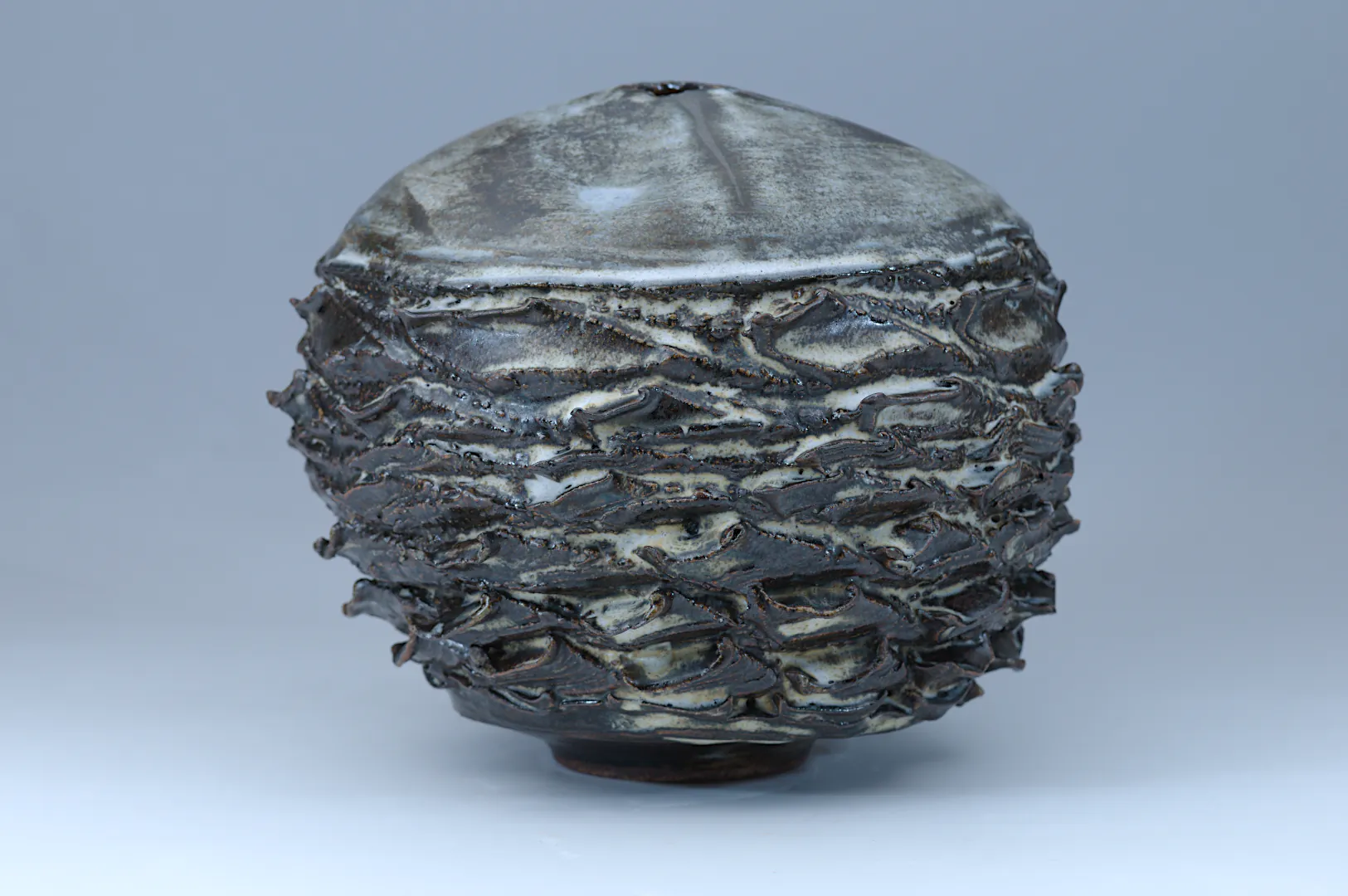
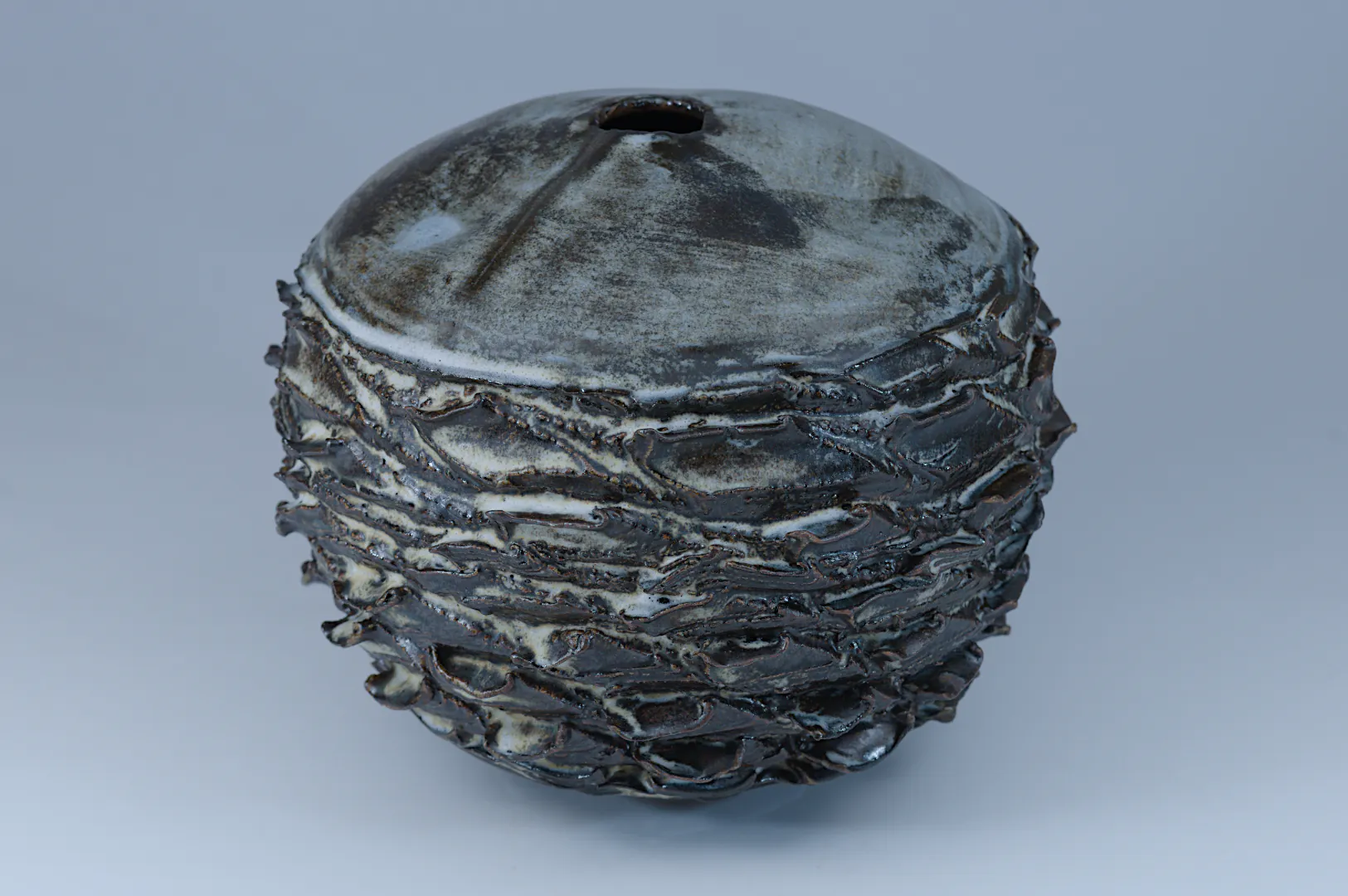
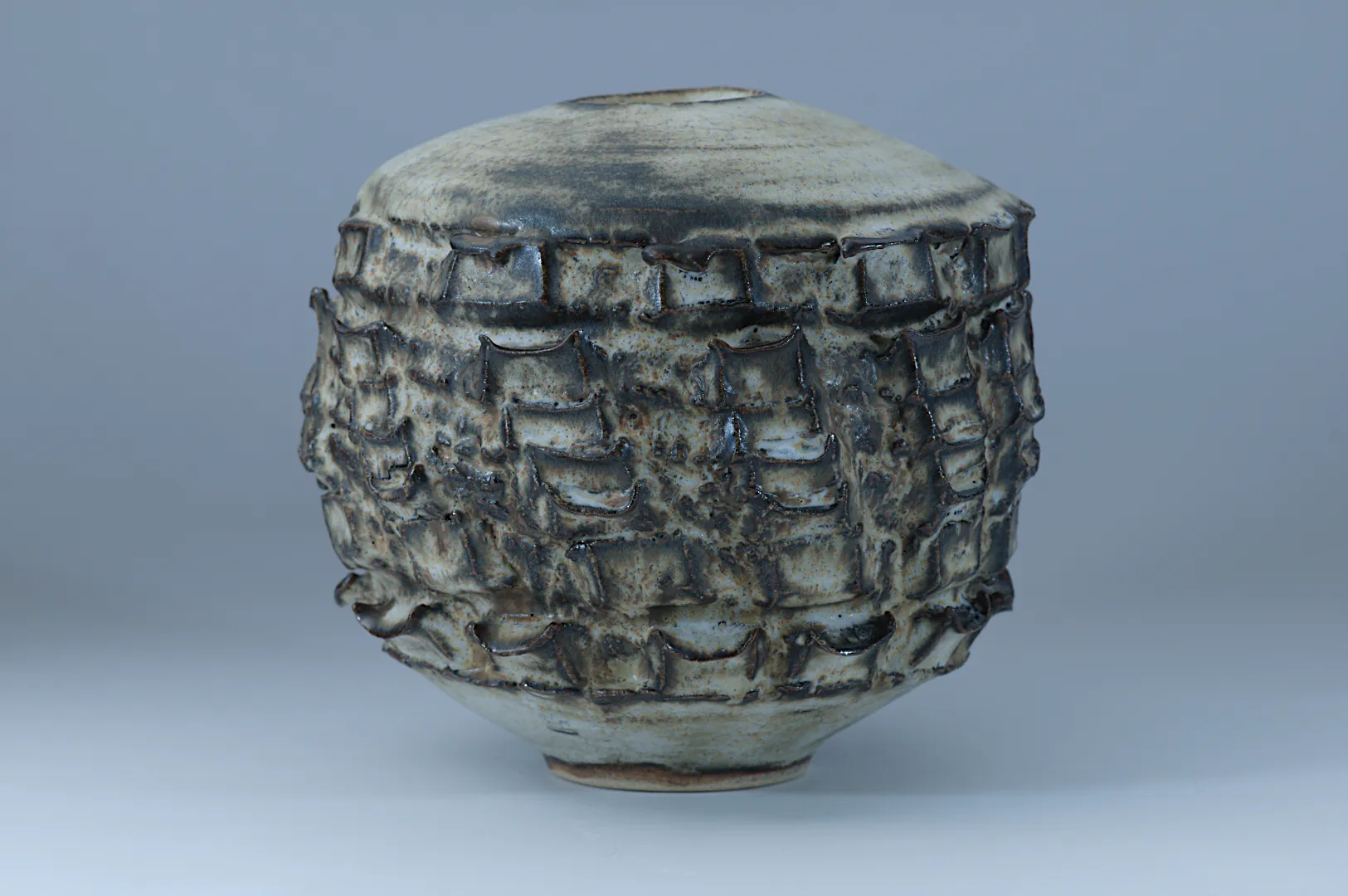
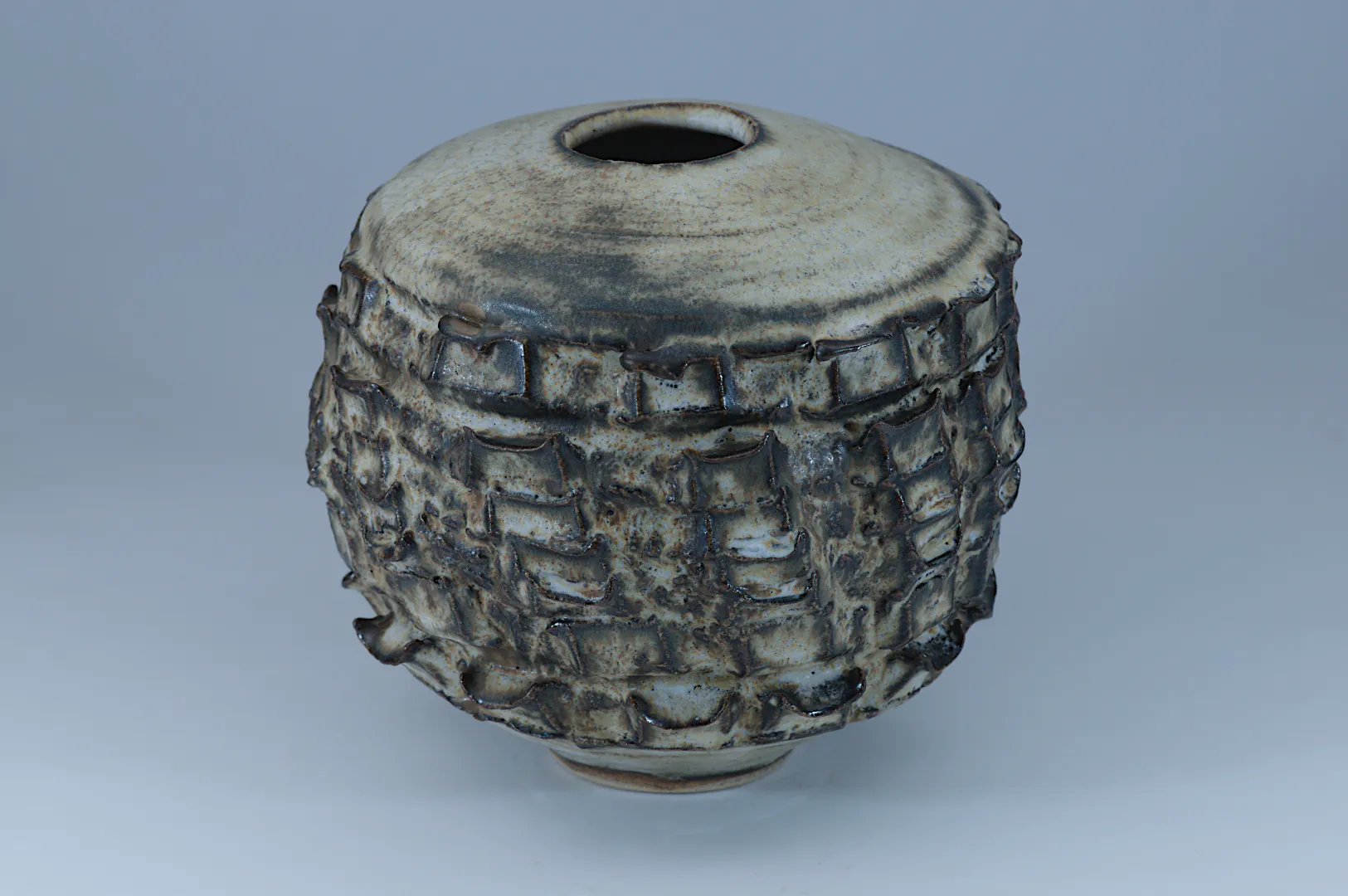
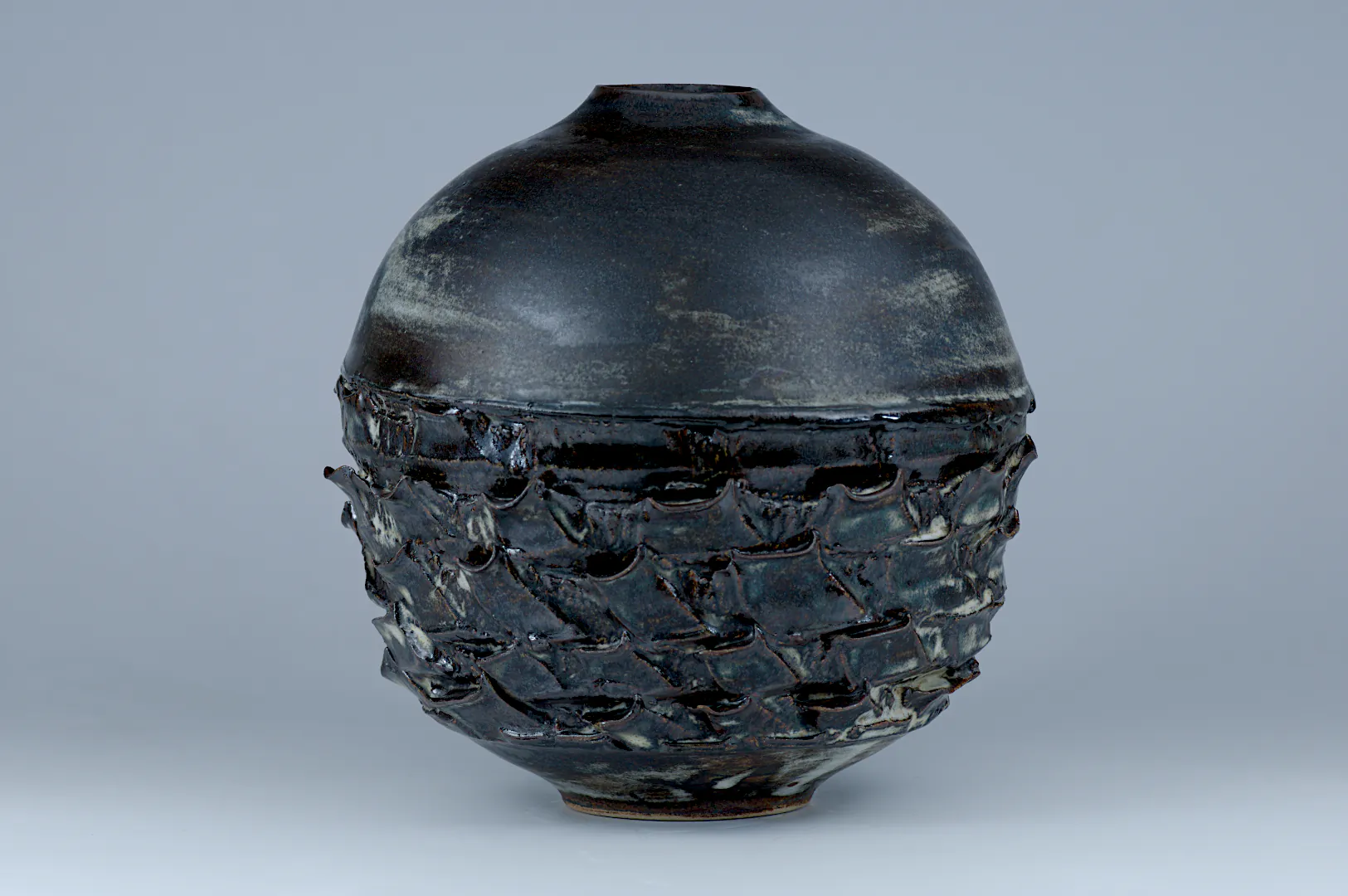
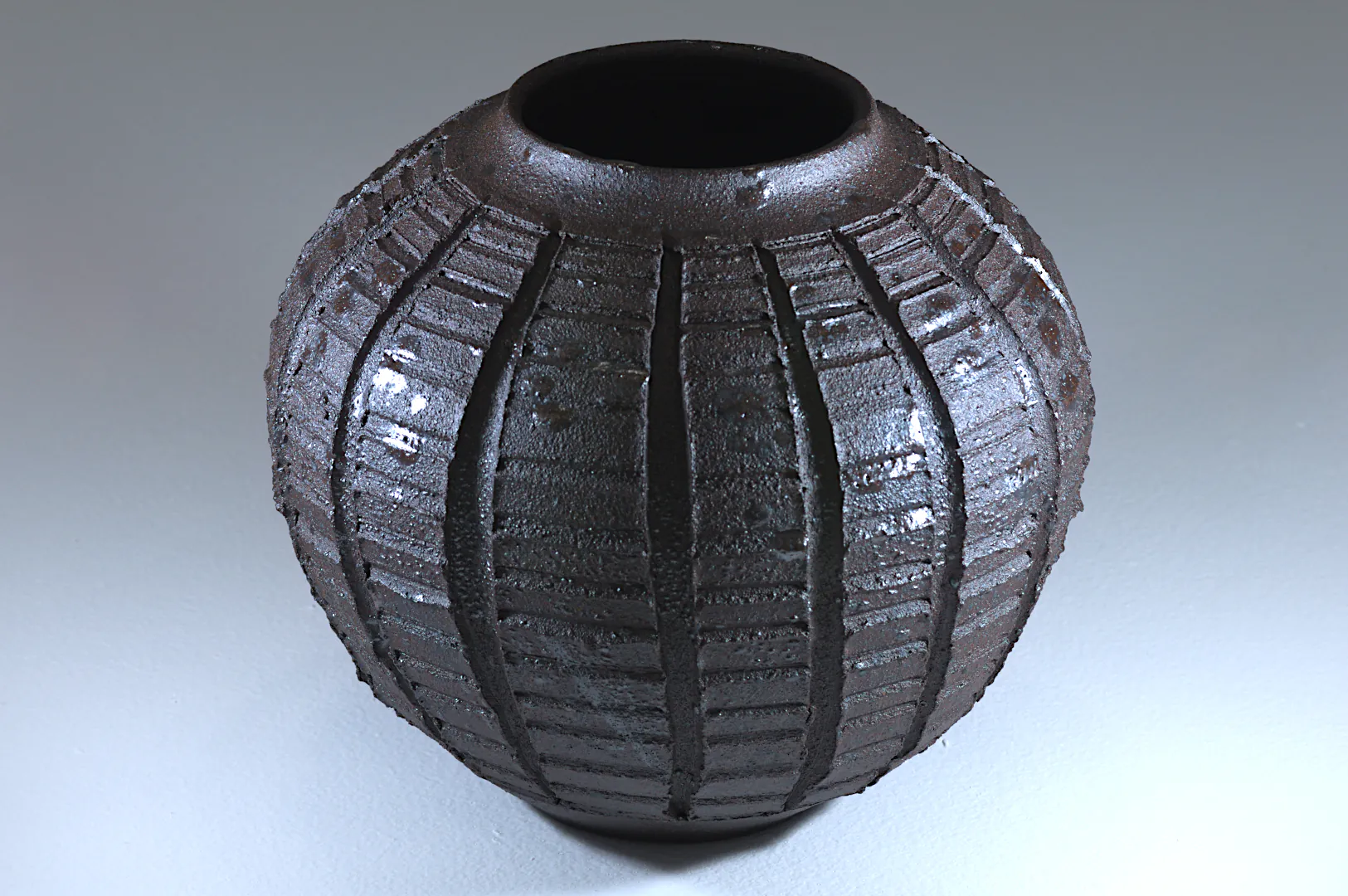
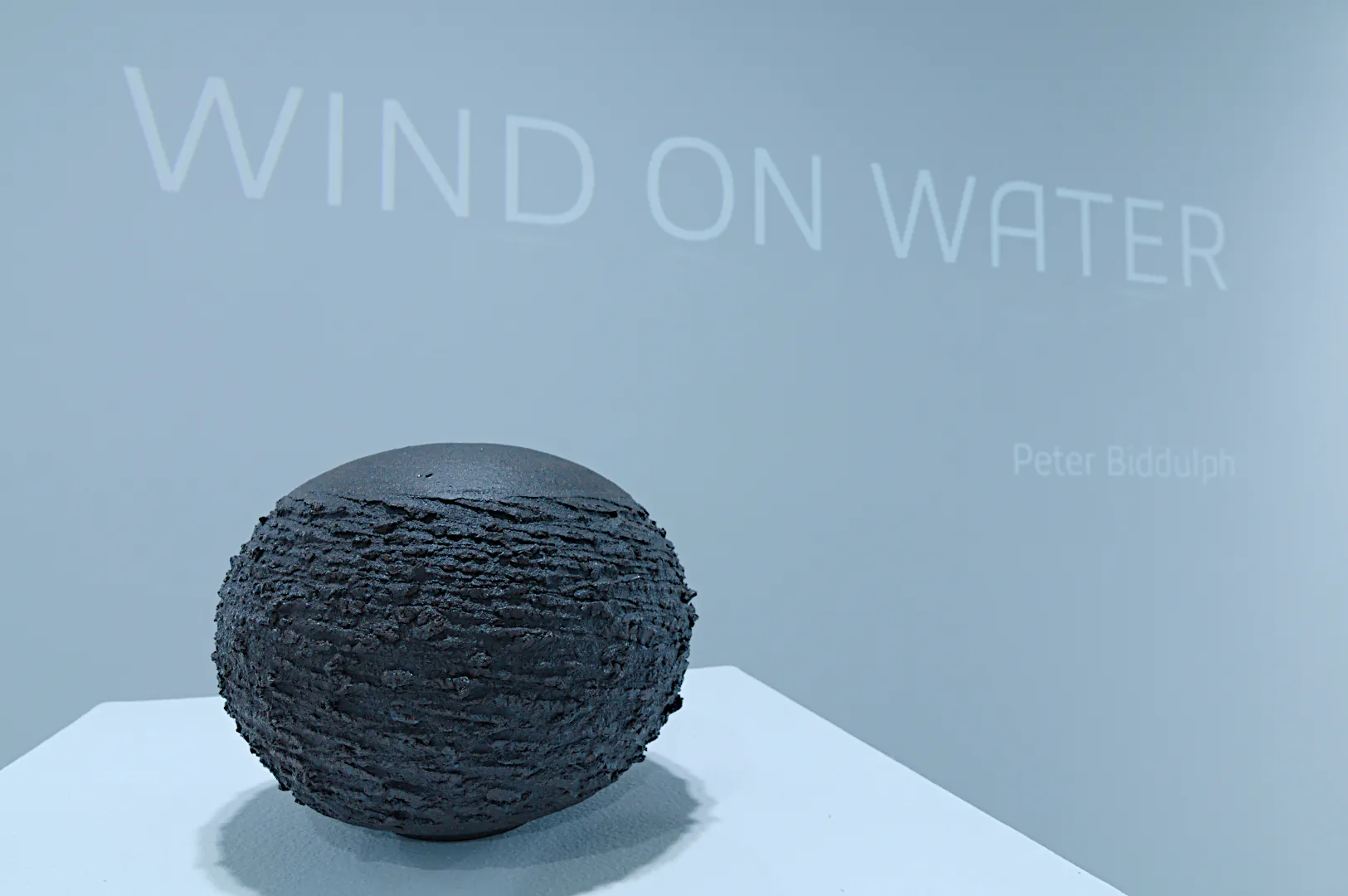
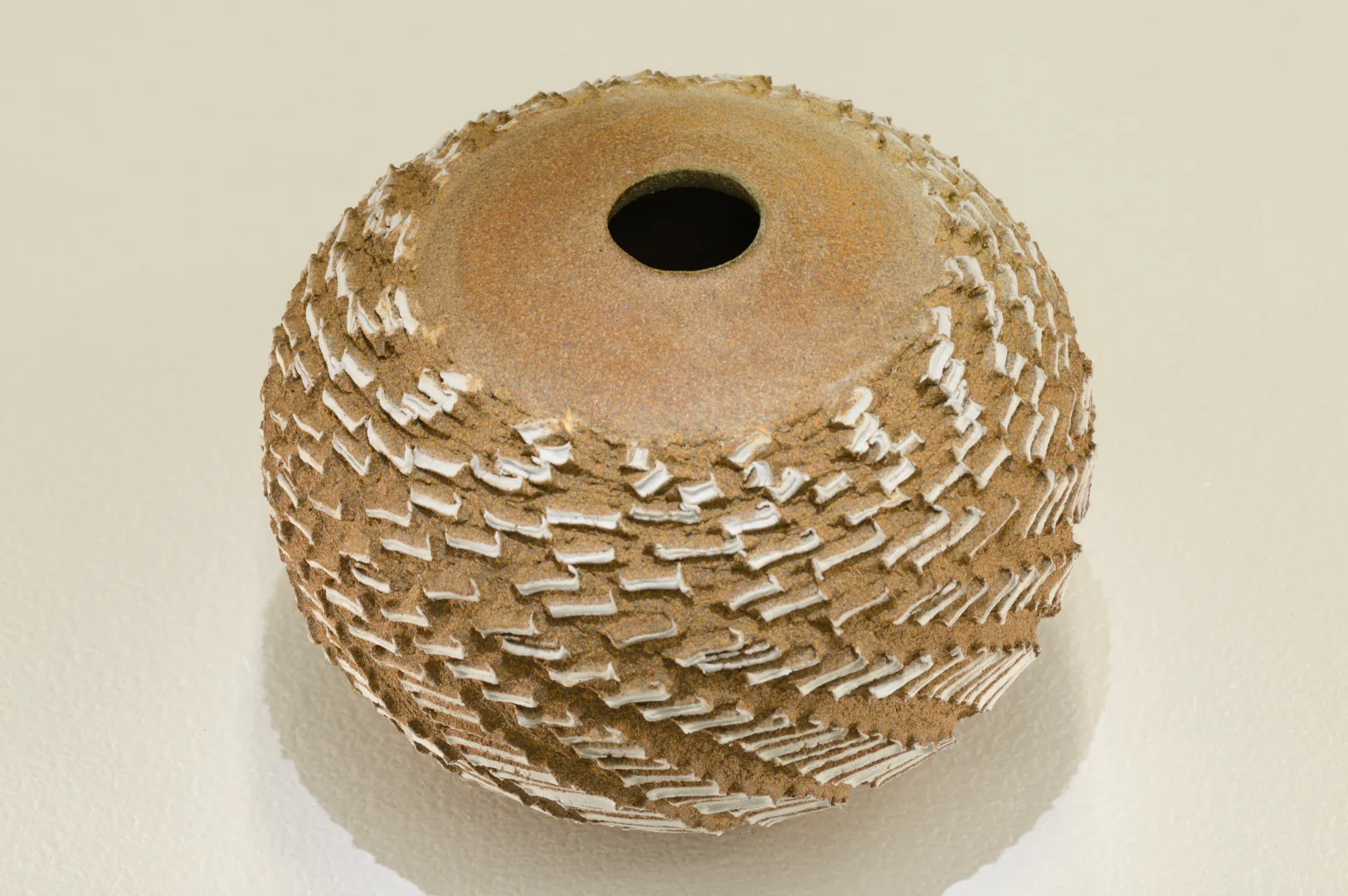
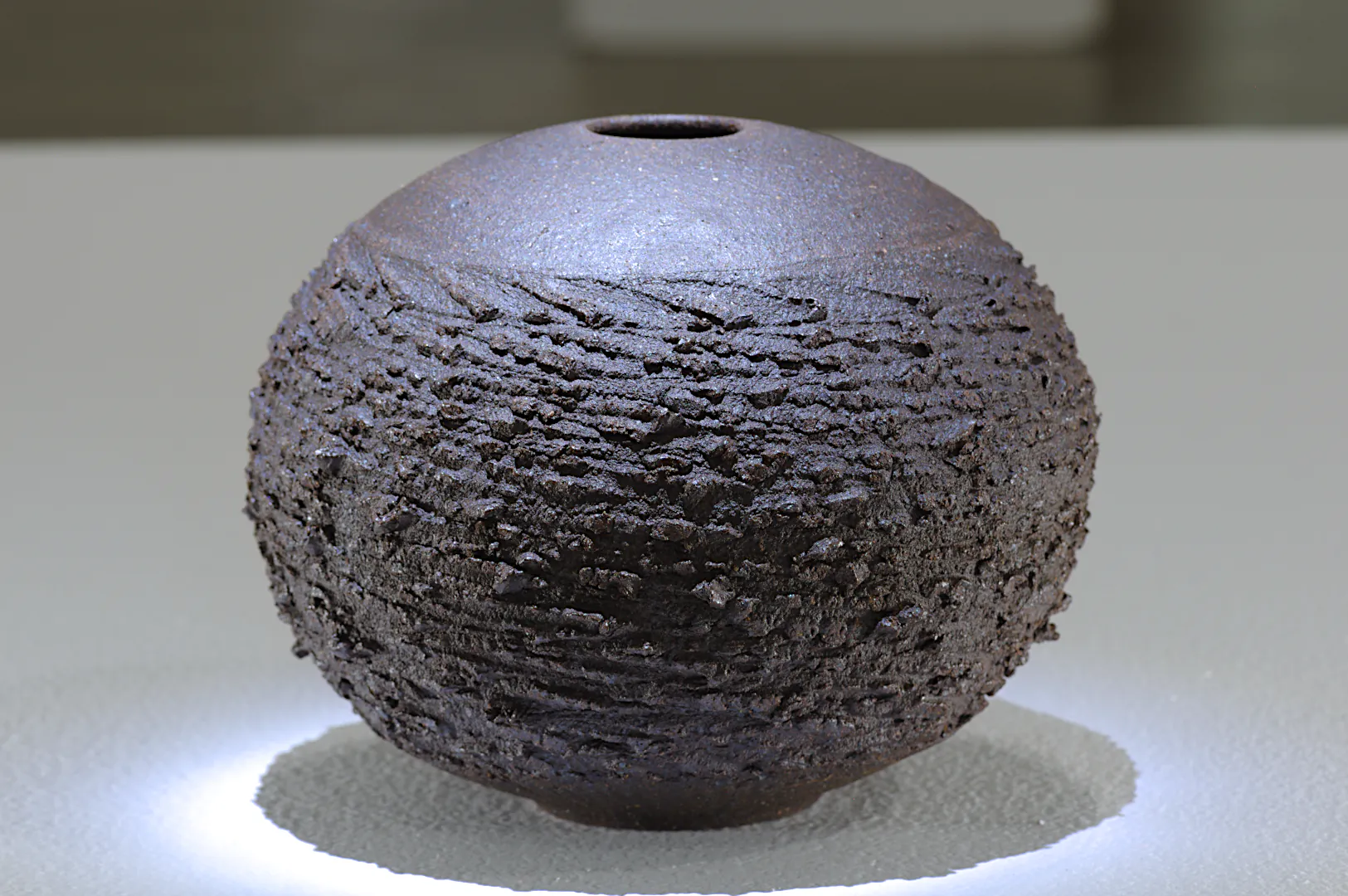
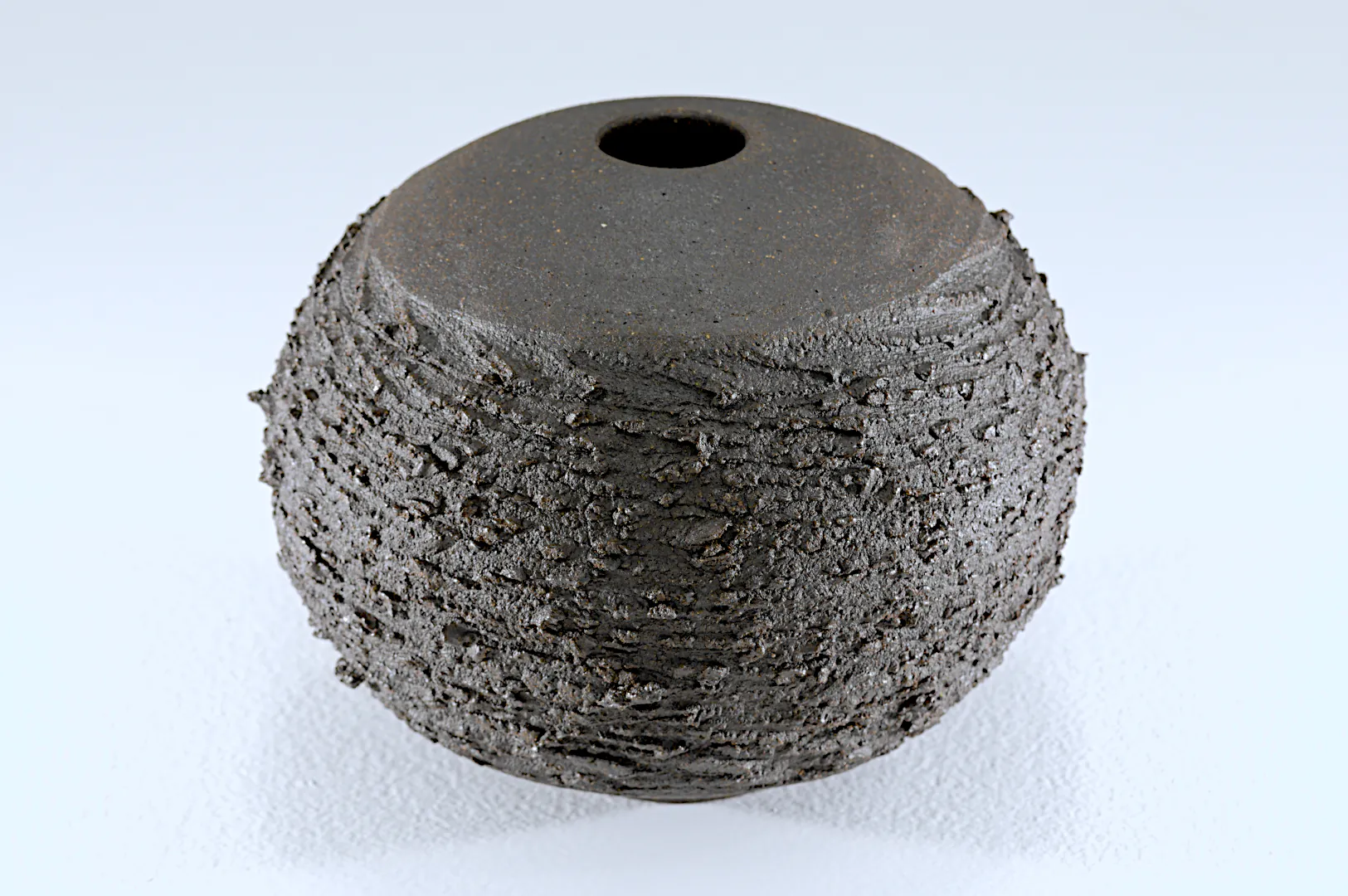
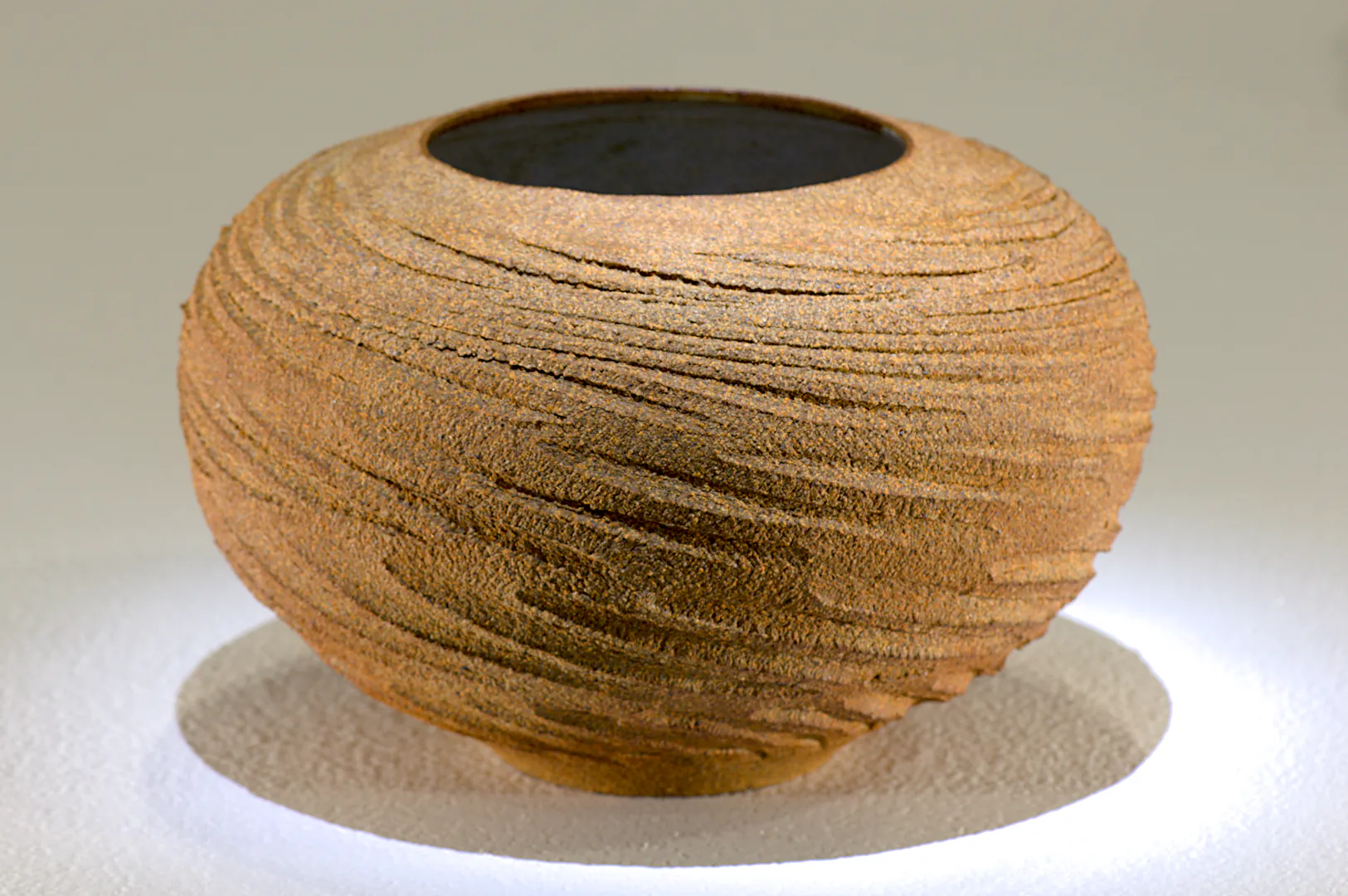
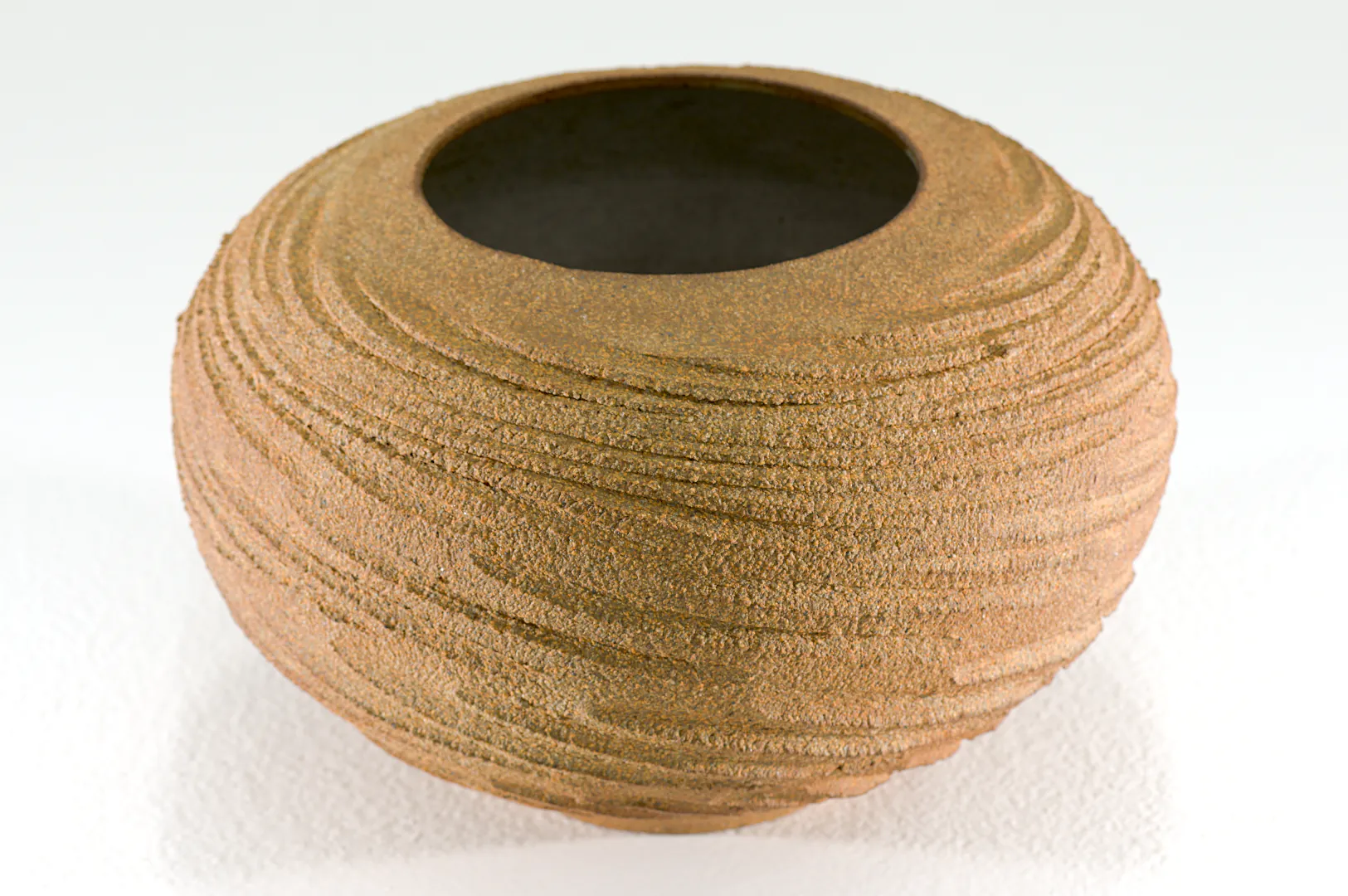
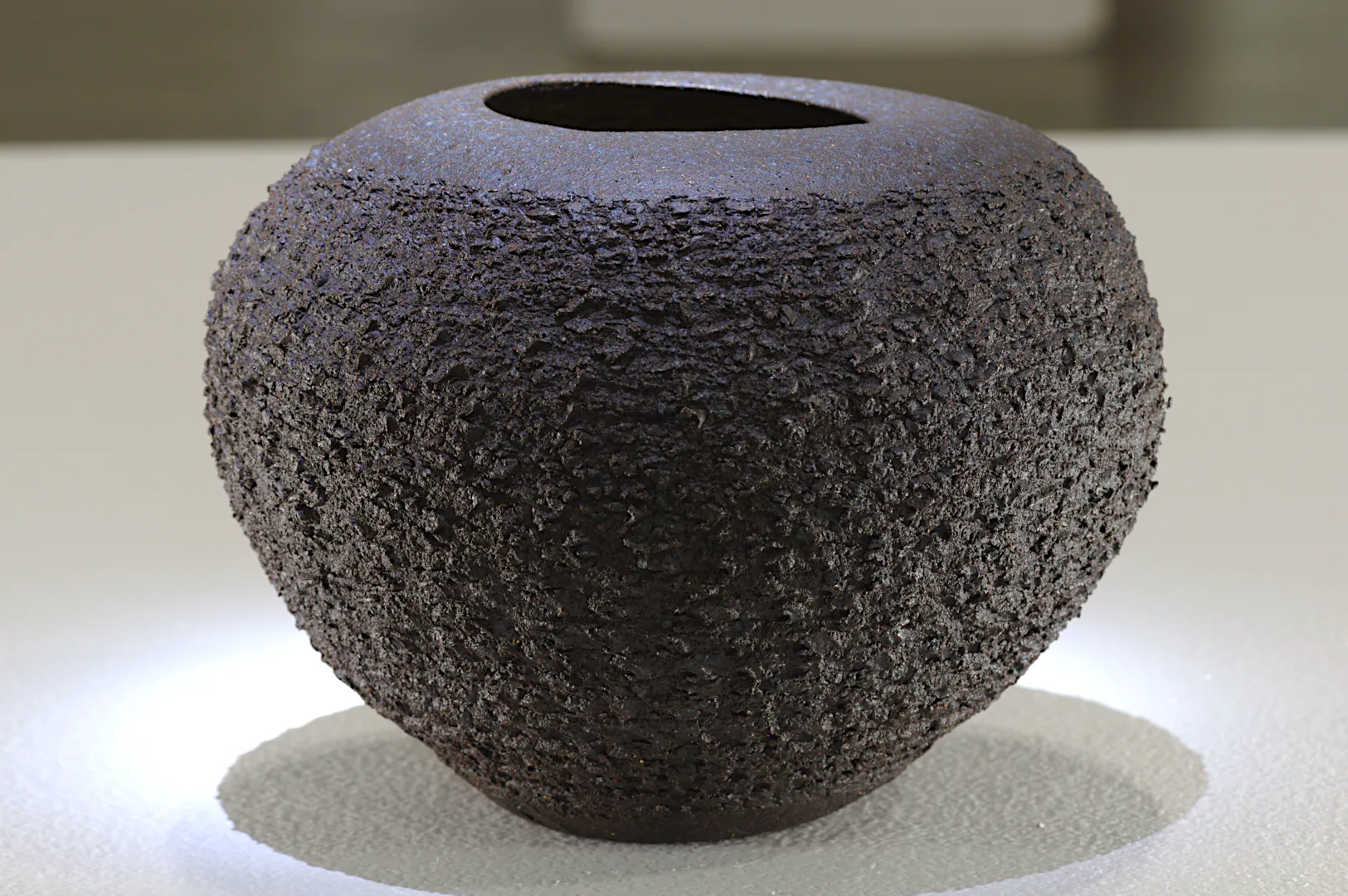
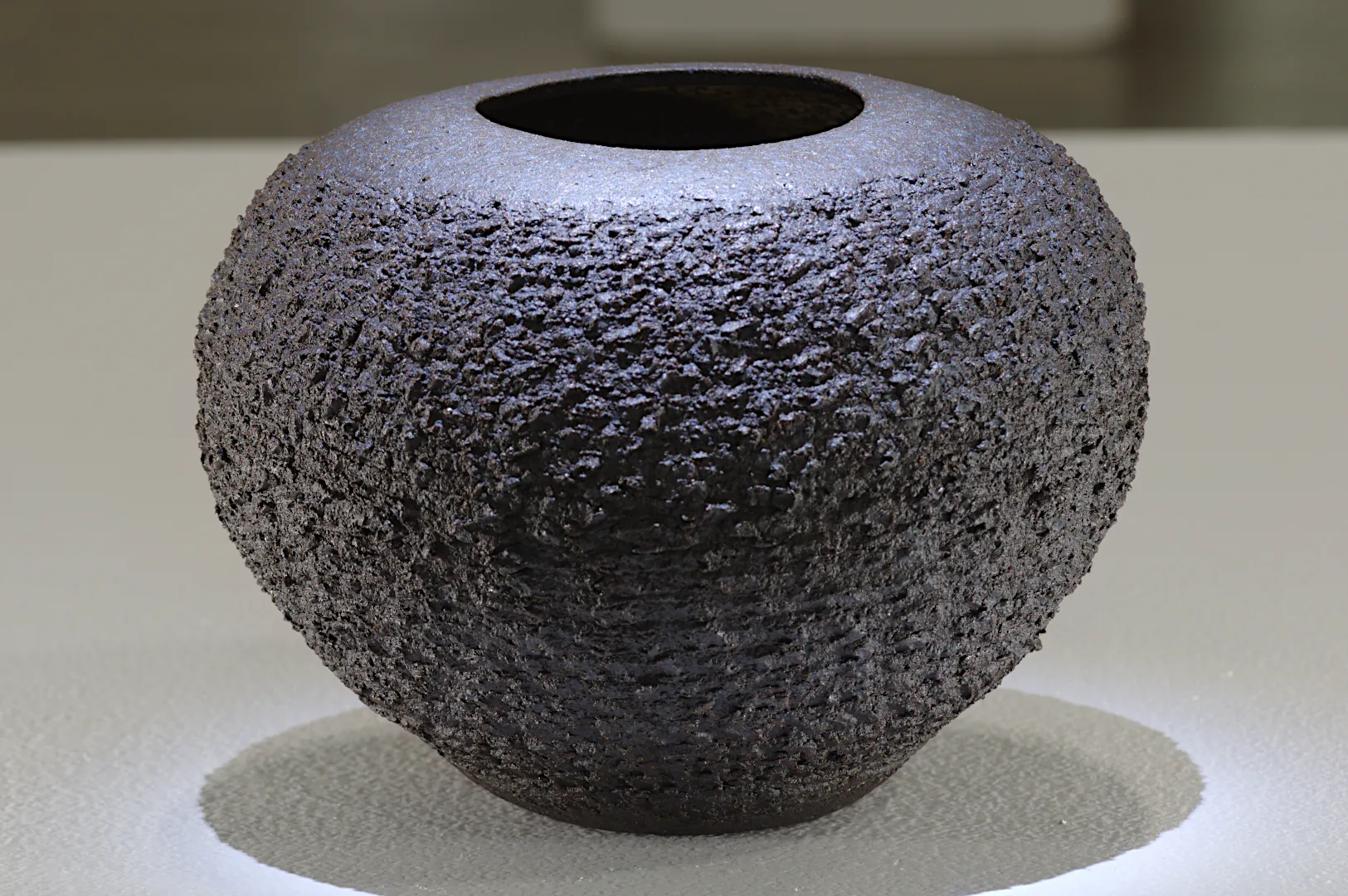
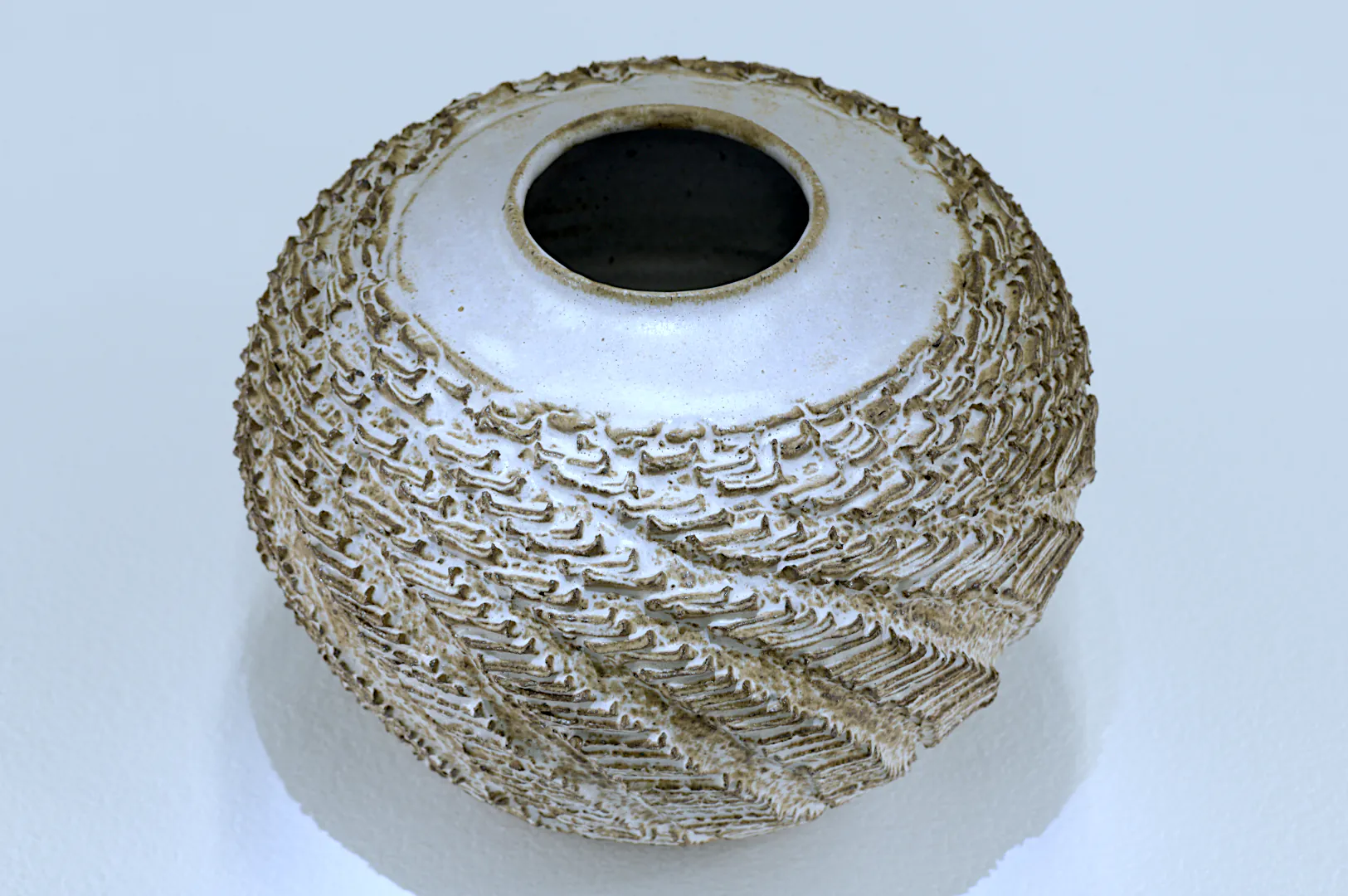
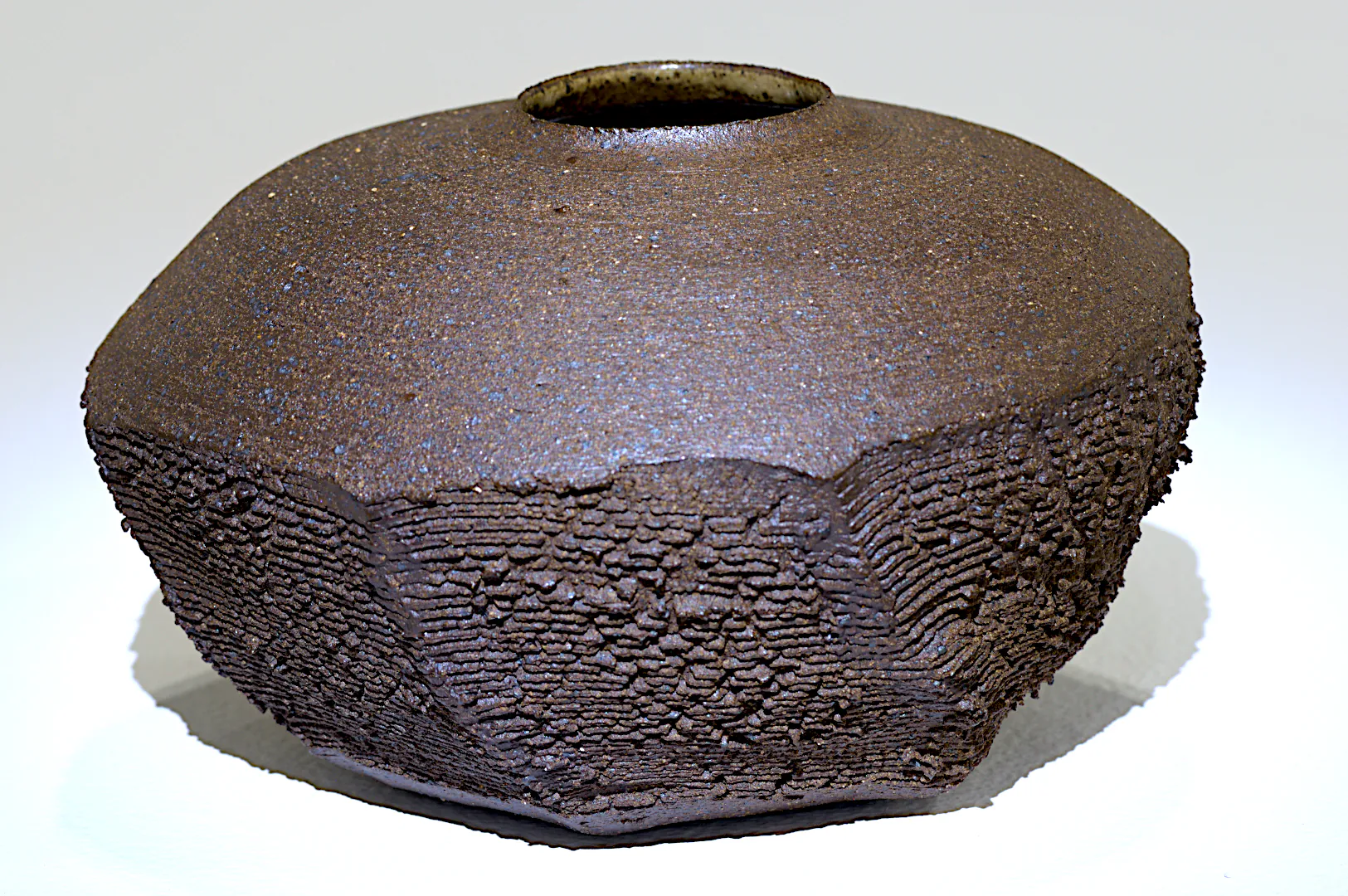
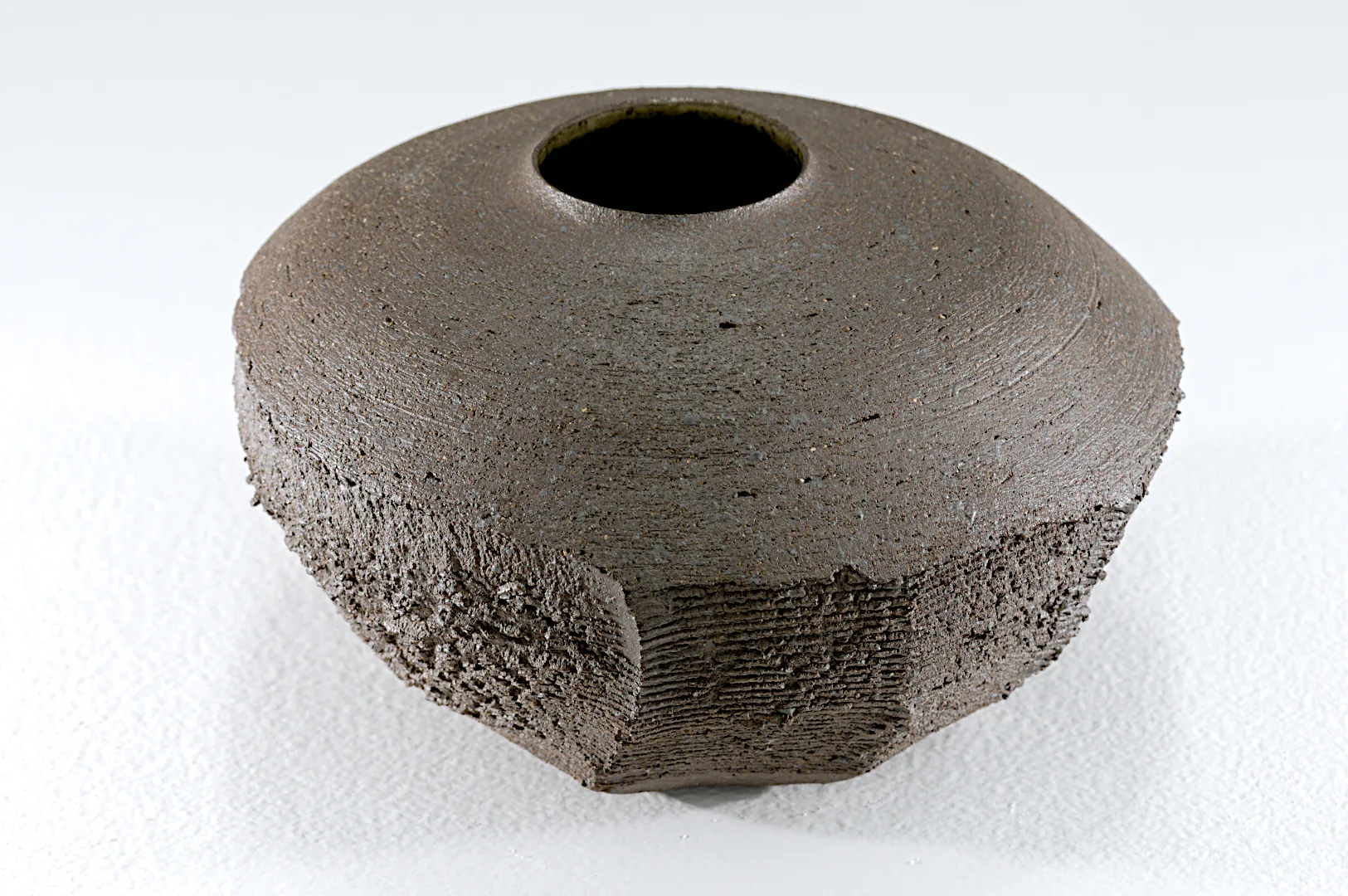

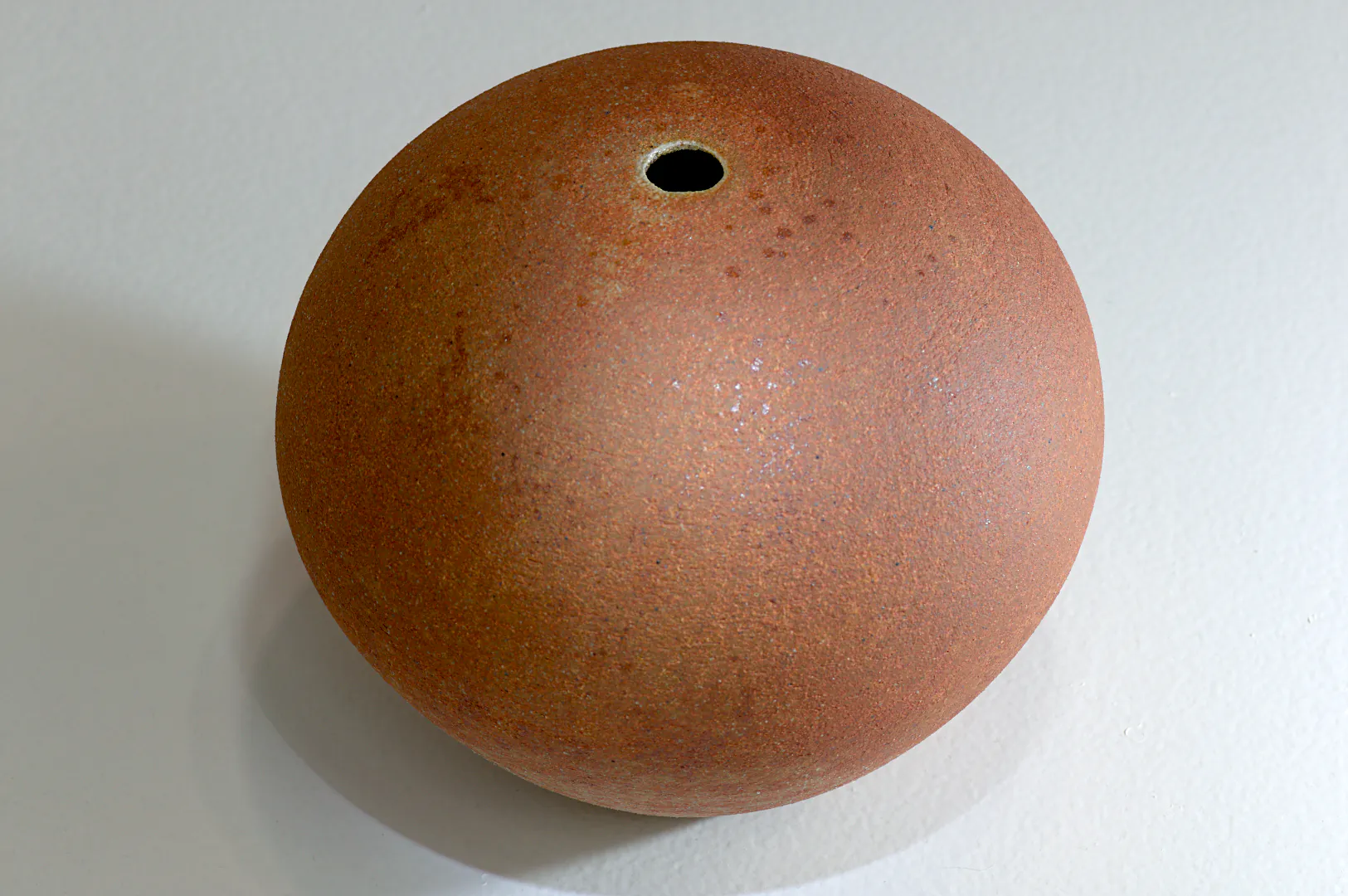
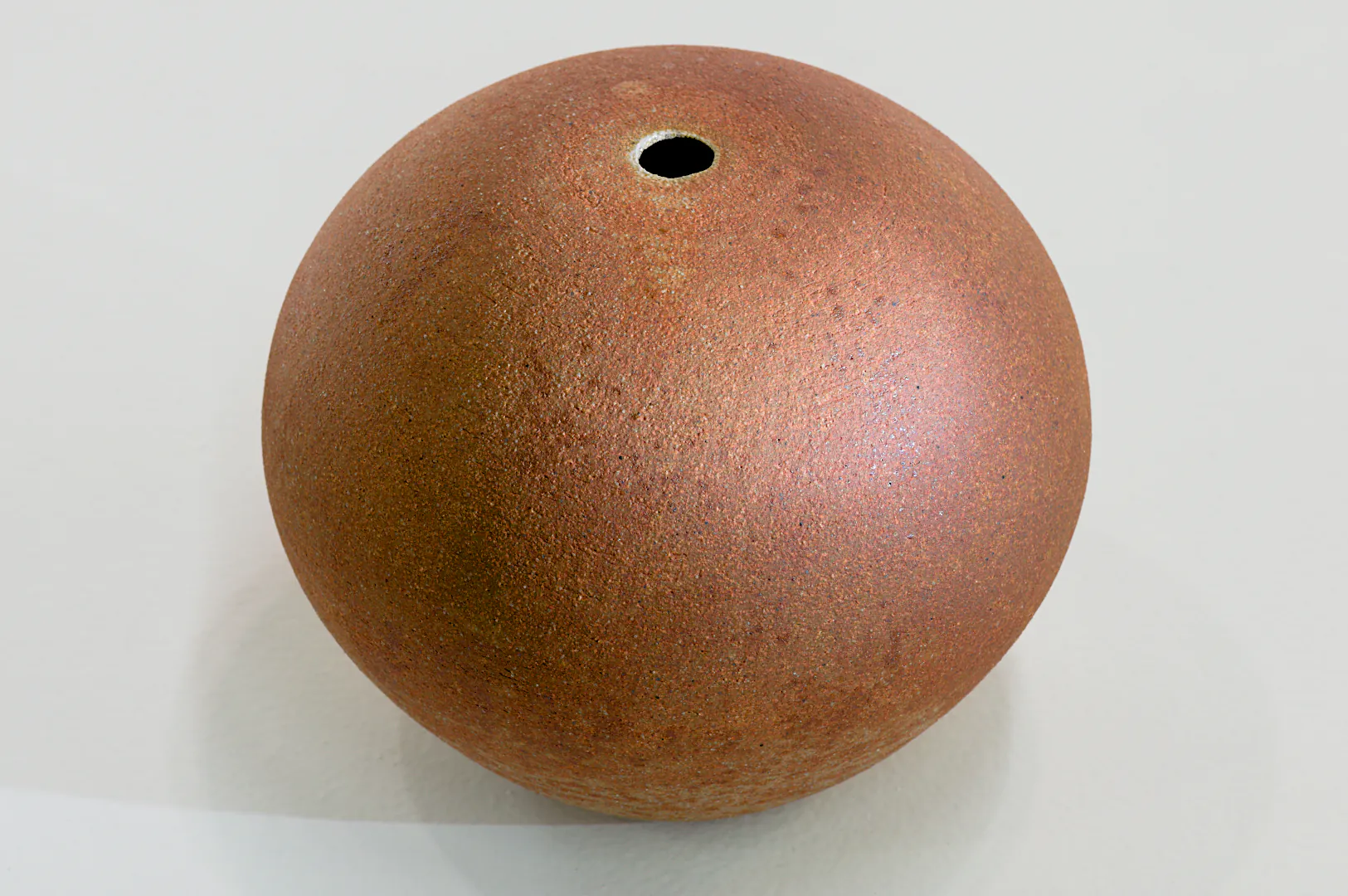
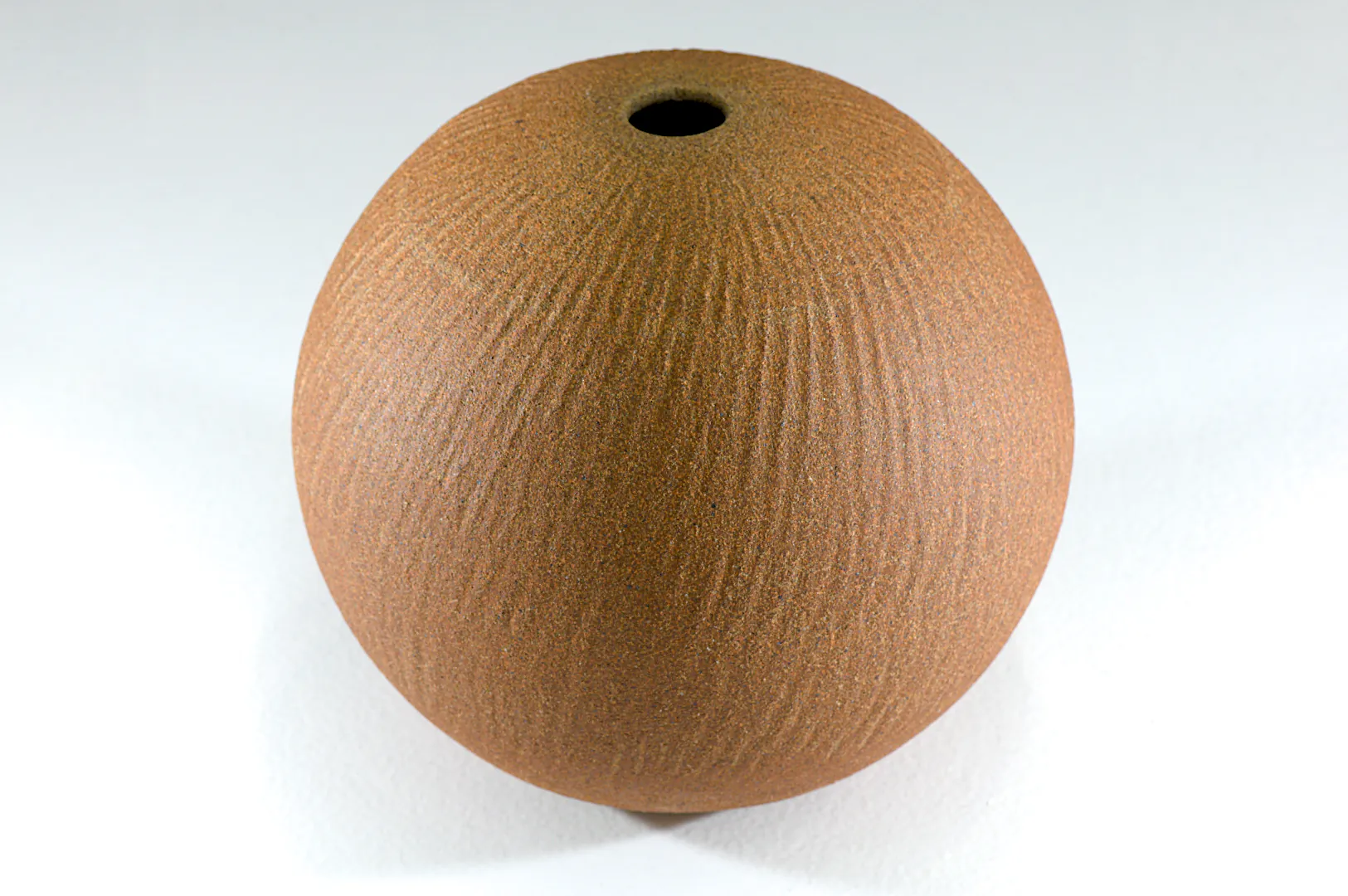
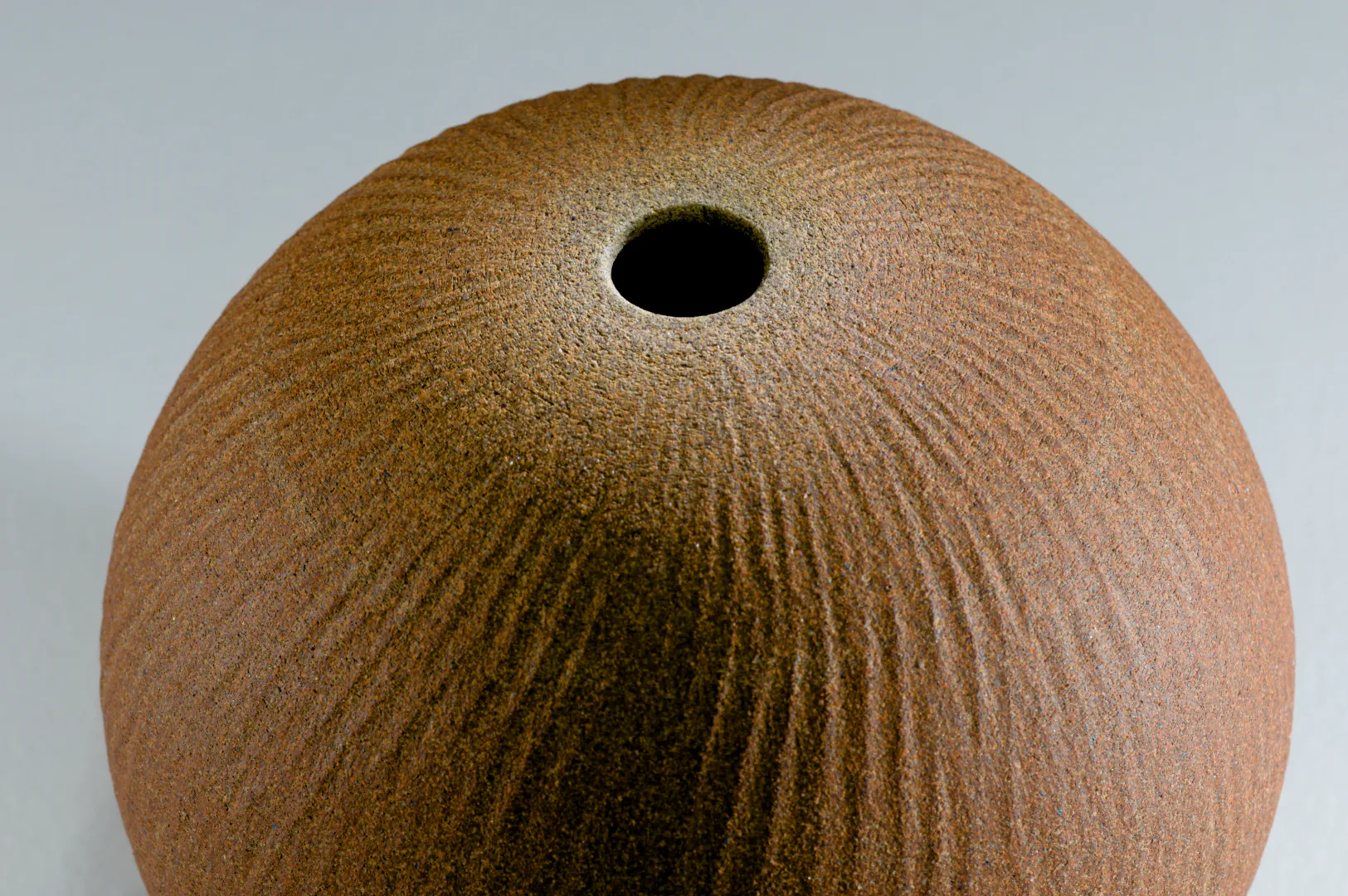


Deeply Textured Sphere : : 12 x 16 cm
Spherical Vessels
A large collection of spherical vessels created over the last decade exhibiting a very diverse range of clay bodies, firing methods, forms, surfaces, and textures.
Clay Bodies
All clay bodies are high fire stoneware clays fired to 1280°C in reduction in a gas kiln or in oxidation in an electric kiln. All works have had a glaze applied to the interior to ensure they are watertight while the exterior of some pieces are unglazed.
Iron-rich Clays
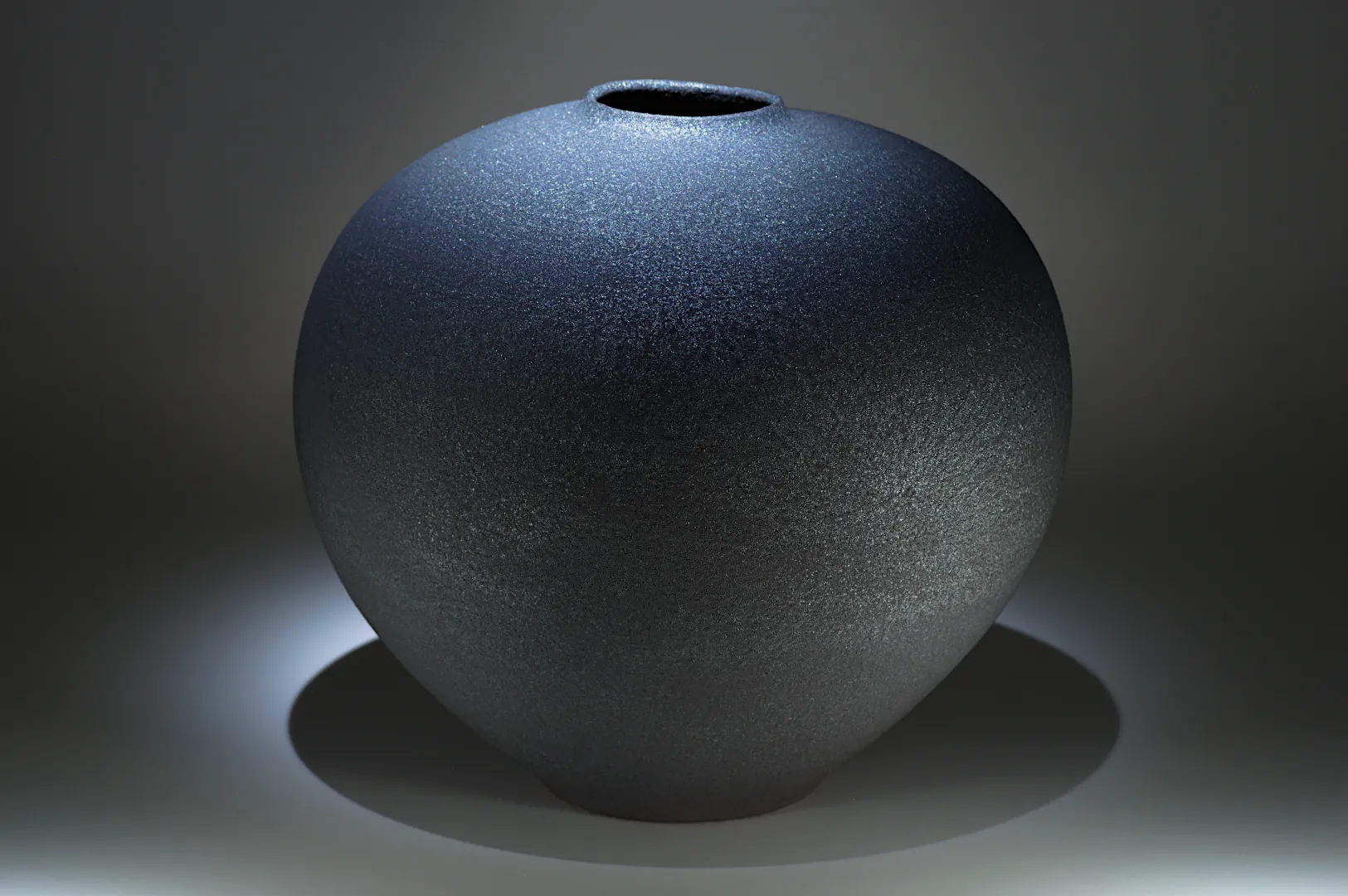
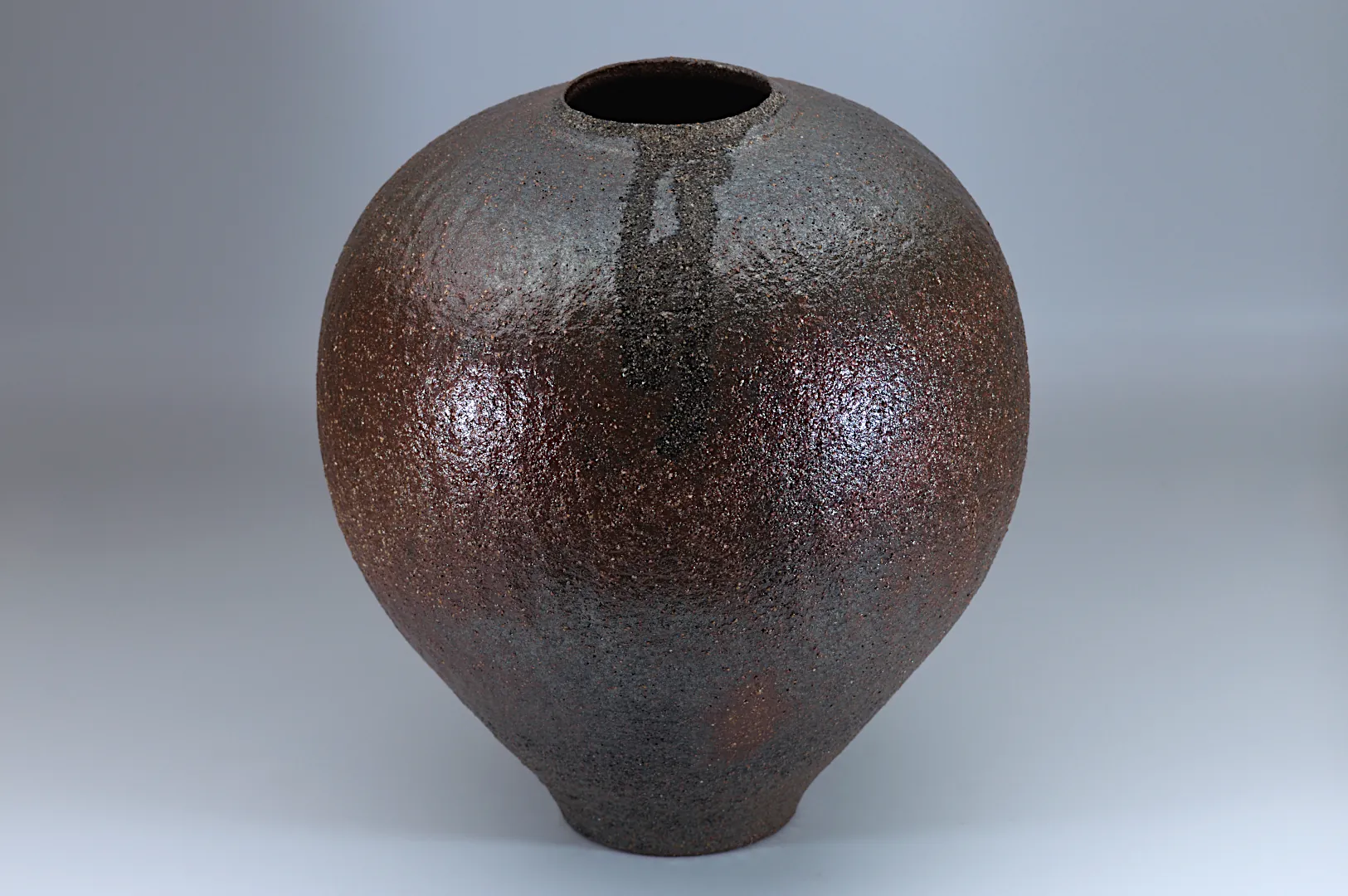
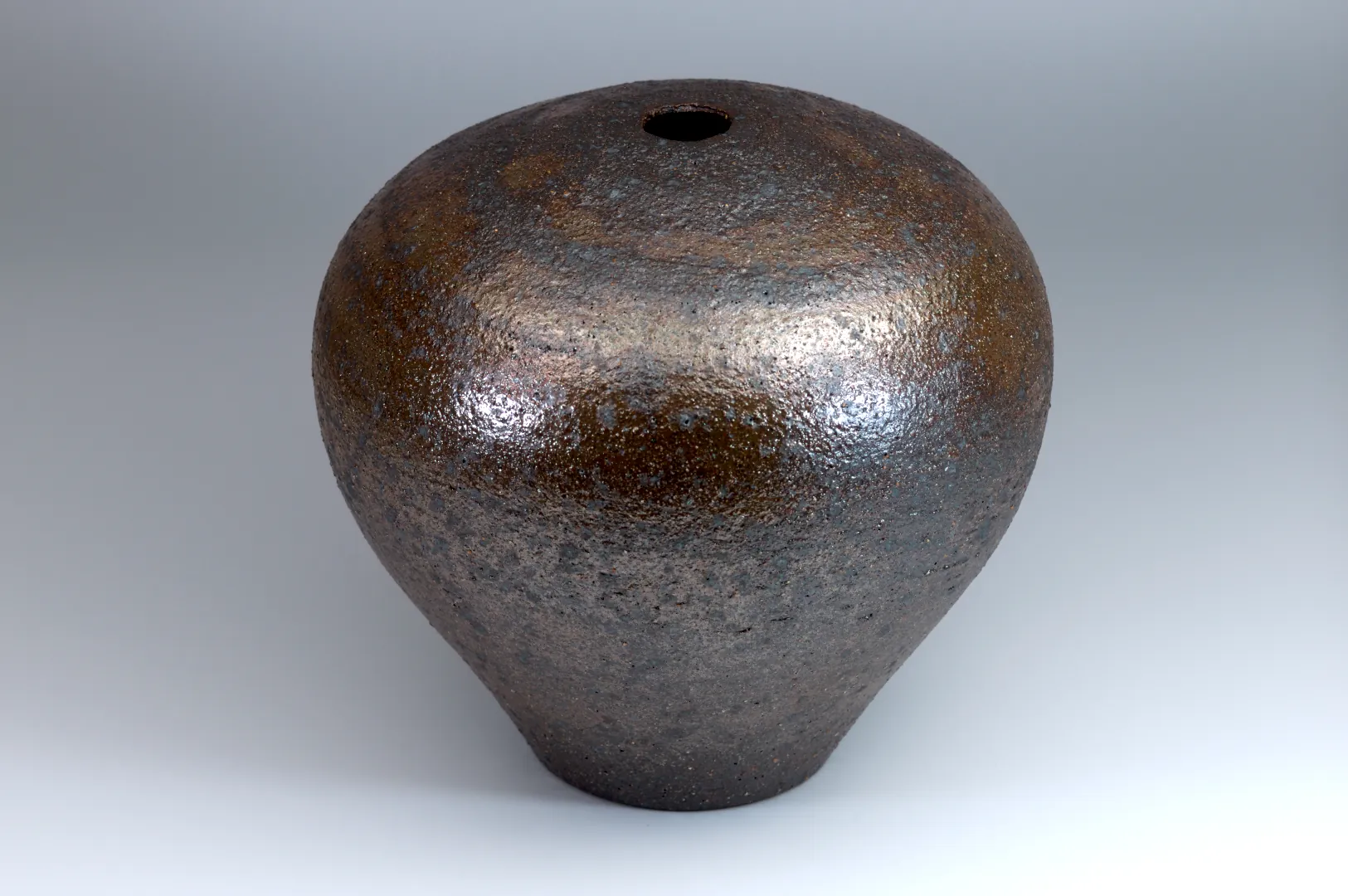
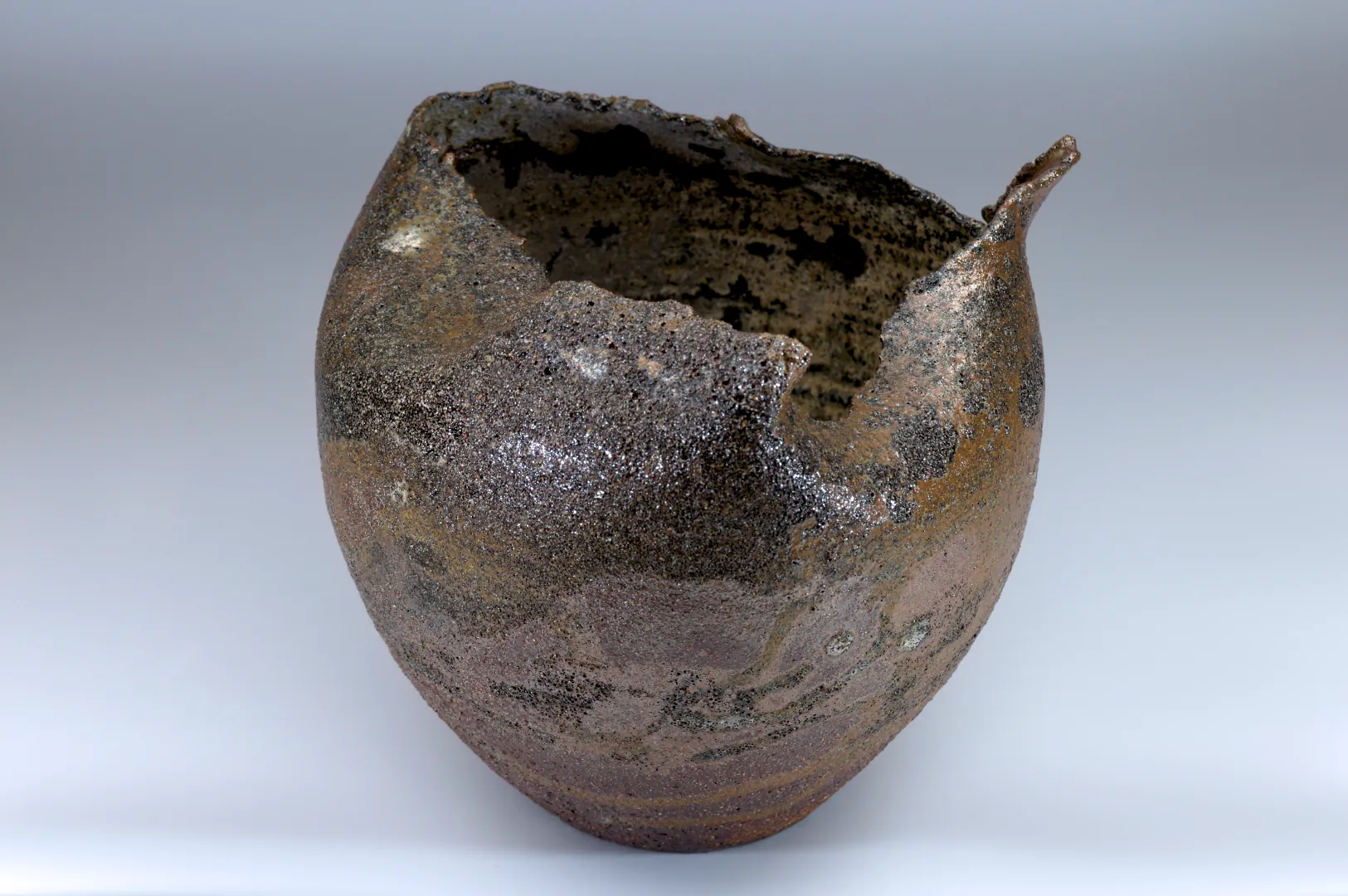
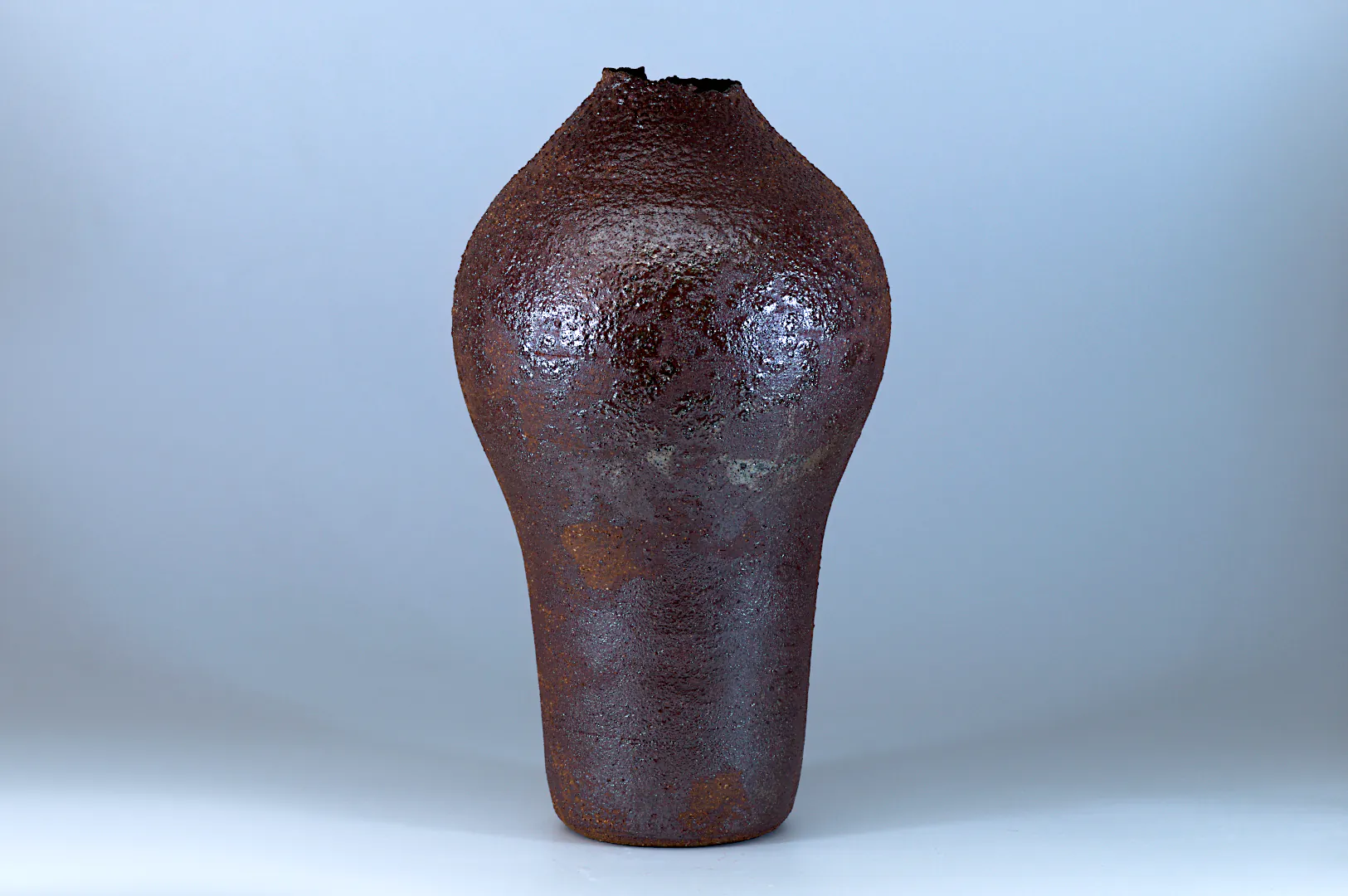
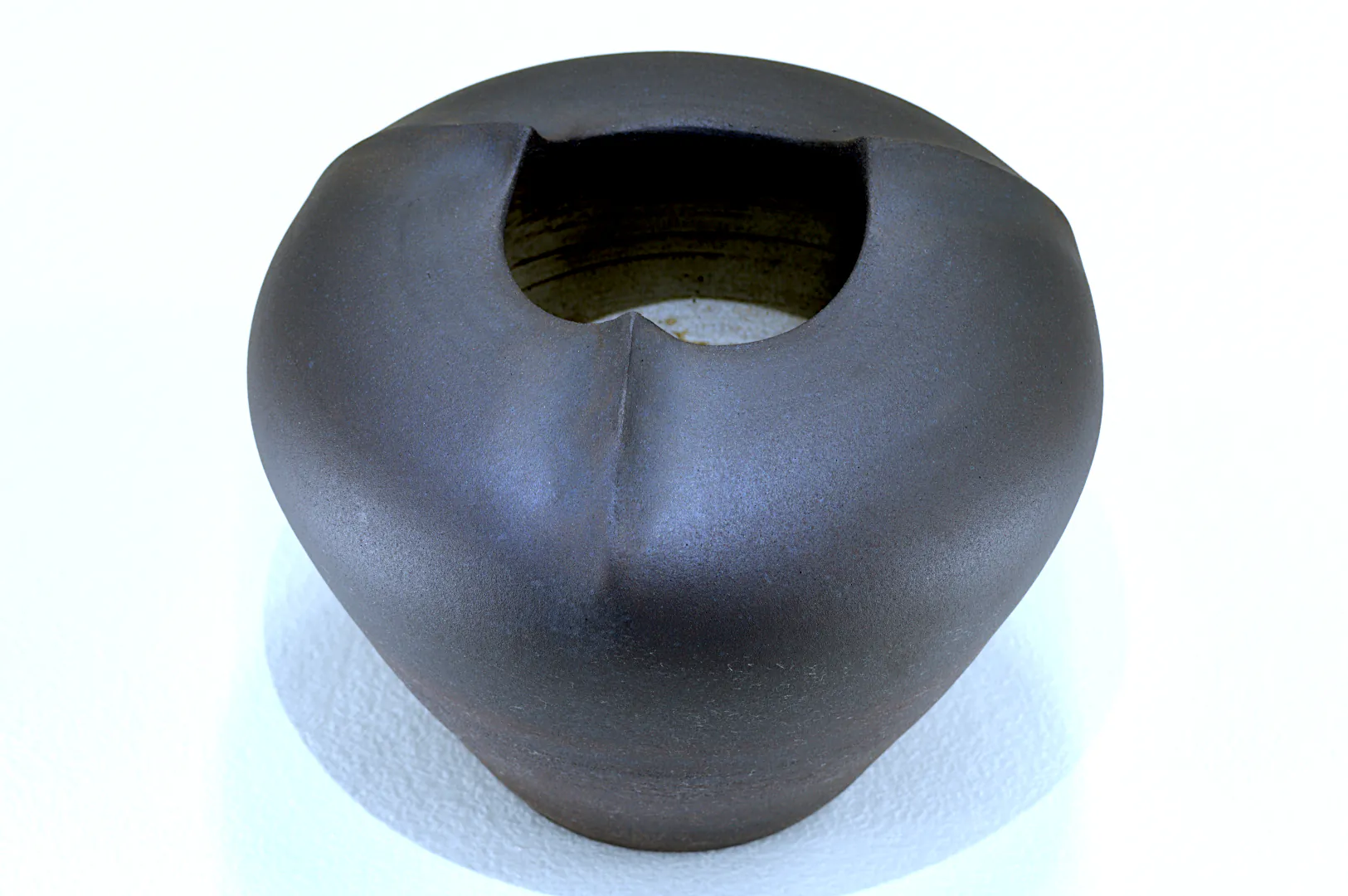
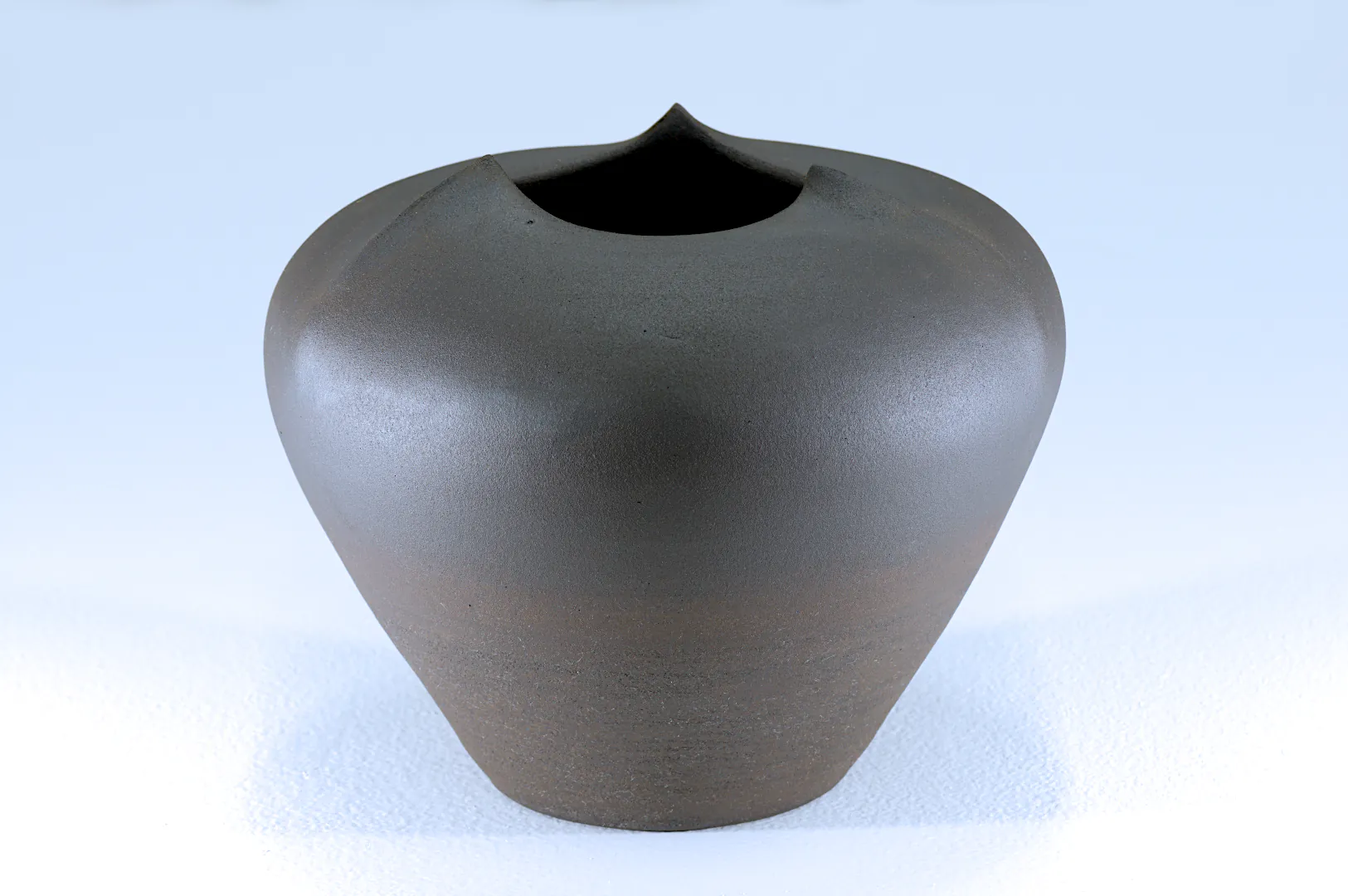
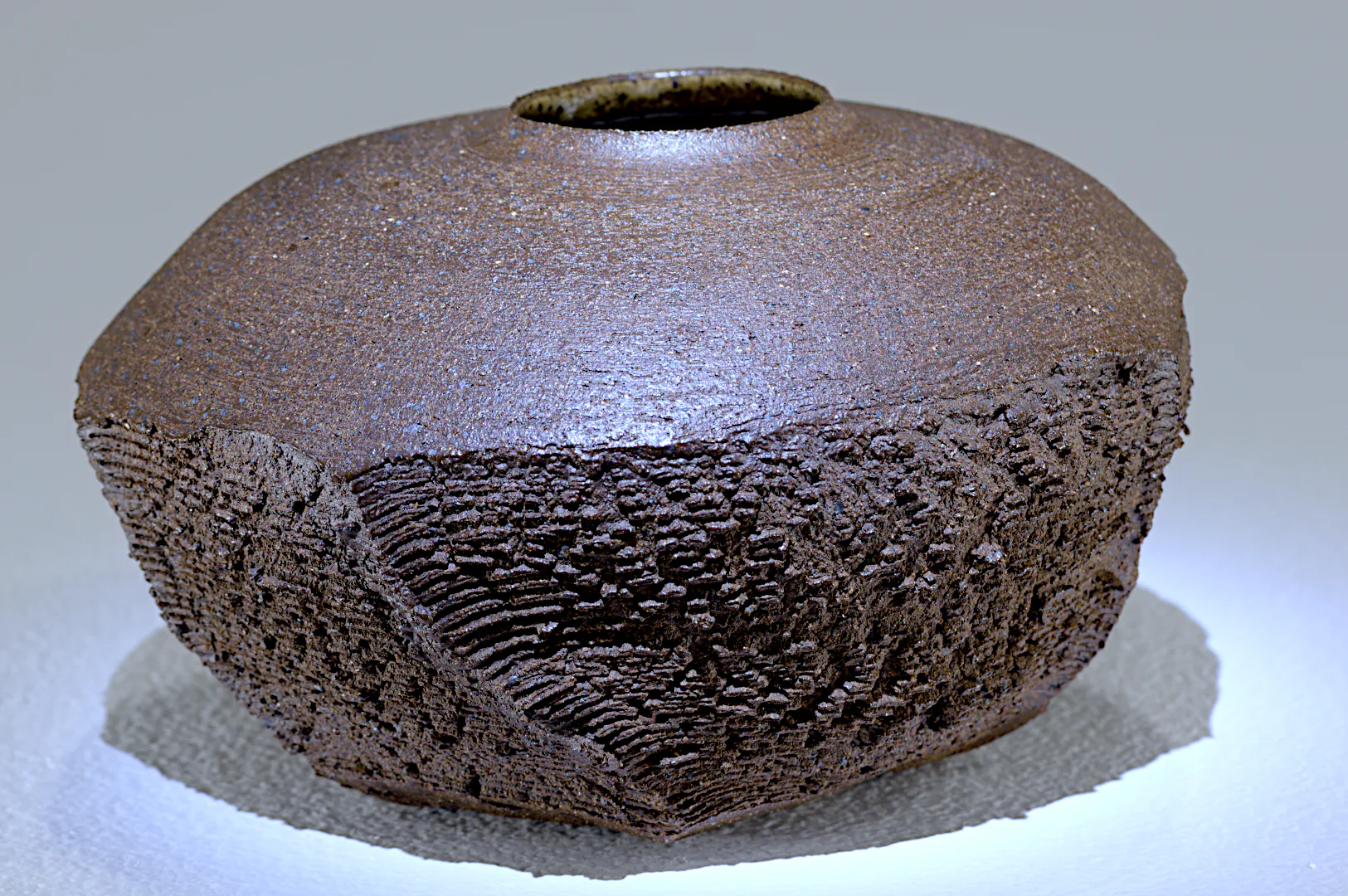
Many of the black, dark brown and red clays, some of which are quite coarse, are my own blend of stoneware clays and oxides. Some of these have had additional fluxes added to the clay body and several have had a shino glaze applied before firing to 1280°C in reduction in a gas kiln.
Speckled White Stoneware
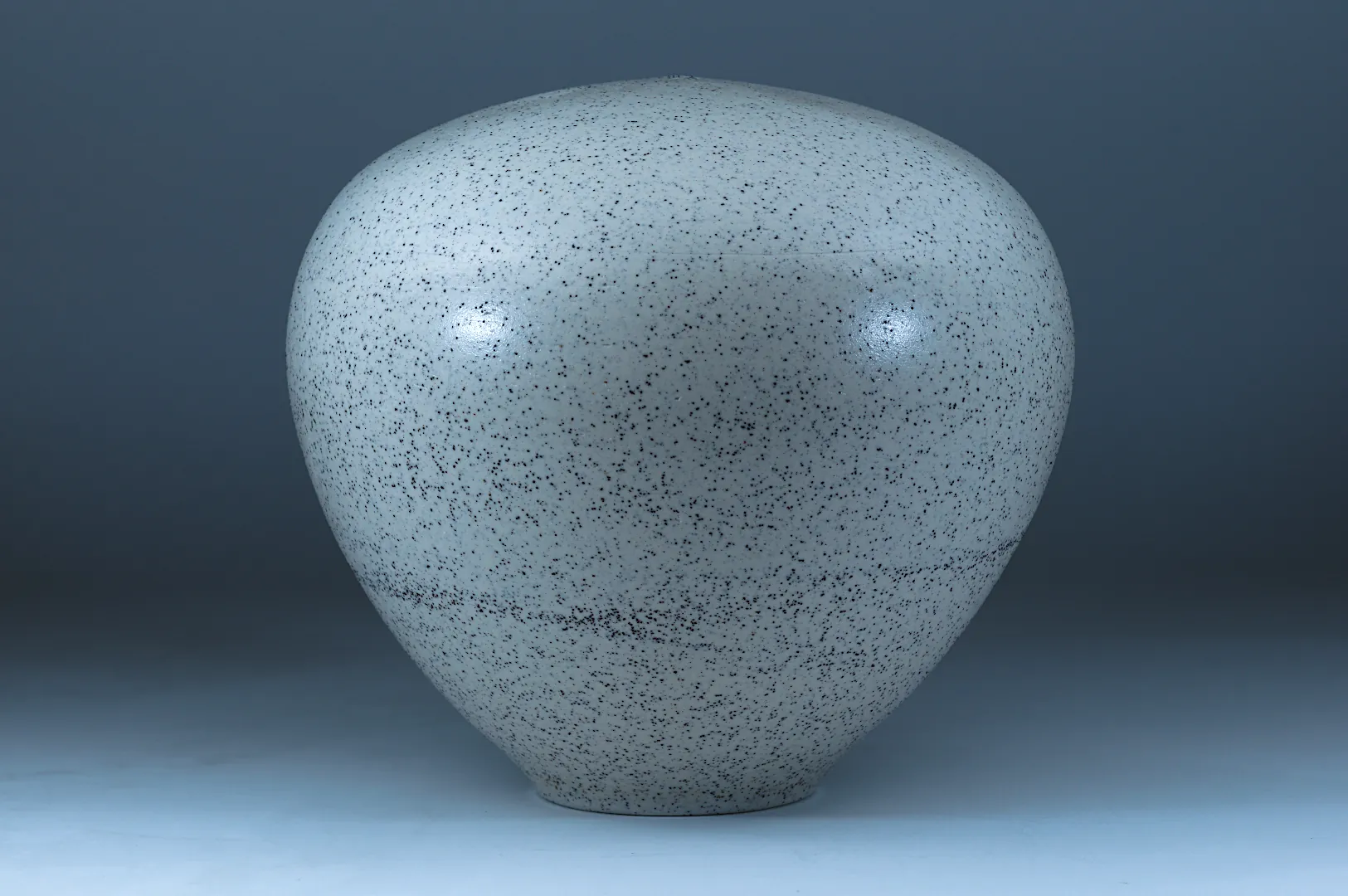
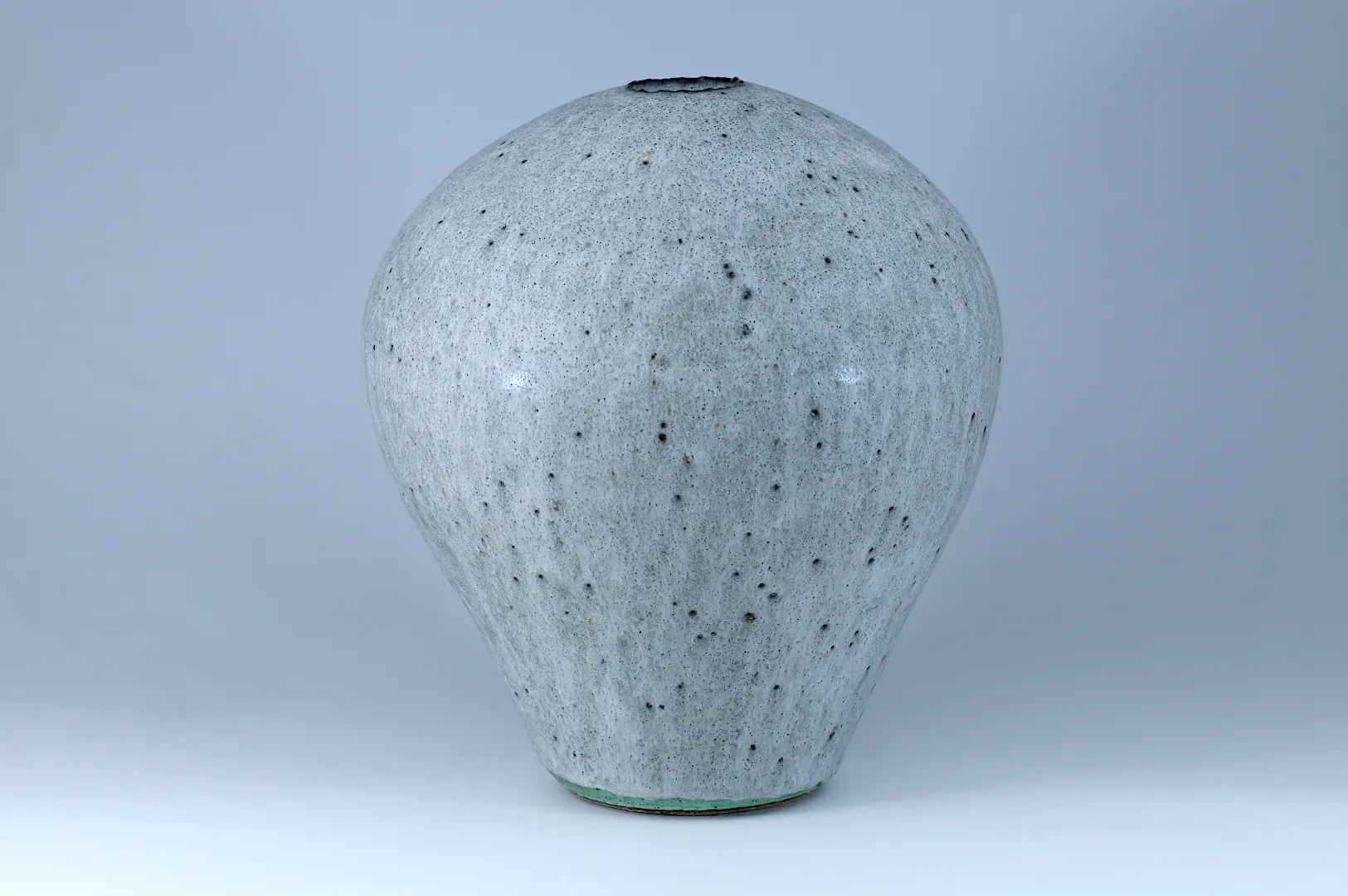
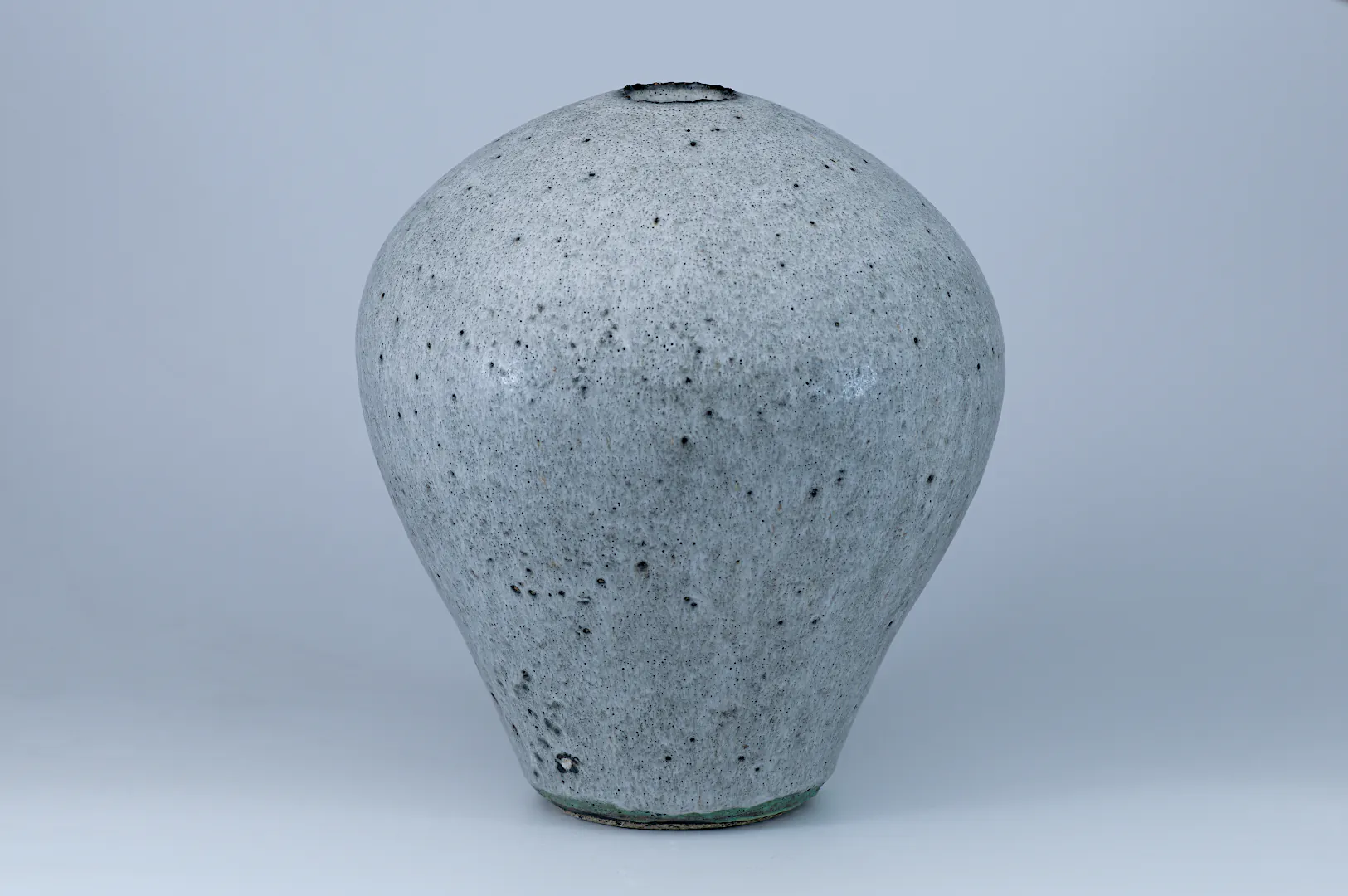
These are sometimes left unglazed on the exterior as in the Deeply Textured Sphere, while the Speckled Sphere has had a thin transparent matte glaze applied to give the clay a slight sheen.
Southern Ice and Lumina Porcelains
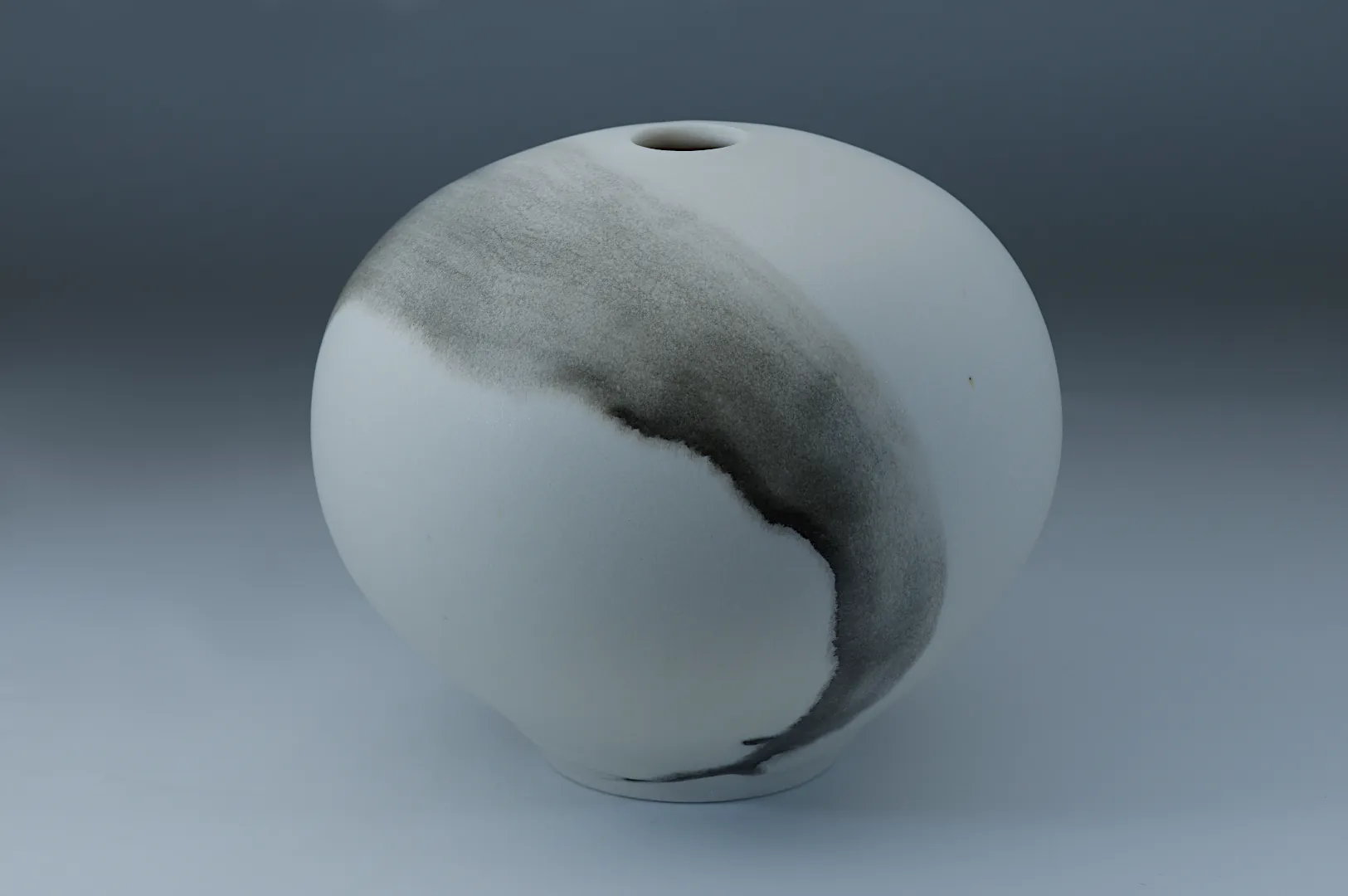
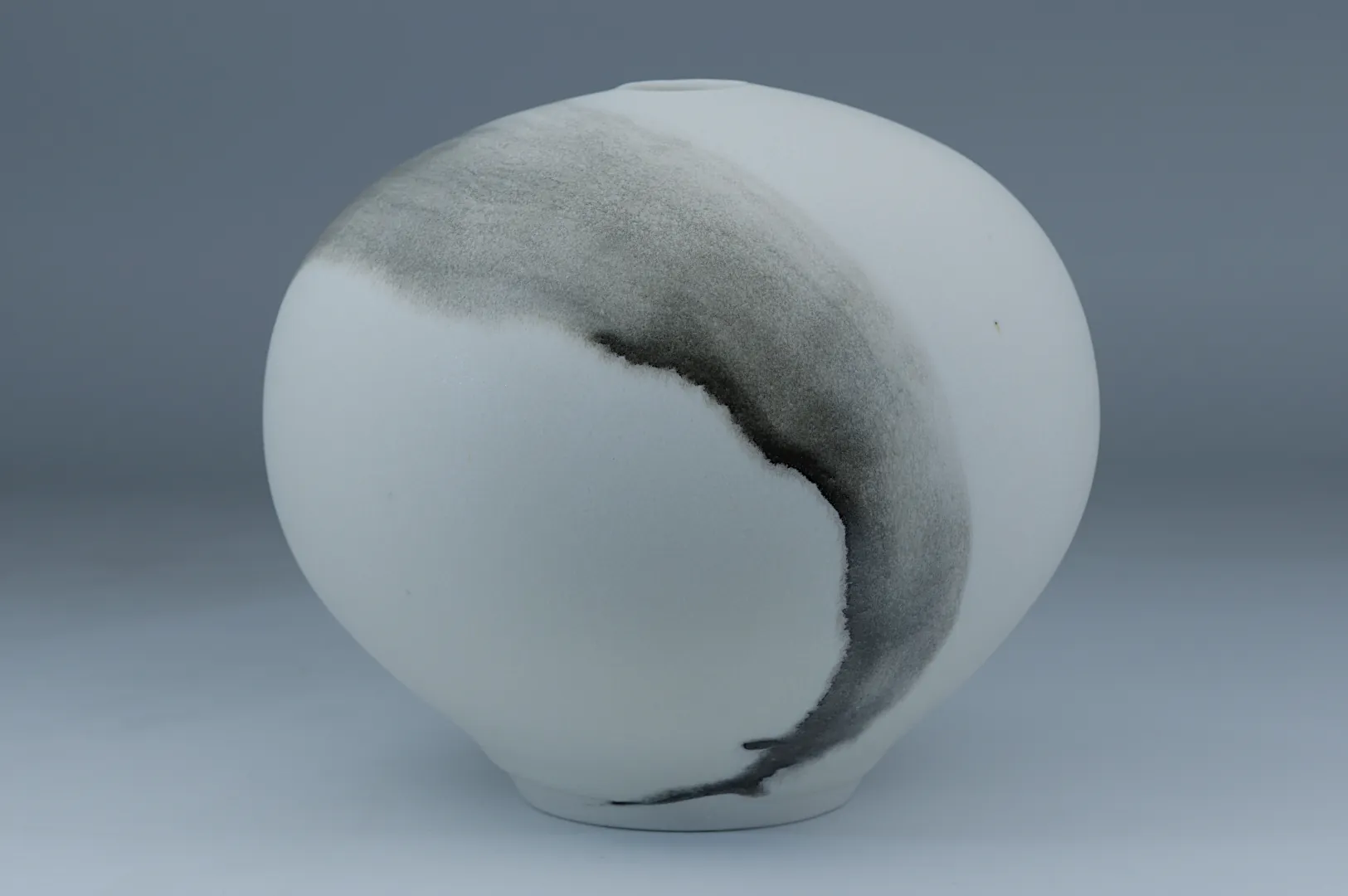
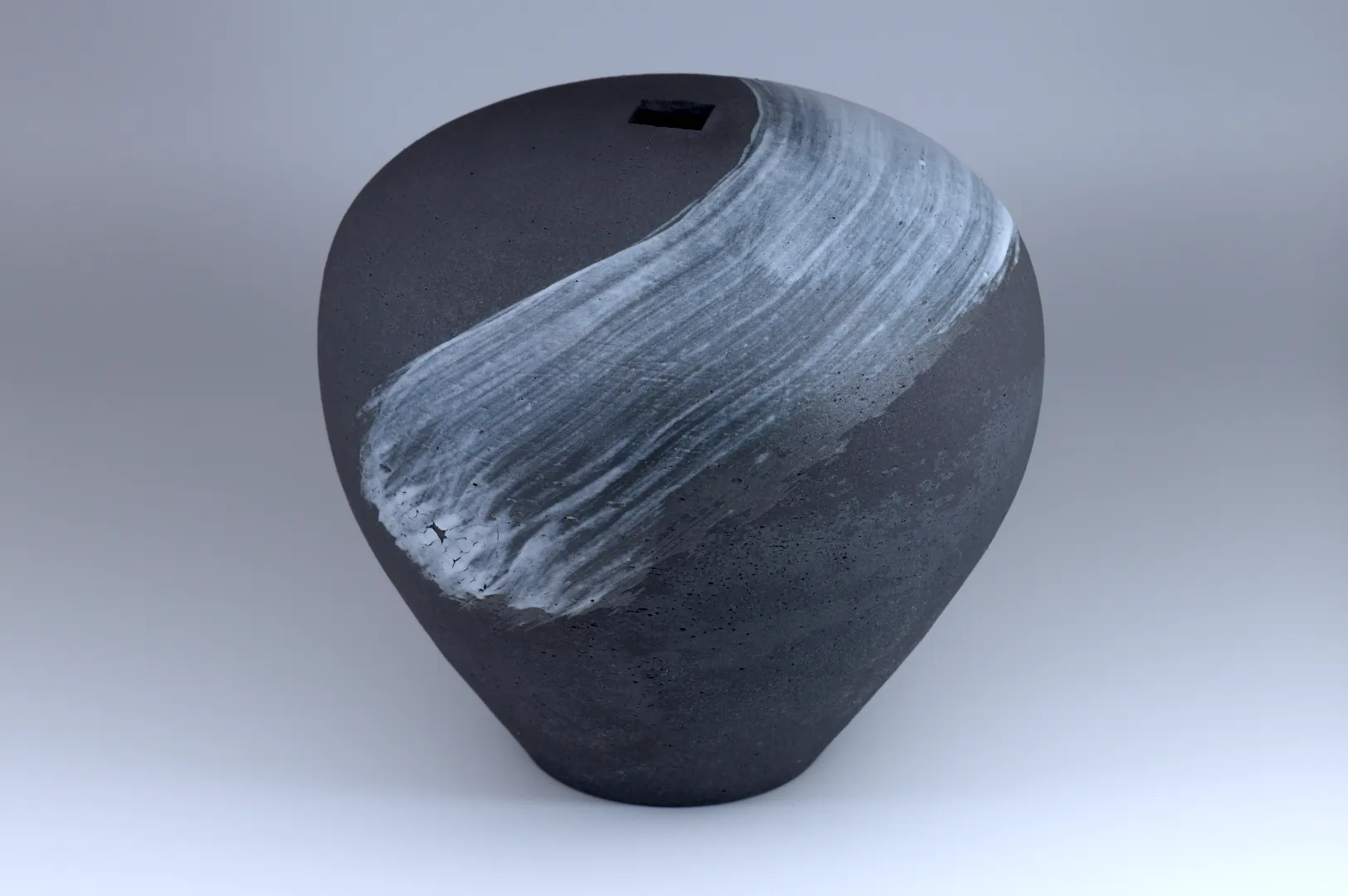
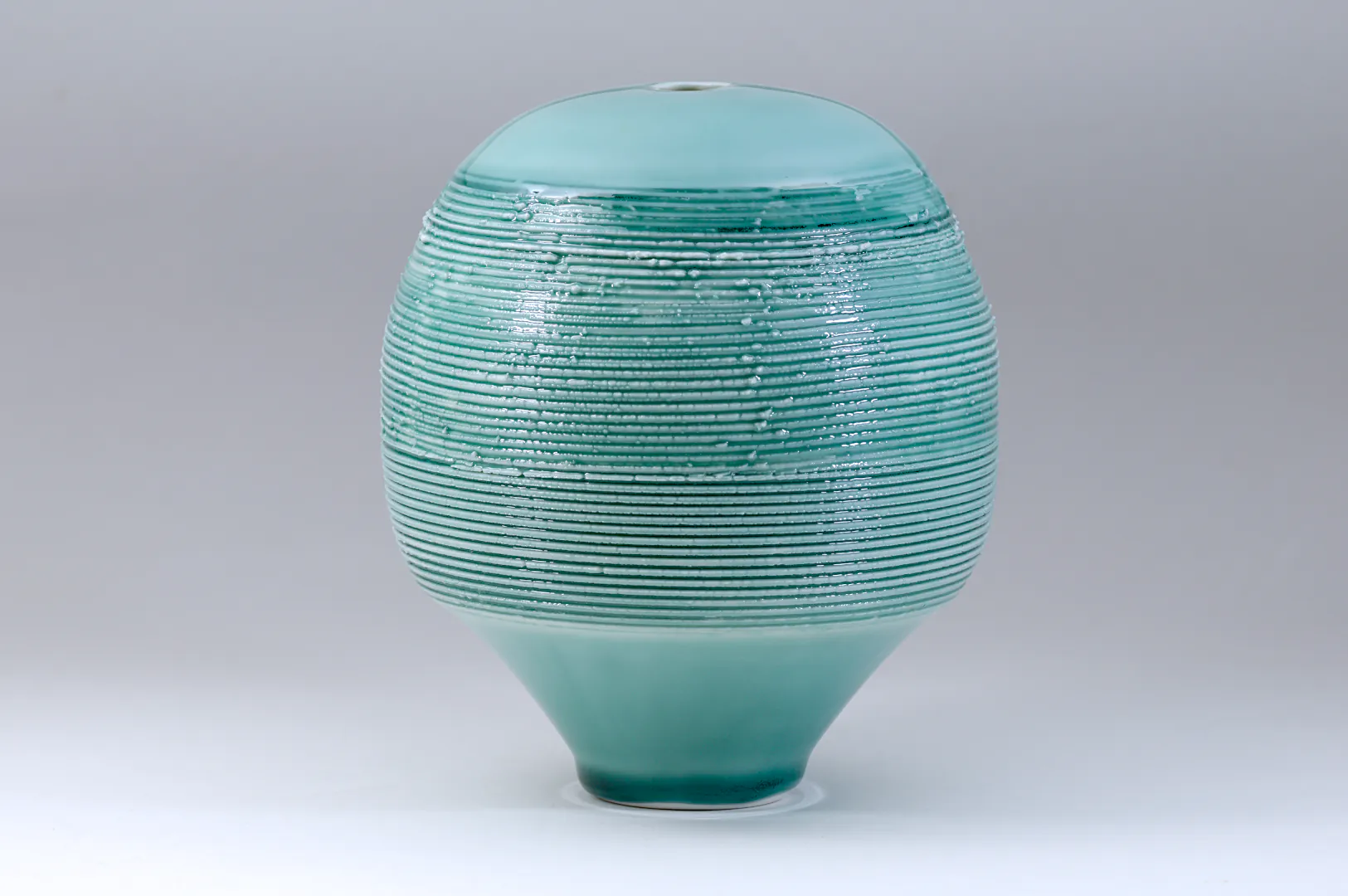
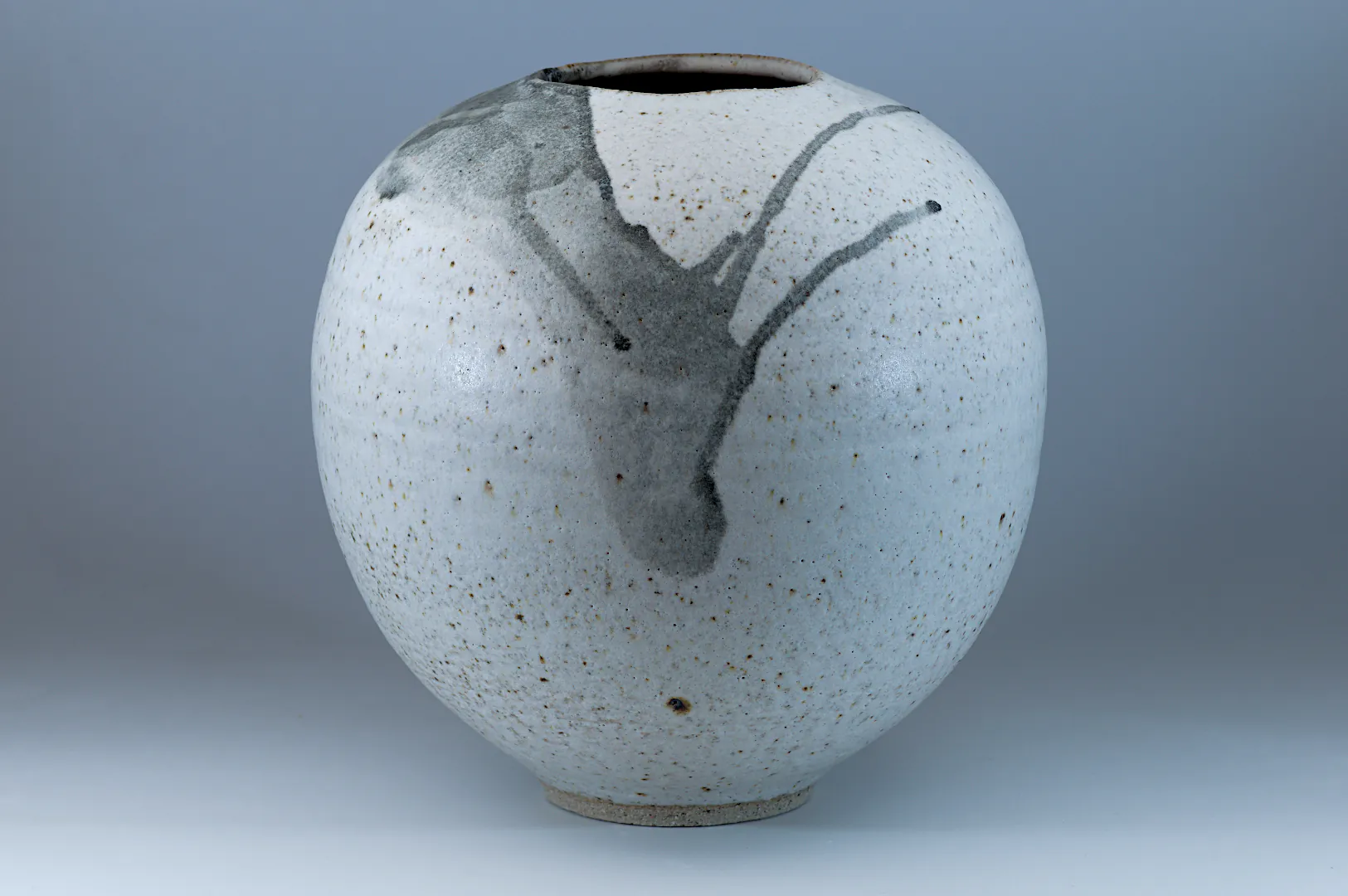
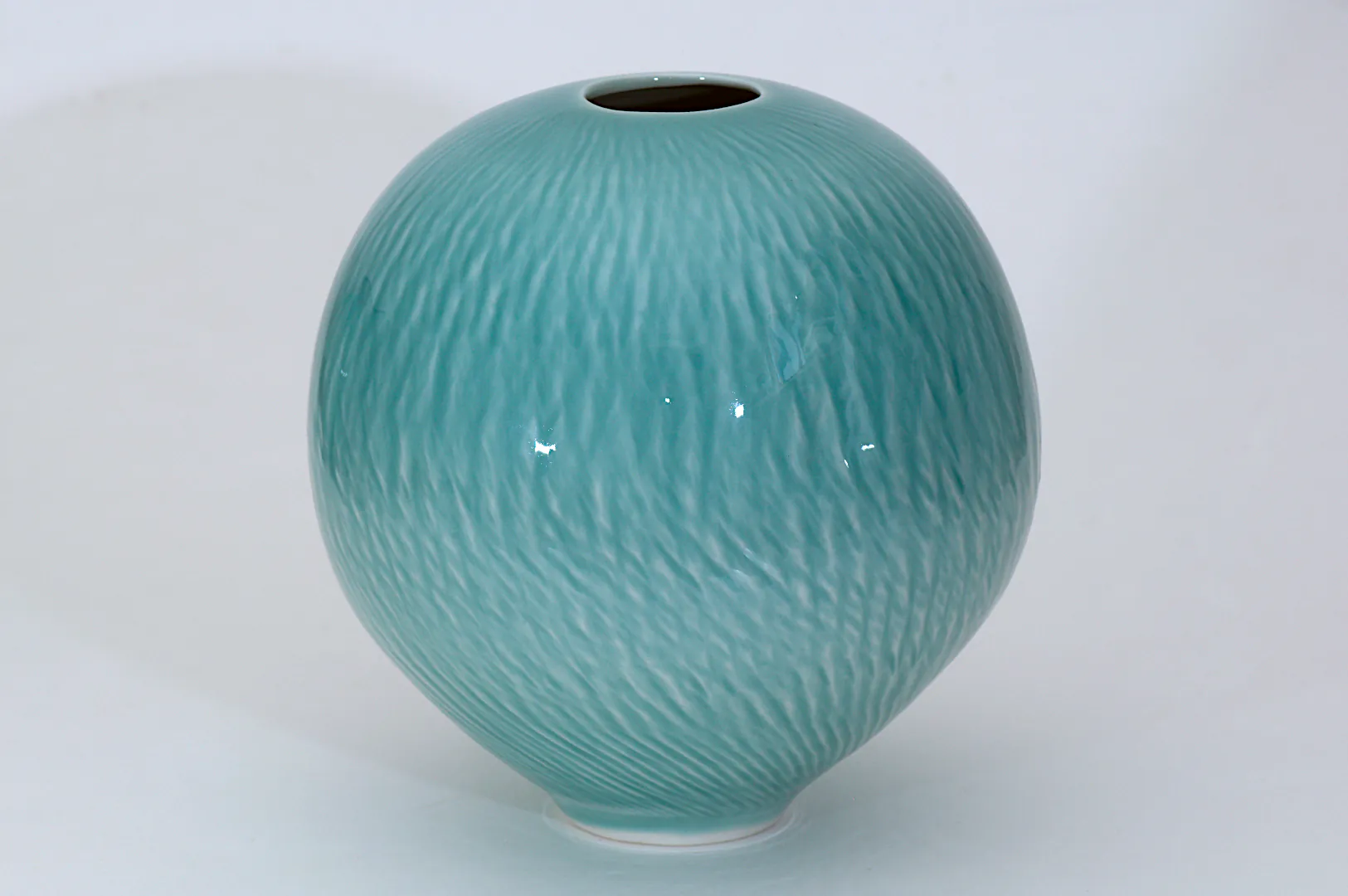
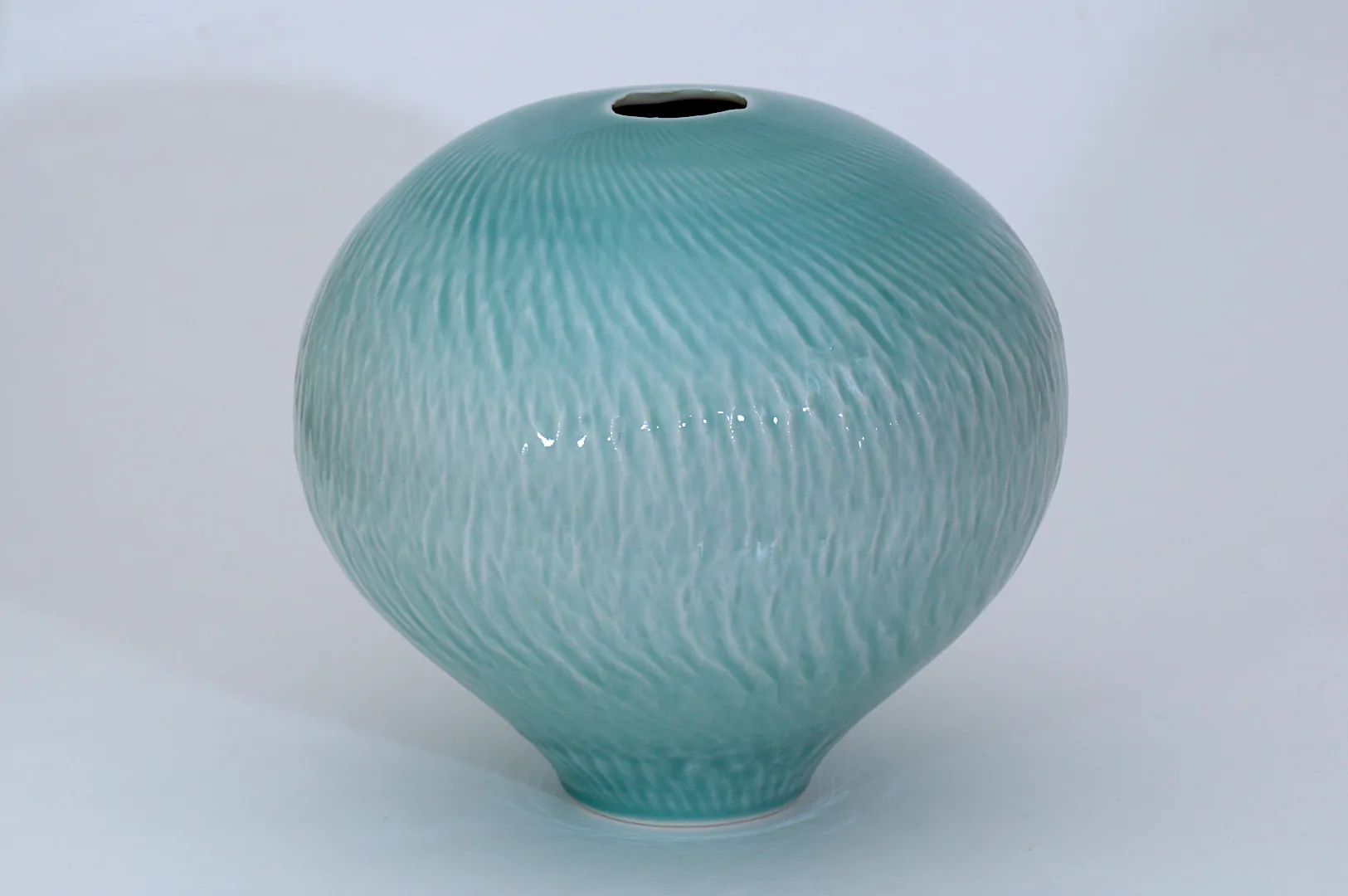
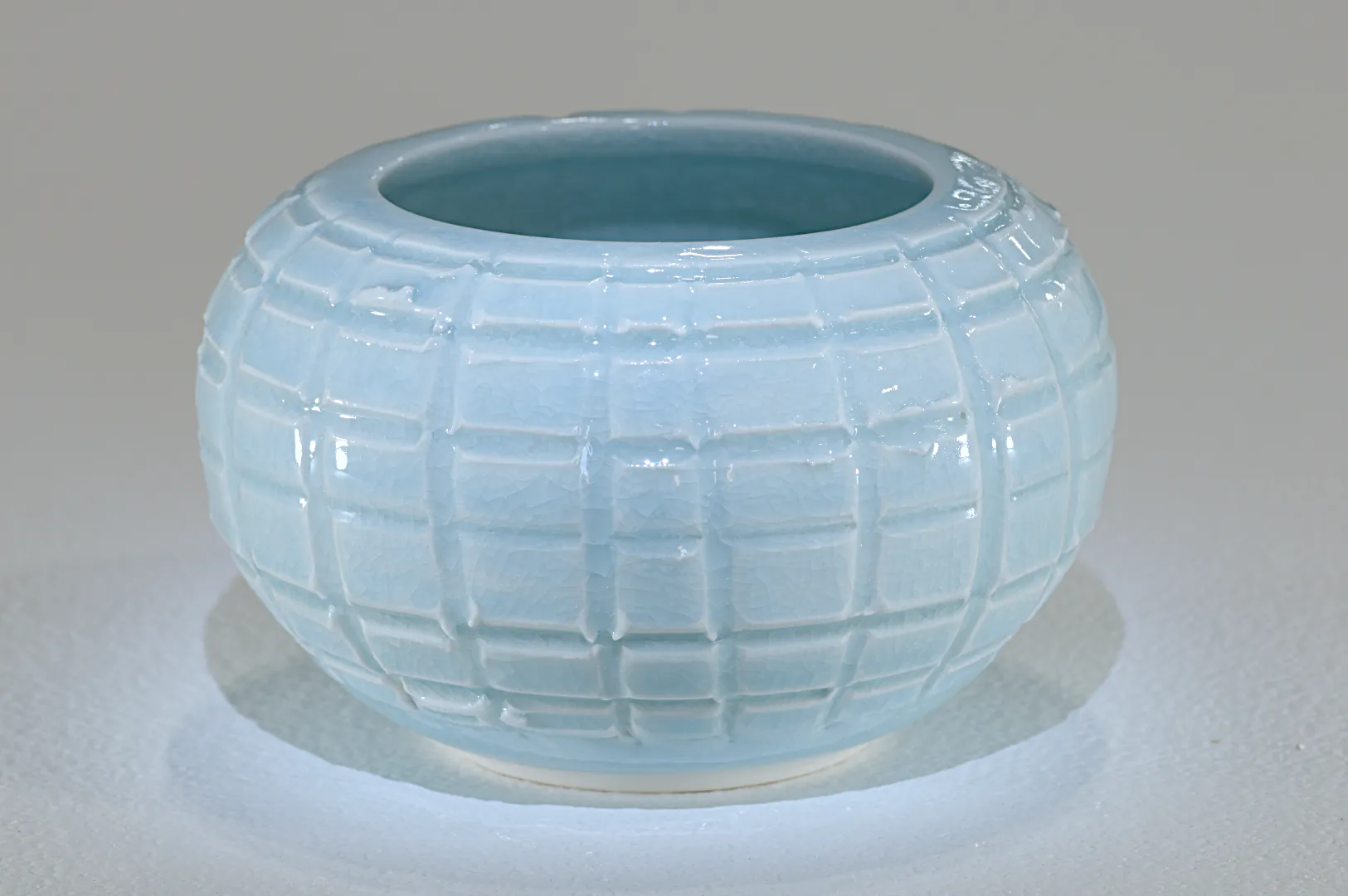
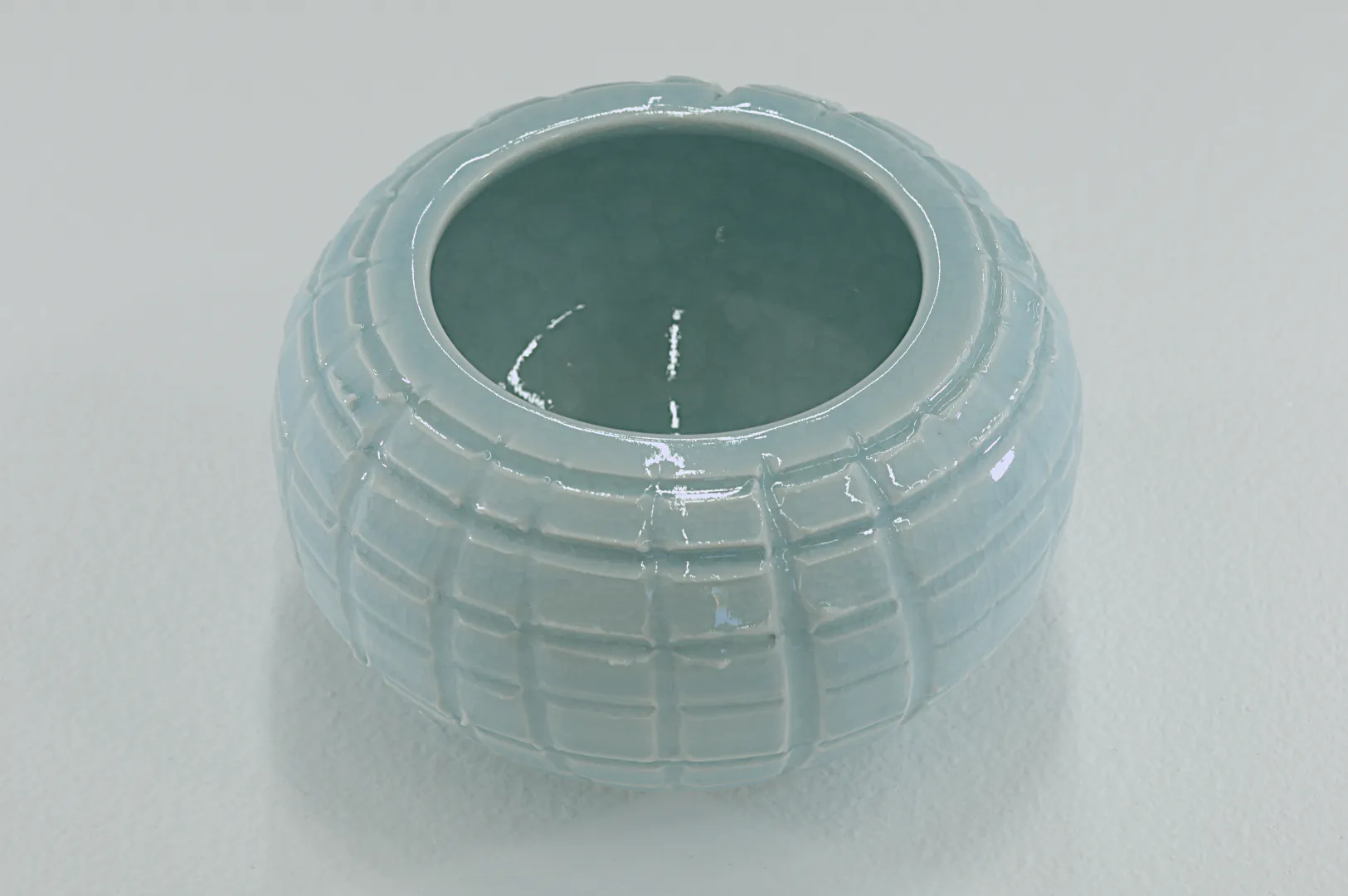
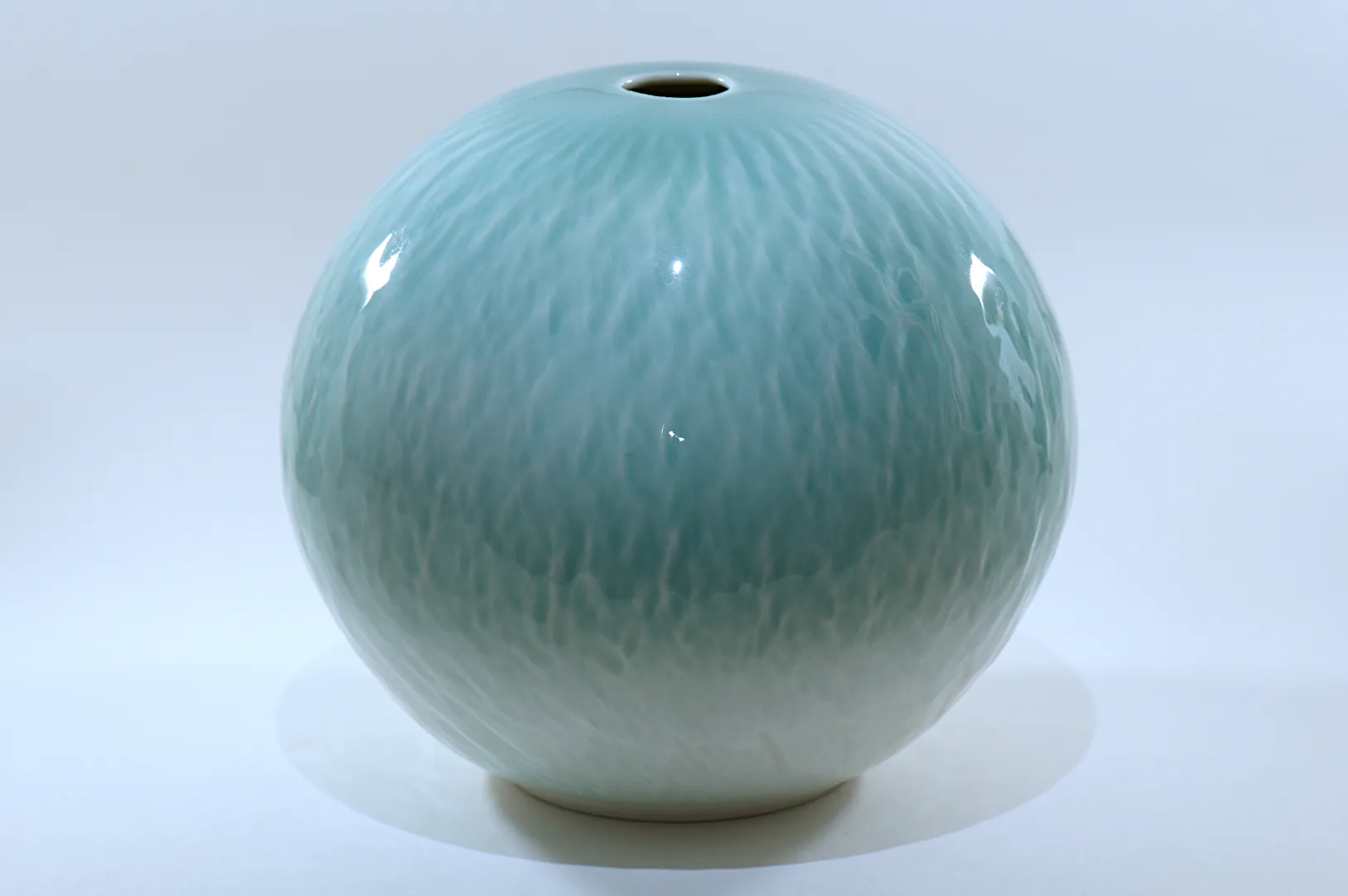
On some of these works I have applied a transparent teal or turquoise glaze prior to firing in oxidation in an electric kiln. The qingbai and celadon blue green glazes can only be achieved by firing in reduction - in this case to 1280°C in a gas kiln. Brushwork using slips and oxides has been applied in a spontaneous manner on some of the works.

Spherical Vase with Brushwork : : 14 x 16 cm
Surface Finishes
Shino Glaze
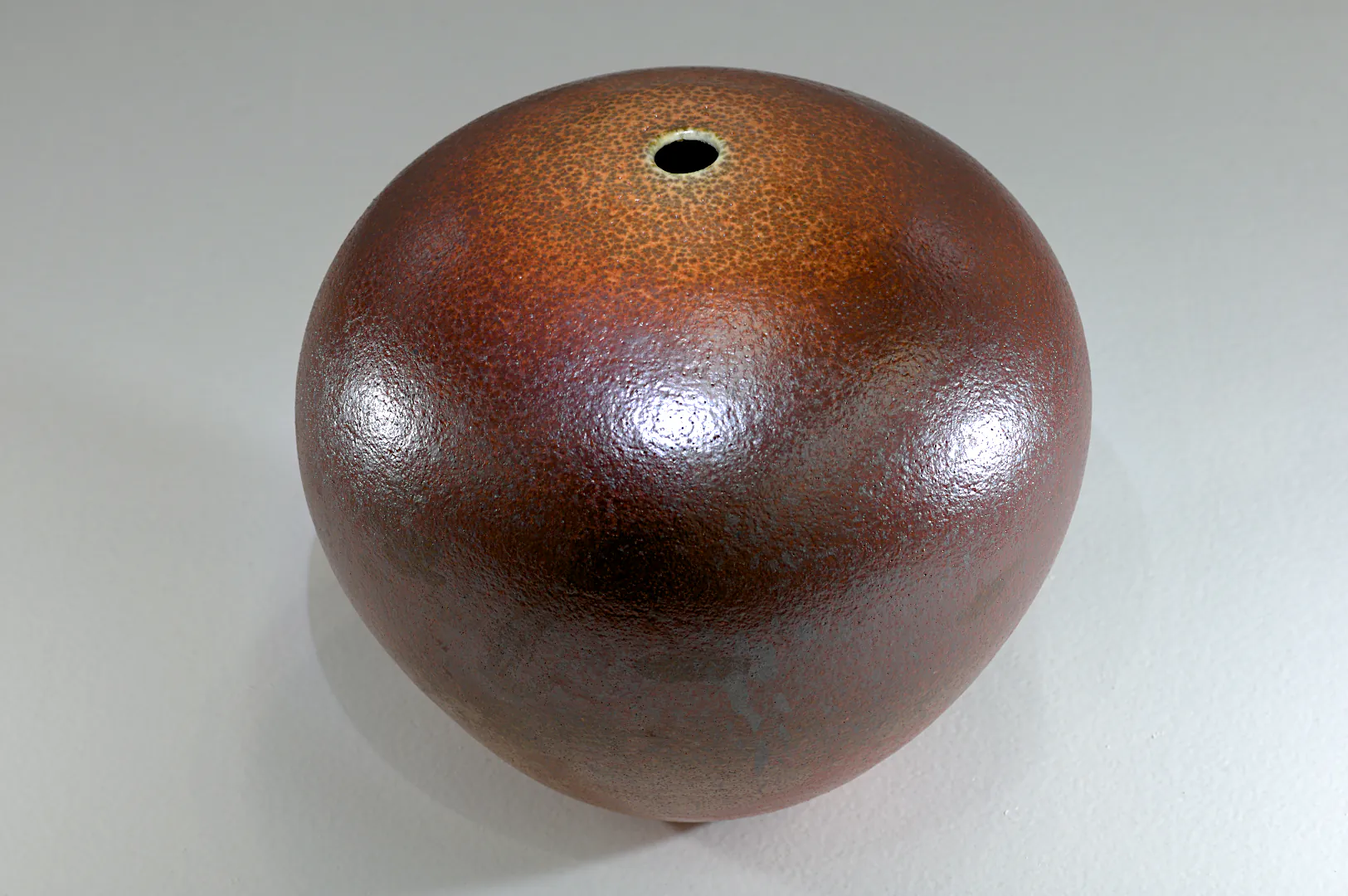
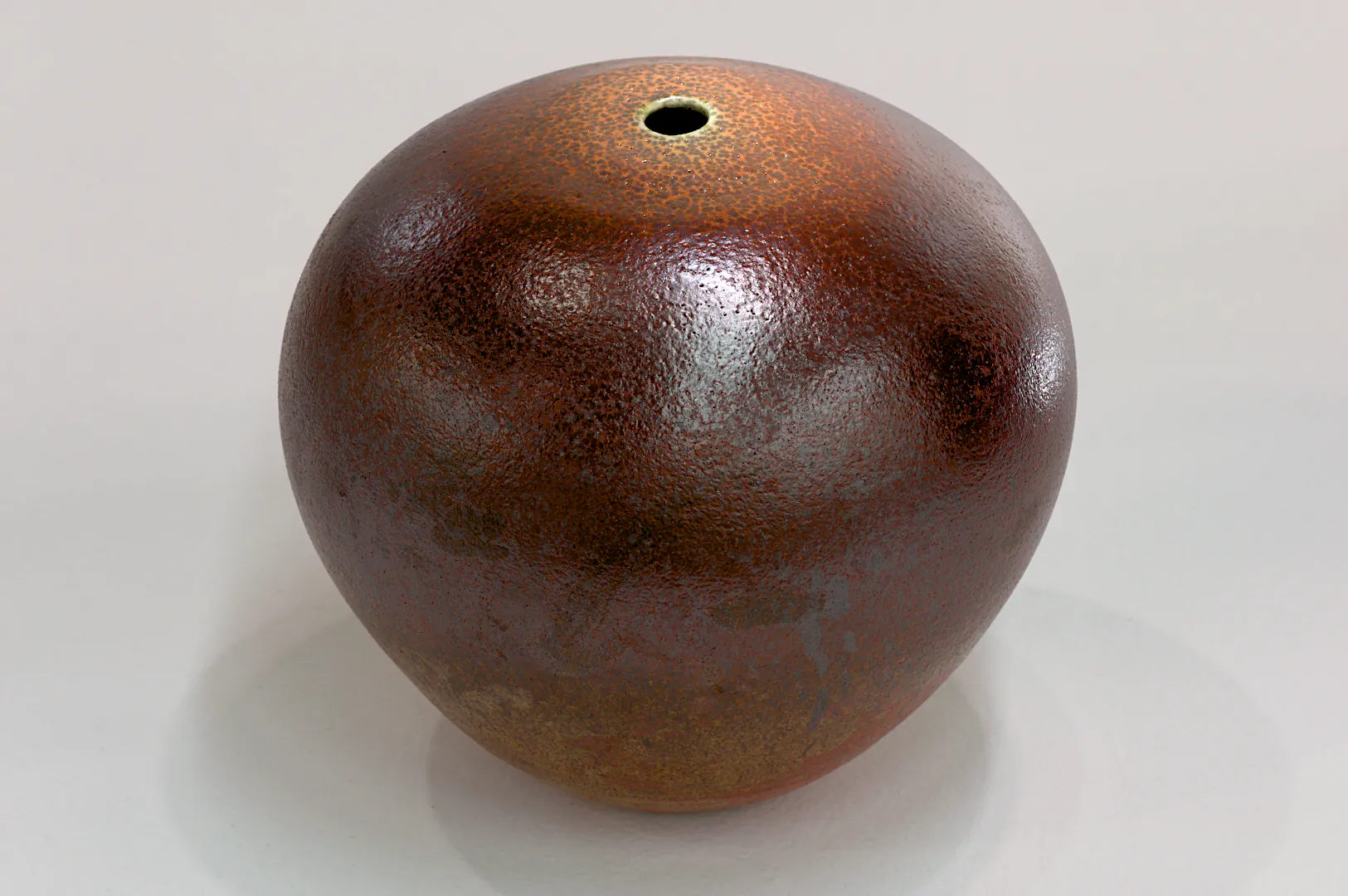
Shino glazes were first created during the Momoyama period (1573 - 1615) in Japan. Several types of shino glaze were developed exhibiting different colours and surface textures. They often have a dimpled surface texture like lemon skin or even 'crawl' away from the clay body revealing patches of unglazed clay. While such an organic, irregular surface is part of a Japanese aesthetic and was highly prized for tea ceremony wares it may be seen as a defect in the west where a perfectly even glazed surface is commonly expected in functional ware. A common variety of shino is a thick white glaze with the appearance of snow. It is thought this type of shino was a result of the desire to emulate the surface of a pure white clay body known as porcelain, which had been discovered in China.
Carbon Trap Shino Glaze
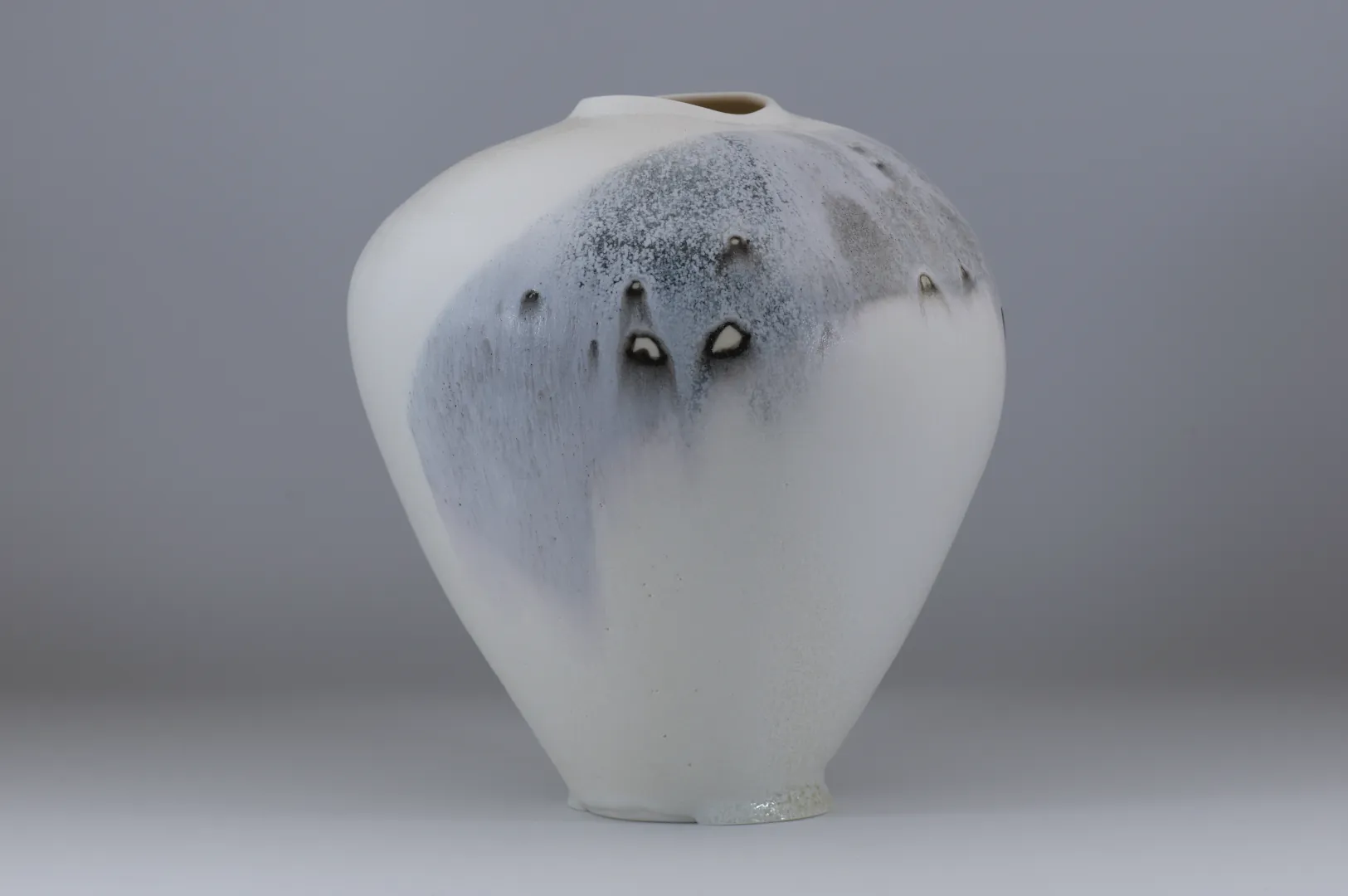
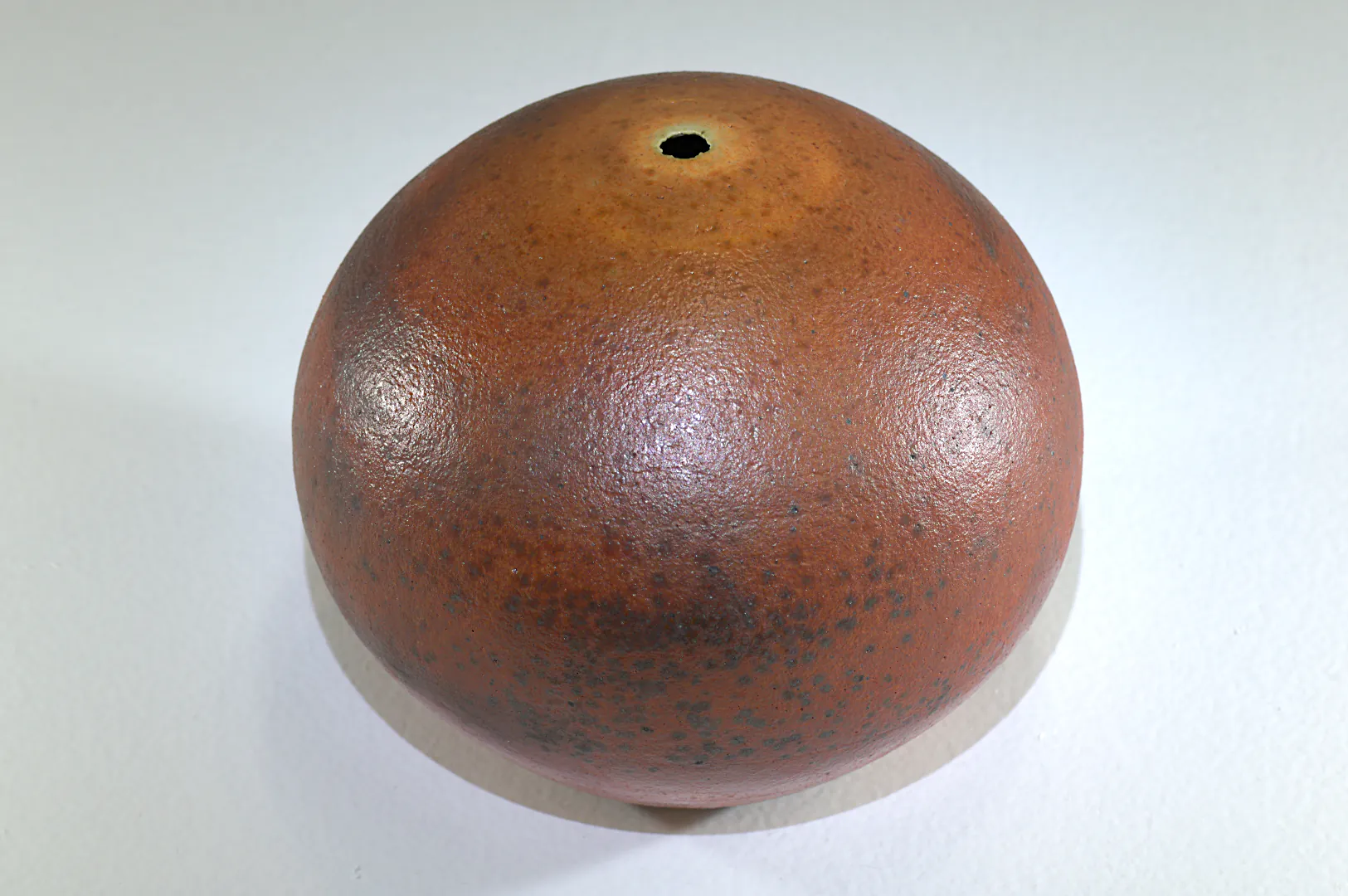
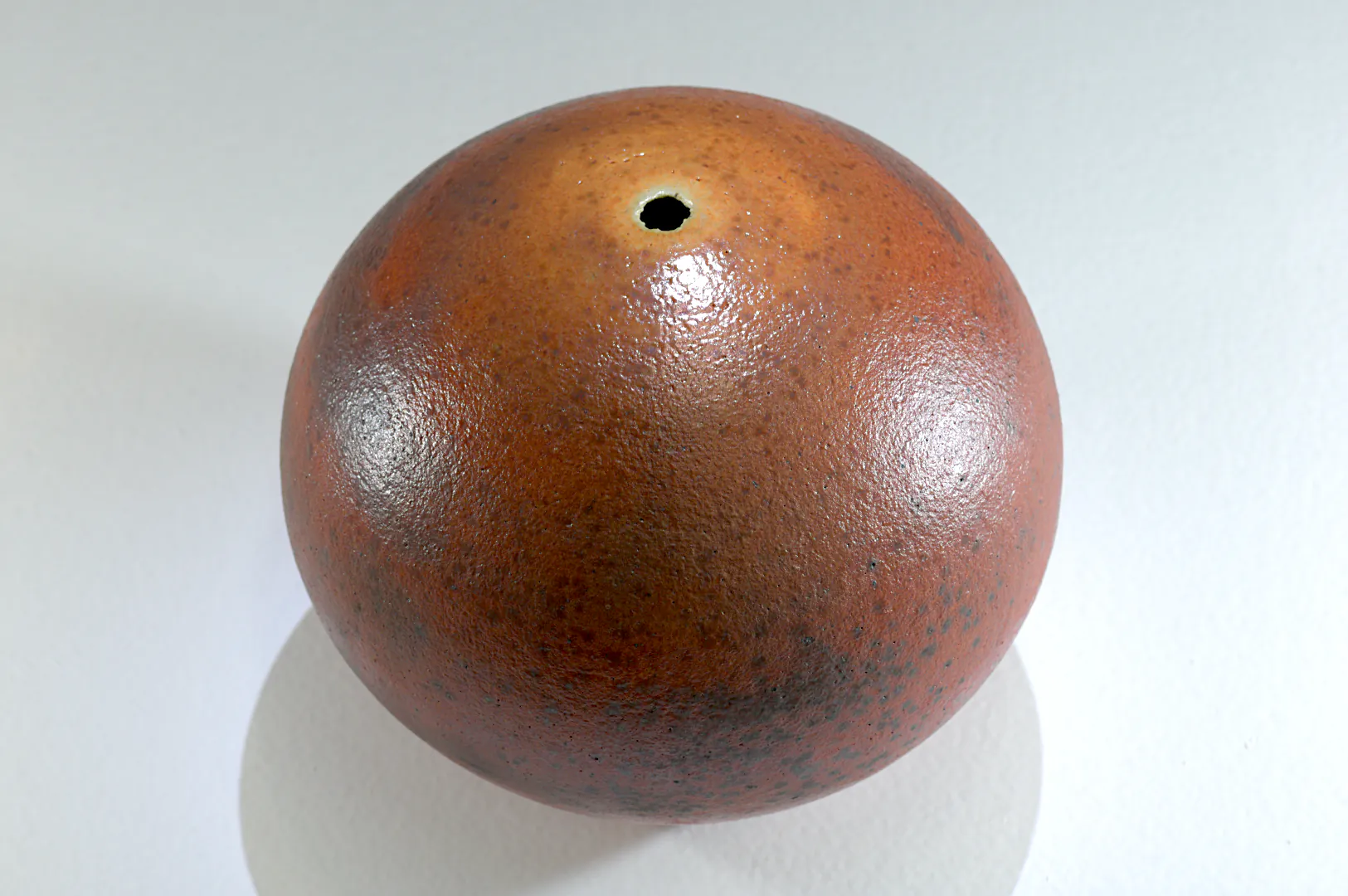
A type of glaze now known as American shino was developed in the early seventies by Viginia Witt, who, as part of a project set by the University of Minnesota to try and replicate early Japanese glazes, was the first to add soda ash to a shino type glaze. When fired in the reducing atmosphere of a gas kiln as the soda ash melts it traps the carbon from the atmosphere of the kiln resulting in the grey and black speckling of the glaze and also accounts for the peach coloured bloom. Several of the works featured here have the appearance of ripening fruit.
I adapted the glaze used on these vessels substituting American with Australian ingredients.
Carbon trap shino can be quite varied in appearance as it is very sensitive to firing conditions, thickness of application and clay body, the glaze appears quite differently on the Southern Ice porcelain cups I created in 2015.
Rippled Surface Texture
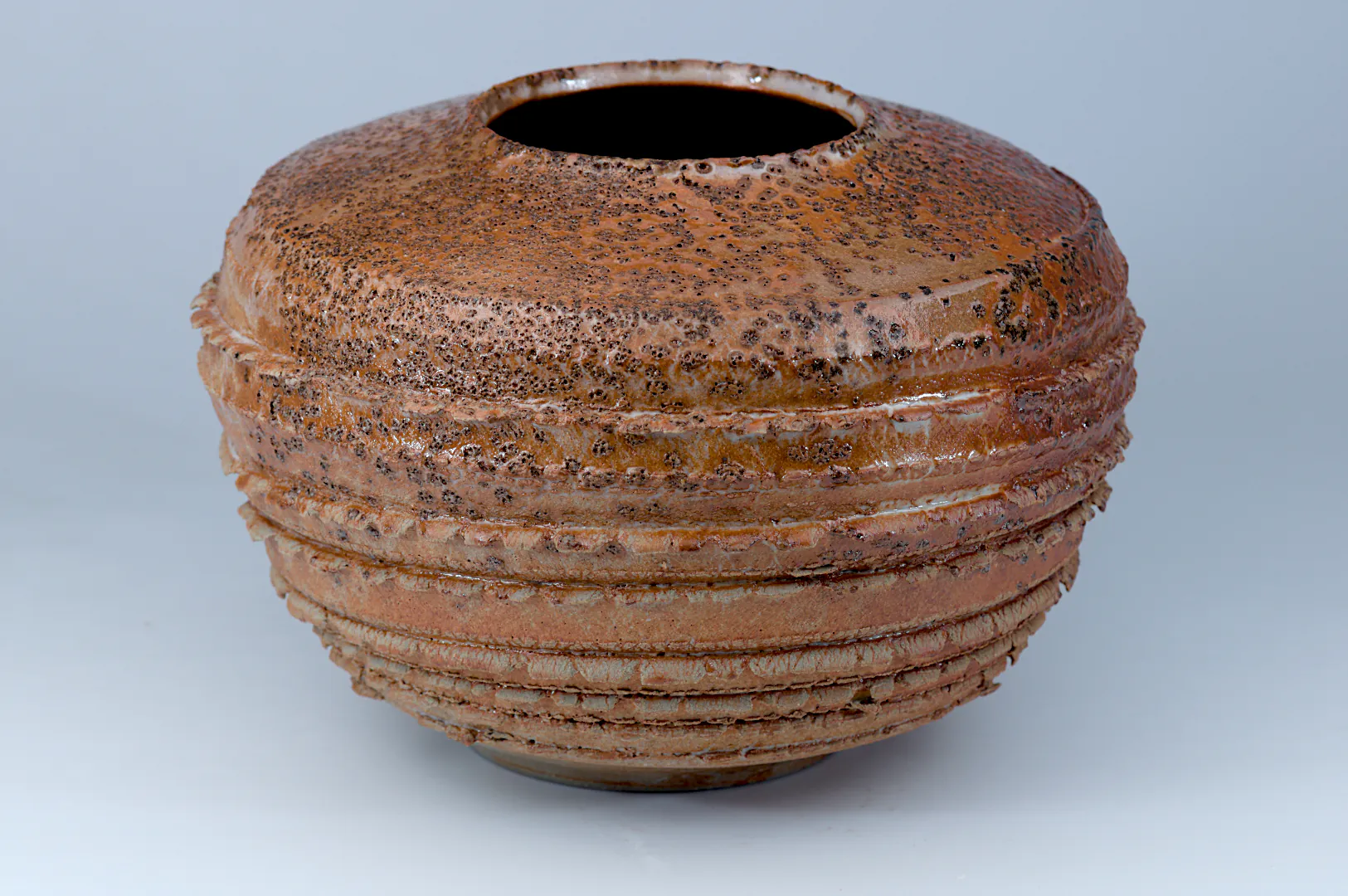
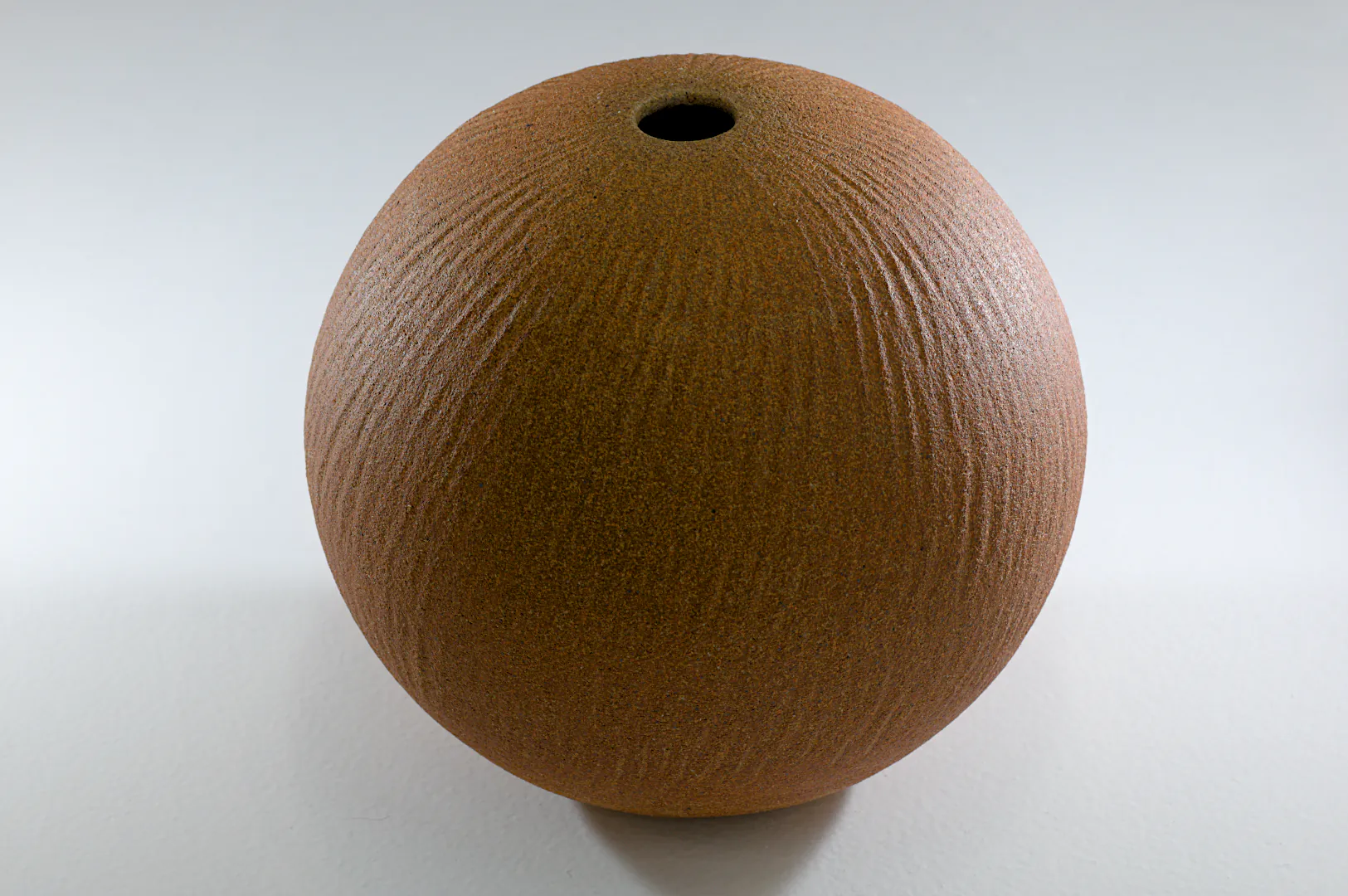
Once a piece has been thrown it is left to dry until the clay reaches the leather hard stage when it may be returned to the wheel for final shaping. A metal loop tool is applied to the surface as it spins to carve a foot ring or resolve the profile of the form in a process known as turning.
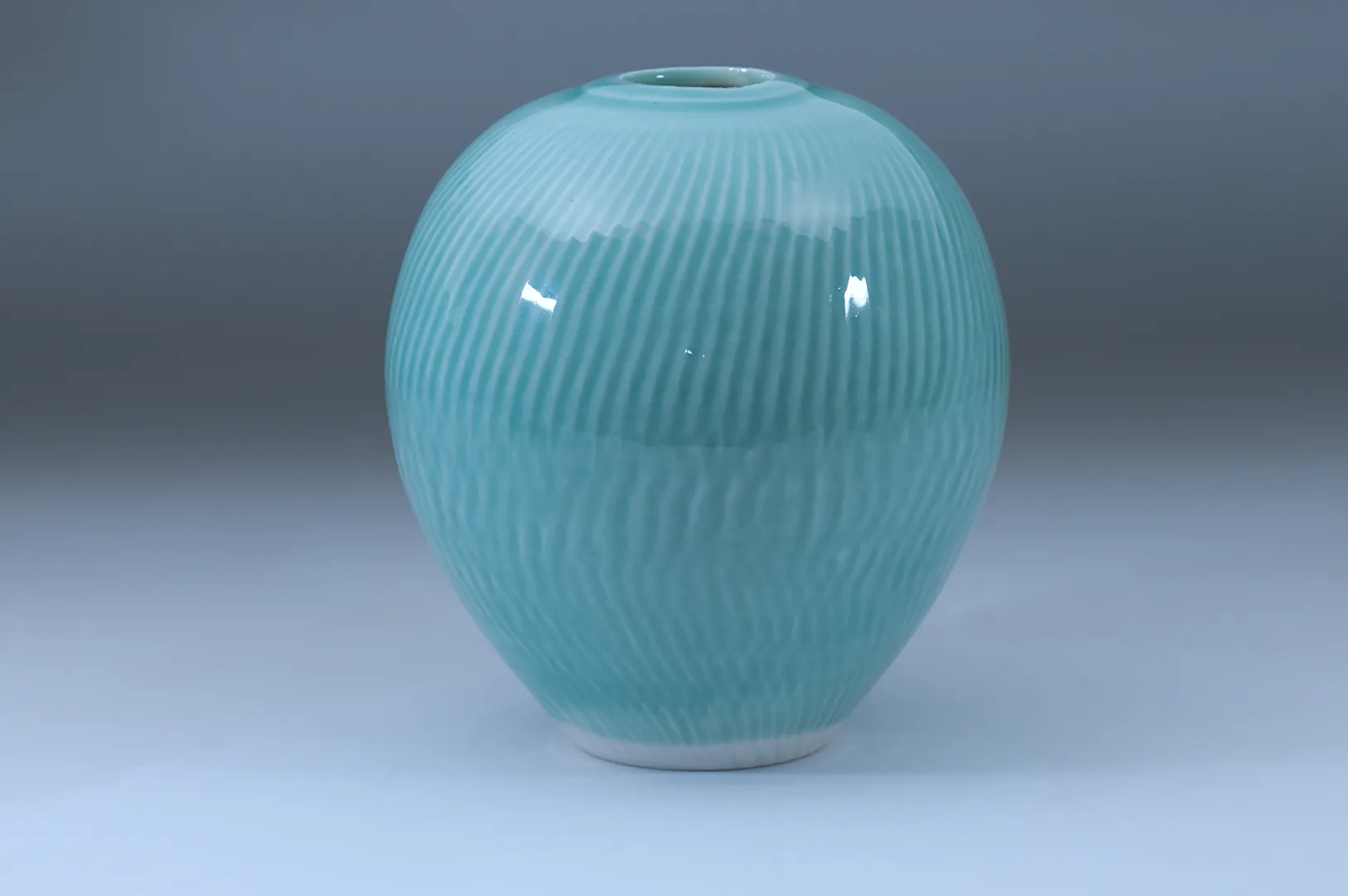
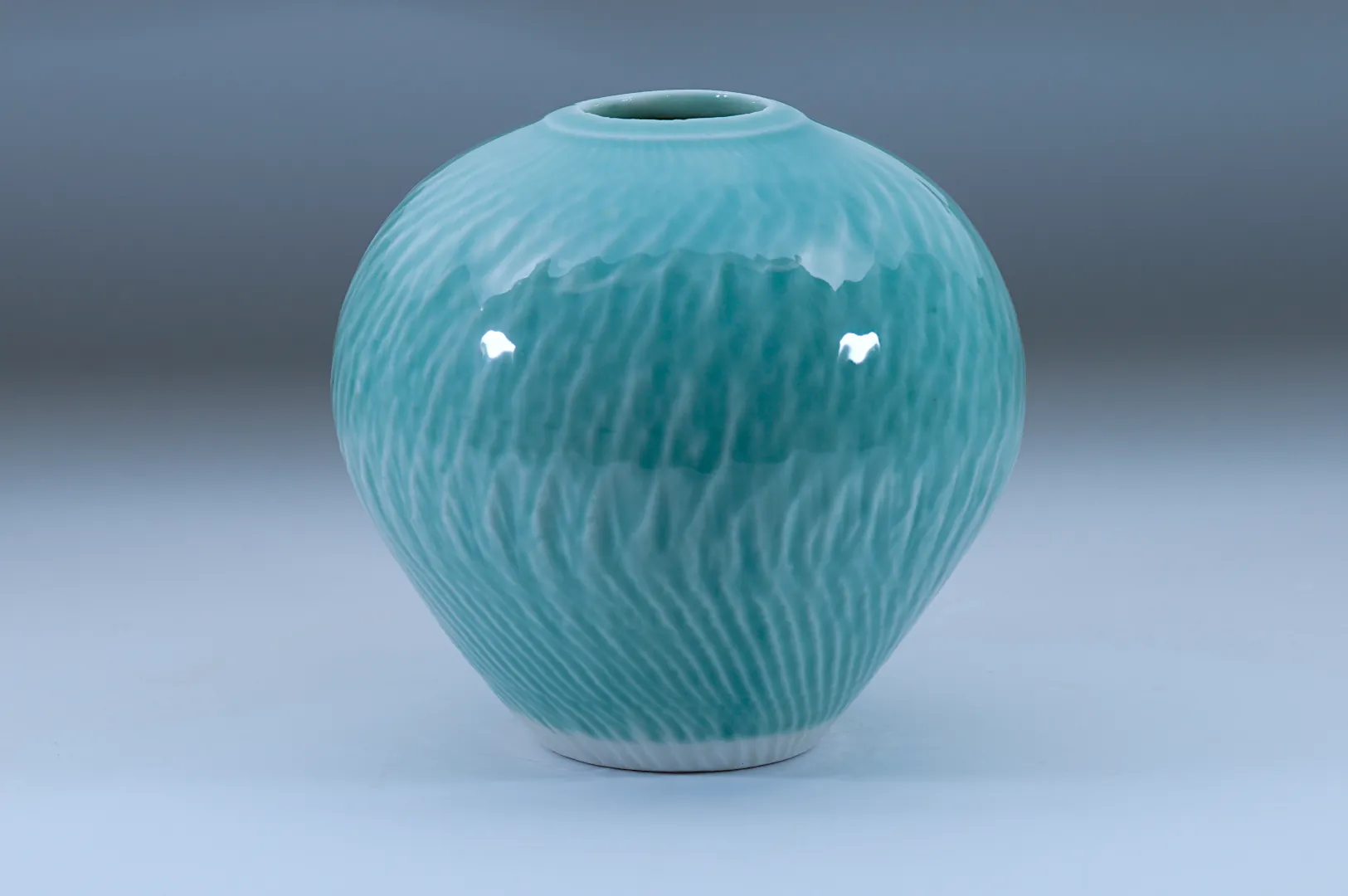
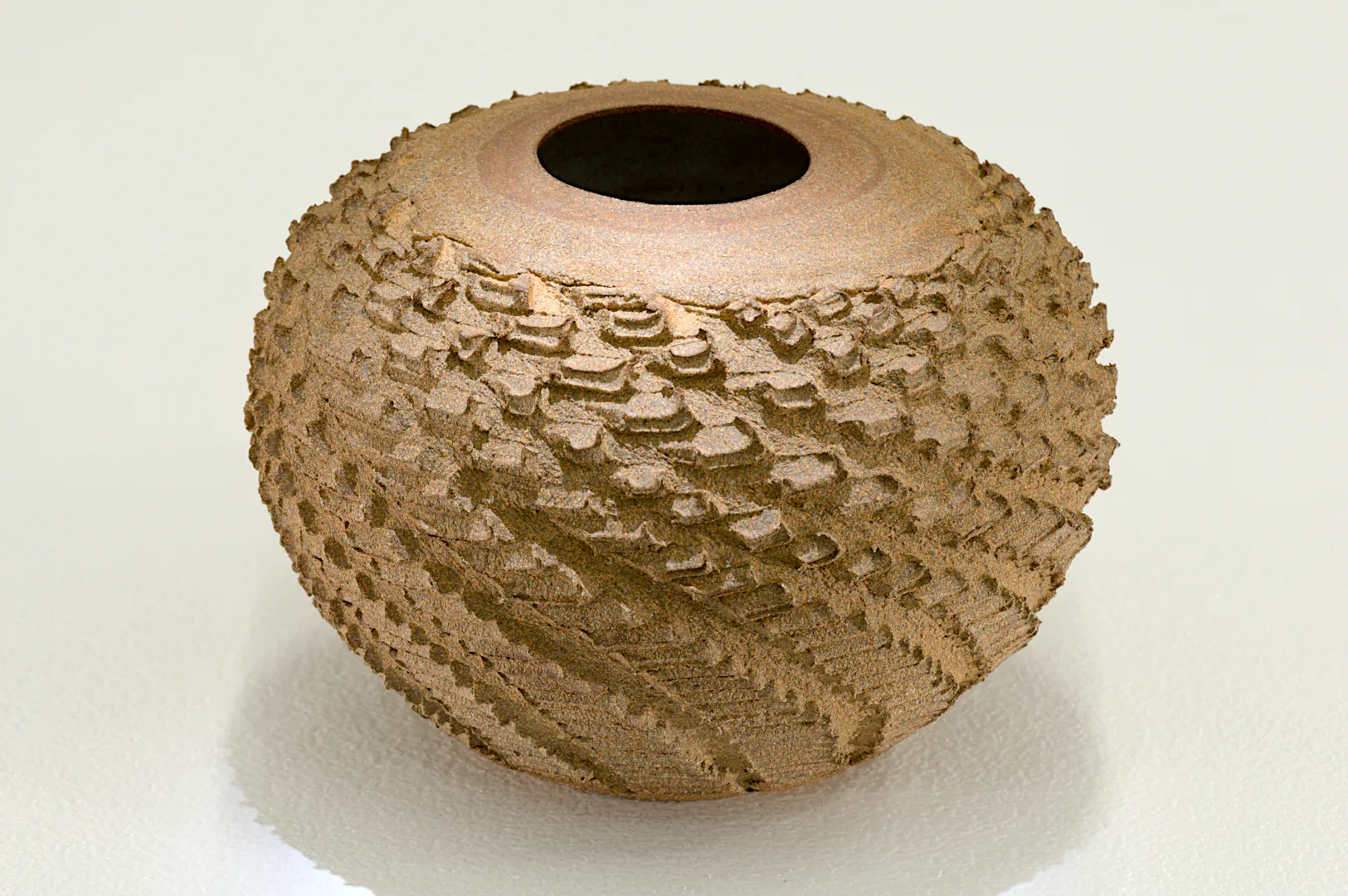
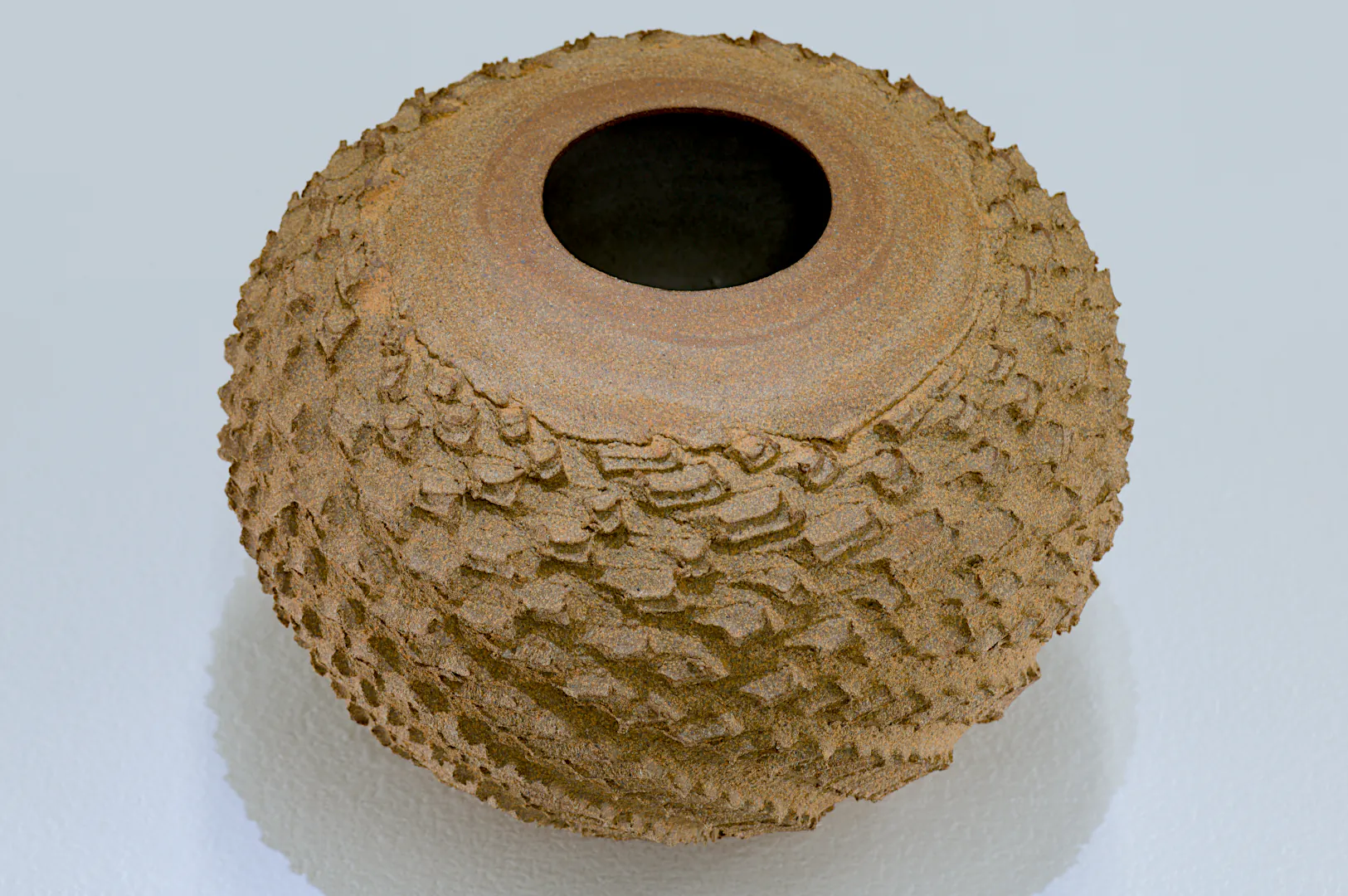
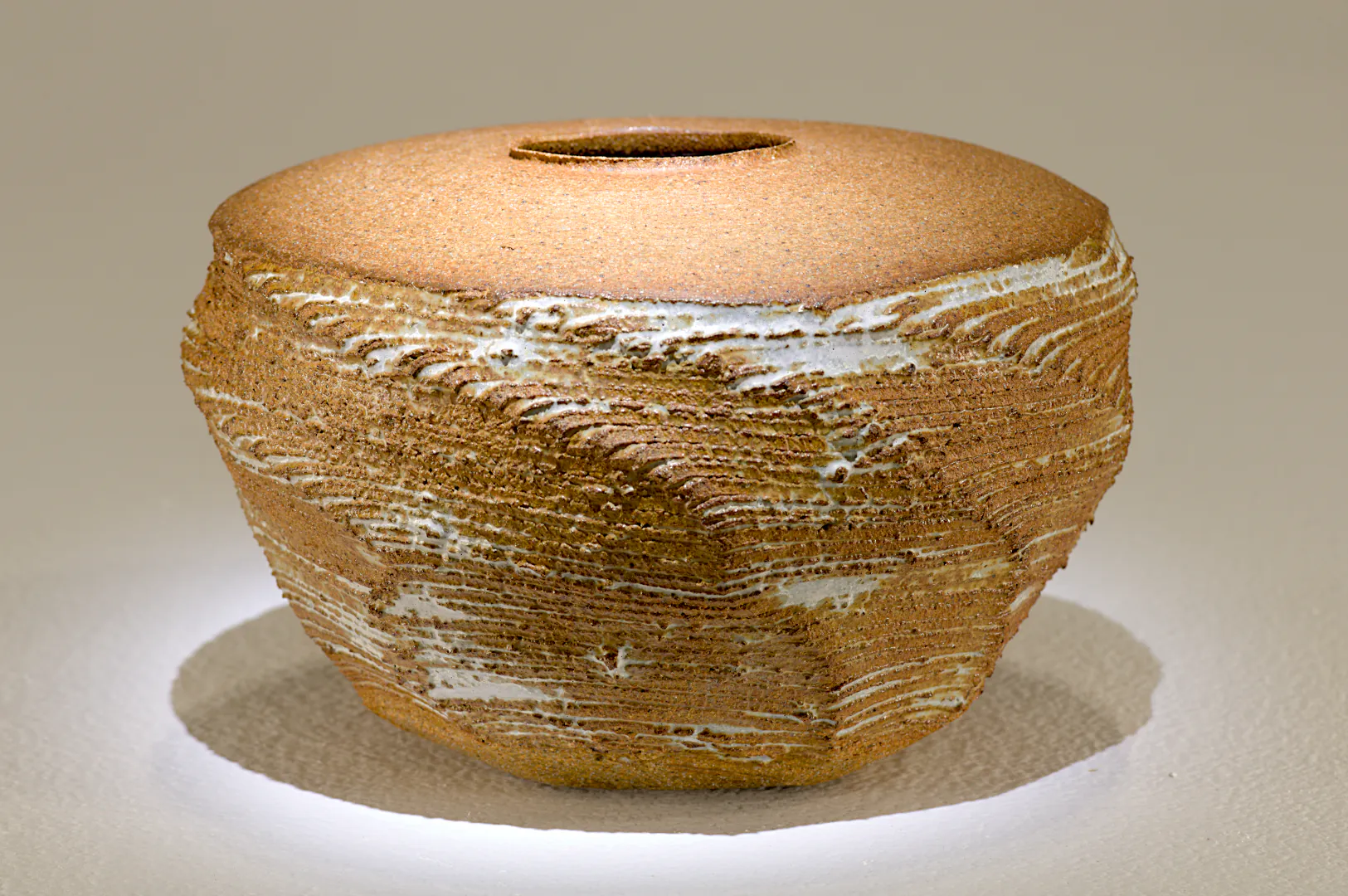
A certain combination of speed of spin, type and dryness of clay and amount of pressure applied can cause the loop tool to skip over the surface as it spins in a process known as chattering, this may be suppressed or encouraged to give a decorative textured surface. The surface of Spherical Vase 3 was created in this way resulting in a texture not unlike the rippled surface of wet sand after the tide has gone out with the unglazed orange sandy clay reinforcing the effect. A rippled water effect has been created on the Southern Ice porcelain Rippled Spheres 1 and 2 using a transparent turquoise glaze over a chattered surface.
