

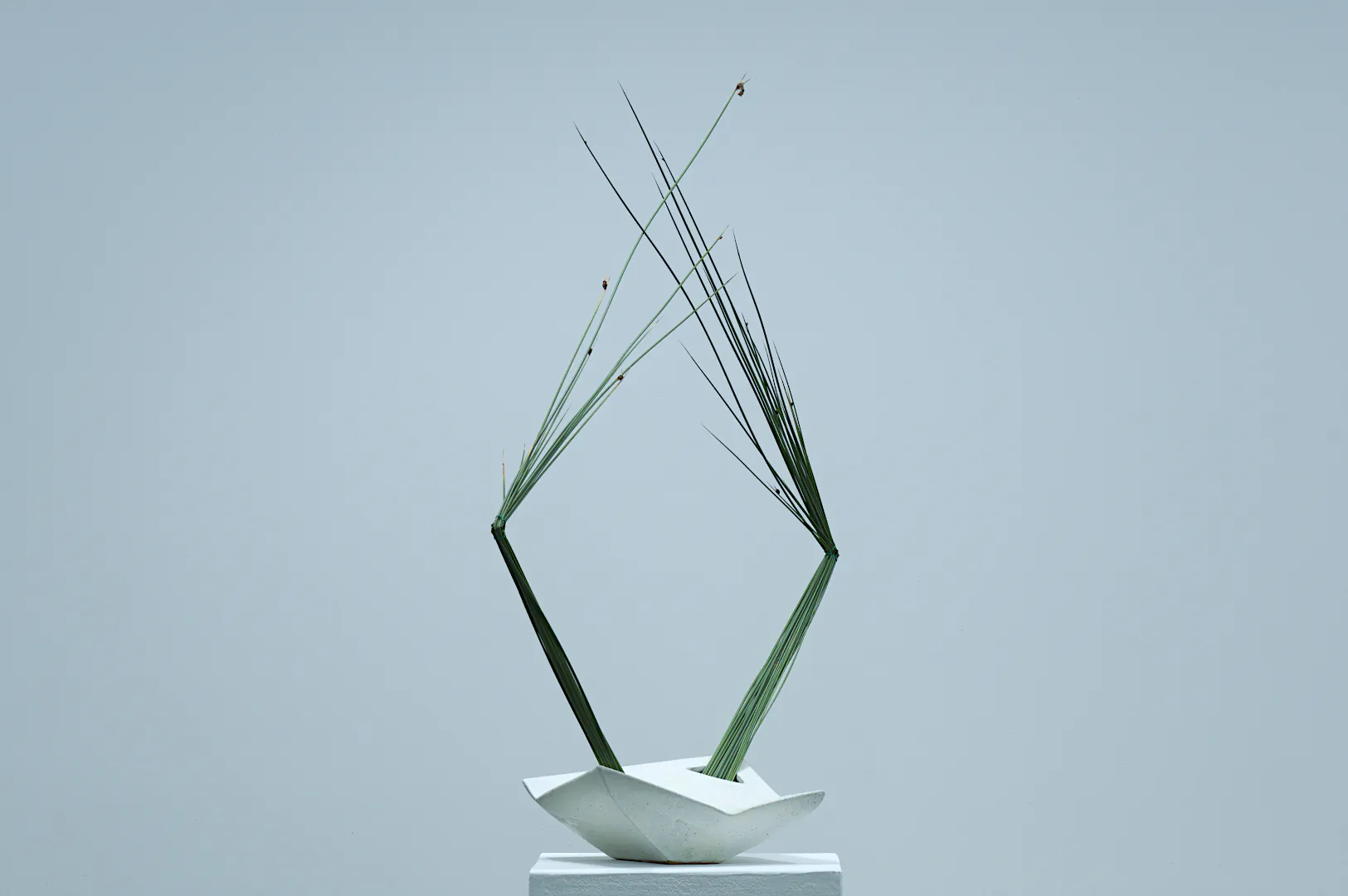

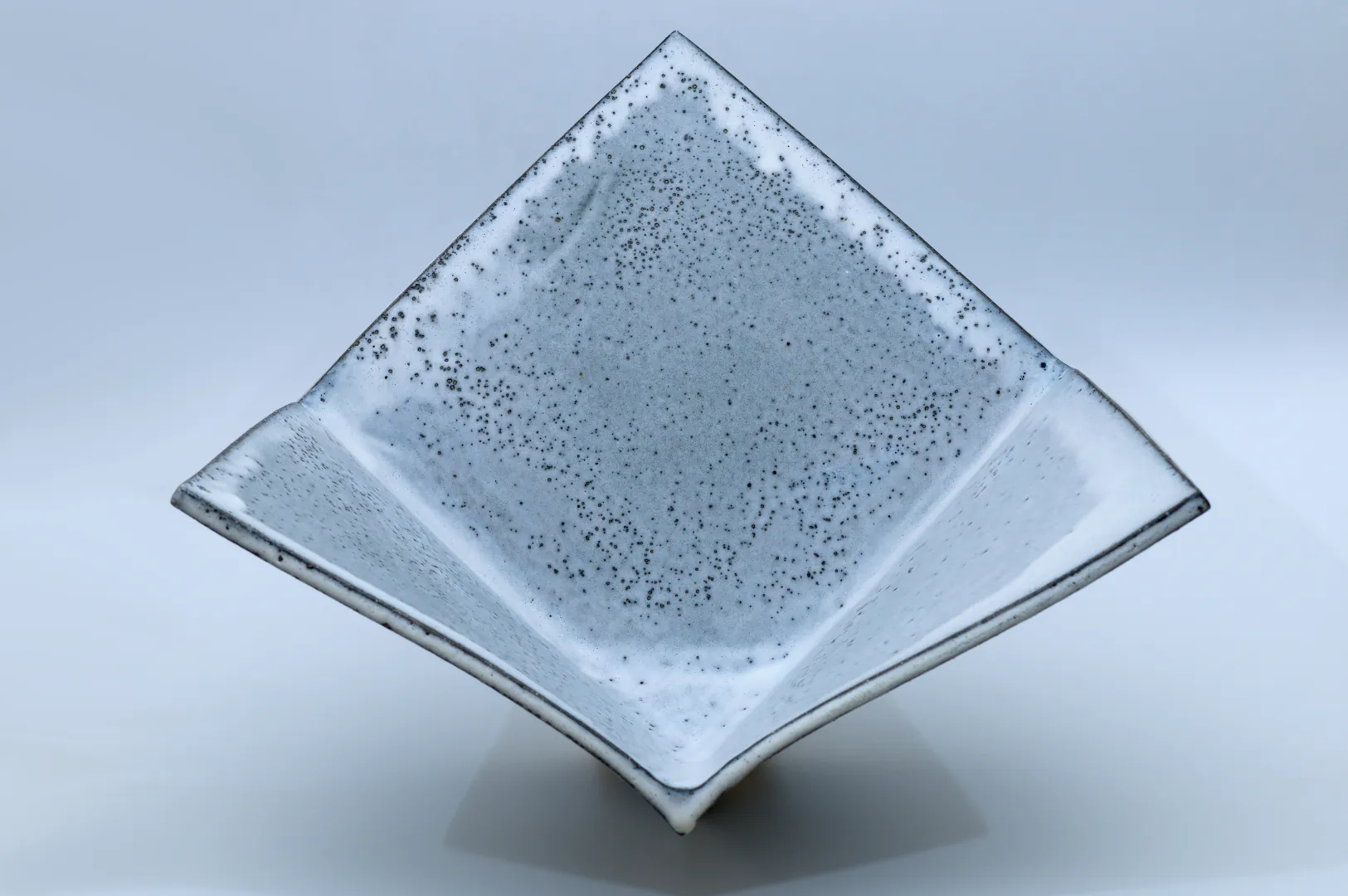
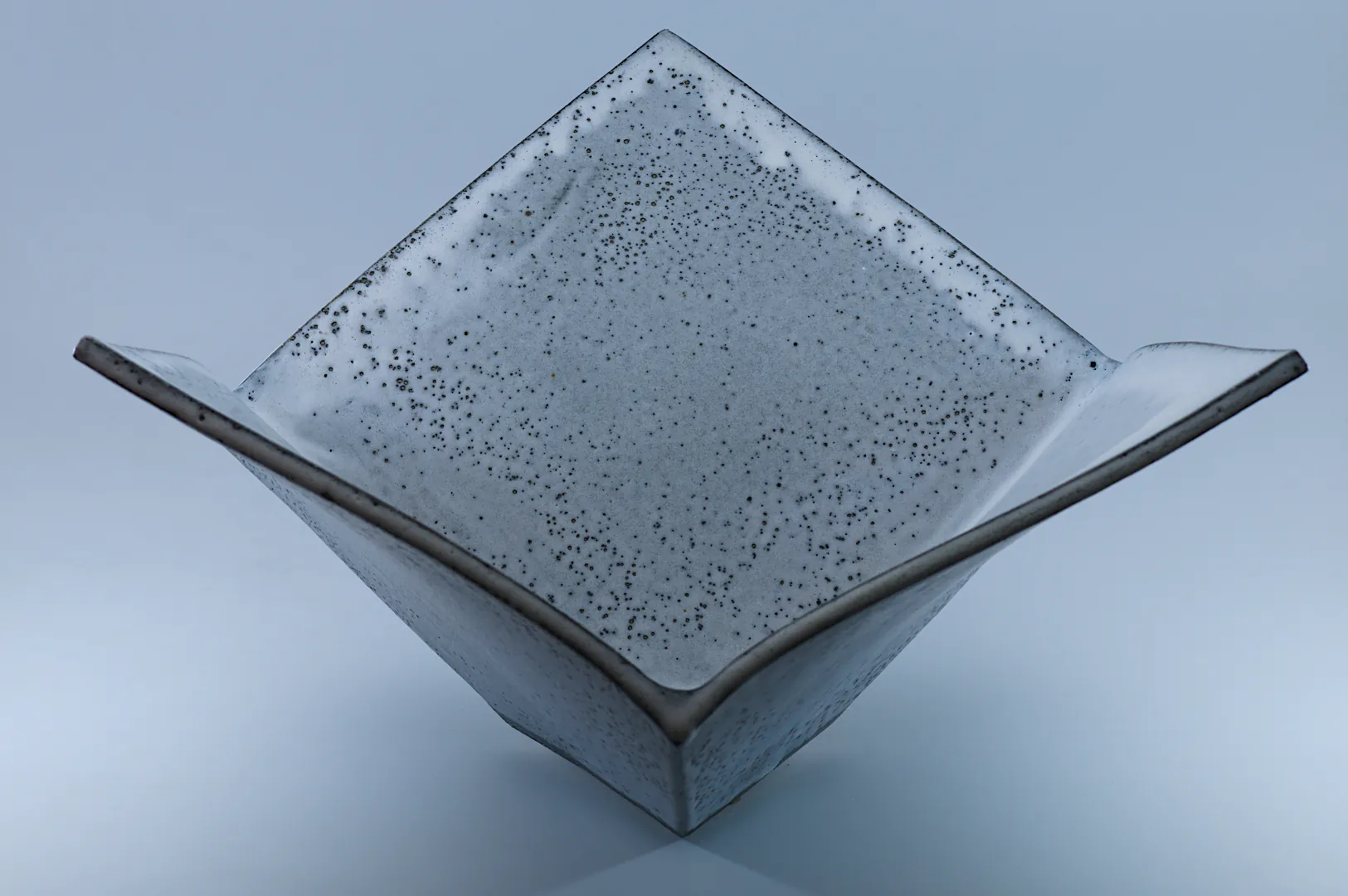
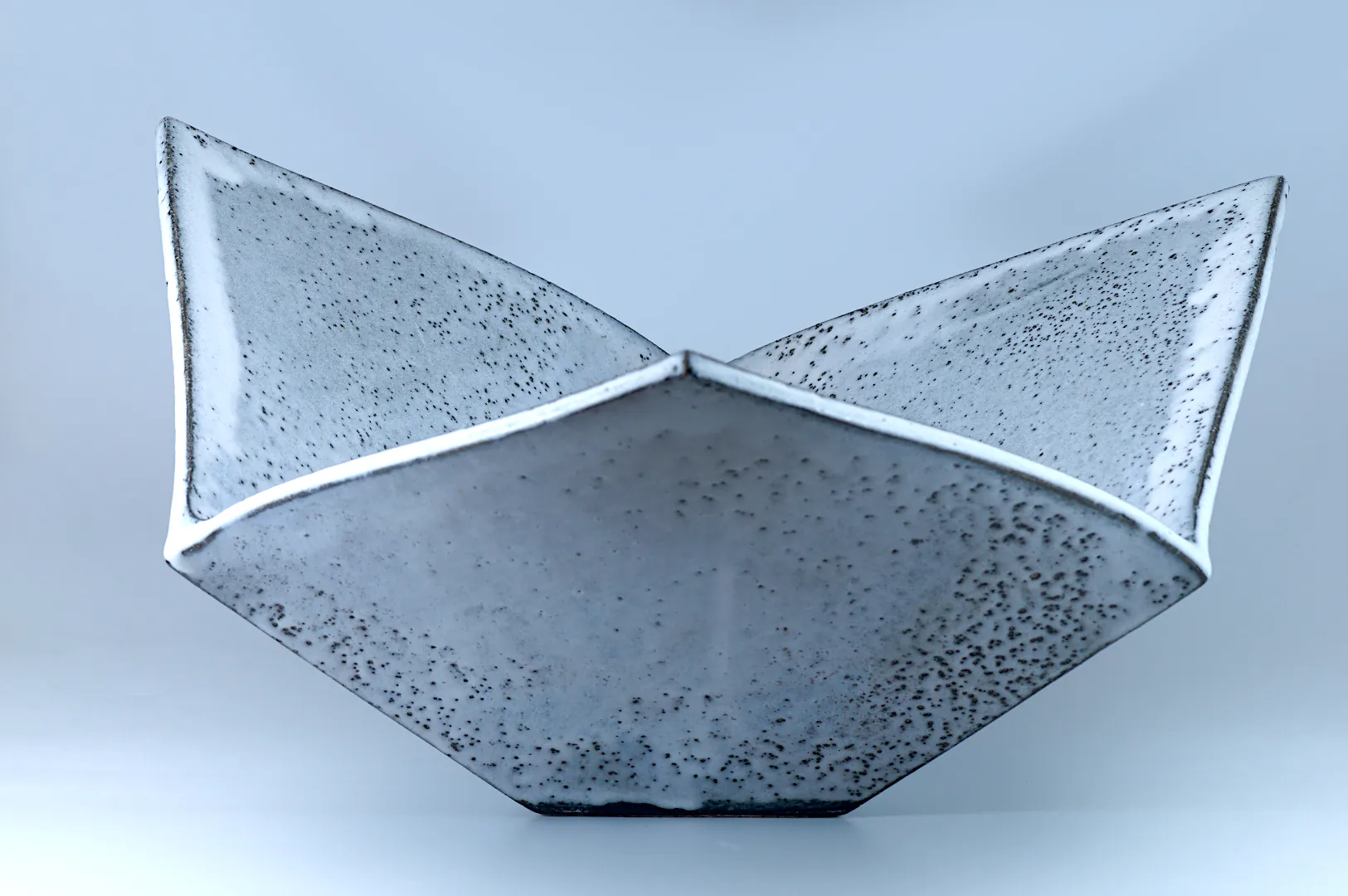
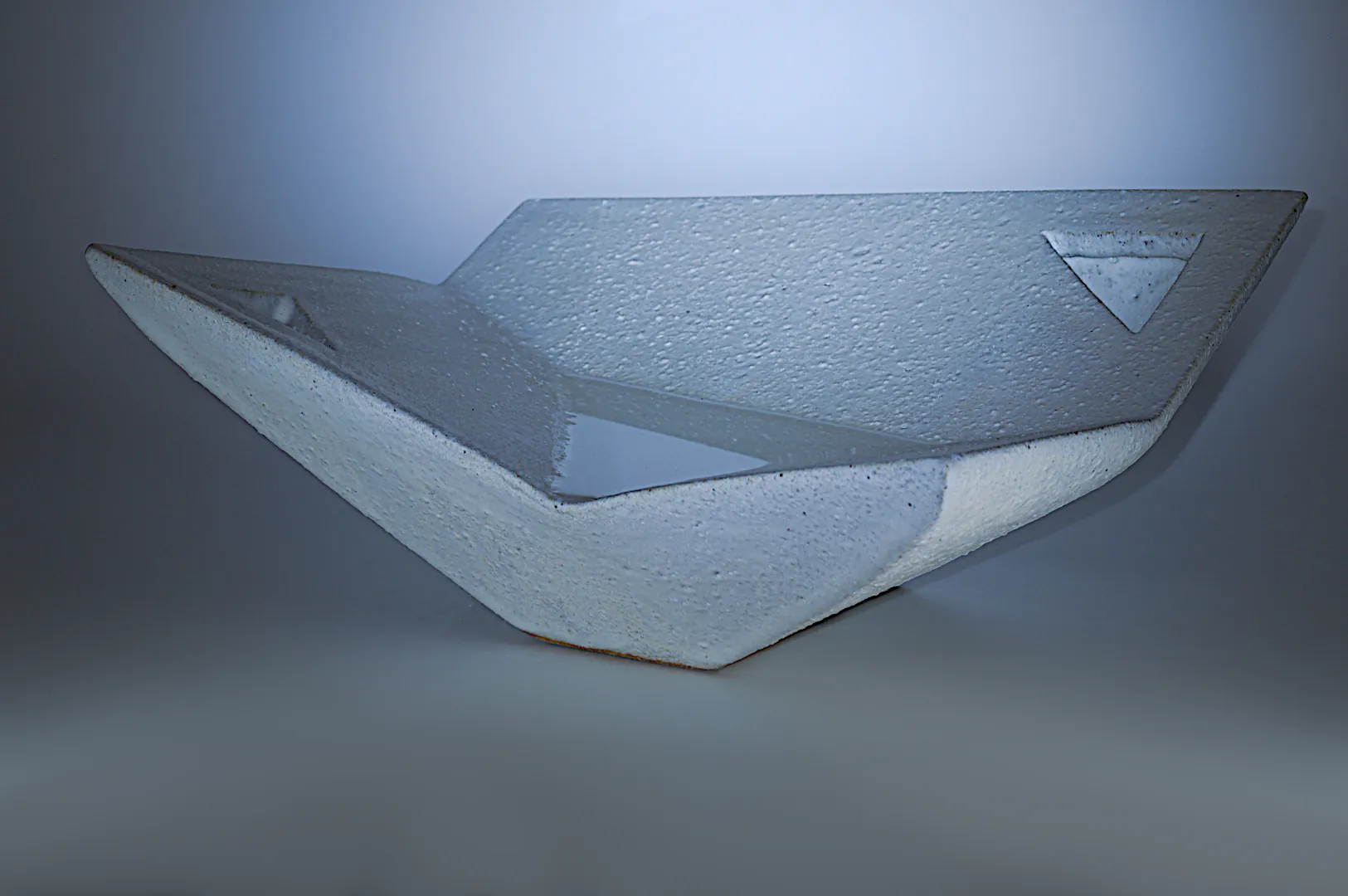
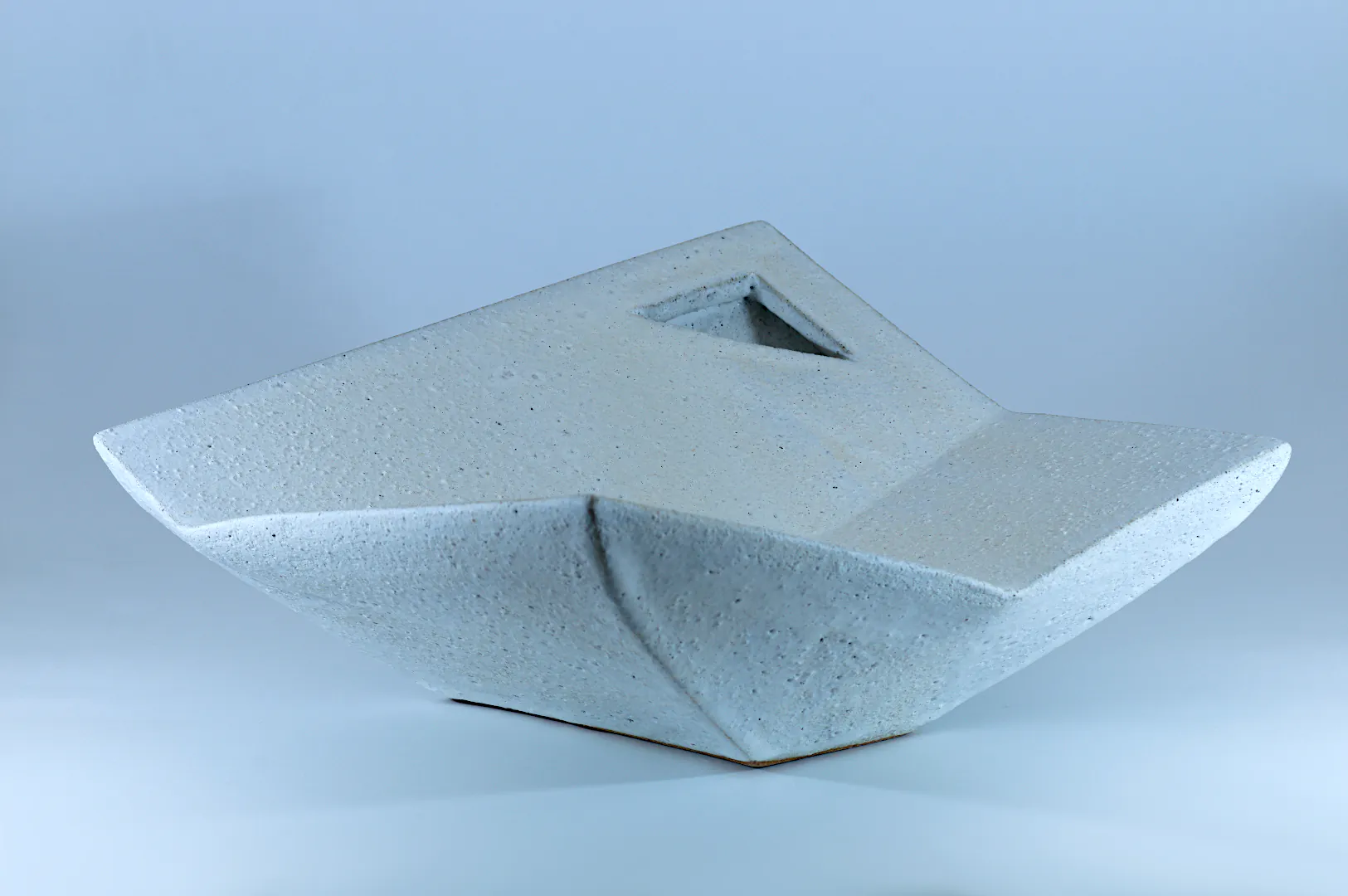
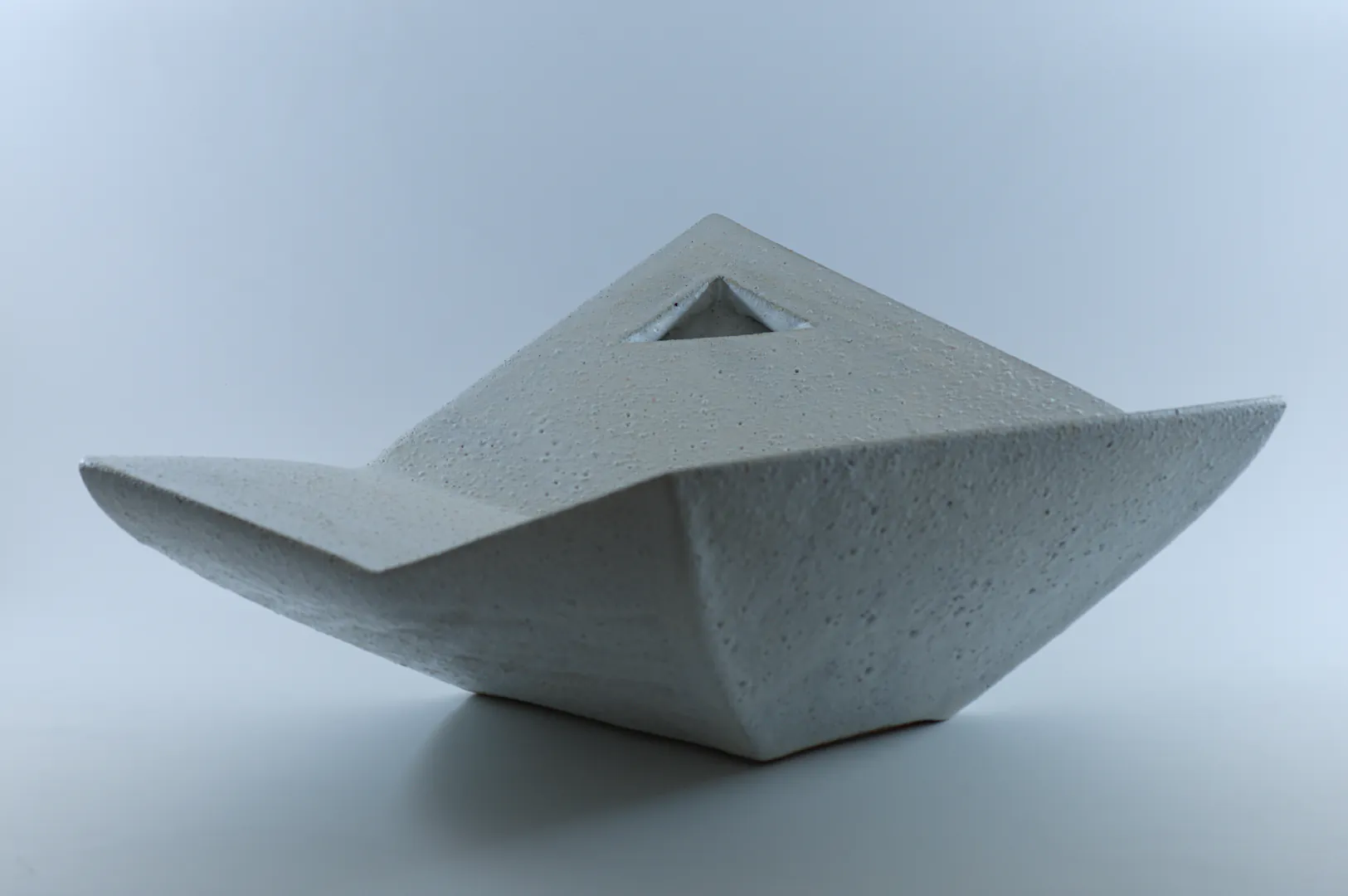
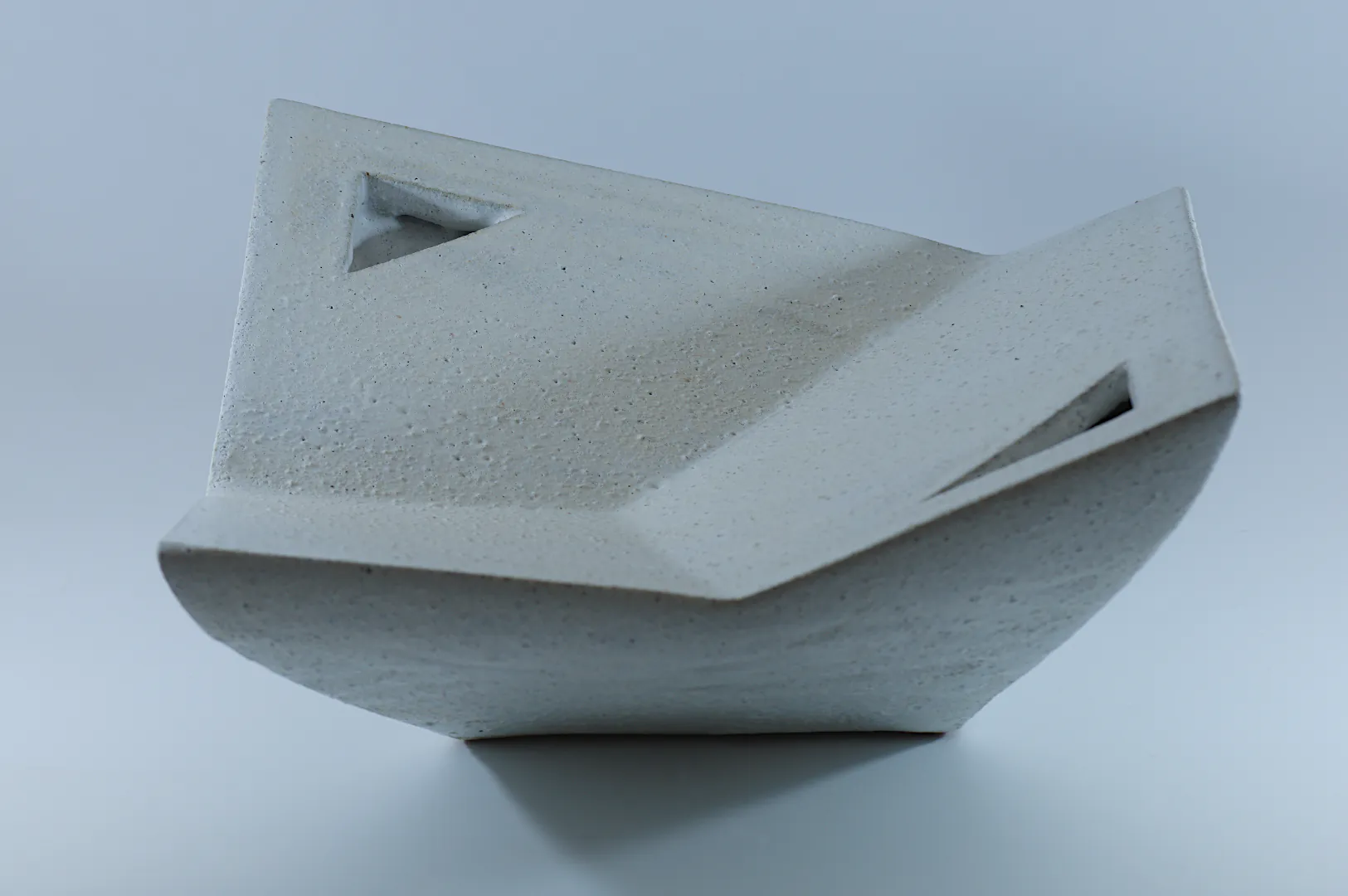
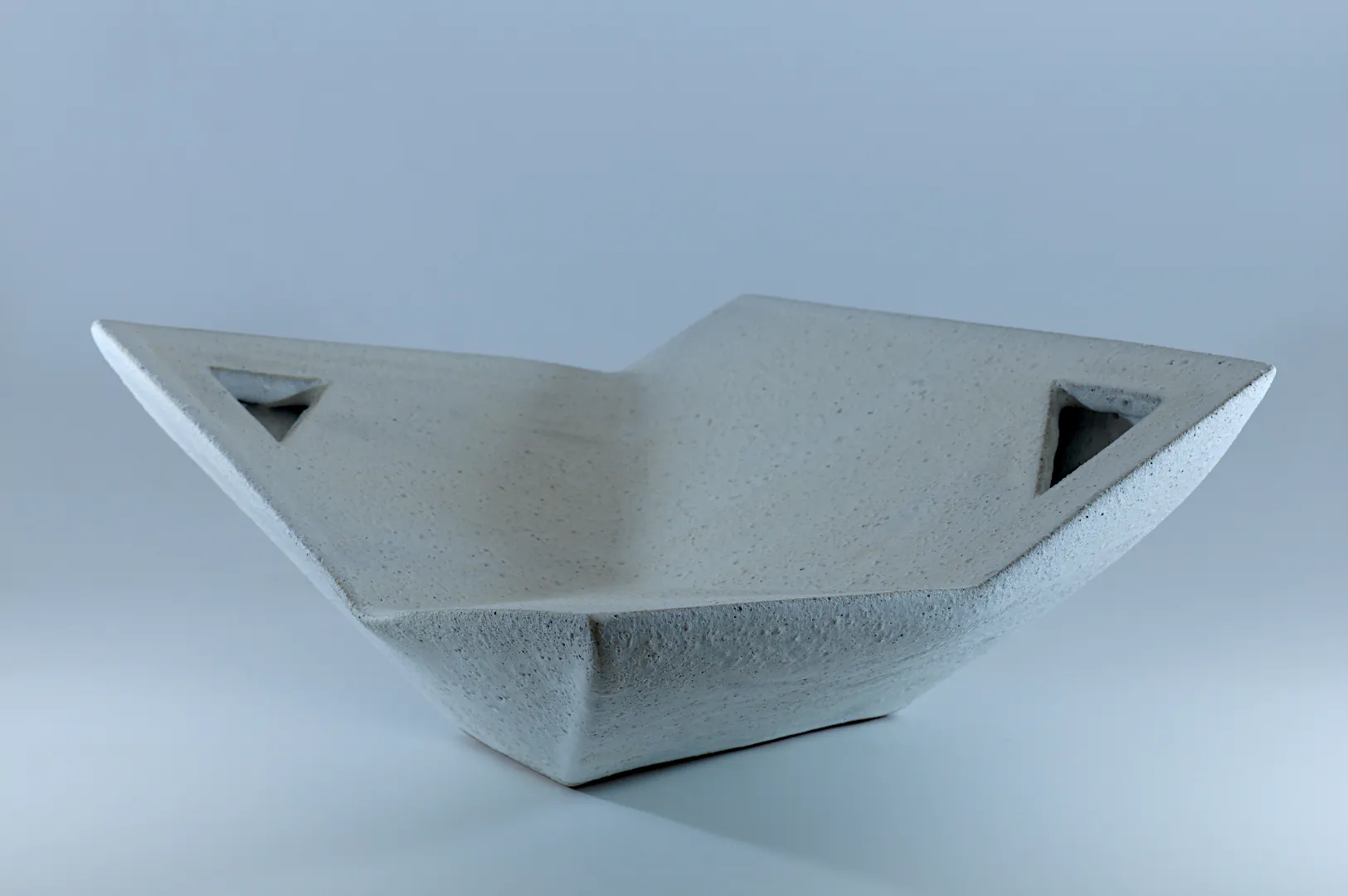
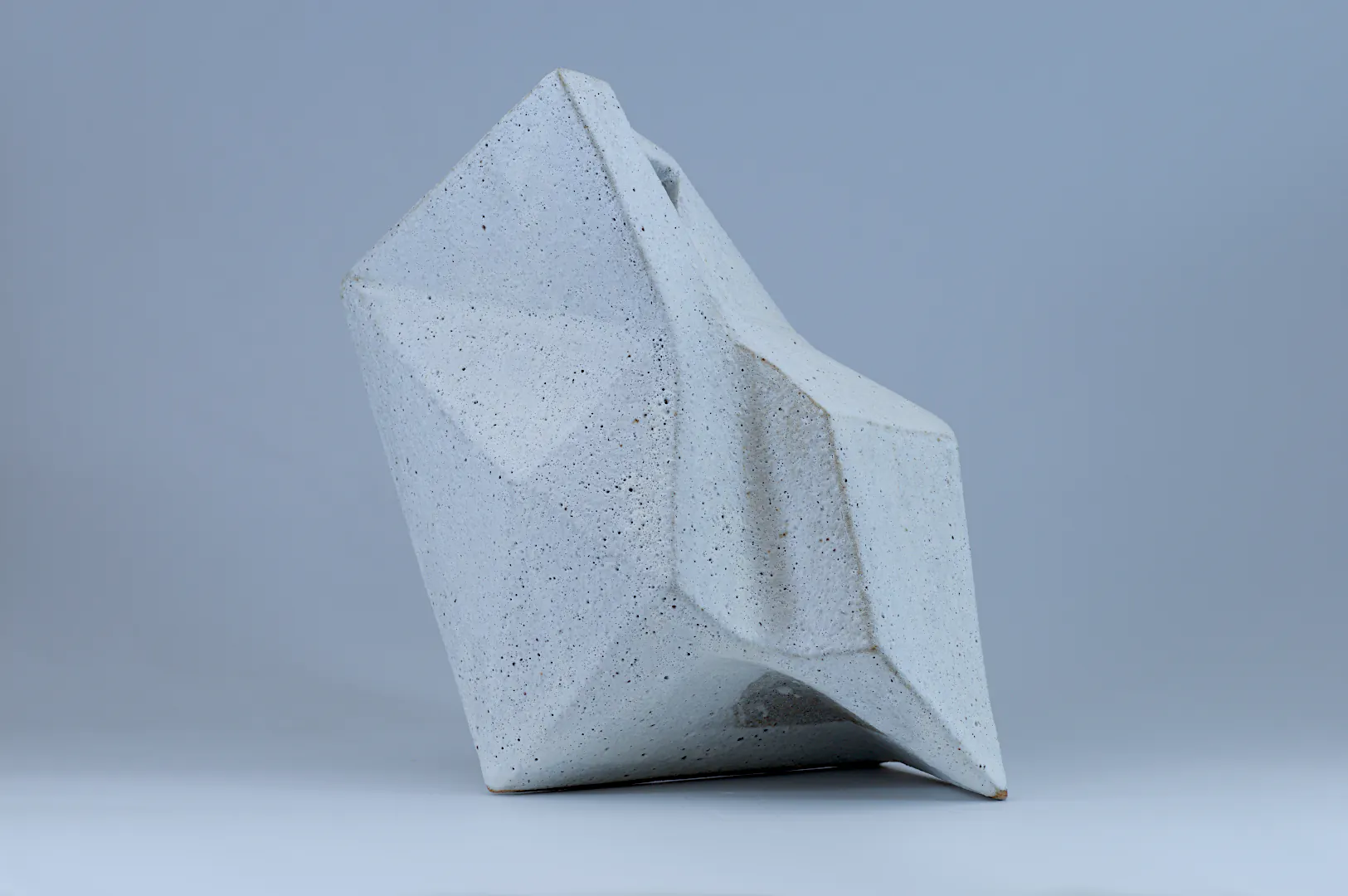
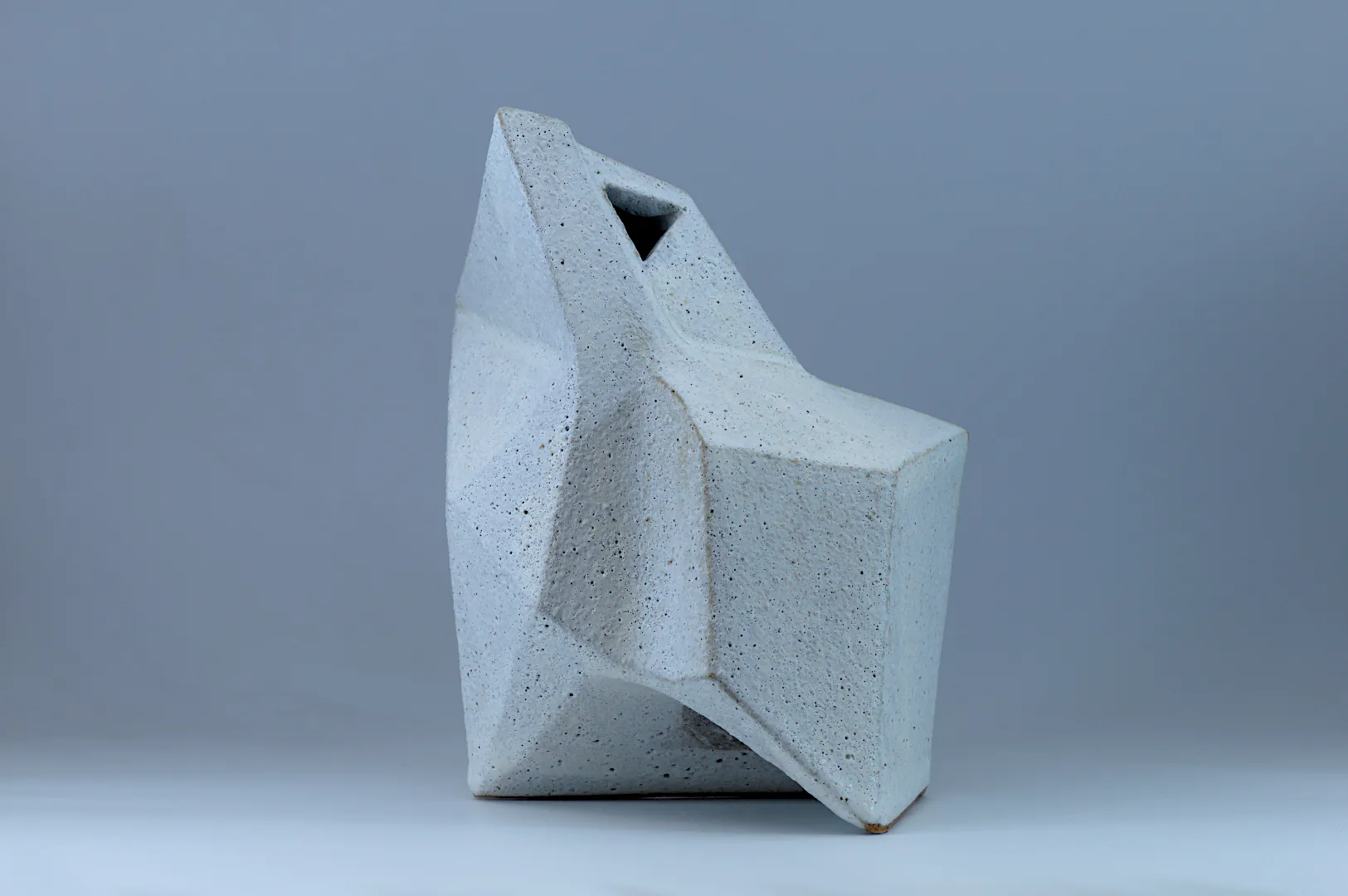
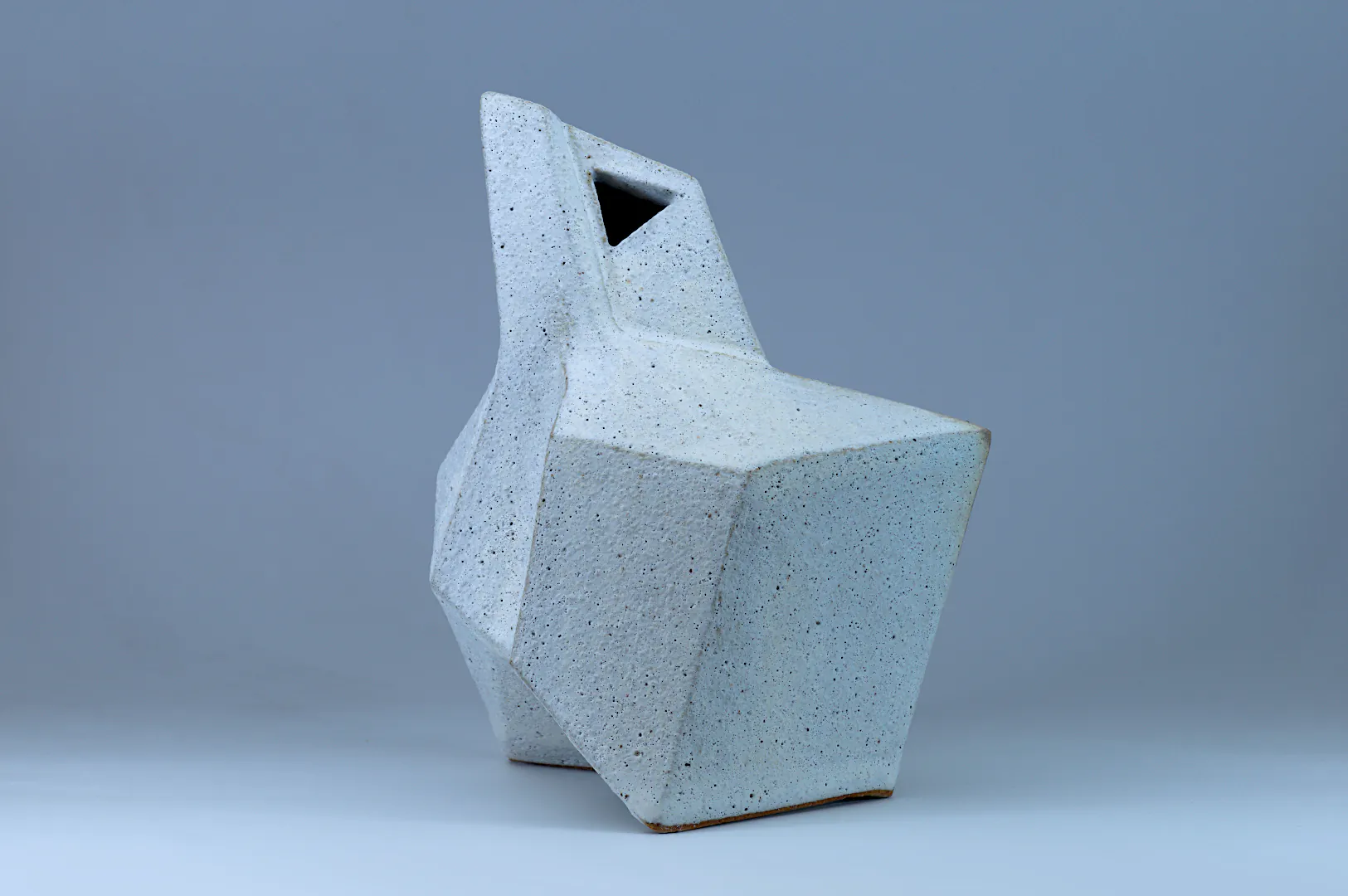
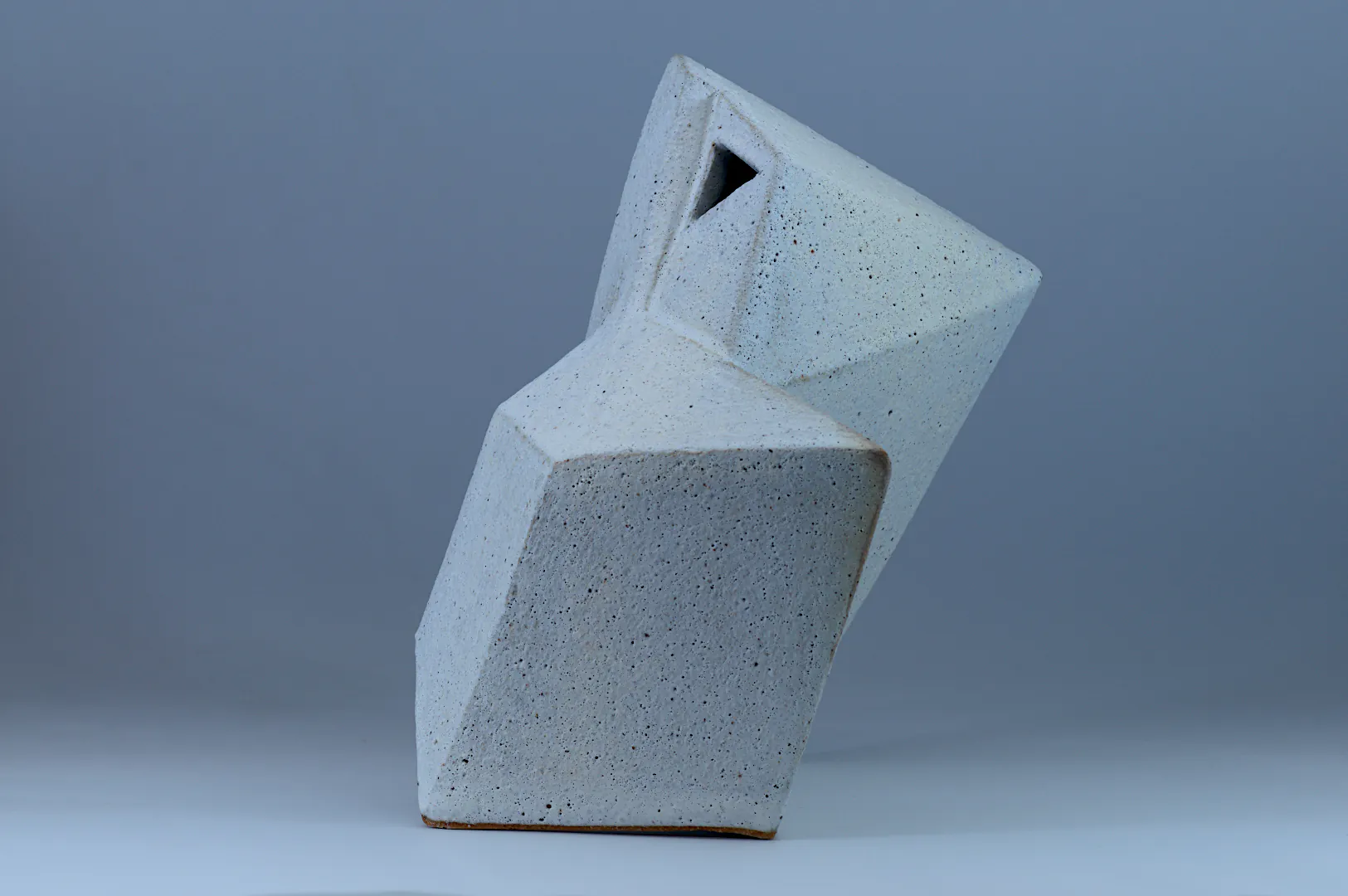
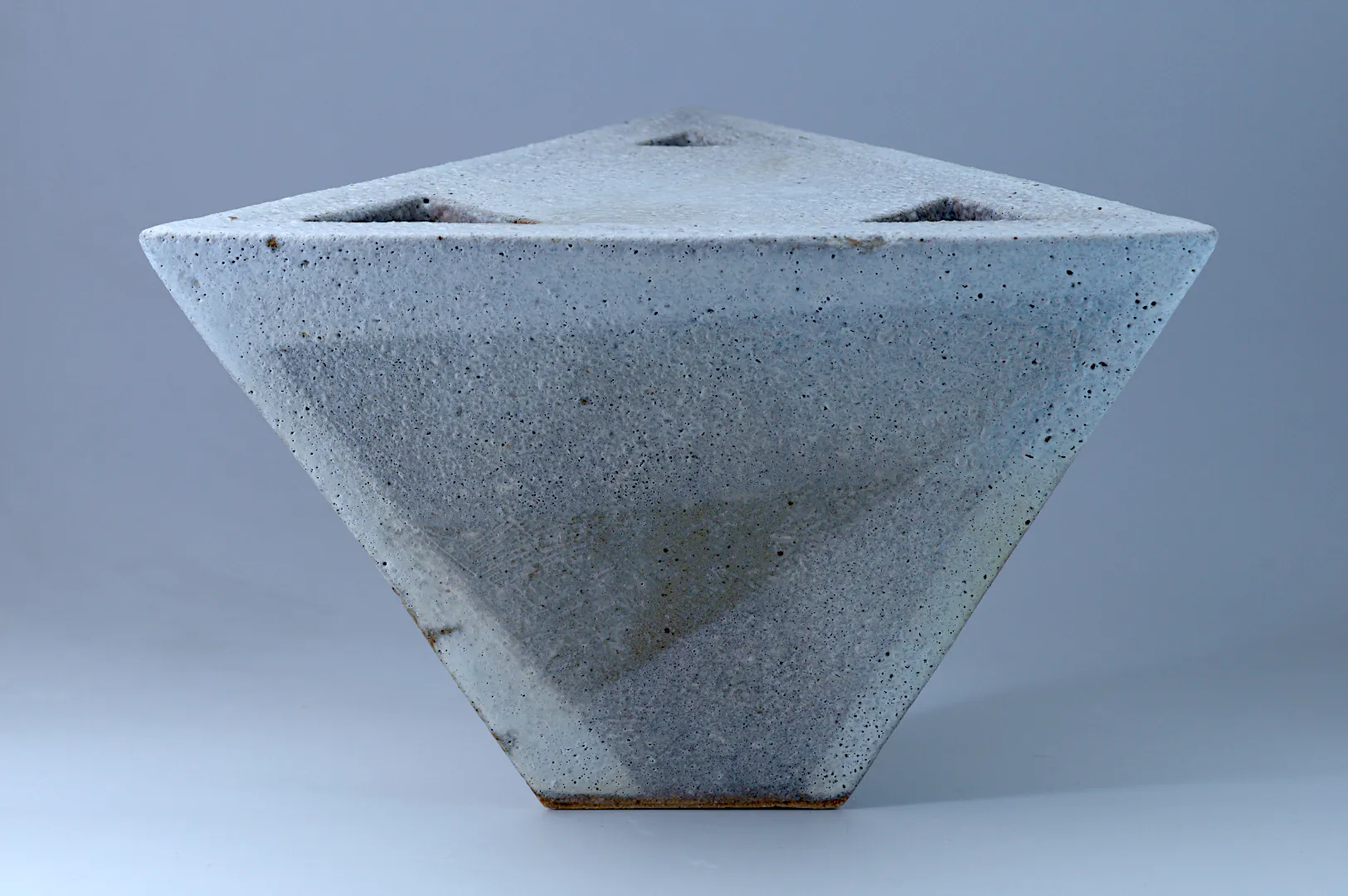
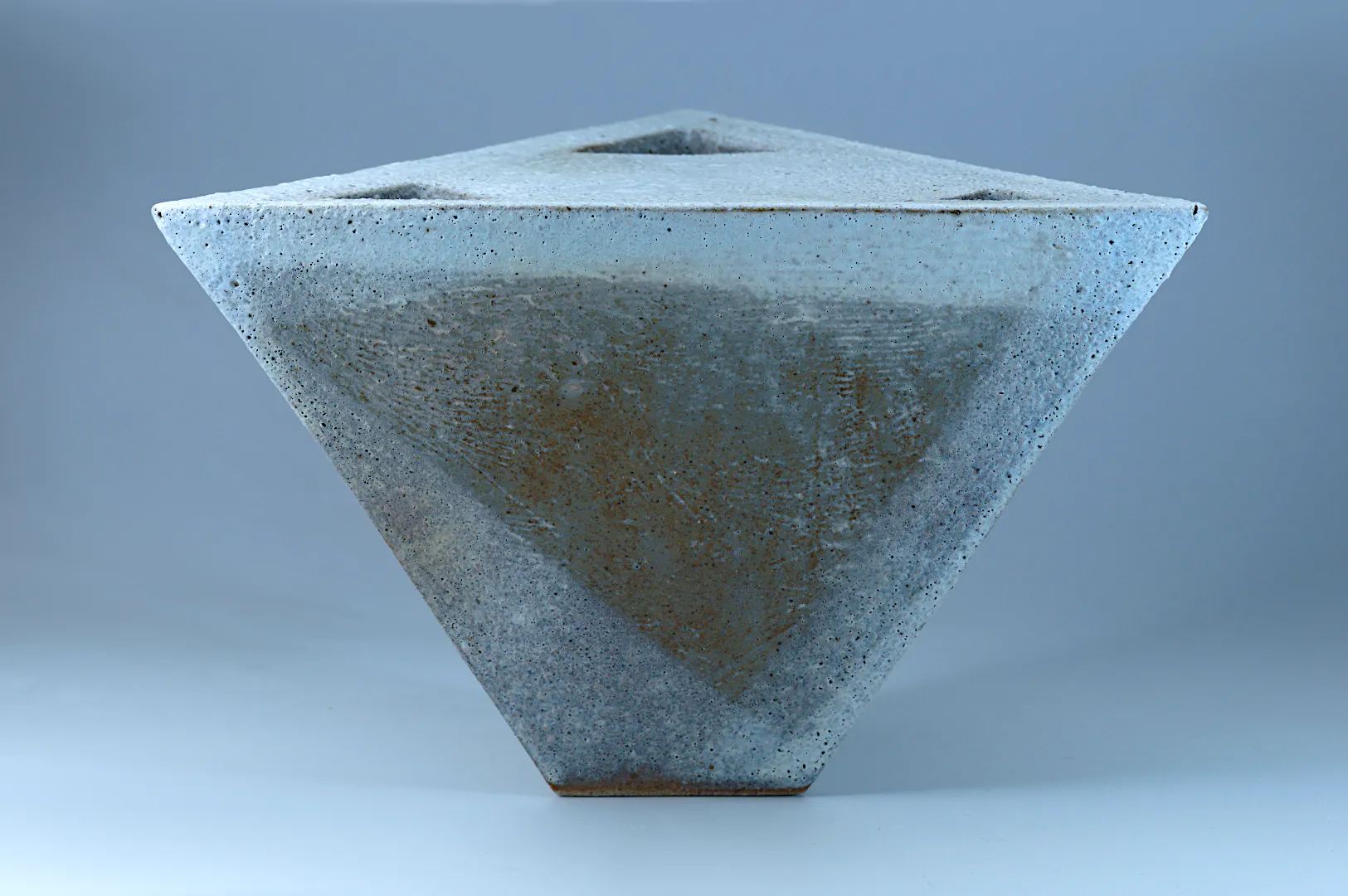
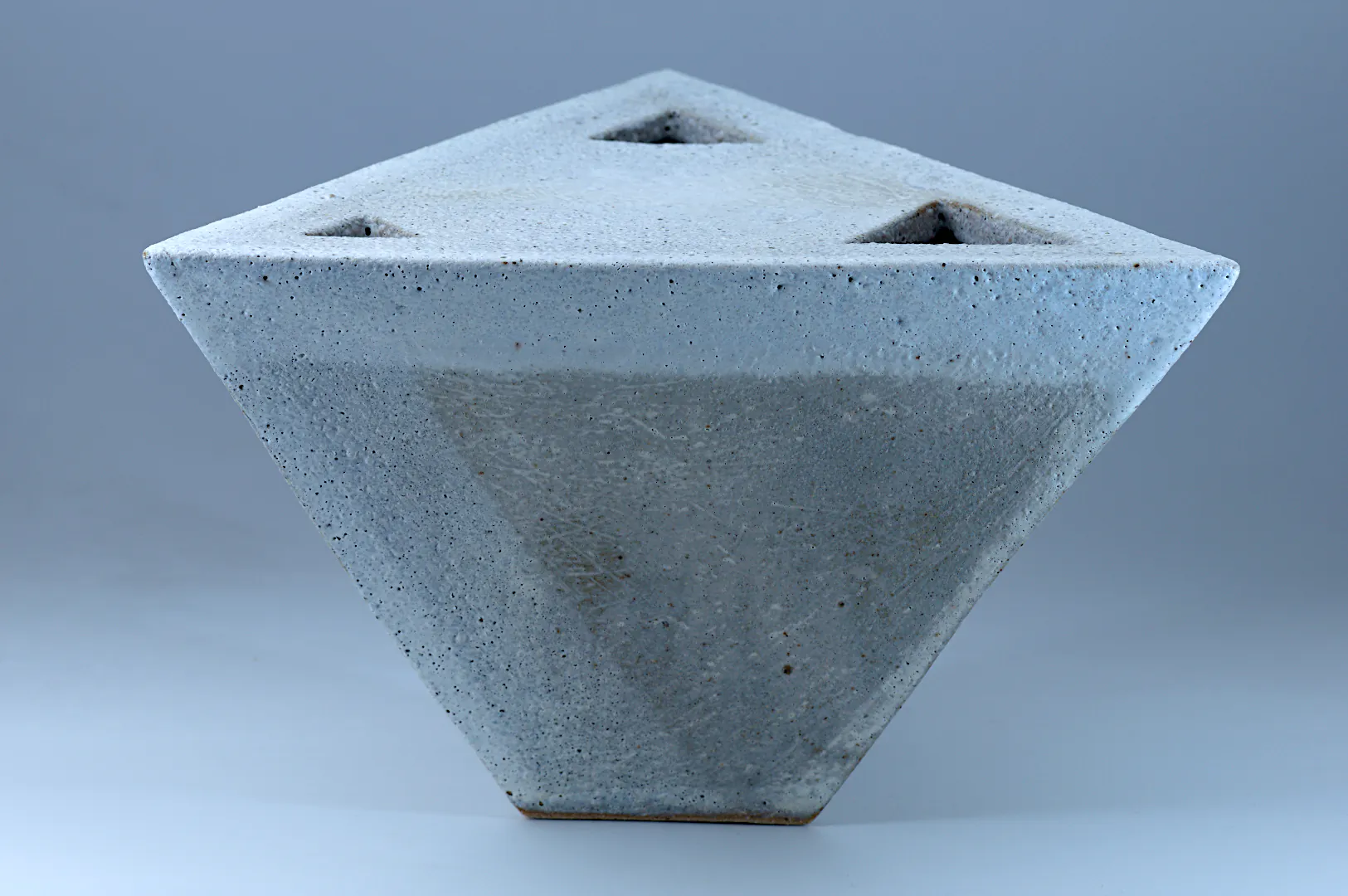
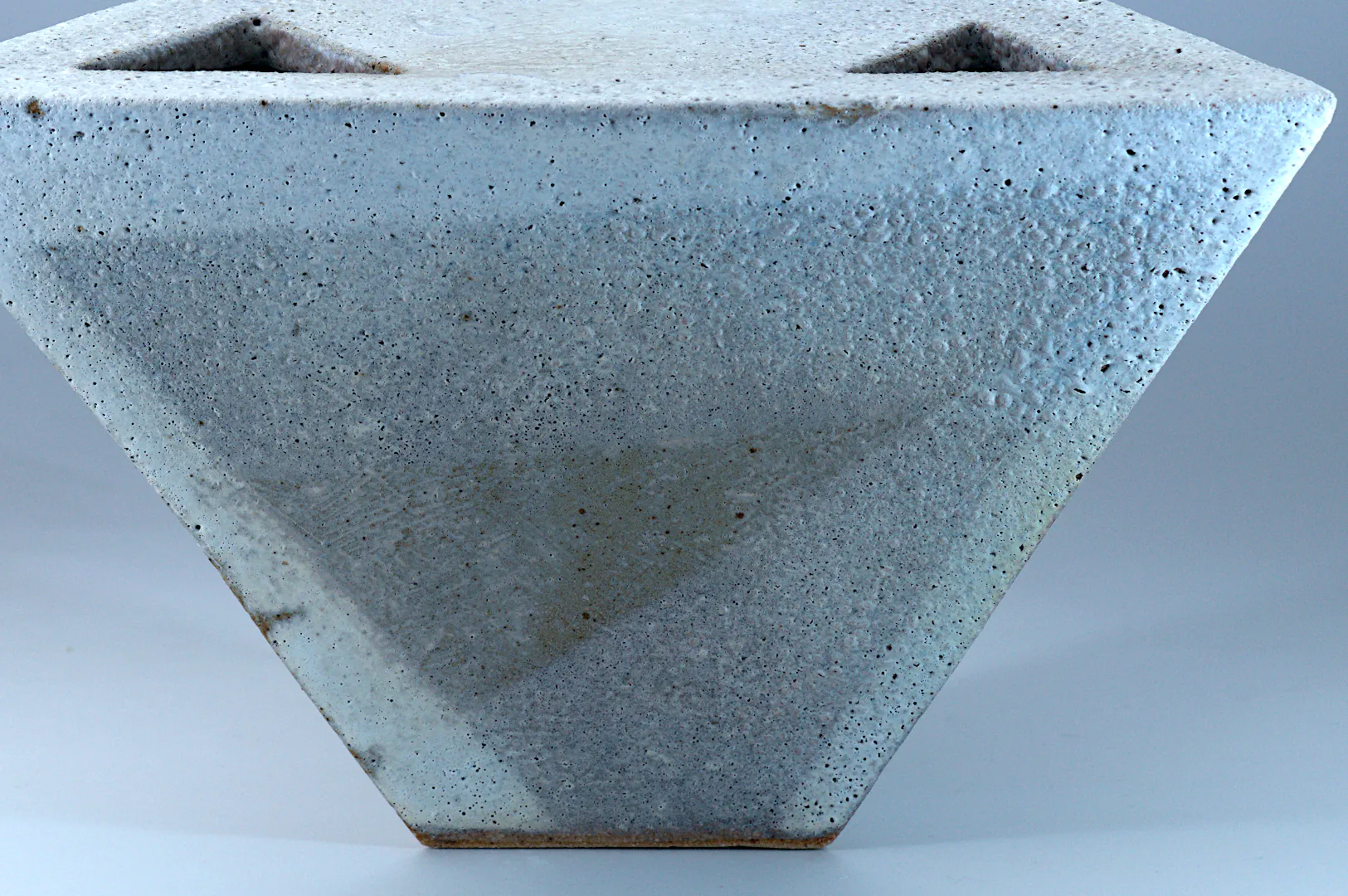
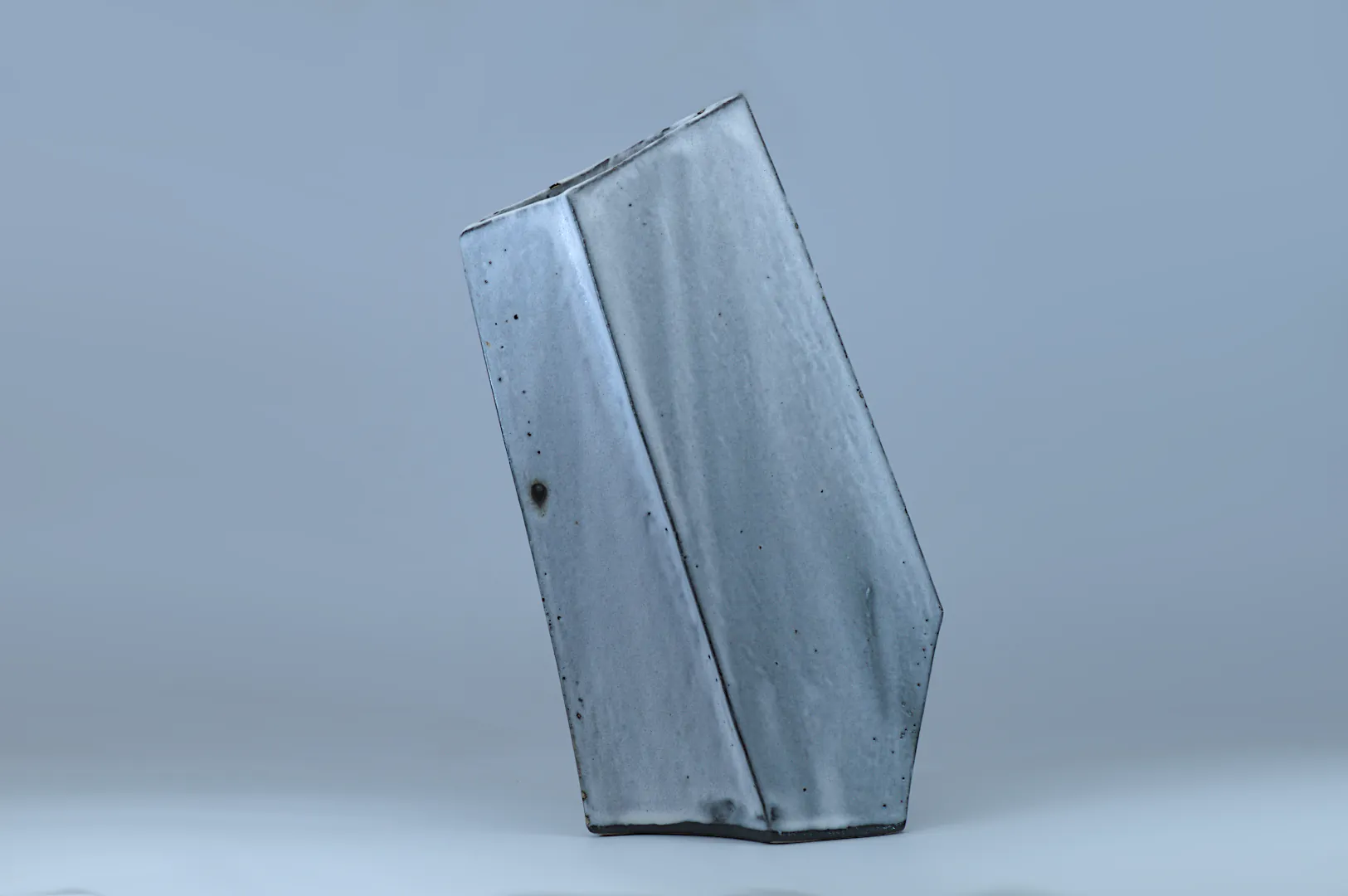
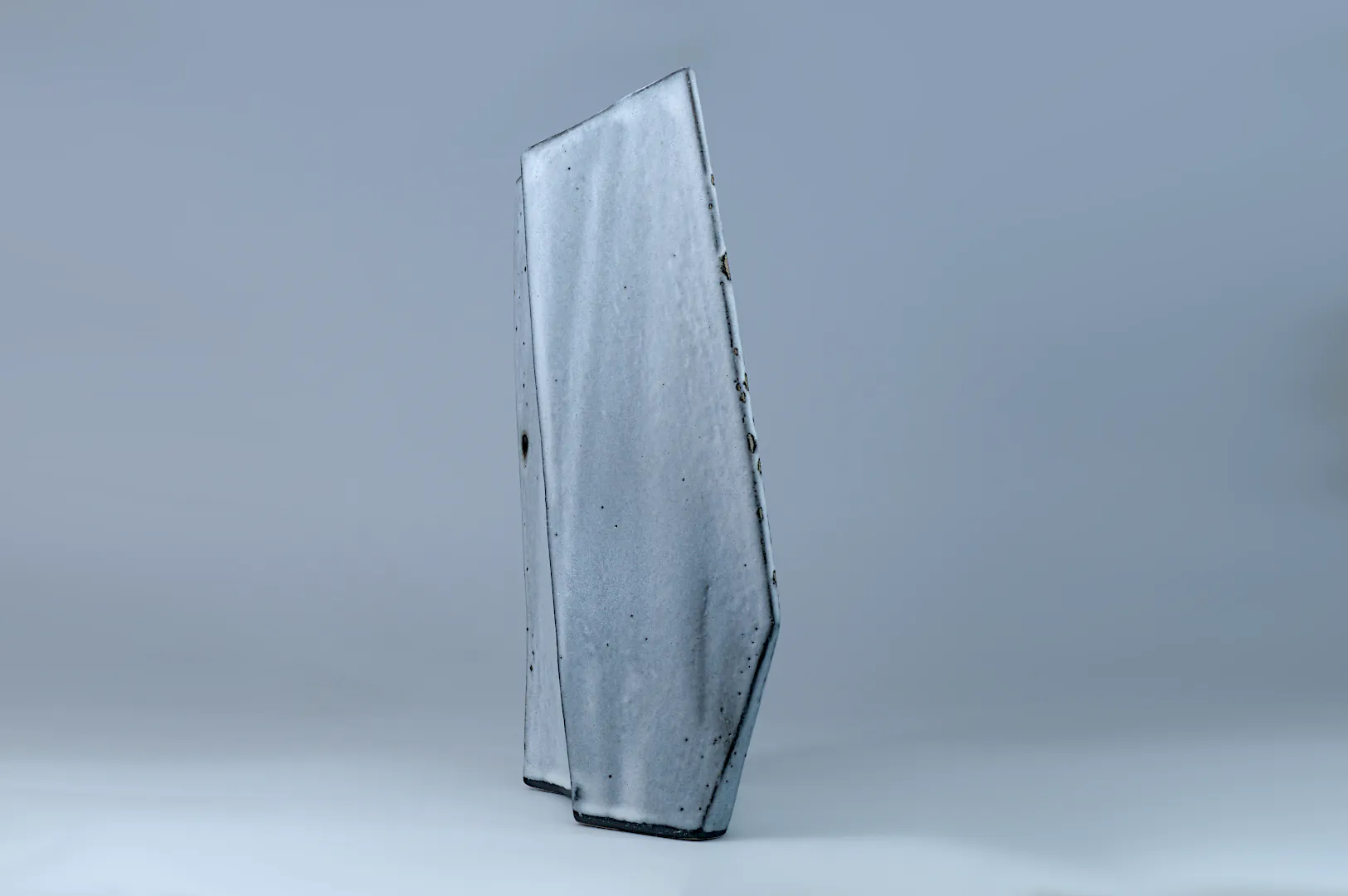
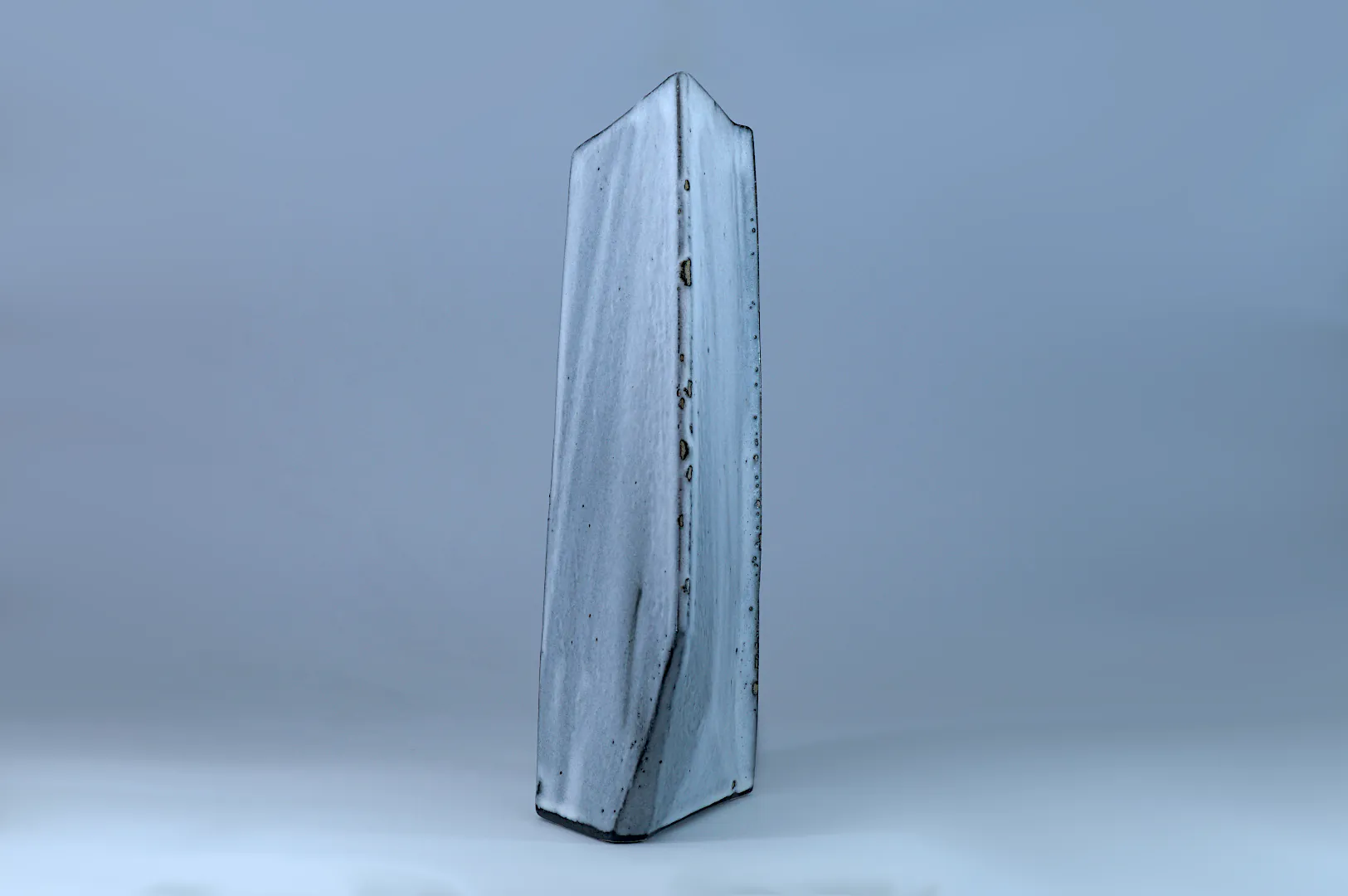
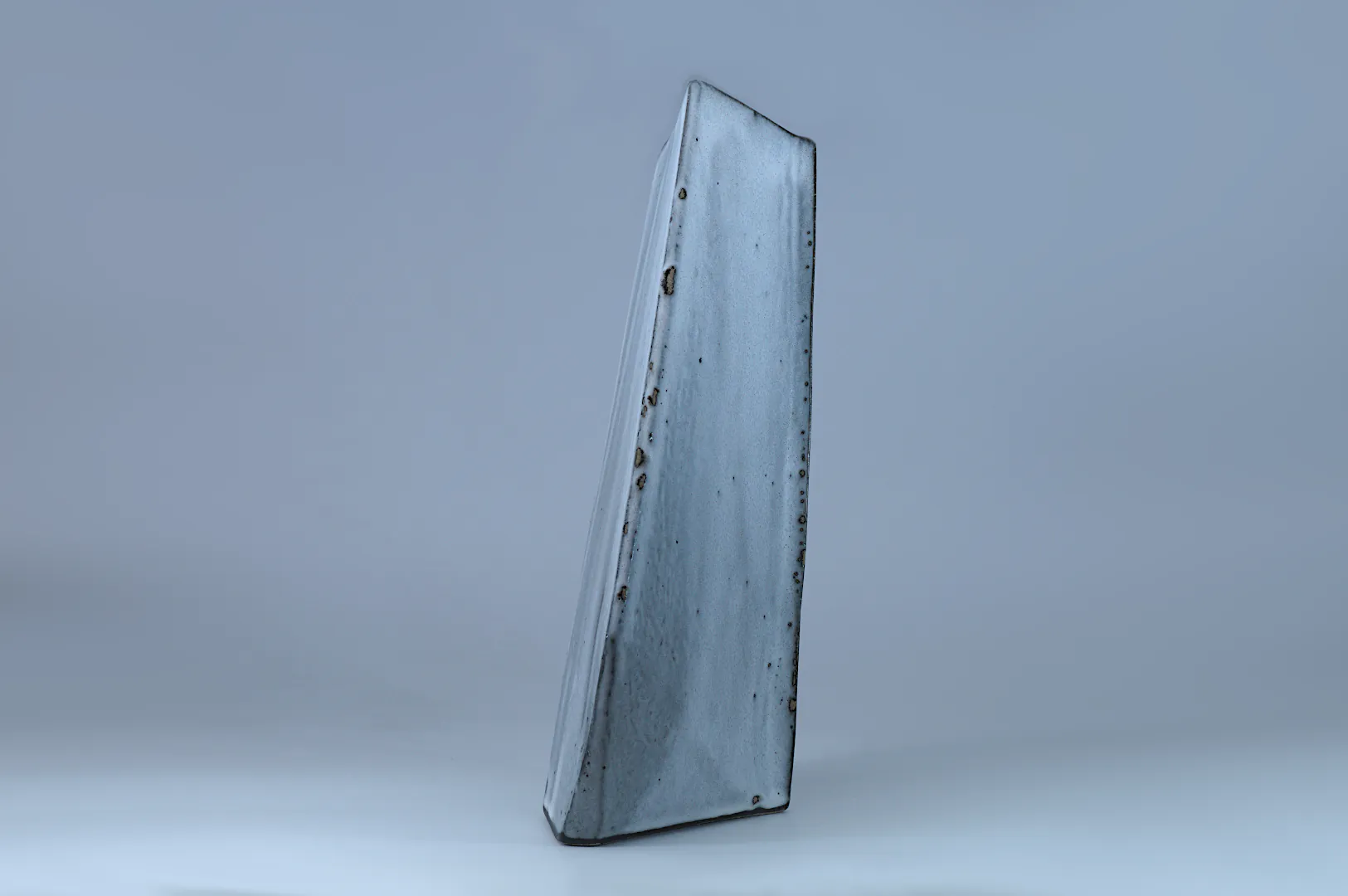
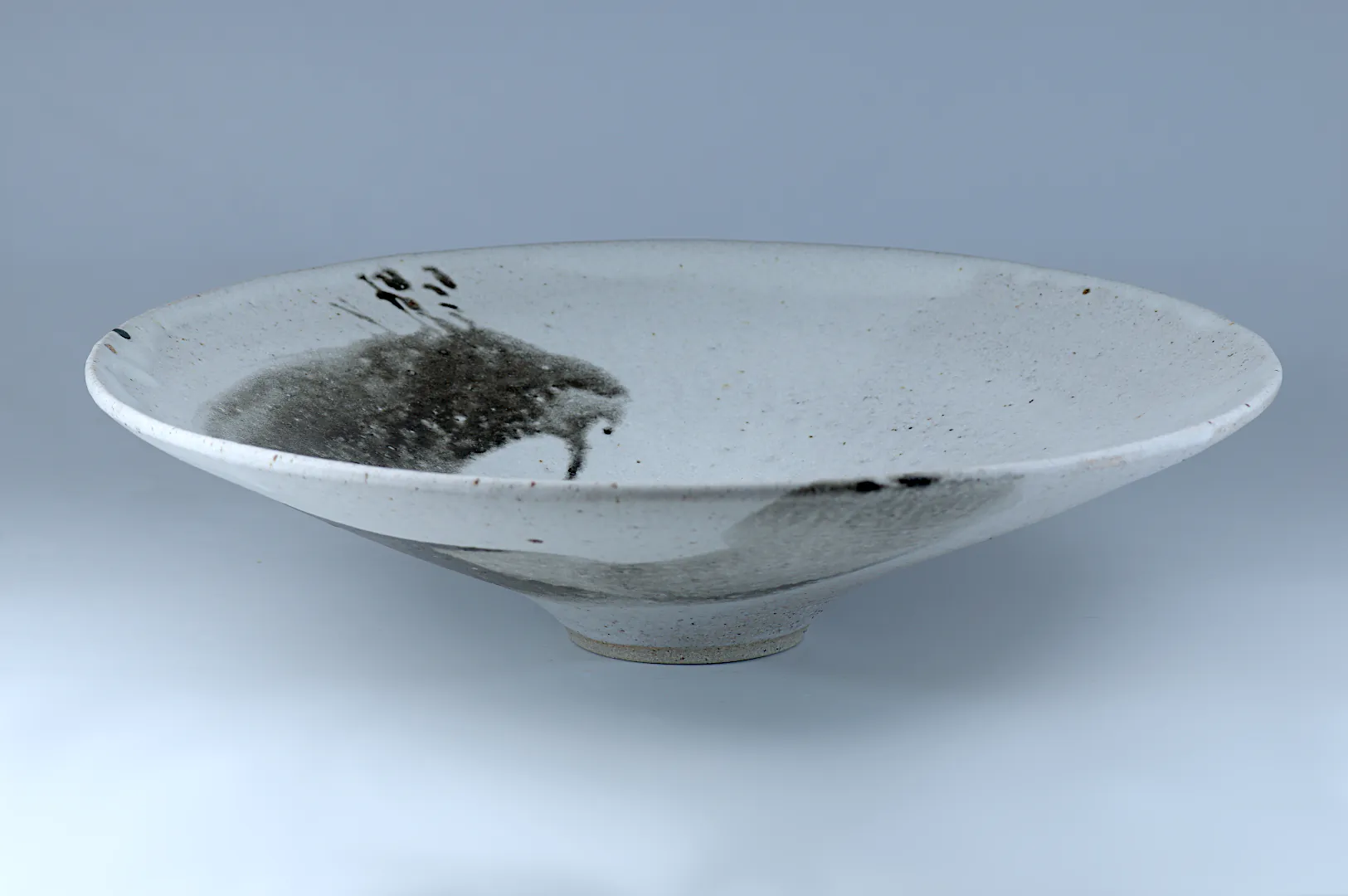
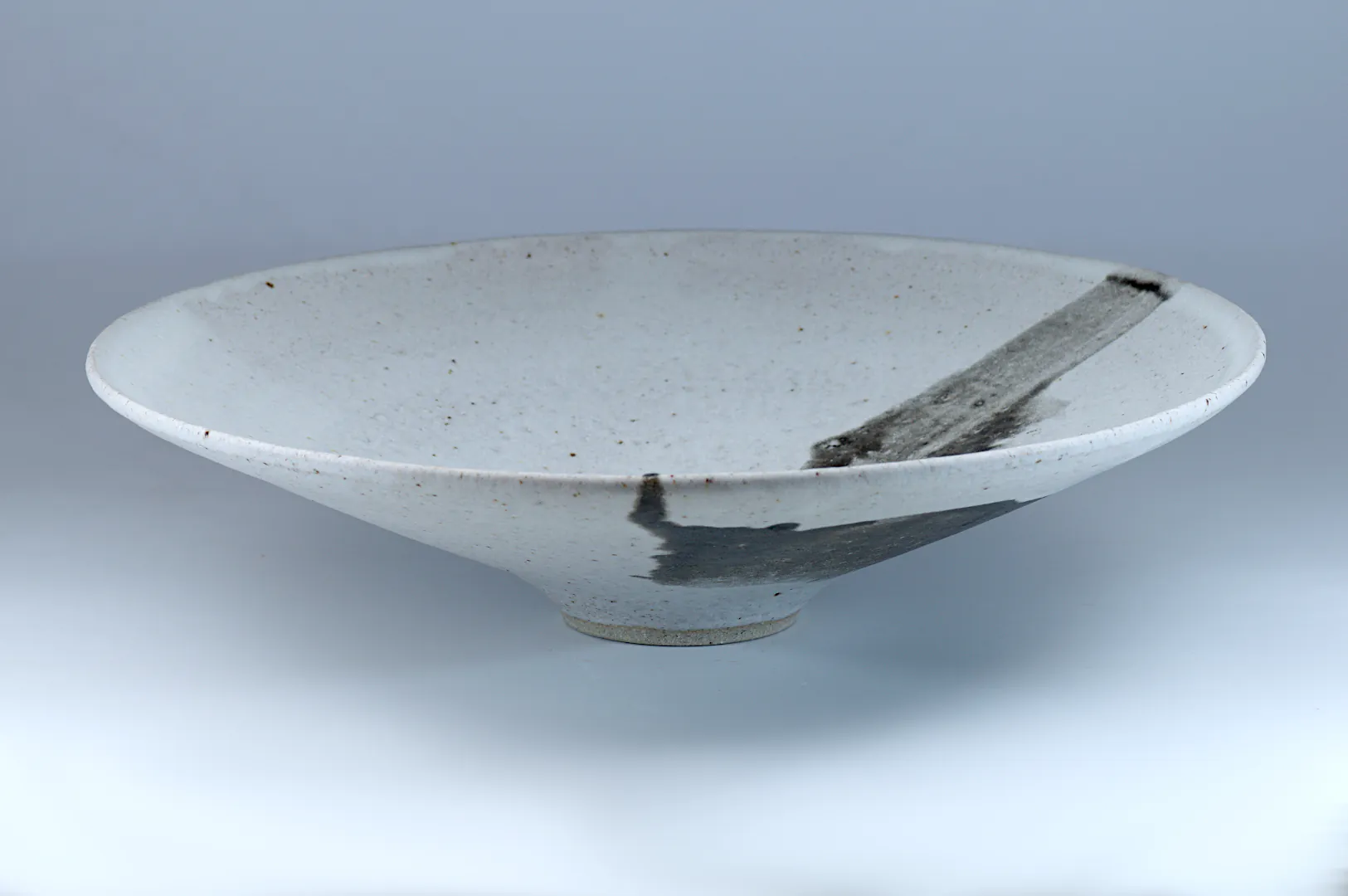
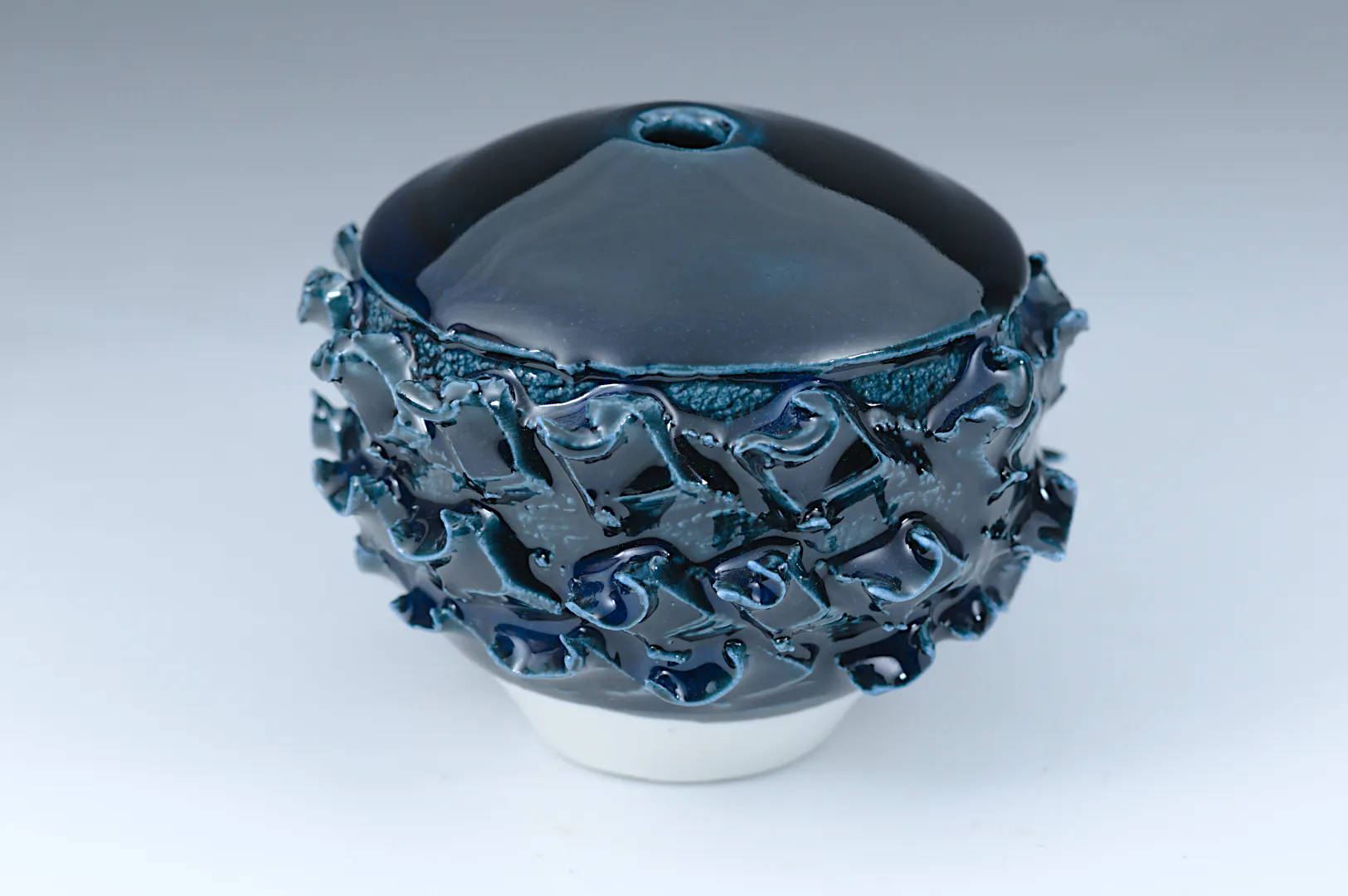
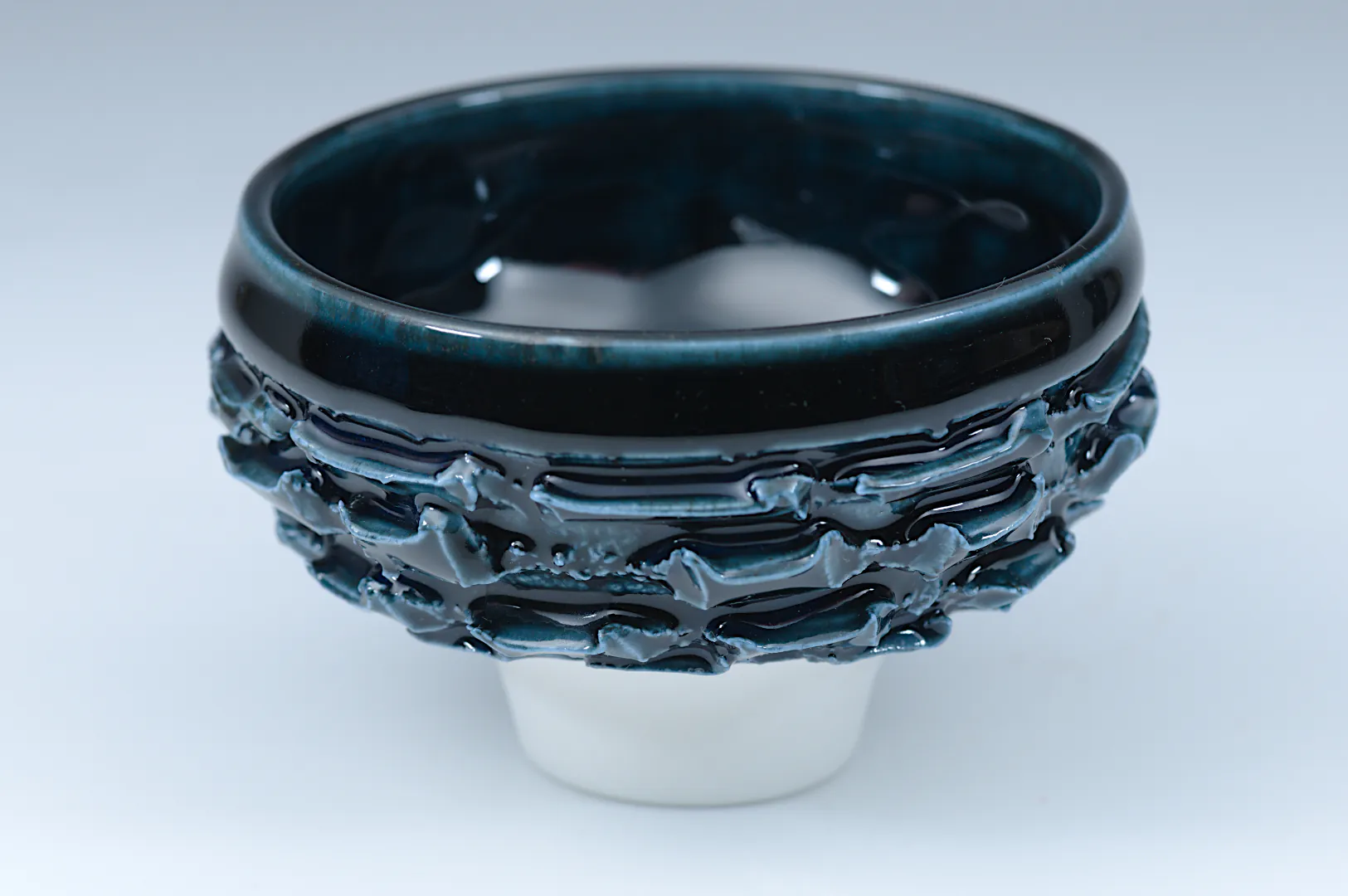
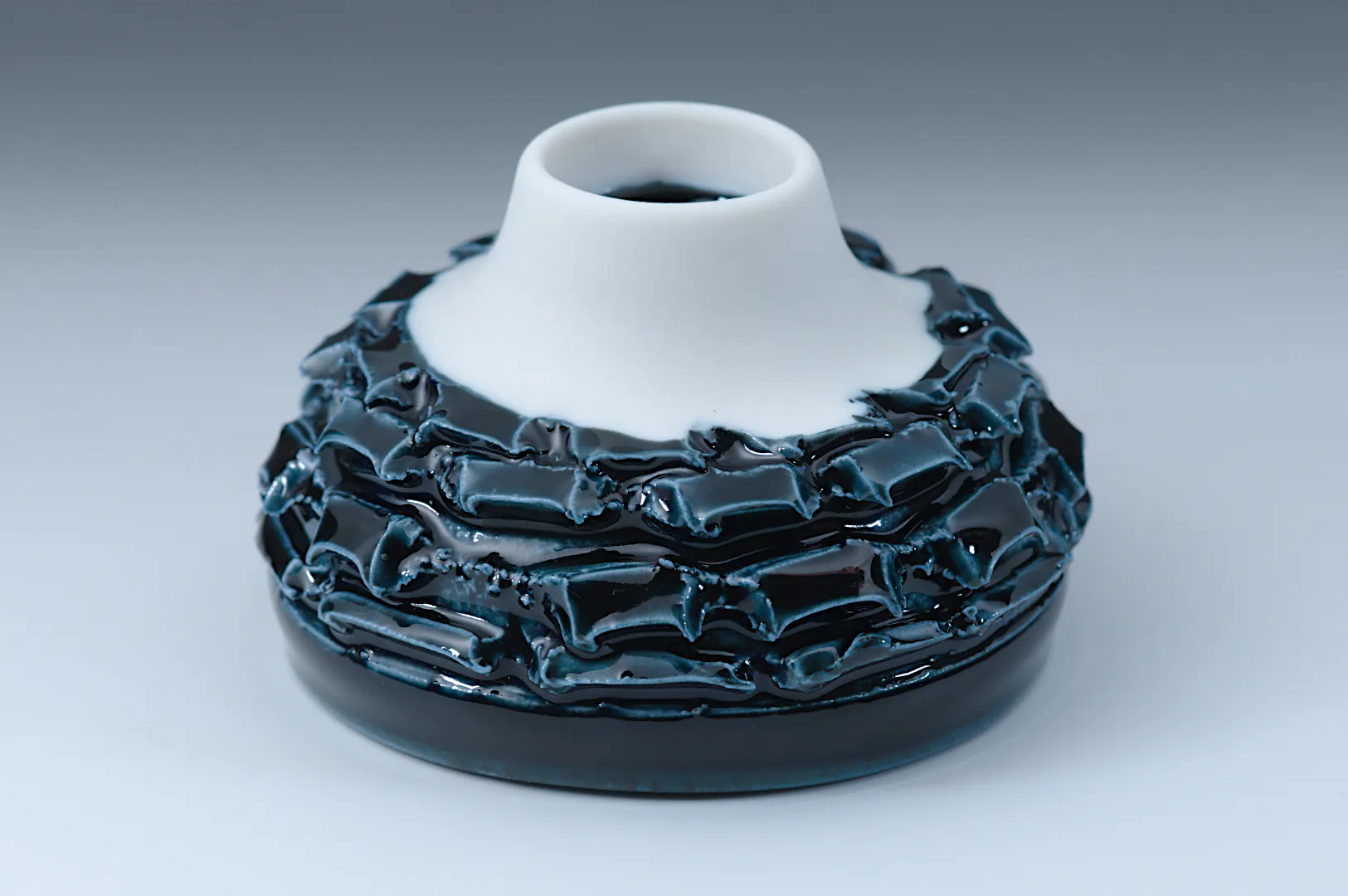
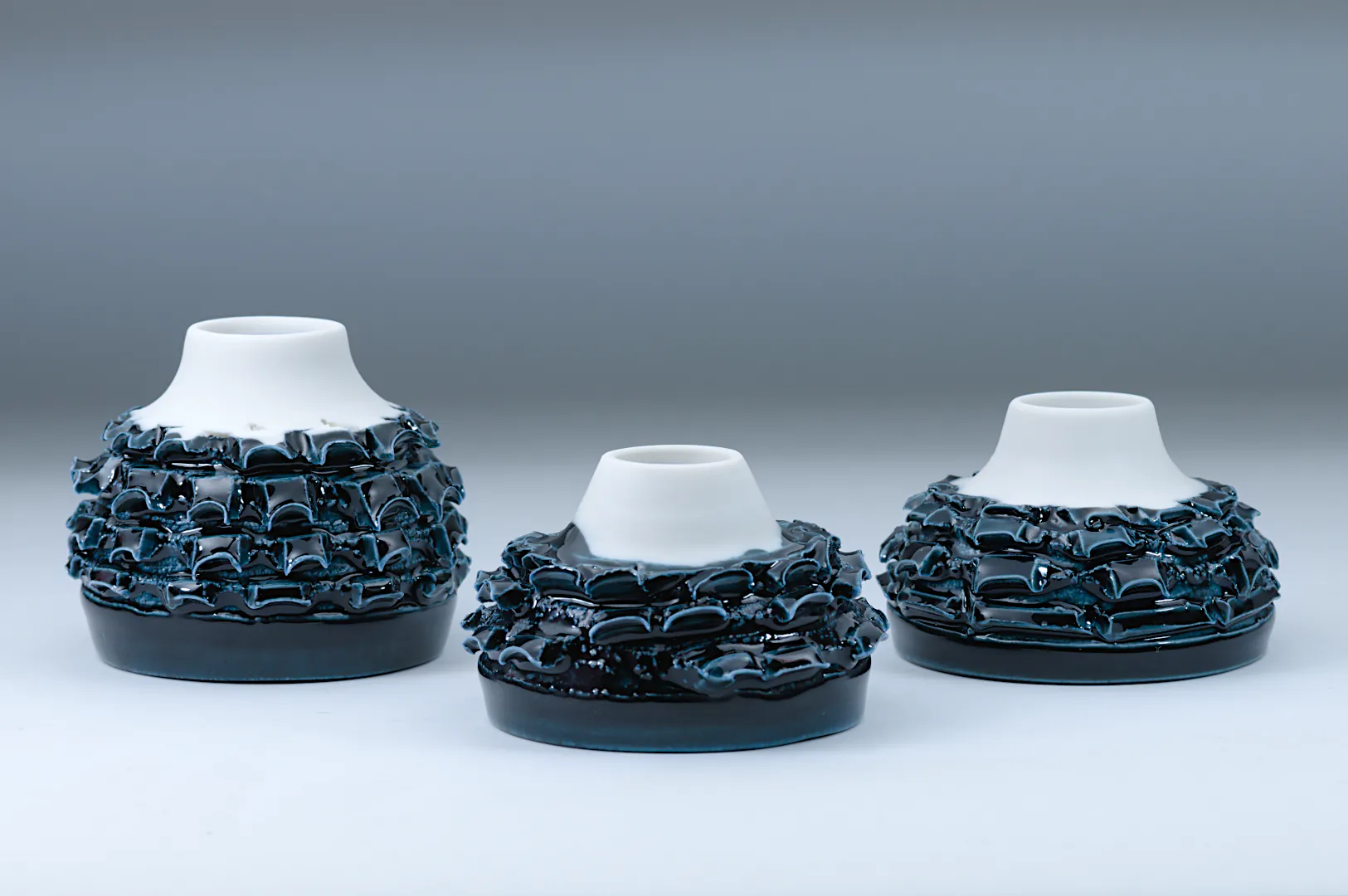
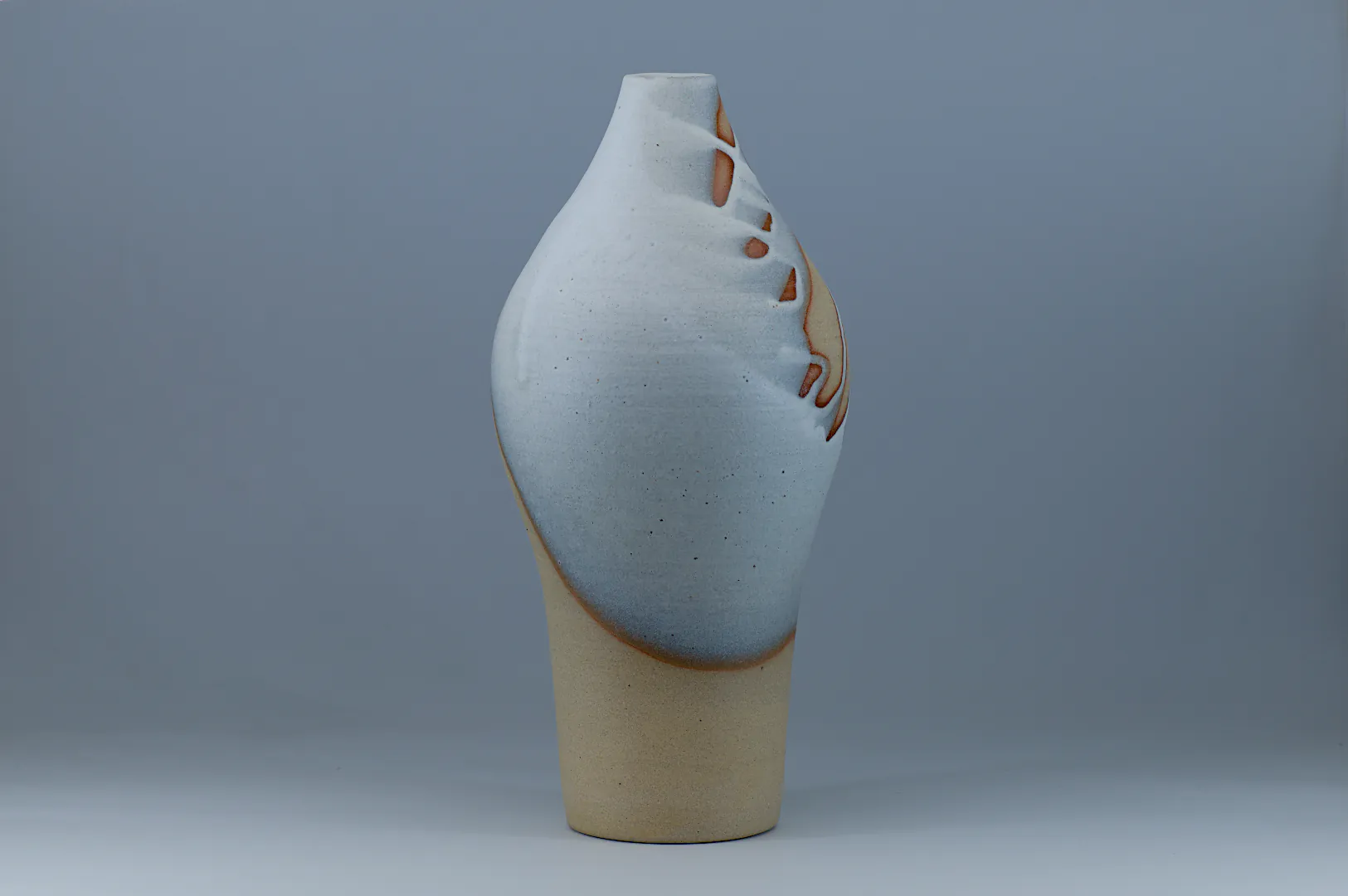
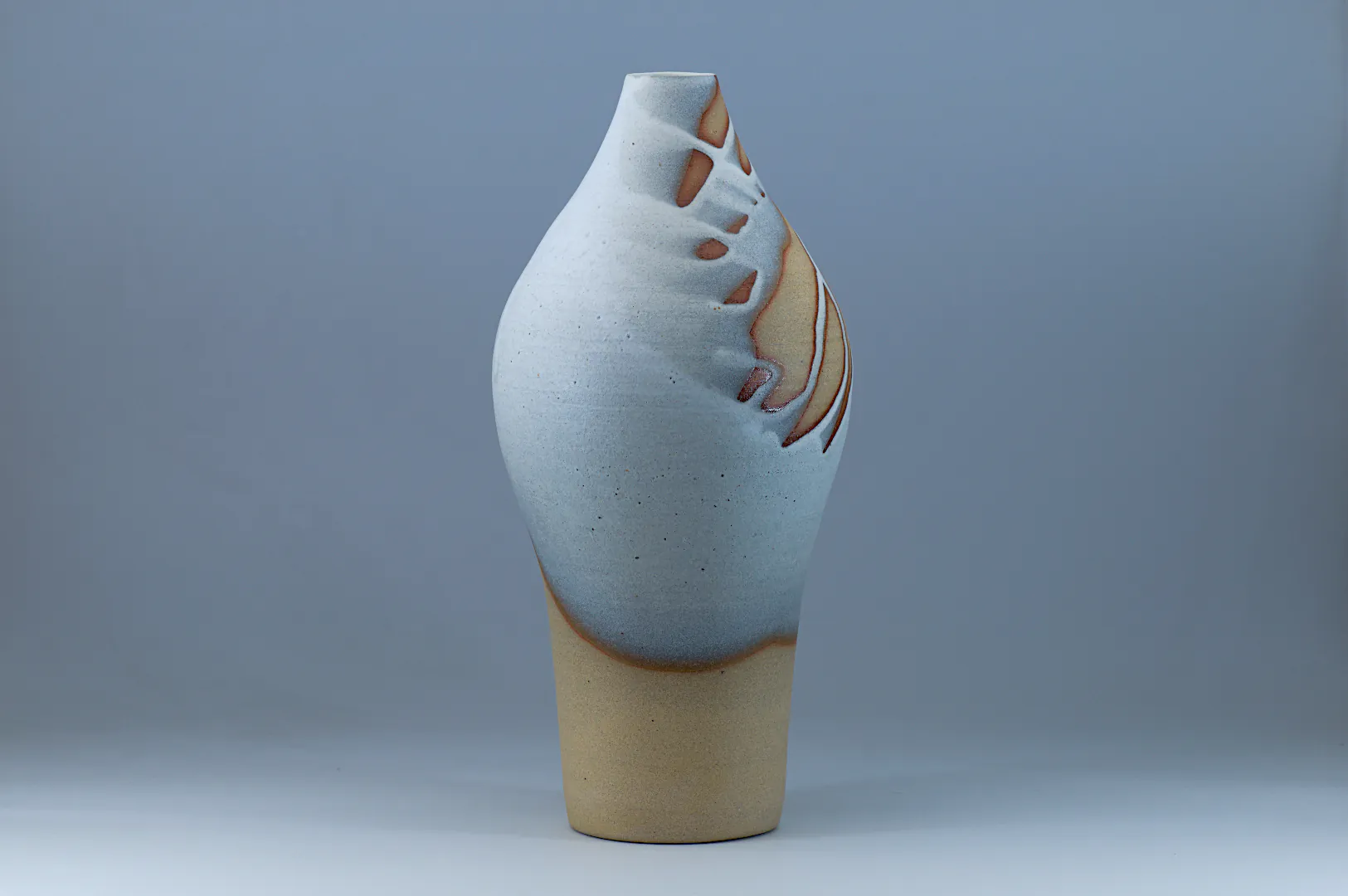
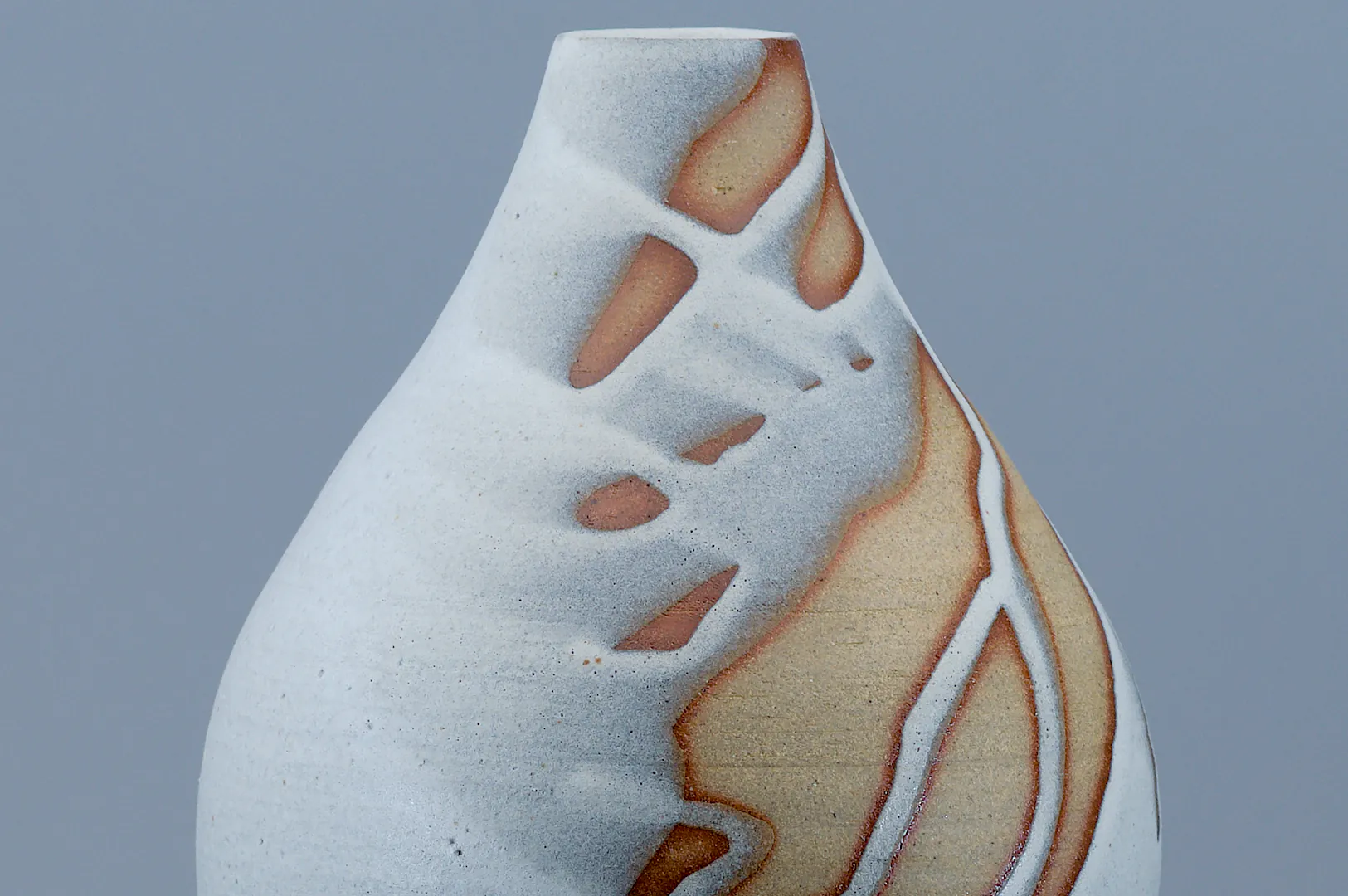
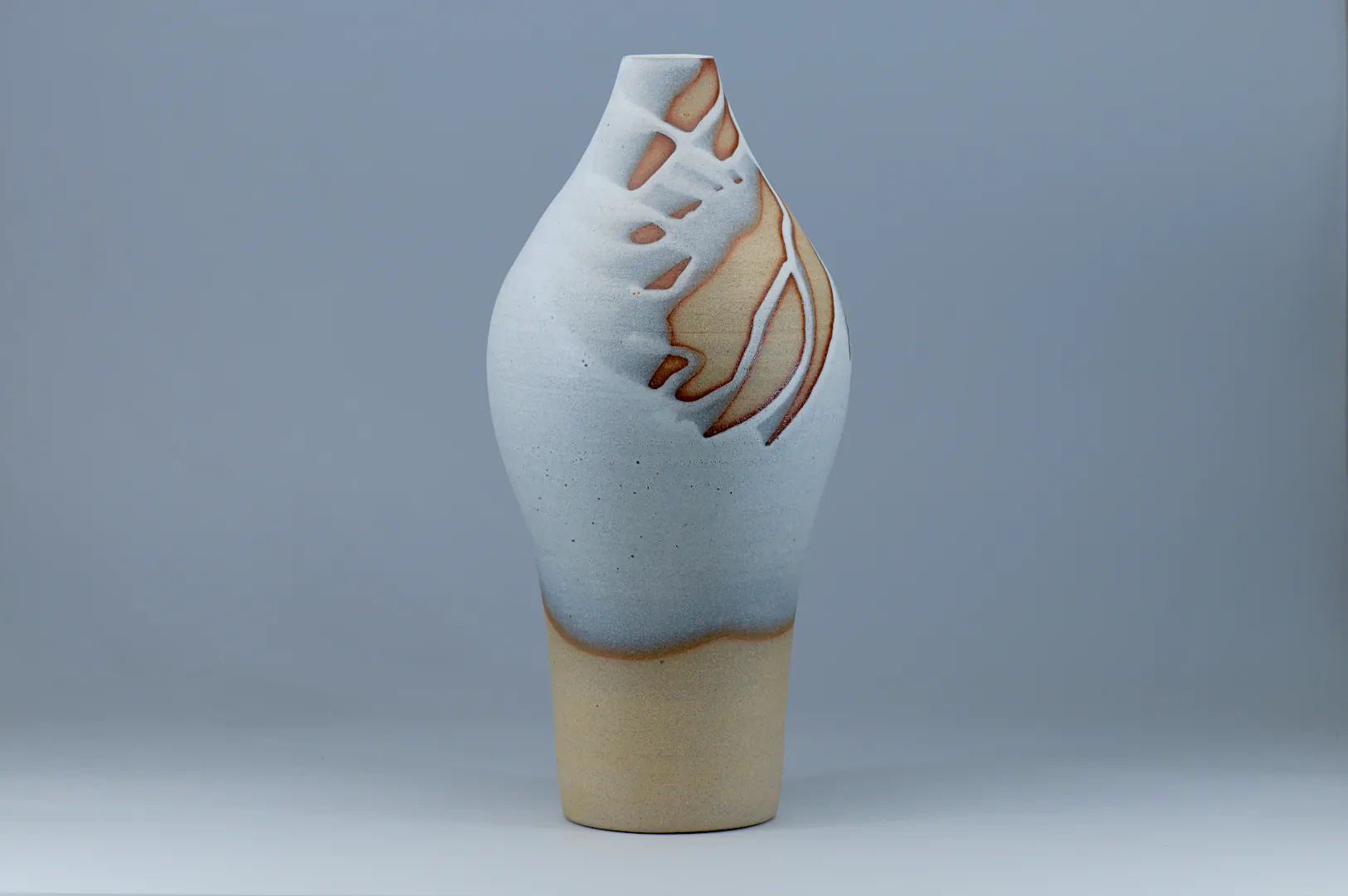
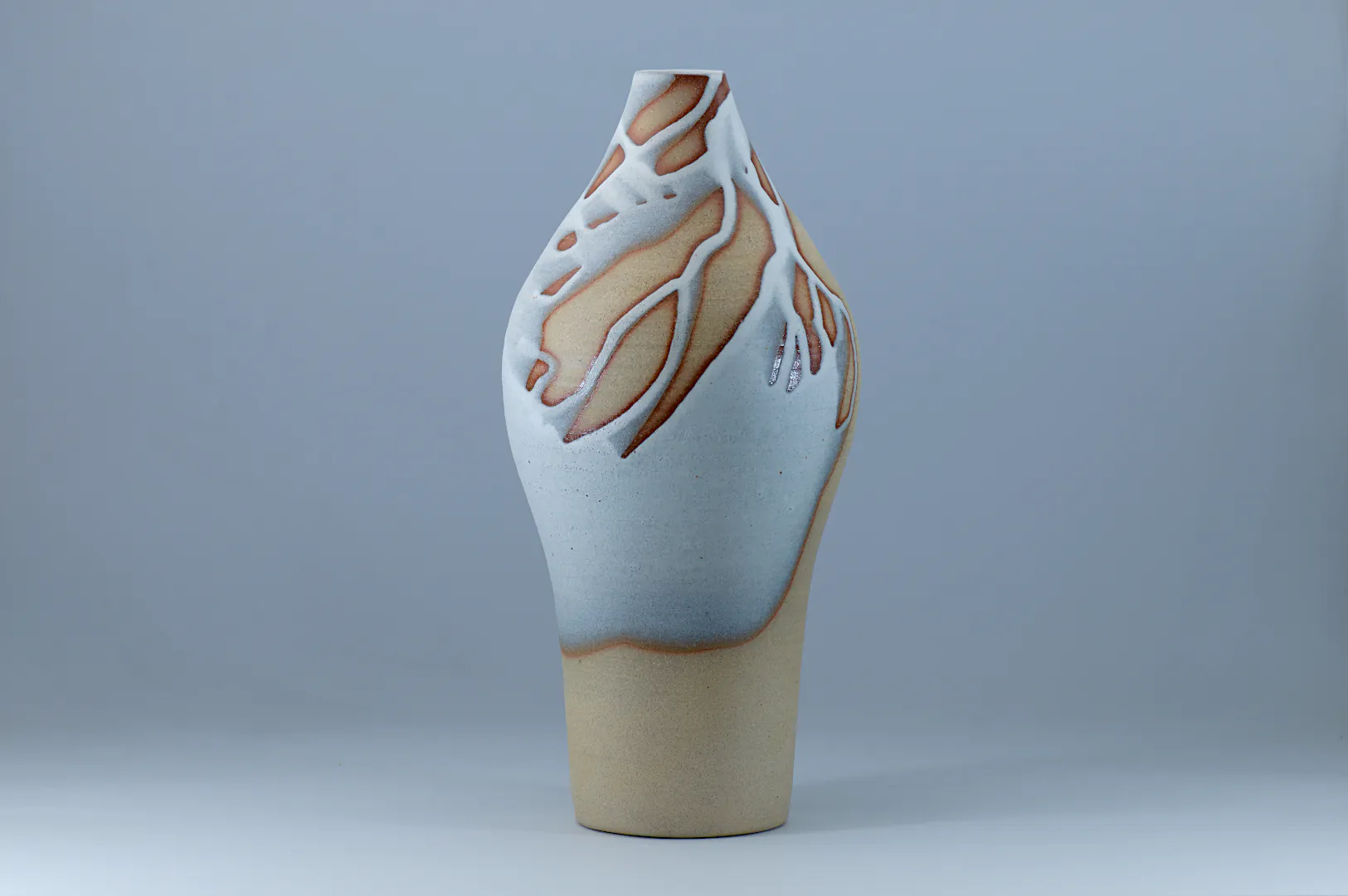
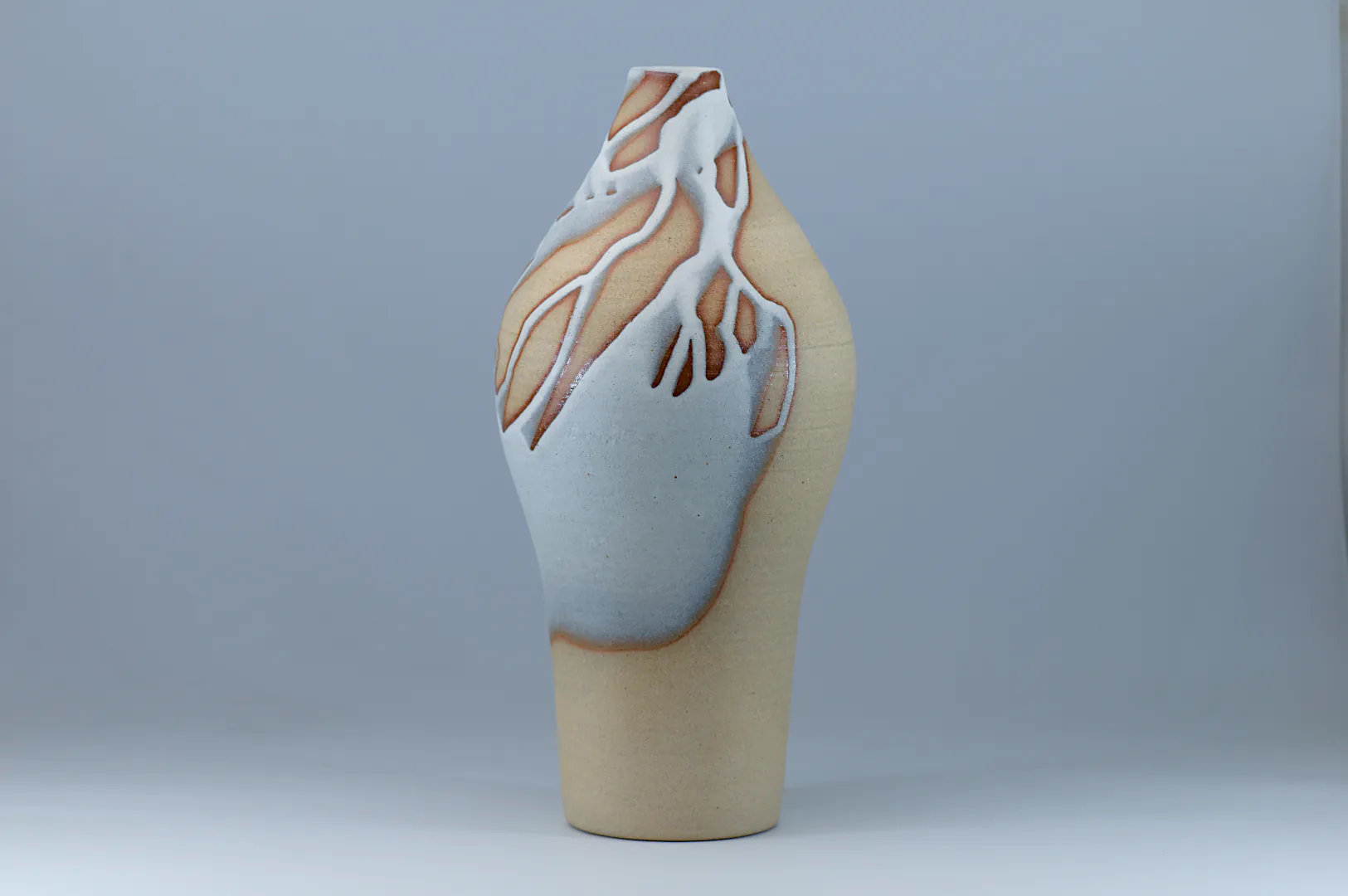
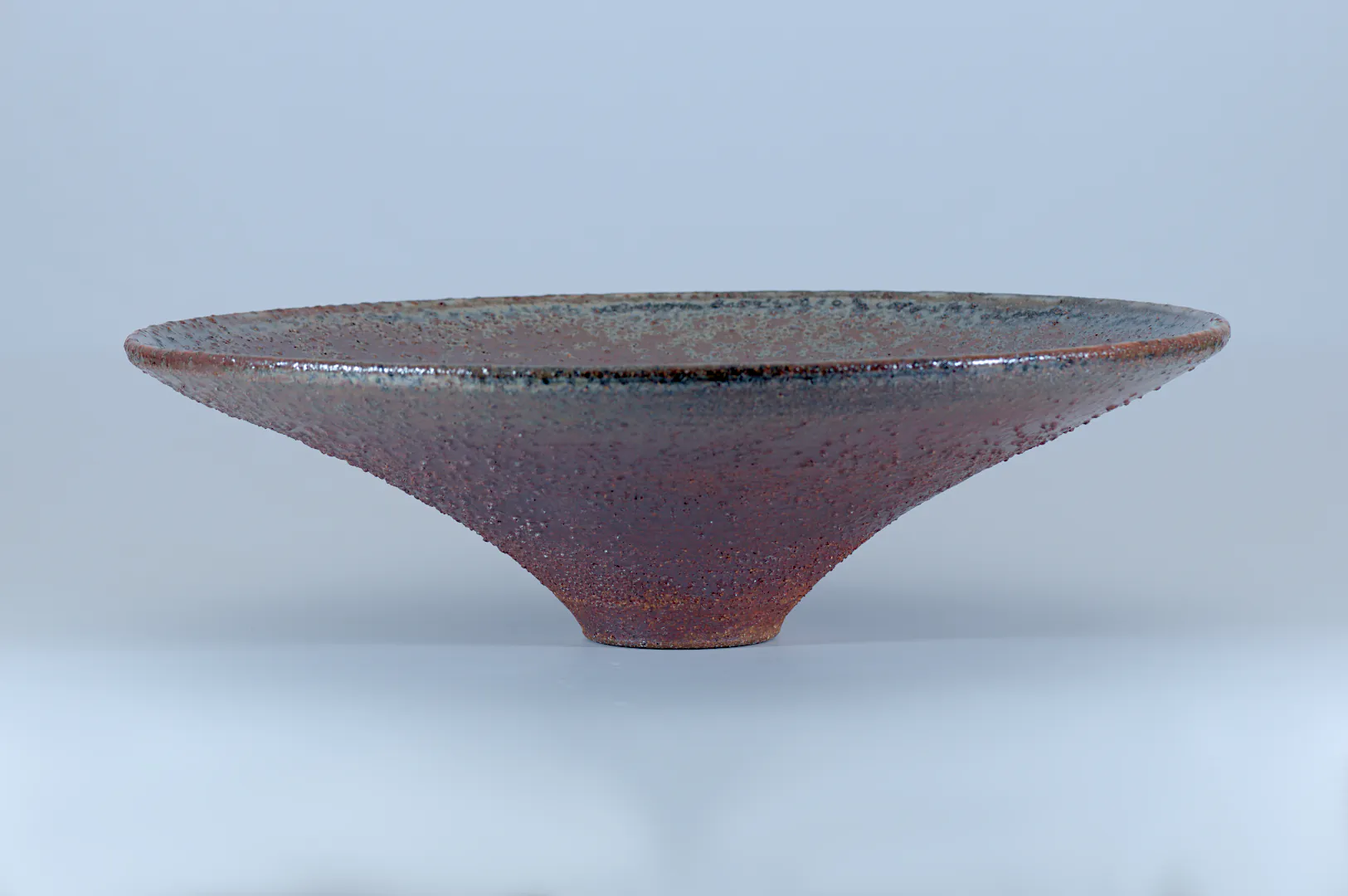
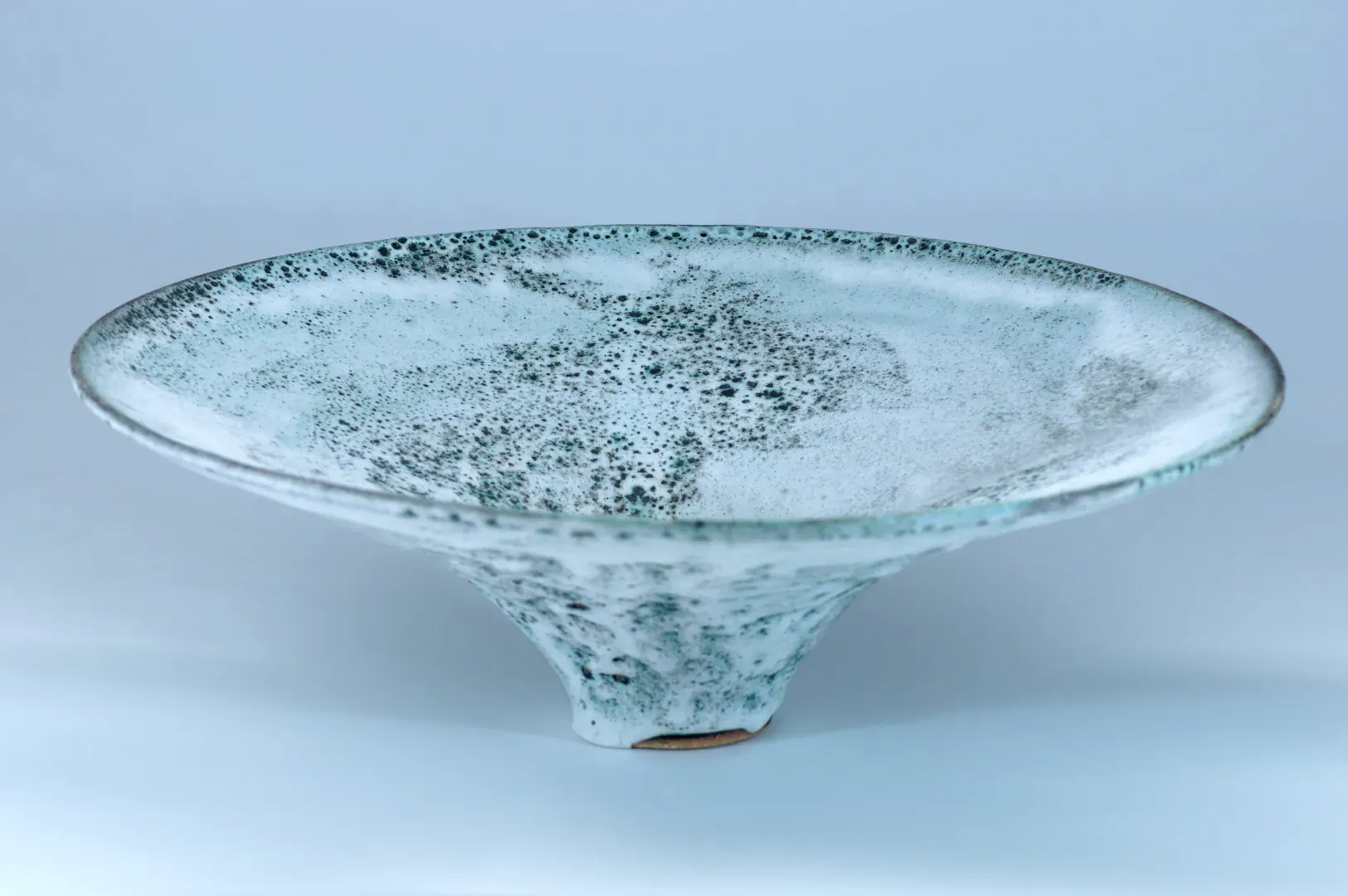
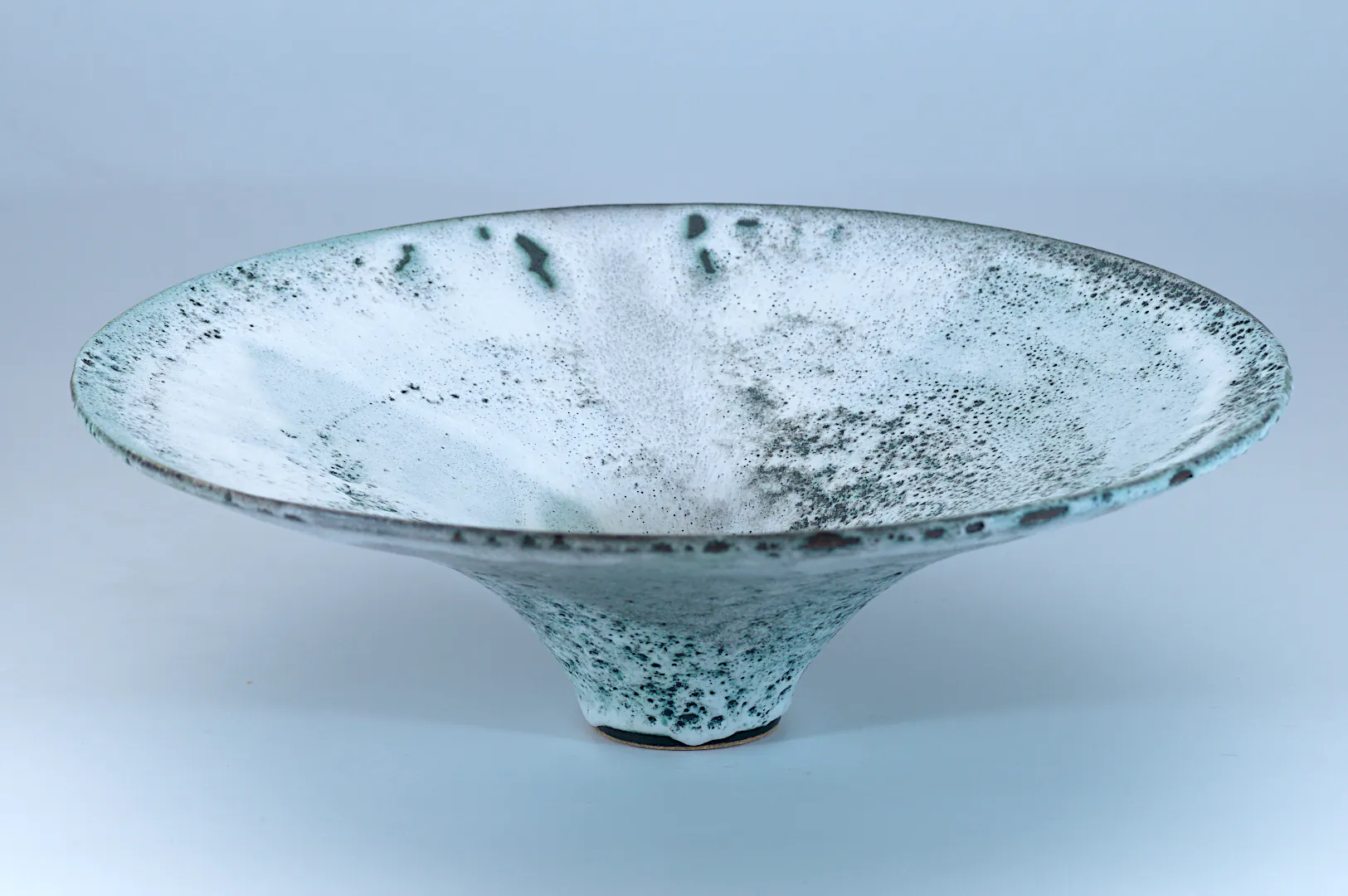
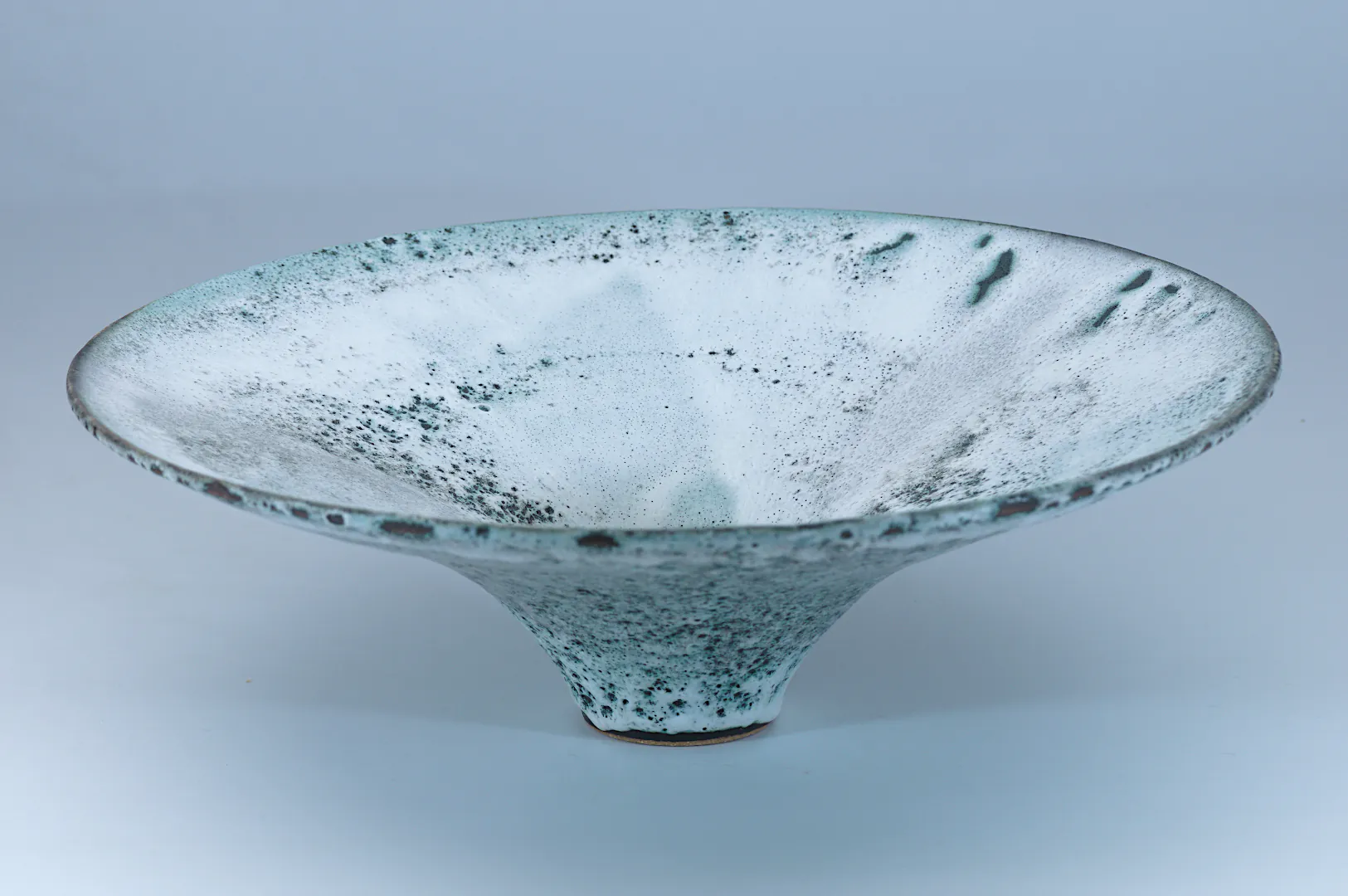
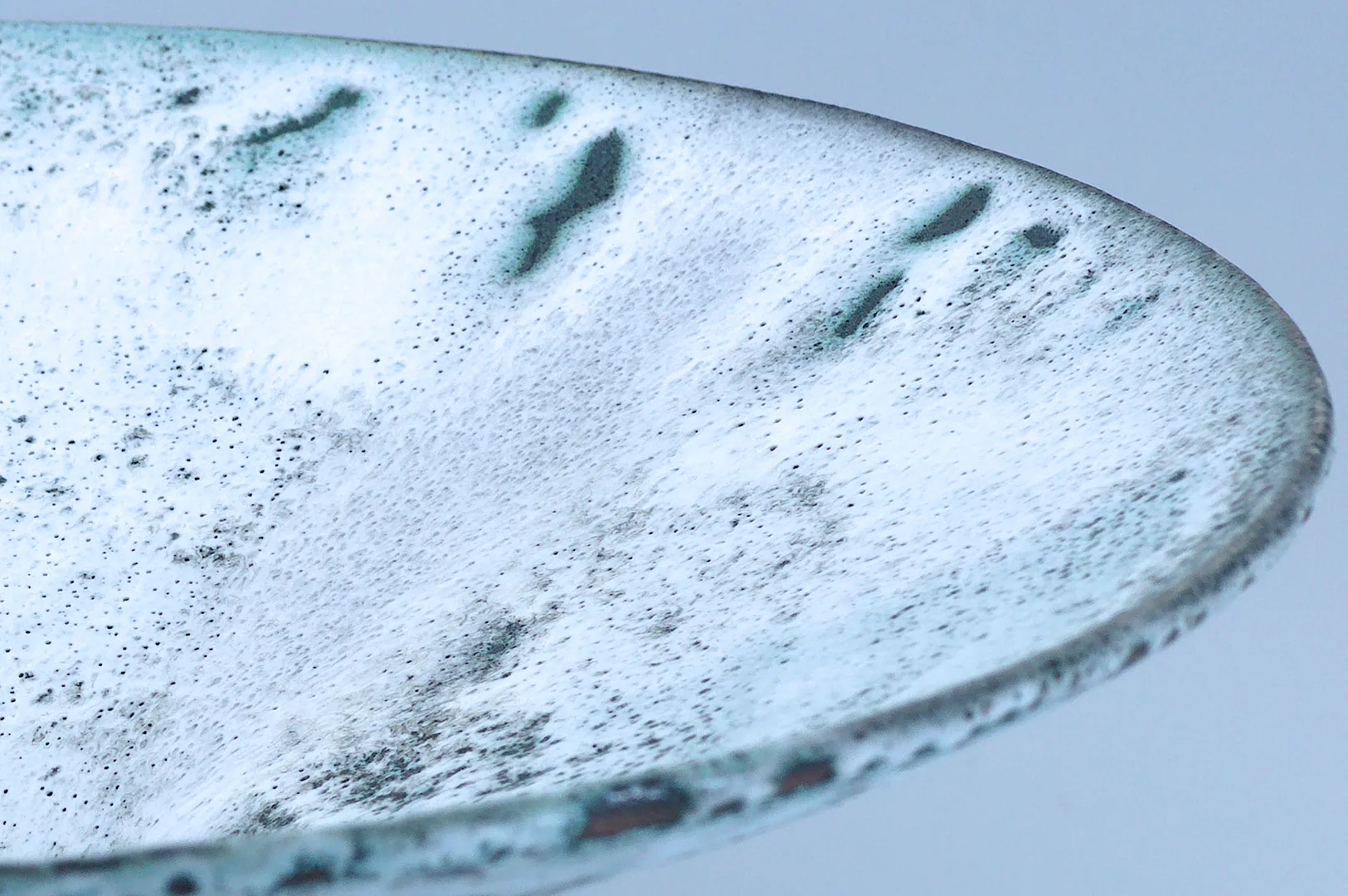
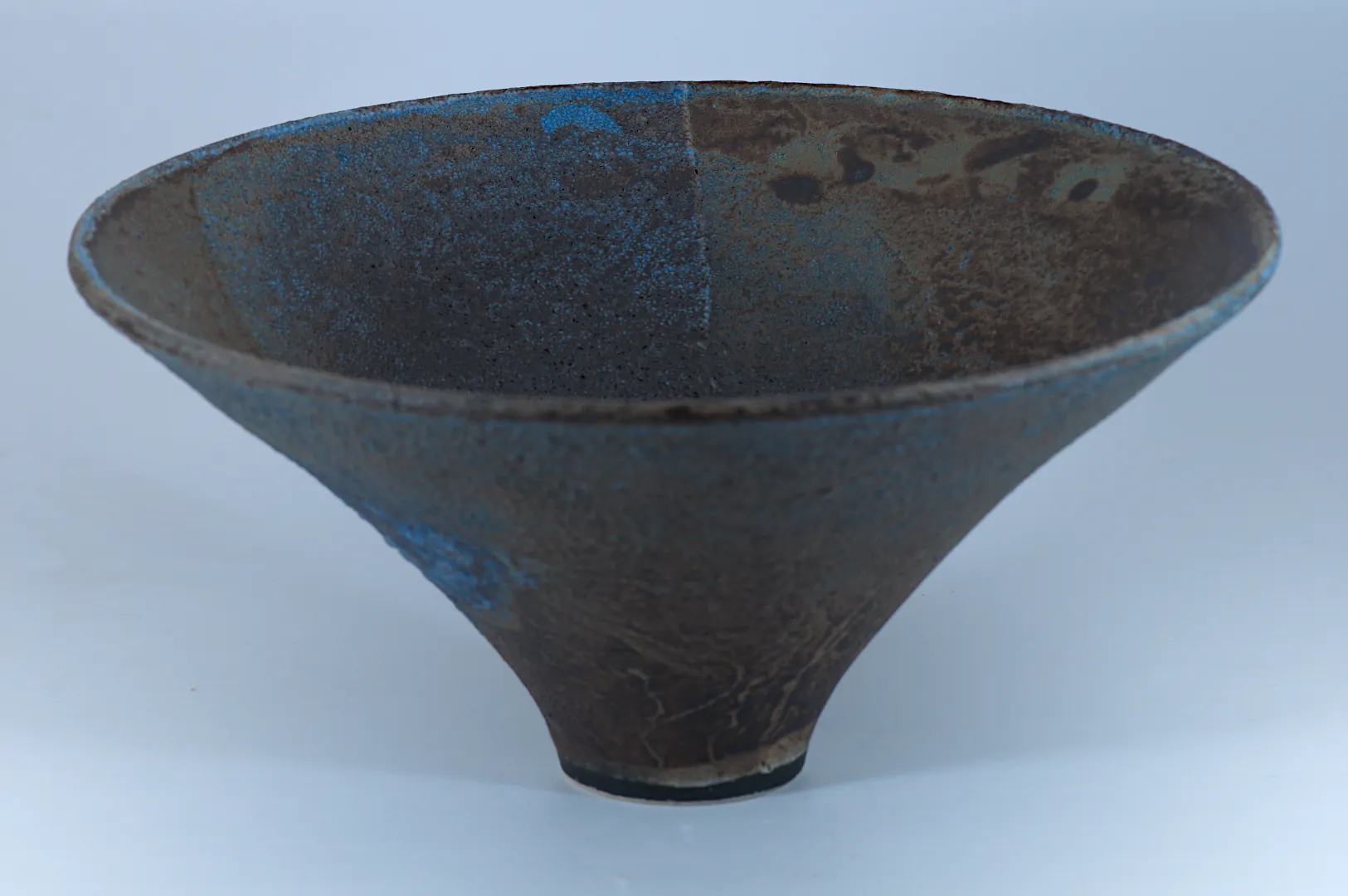
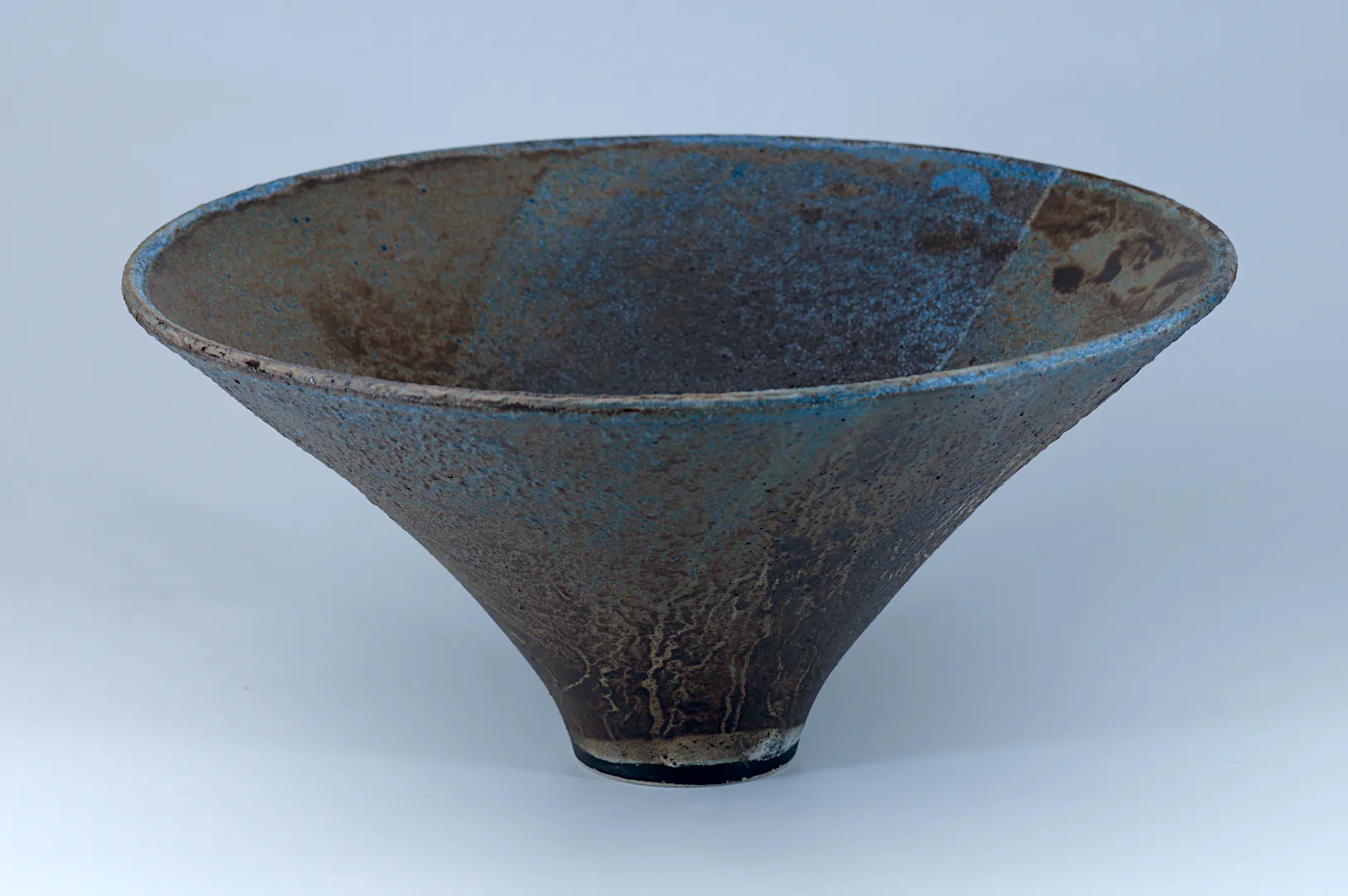
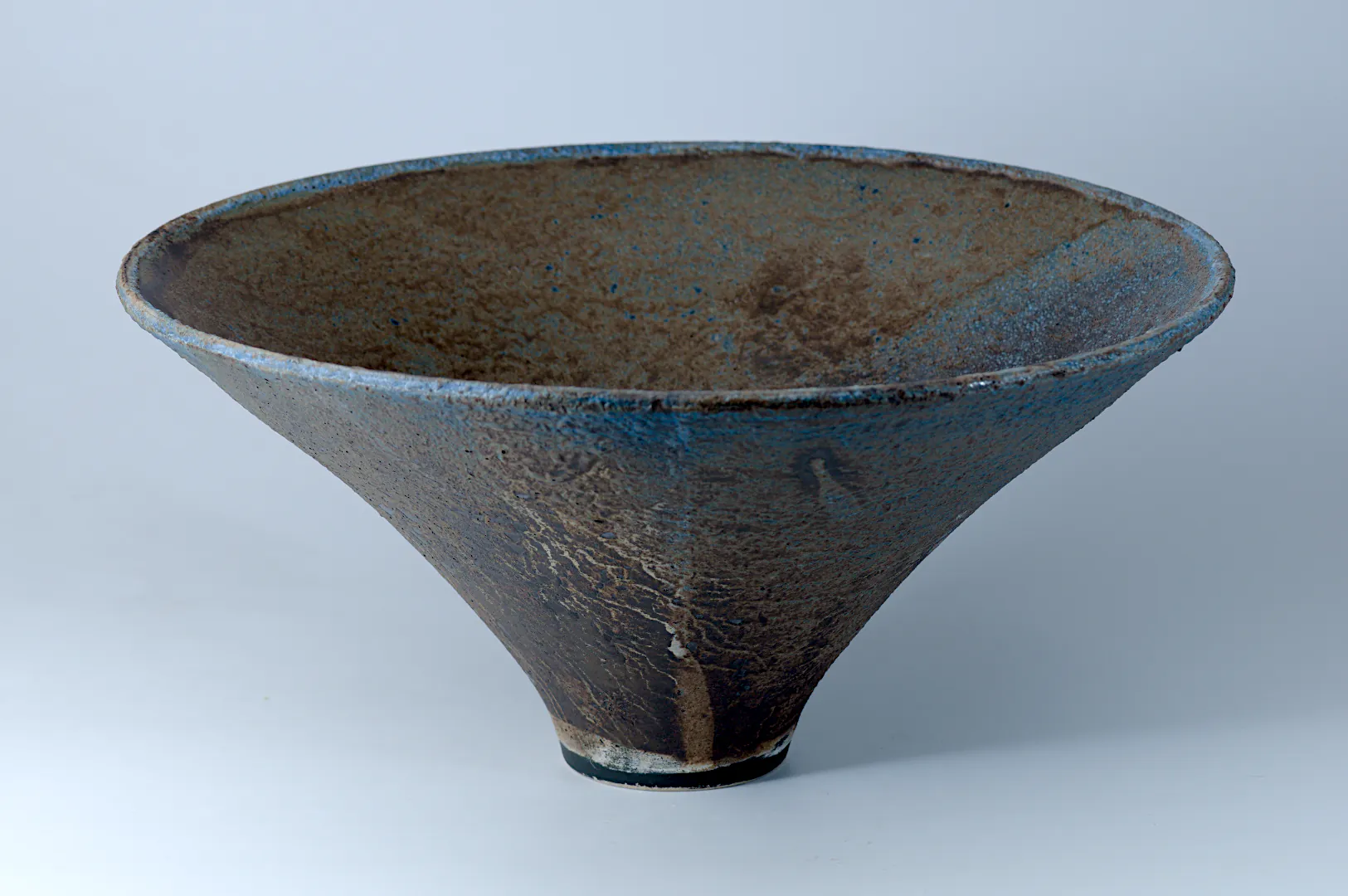
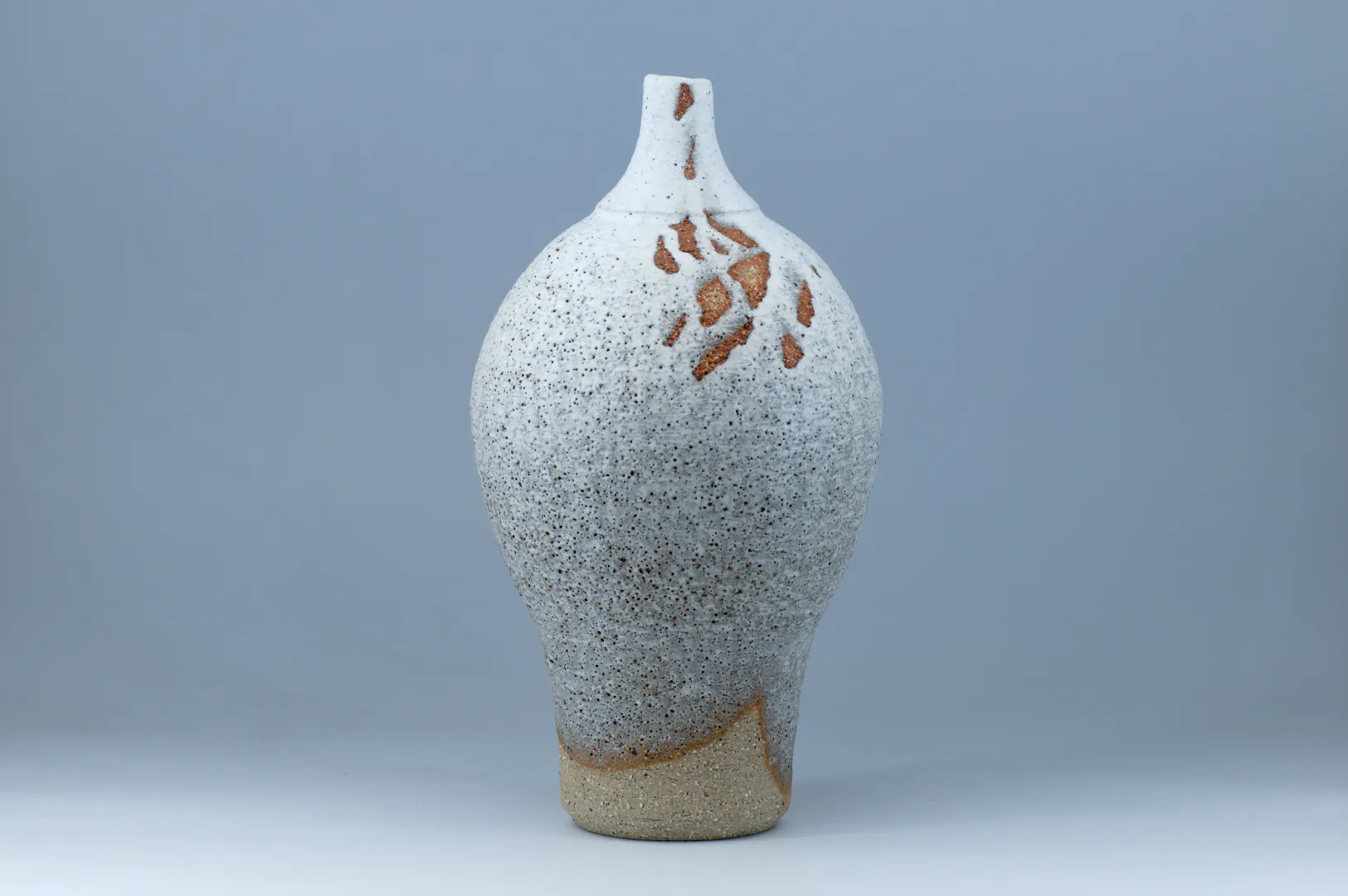
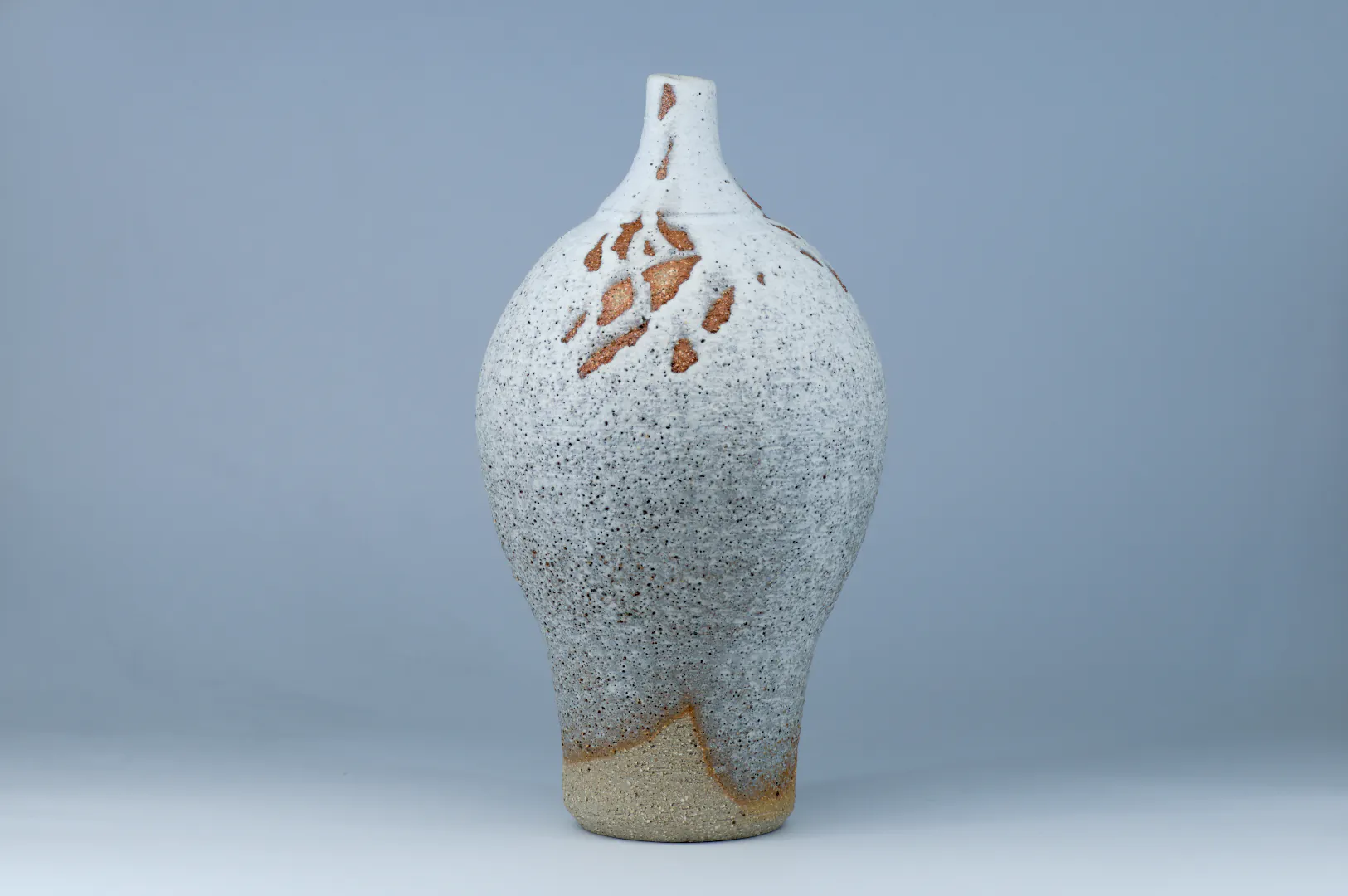
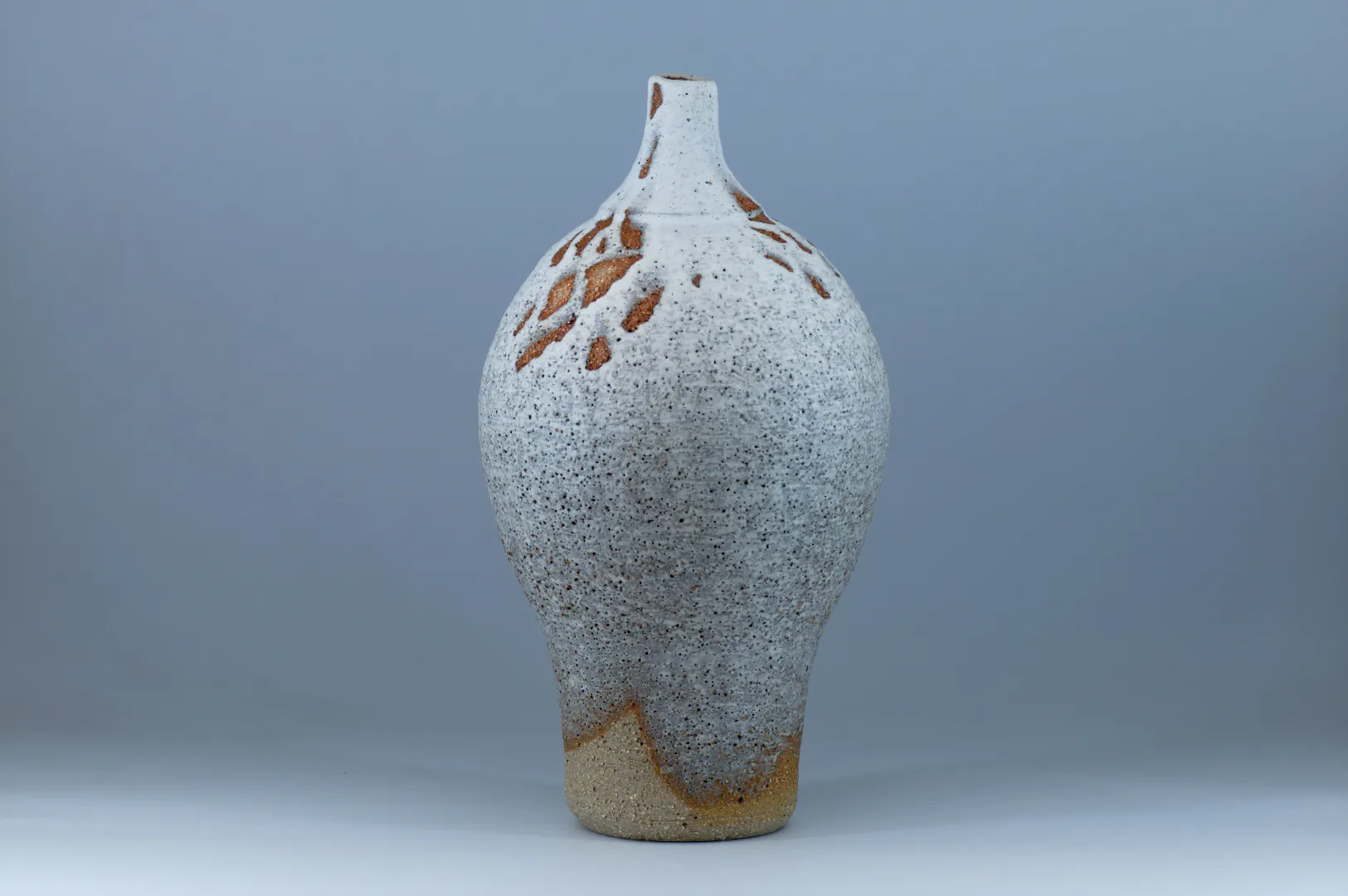
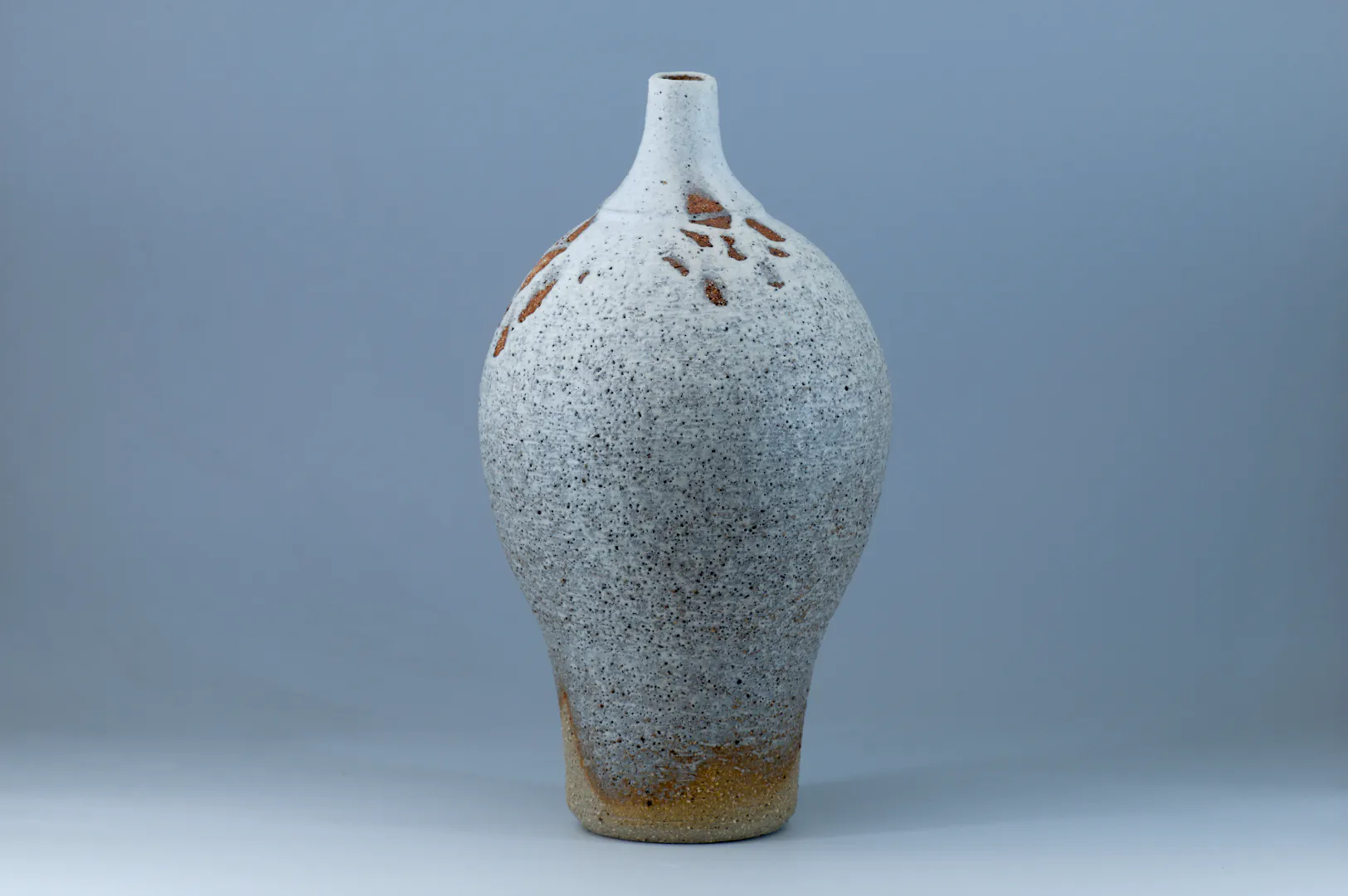
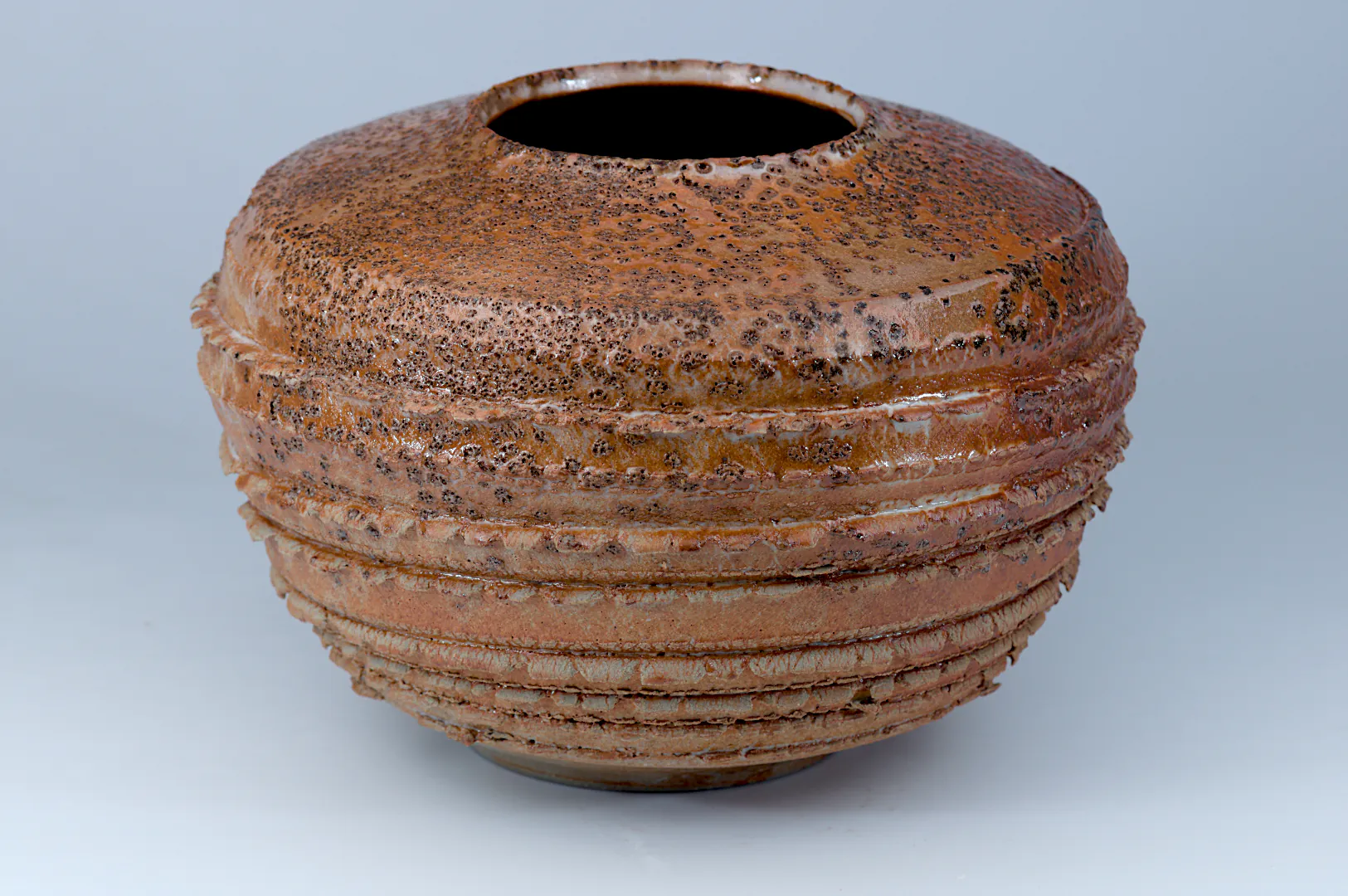
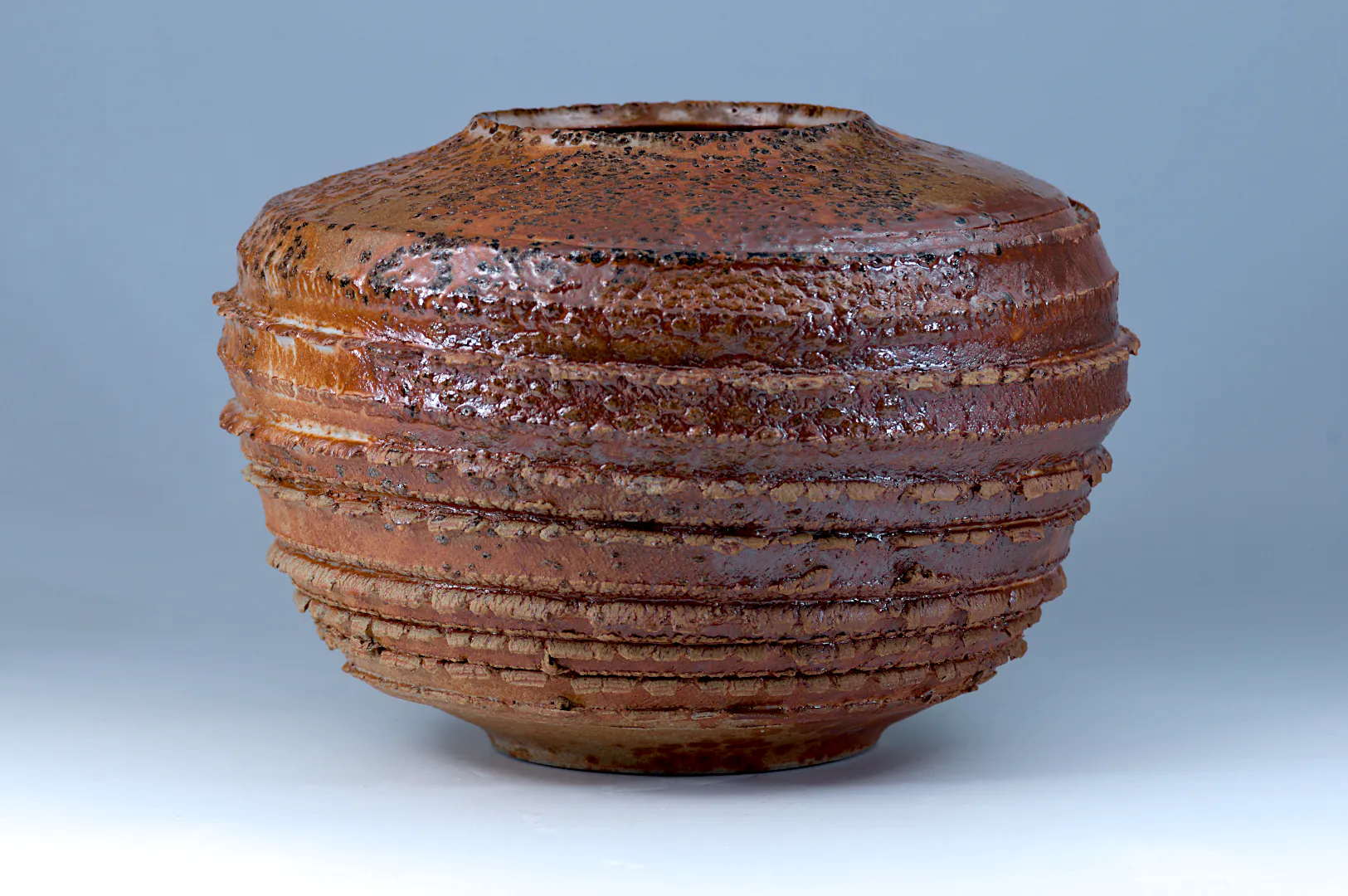
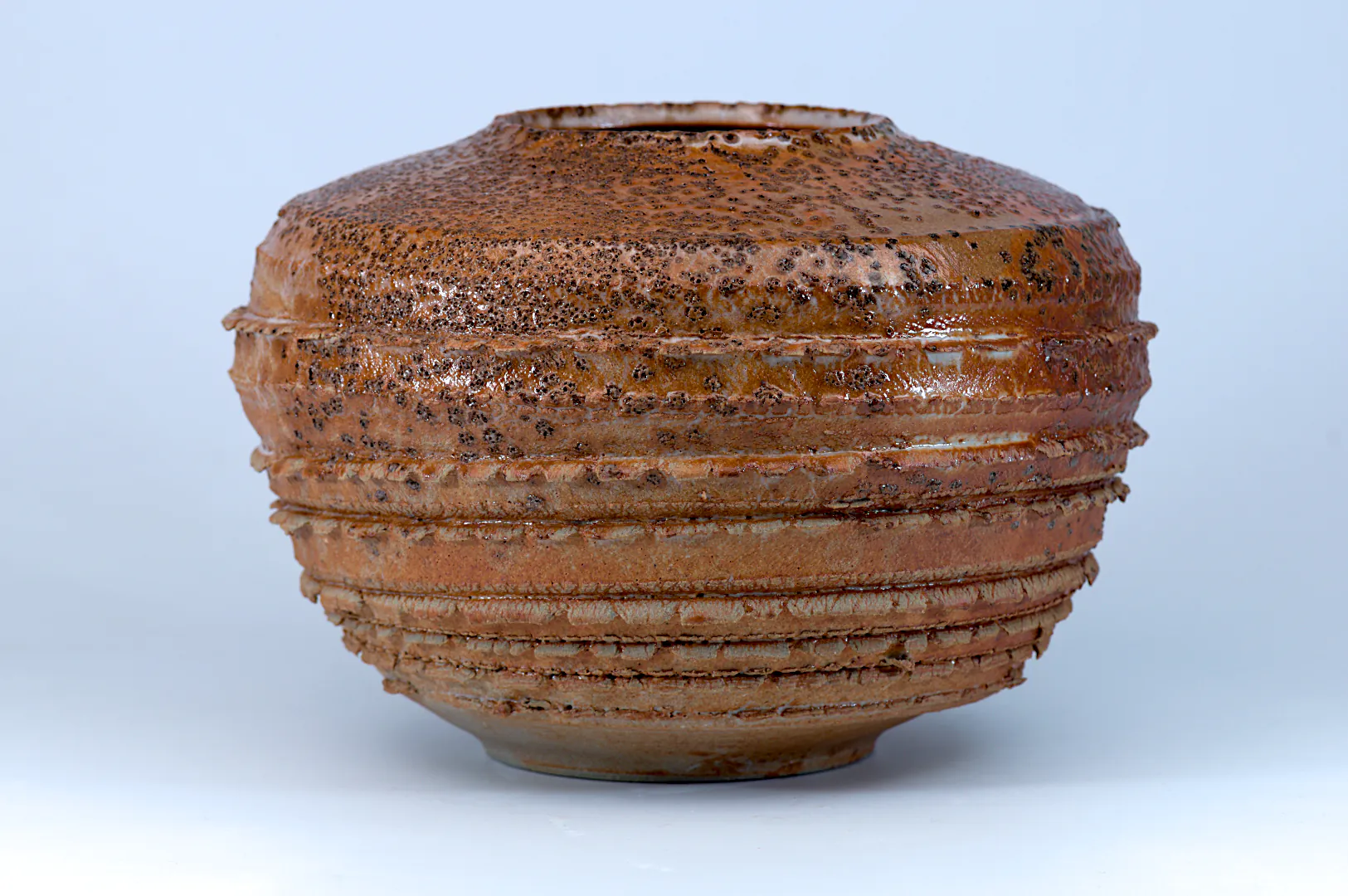
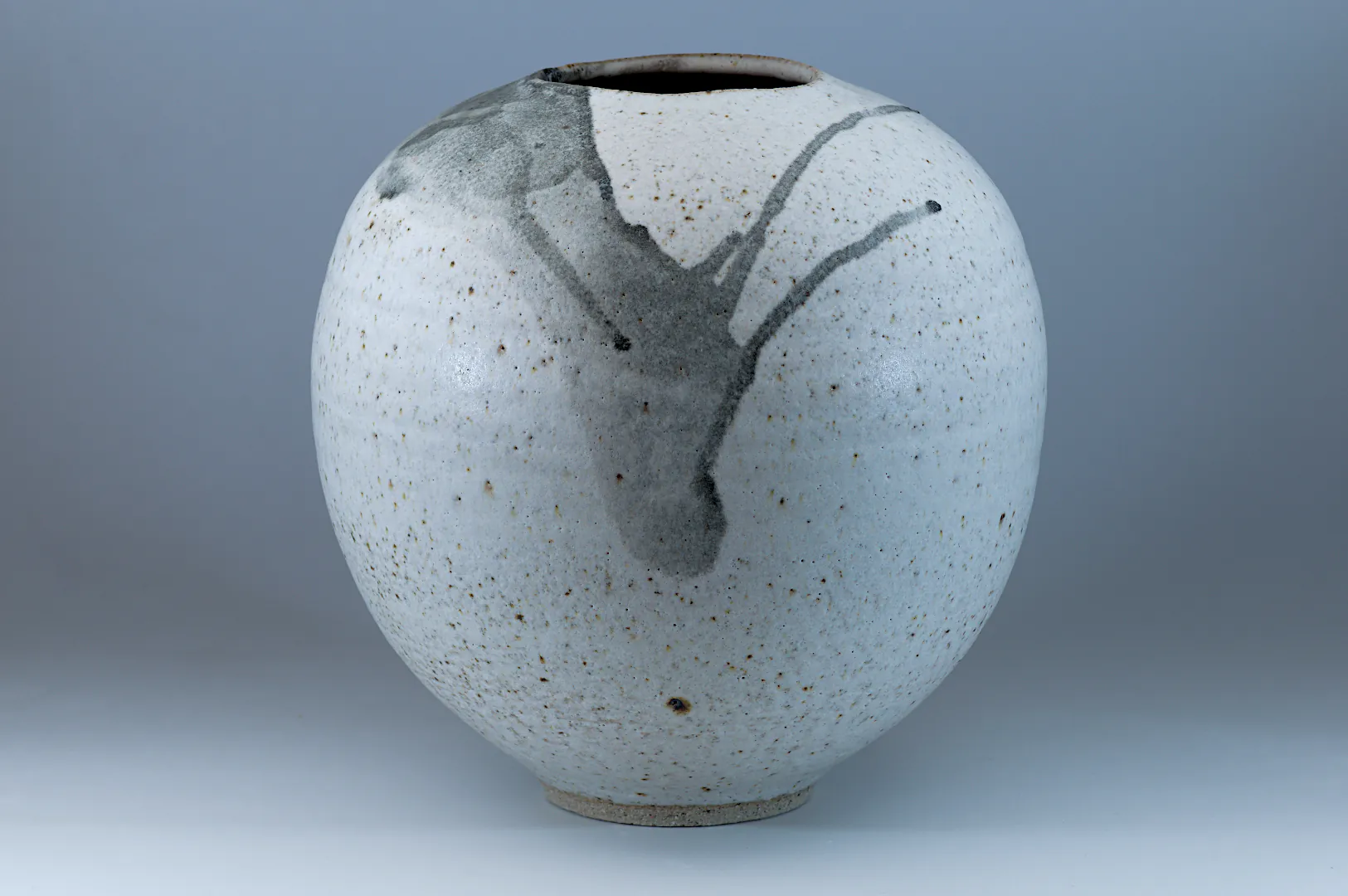
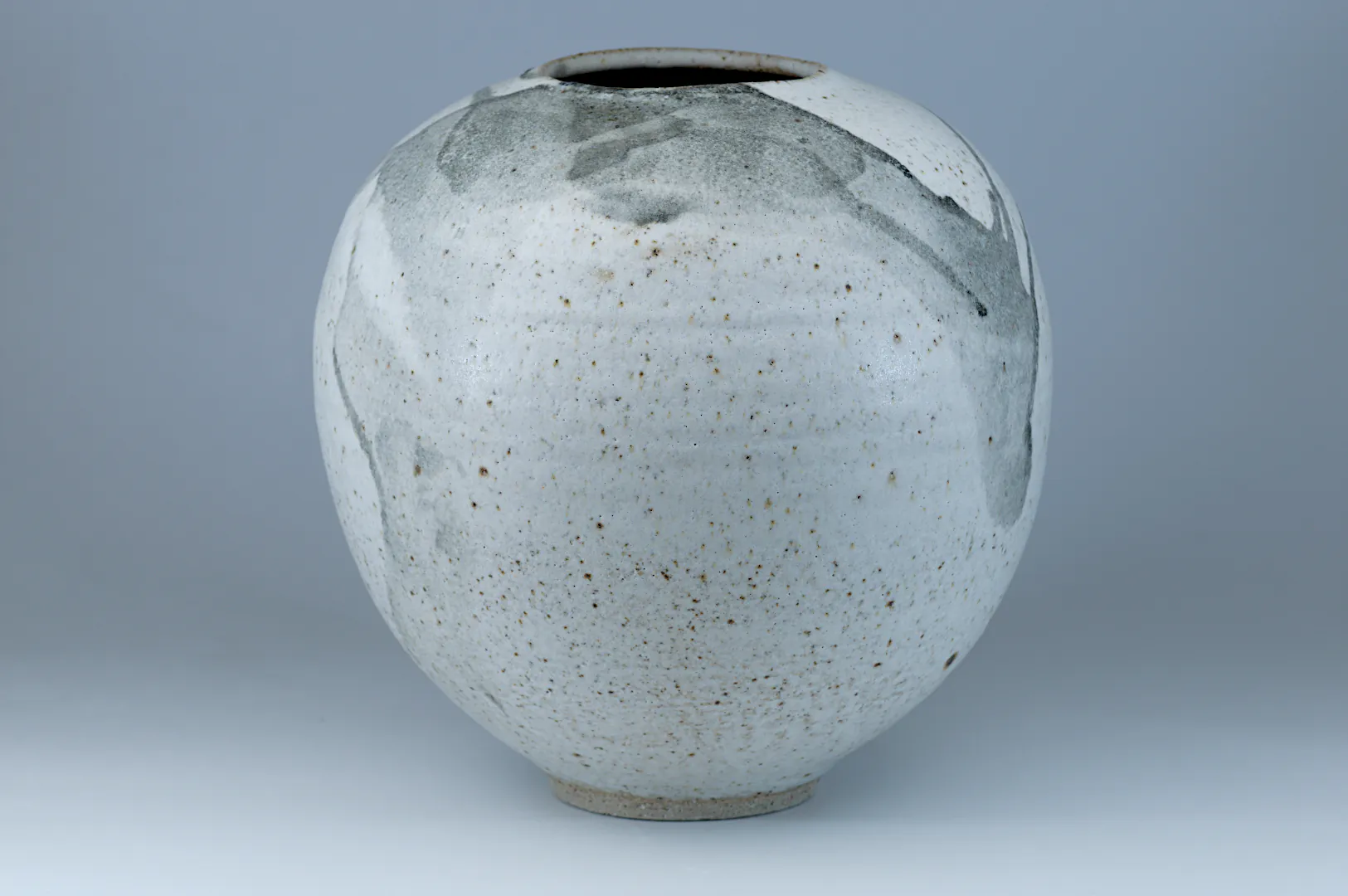
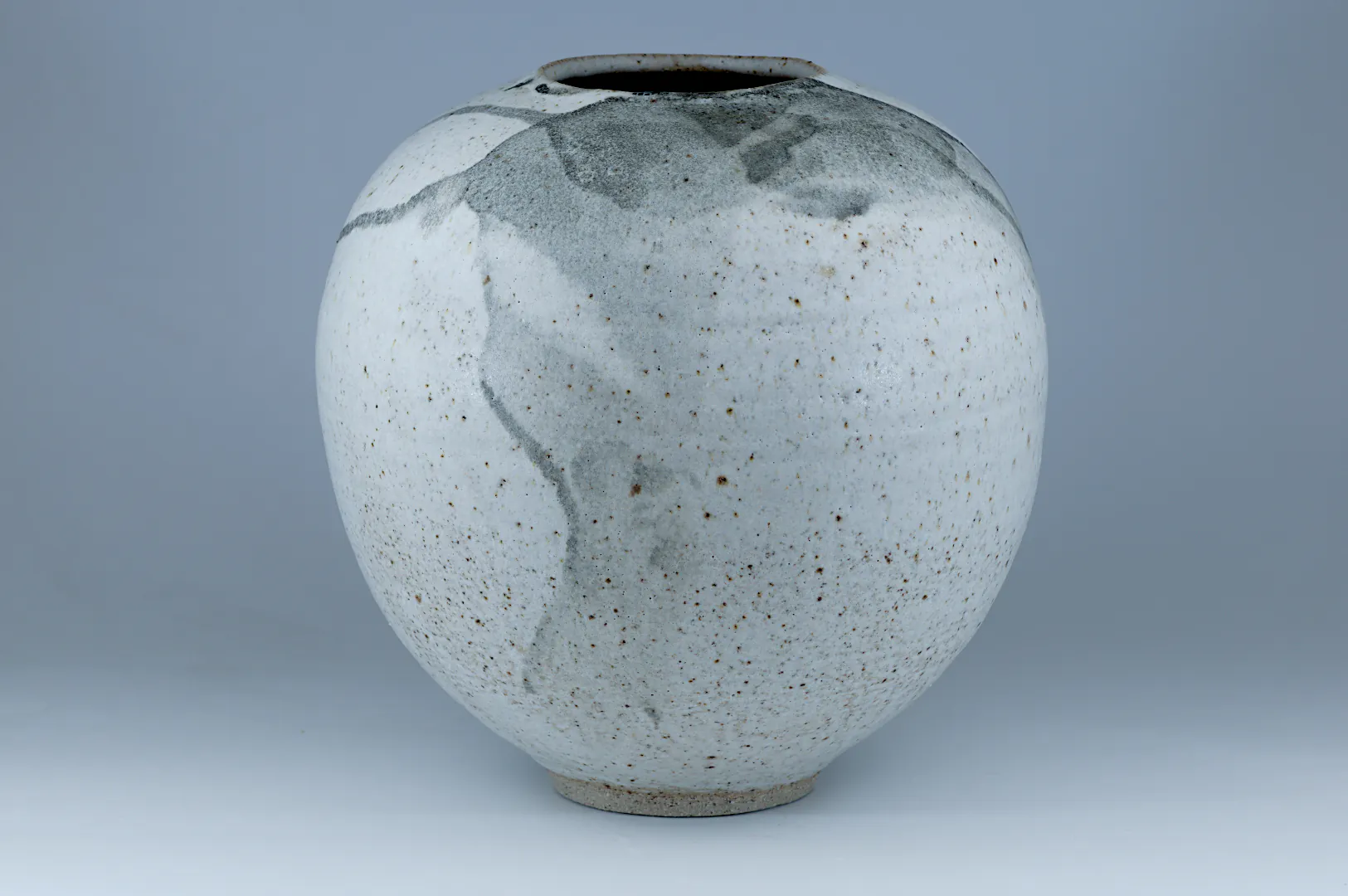
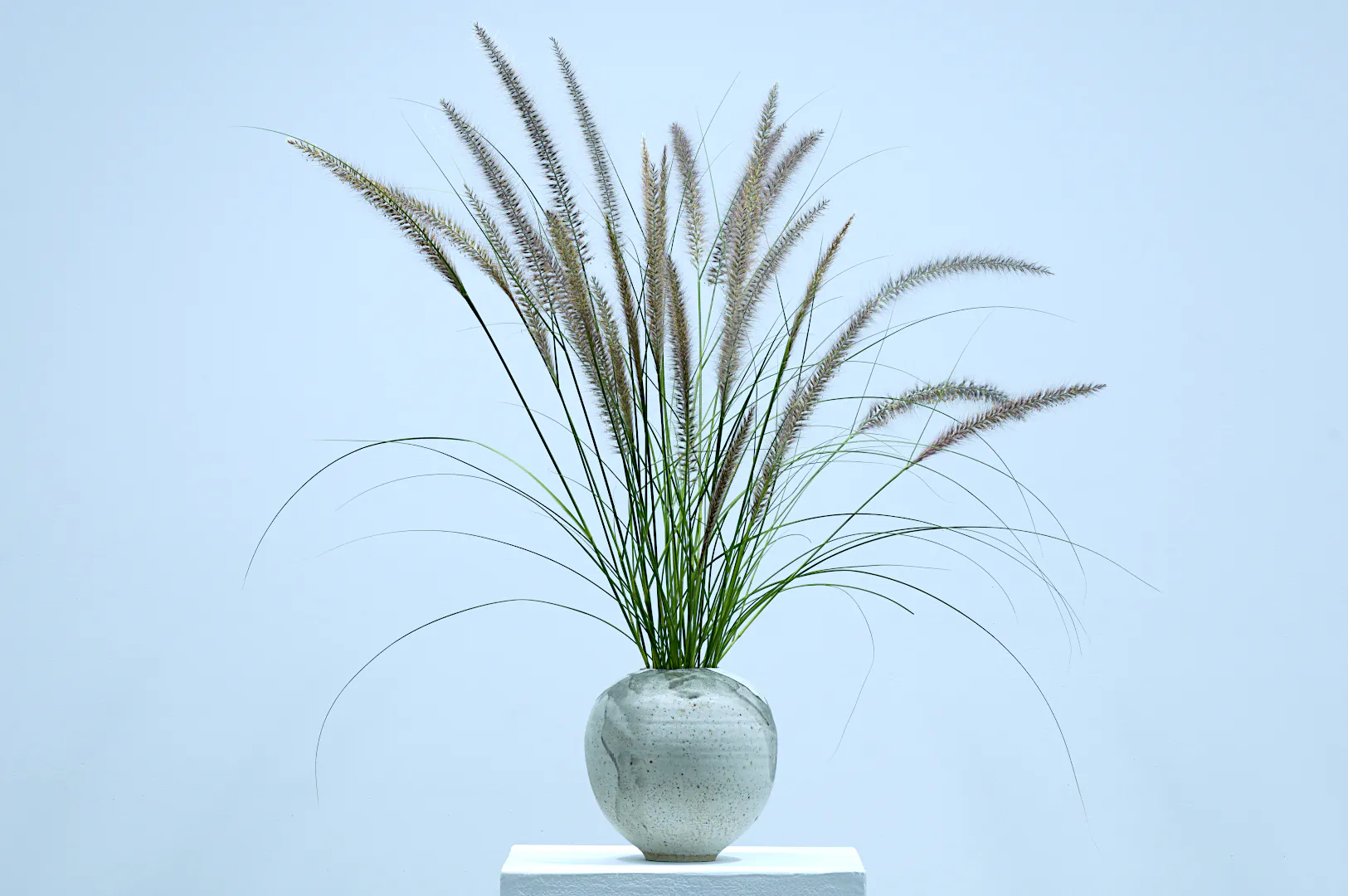
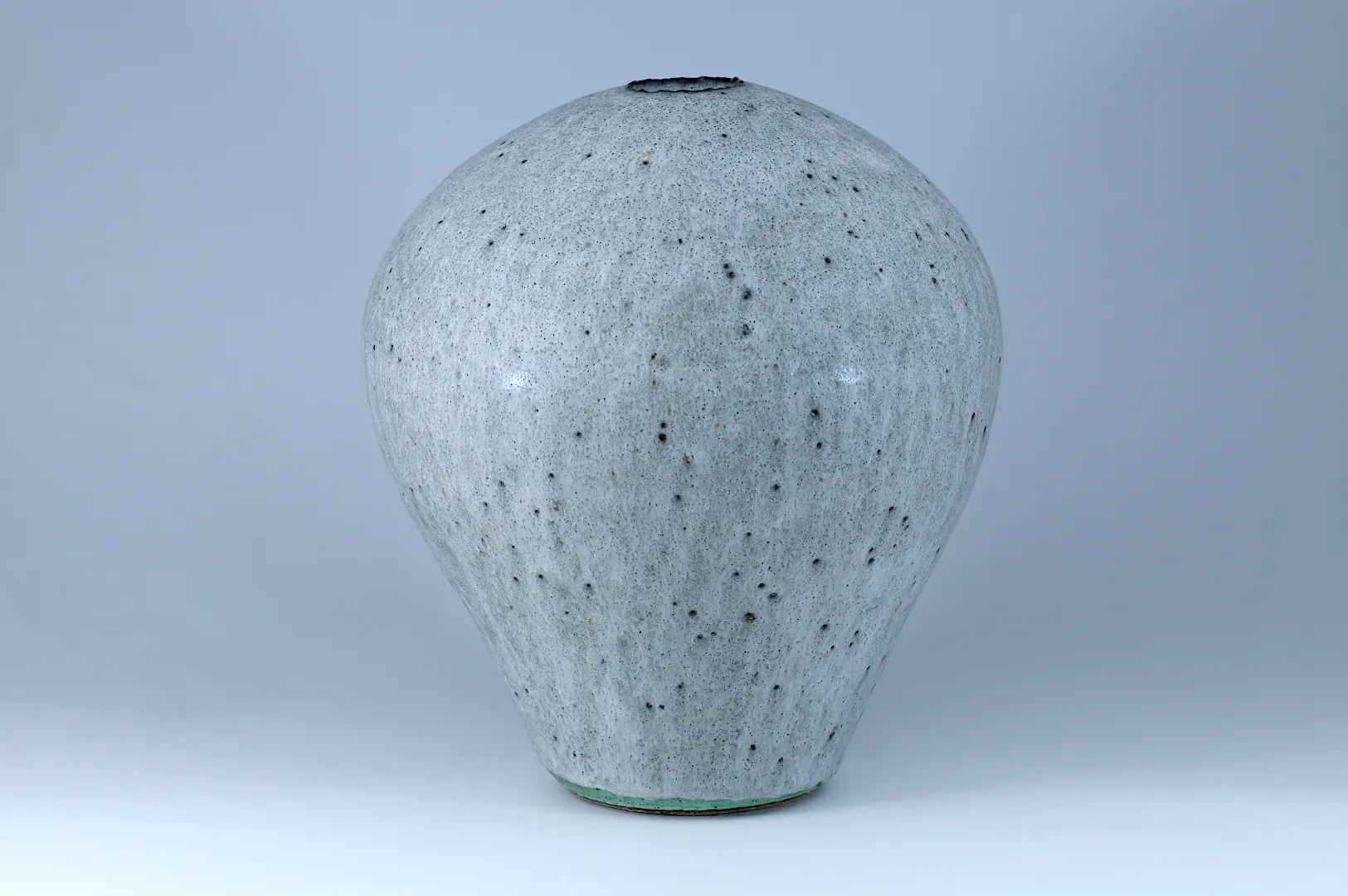
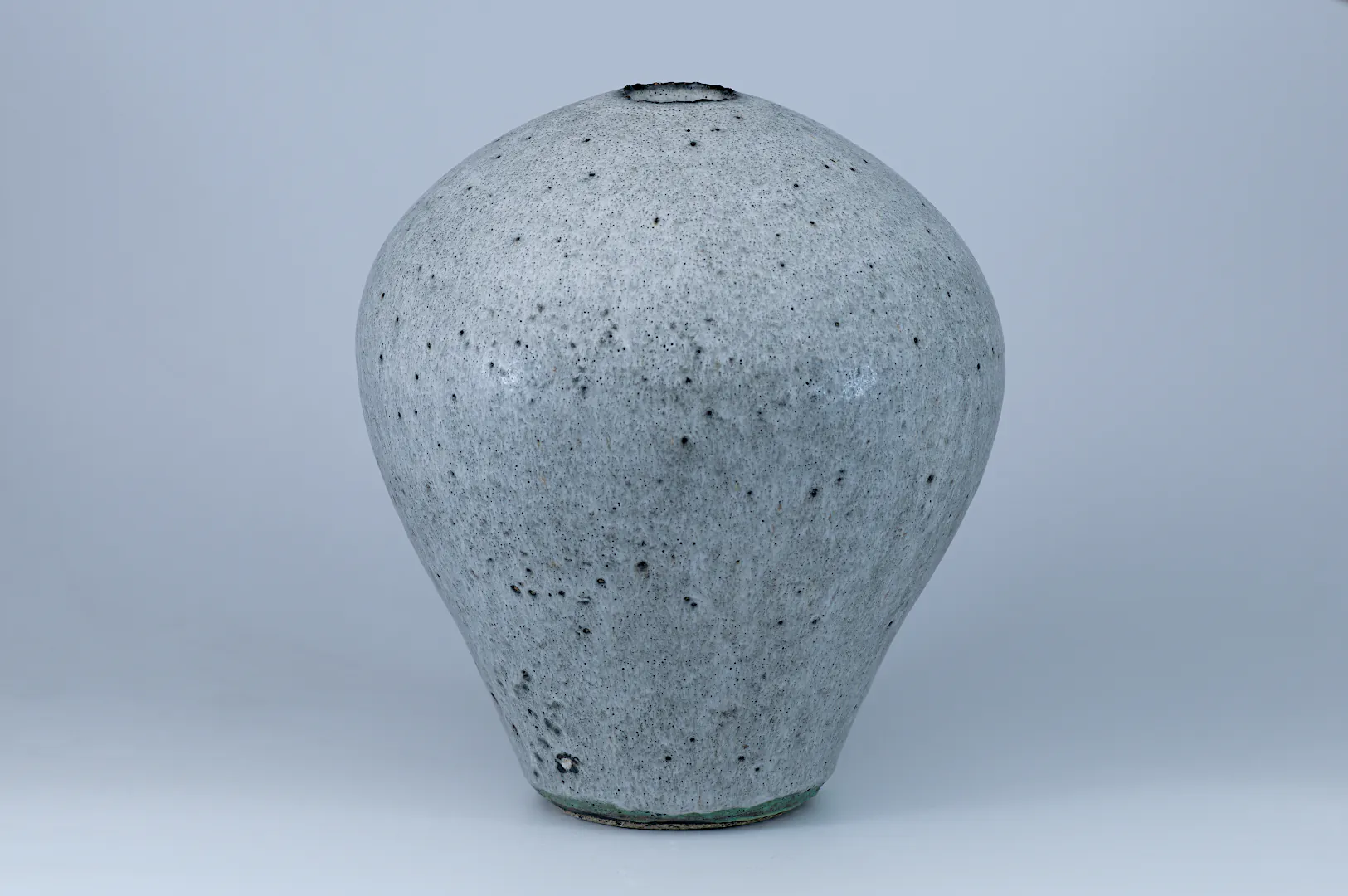
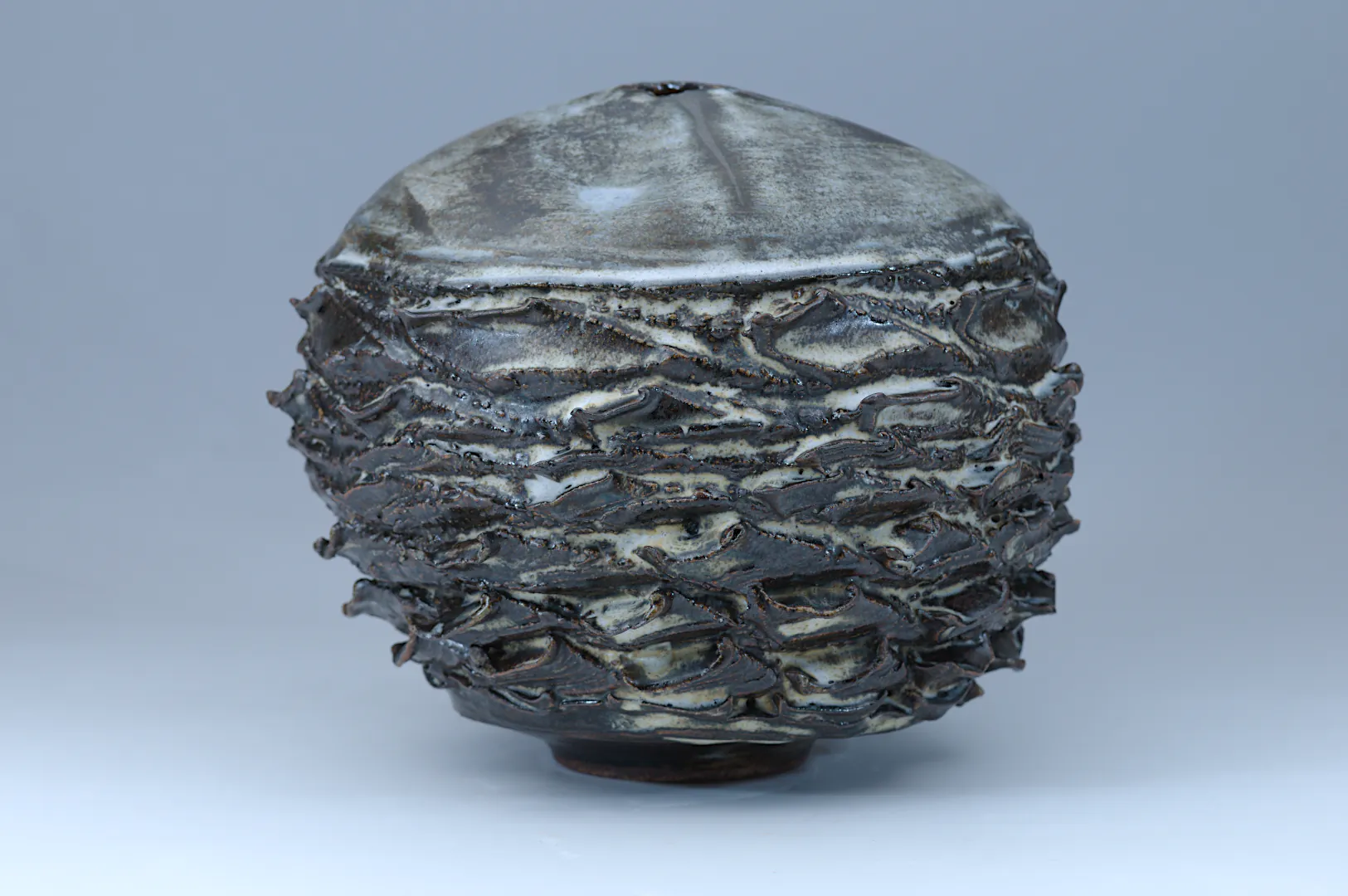
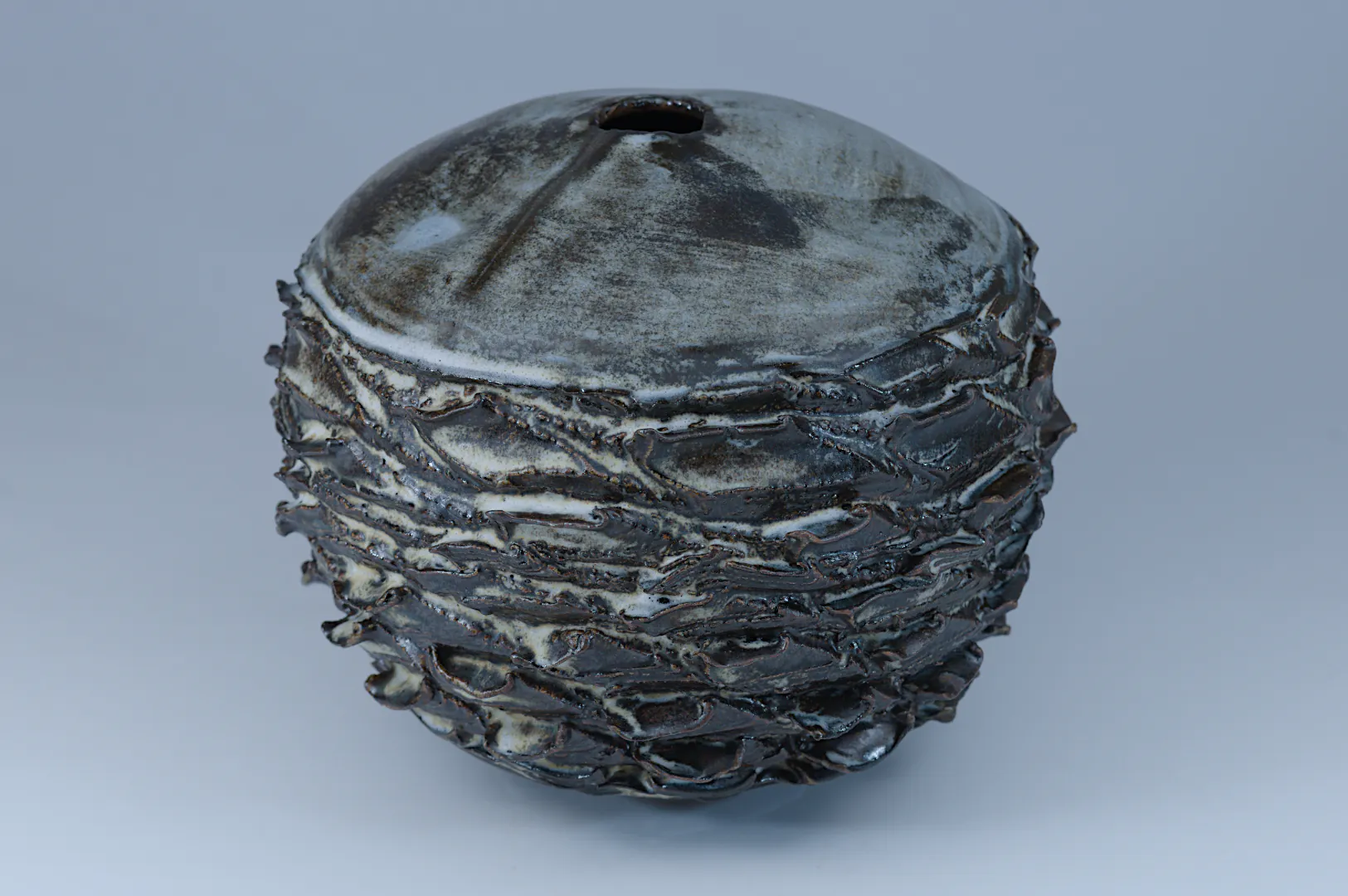
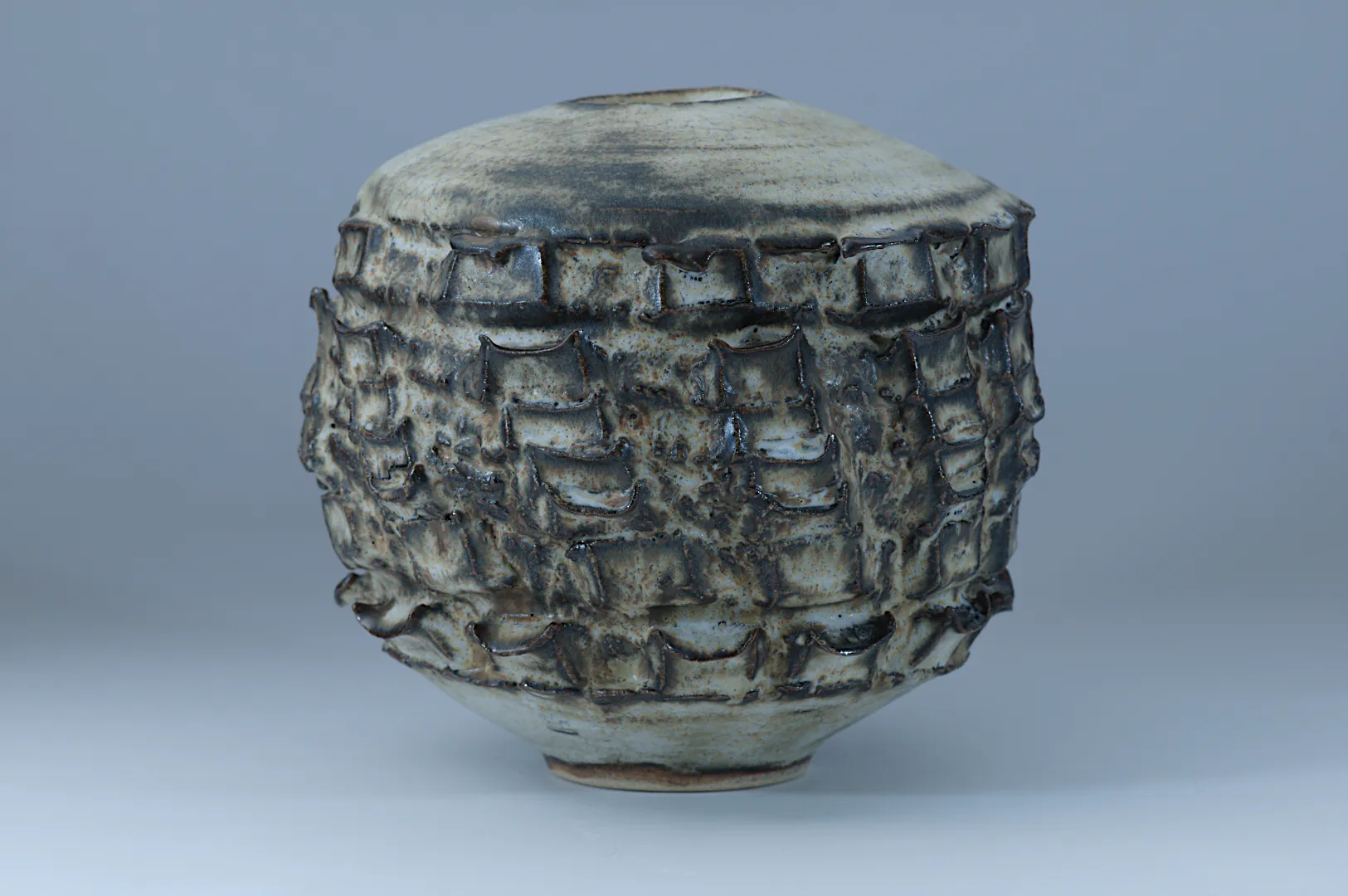
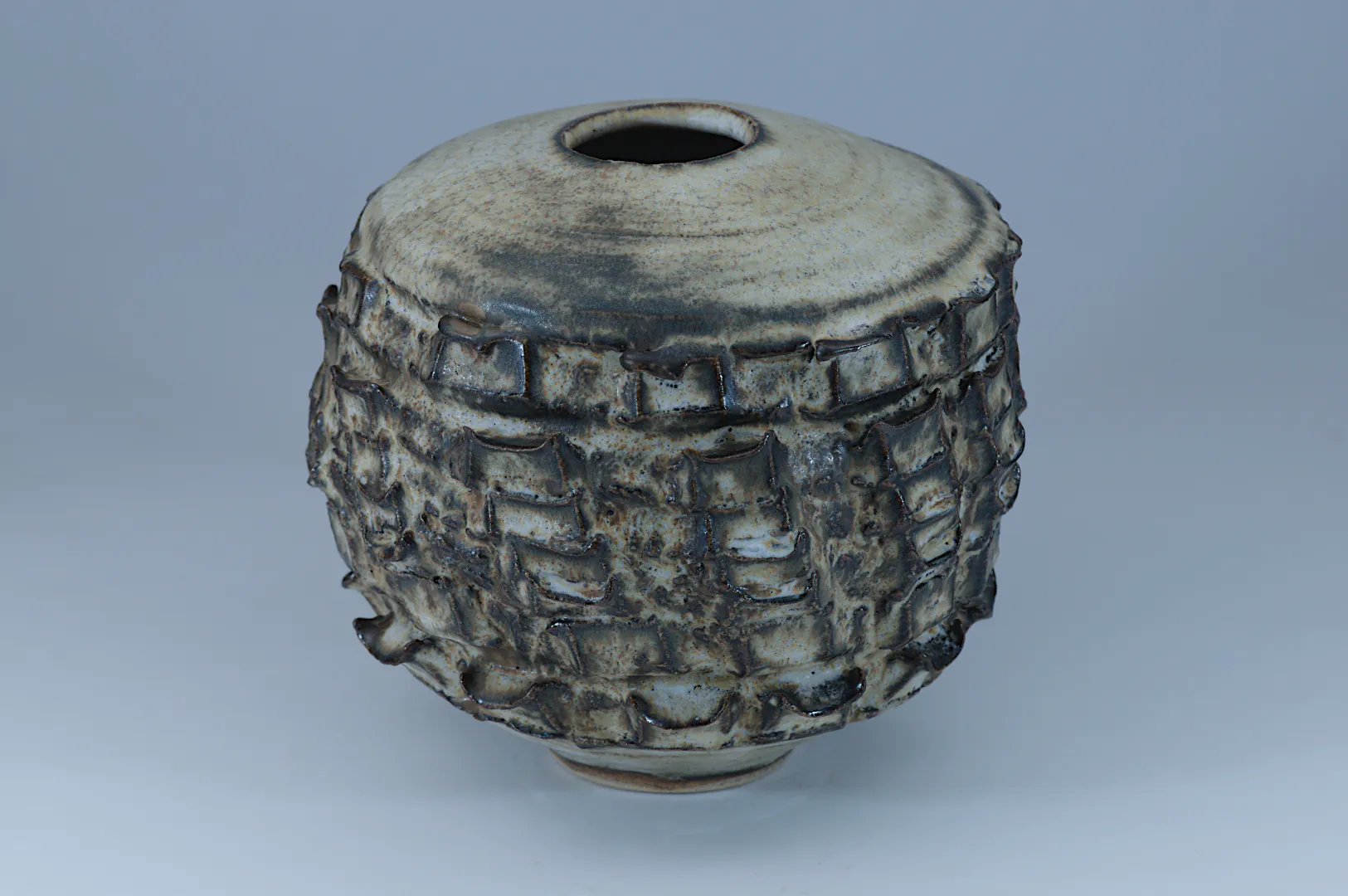
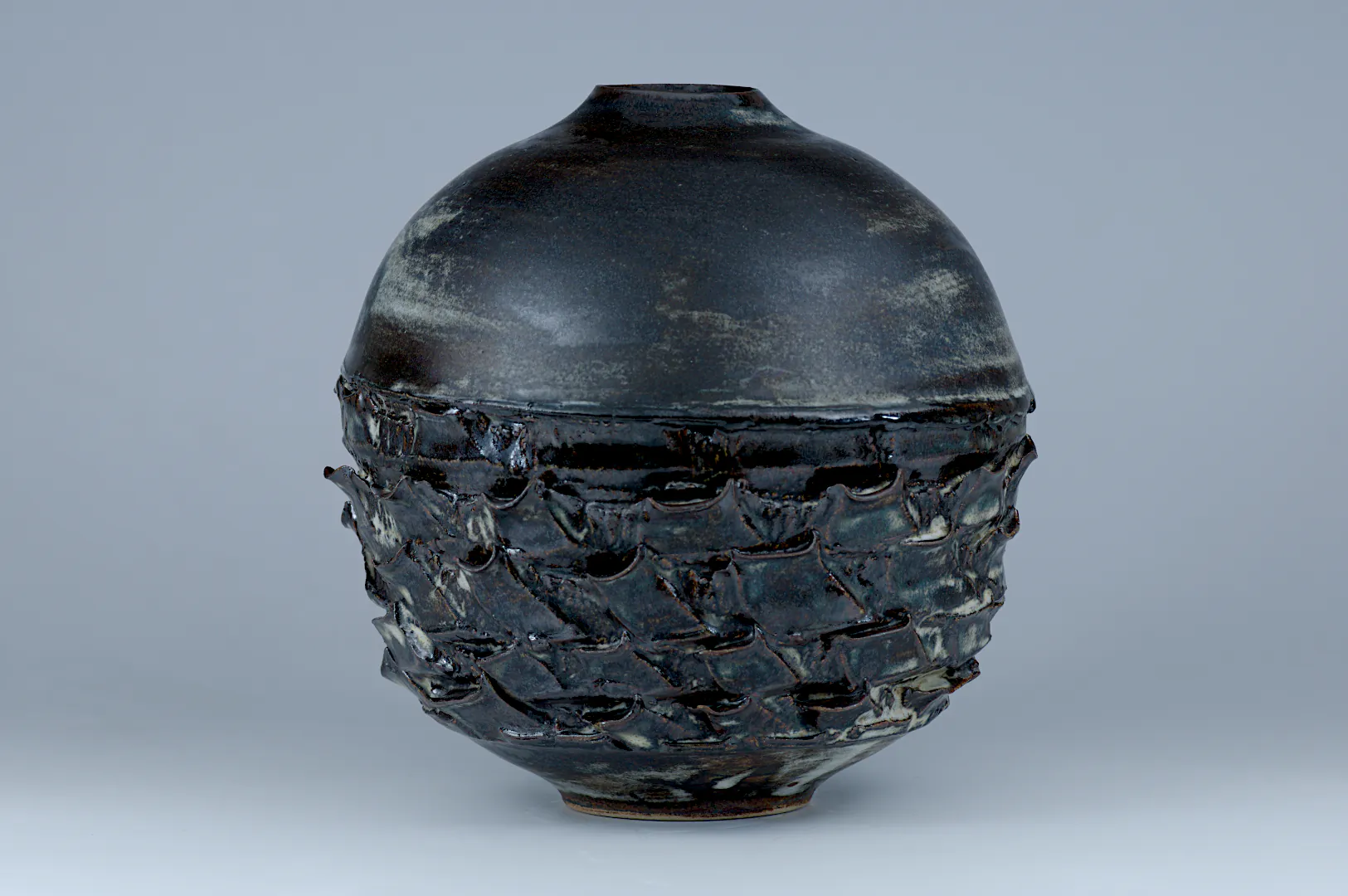
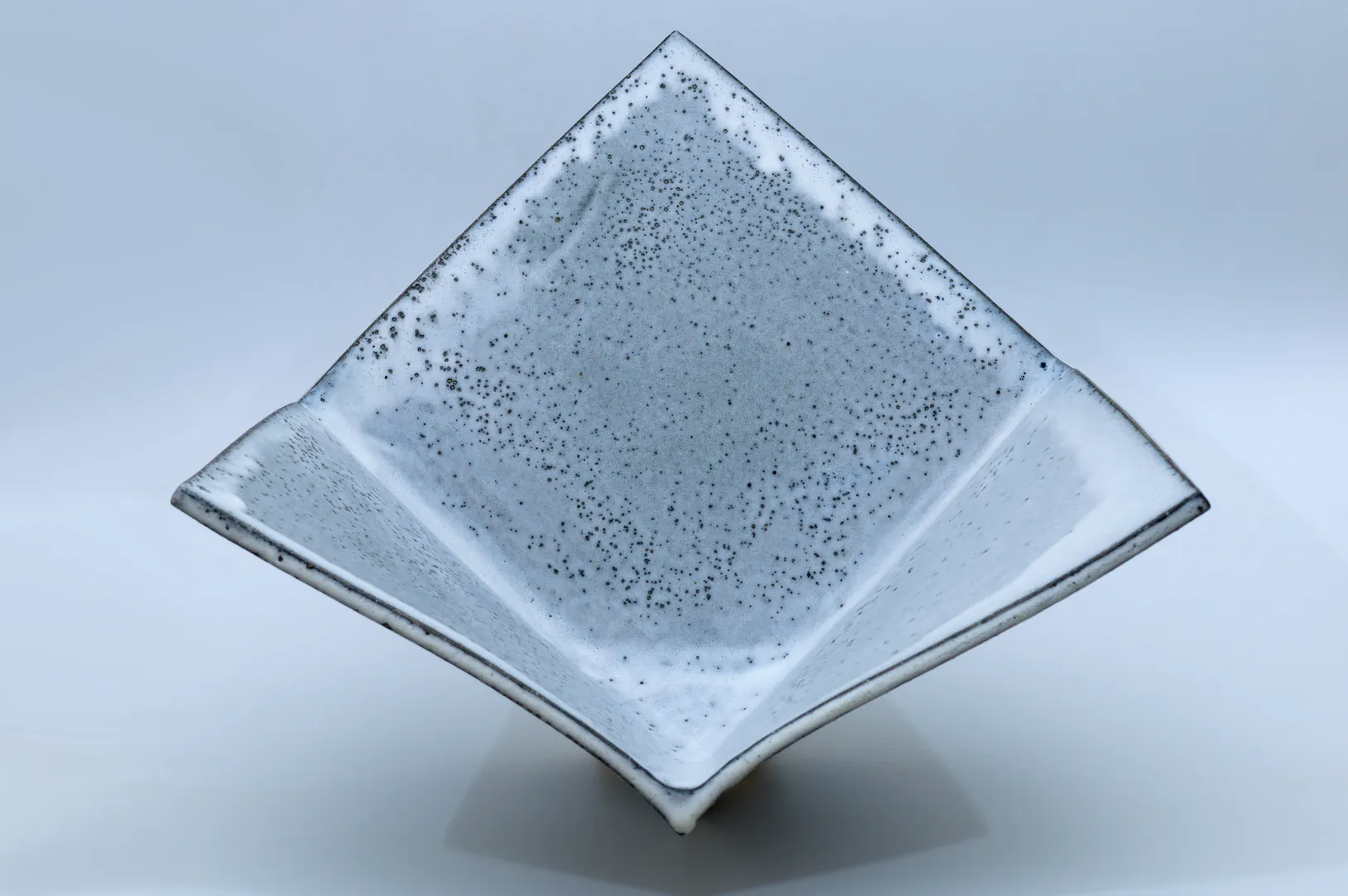
Schneefeld : : Hand Built Vessel 22 x 44 cm
Mesh : : Solo Exhibition 2026
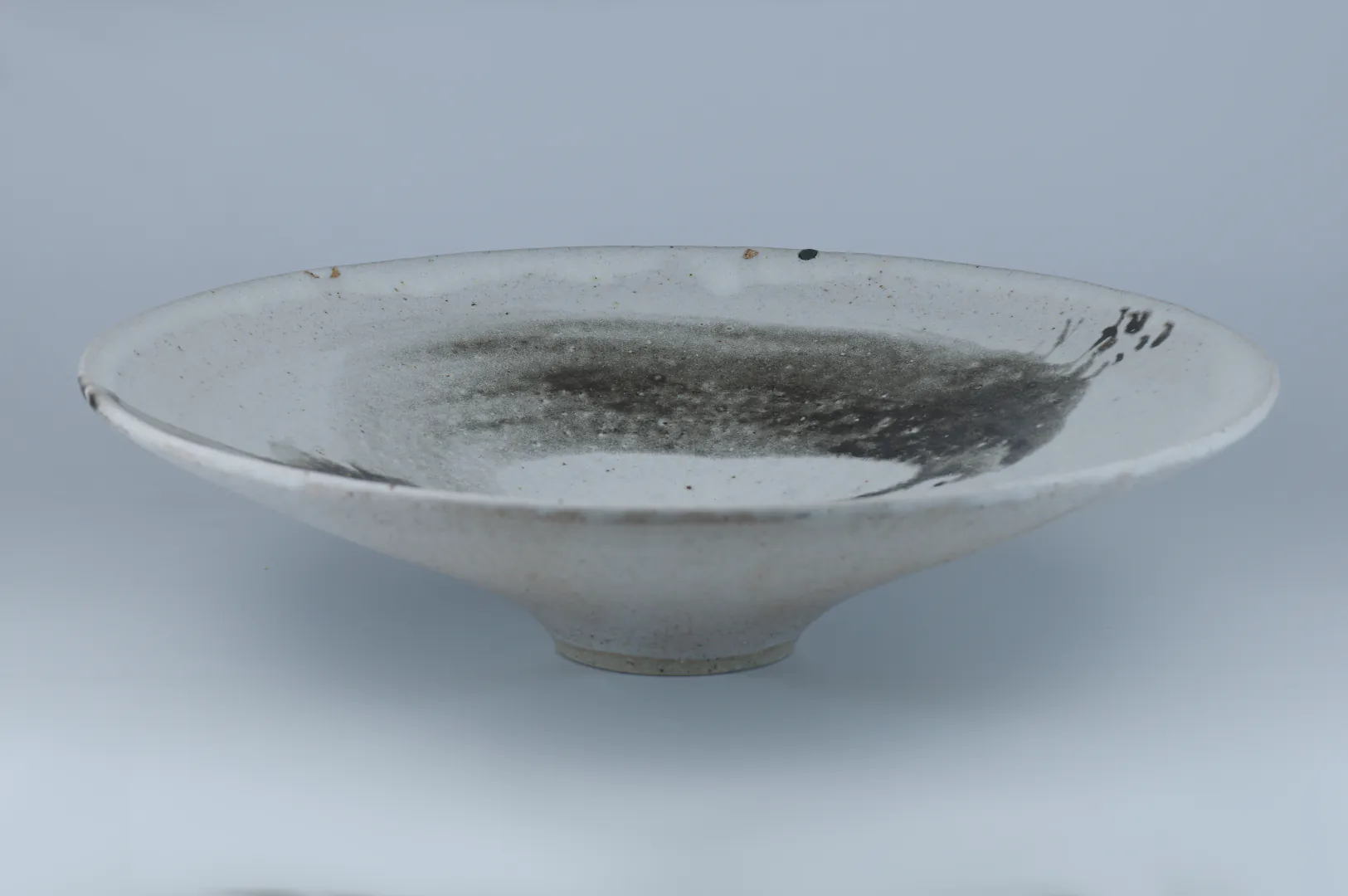
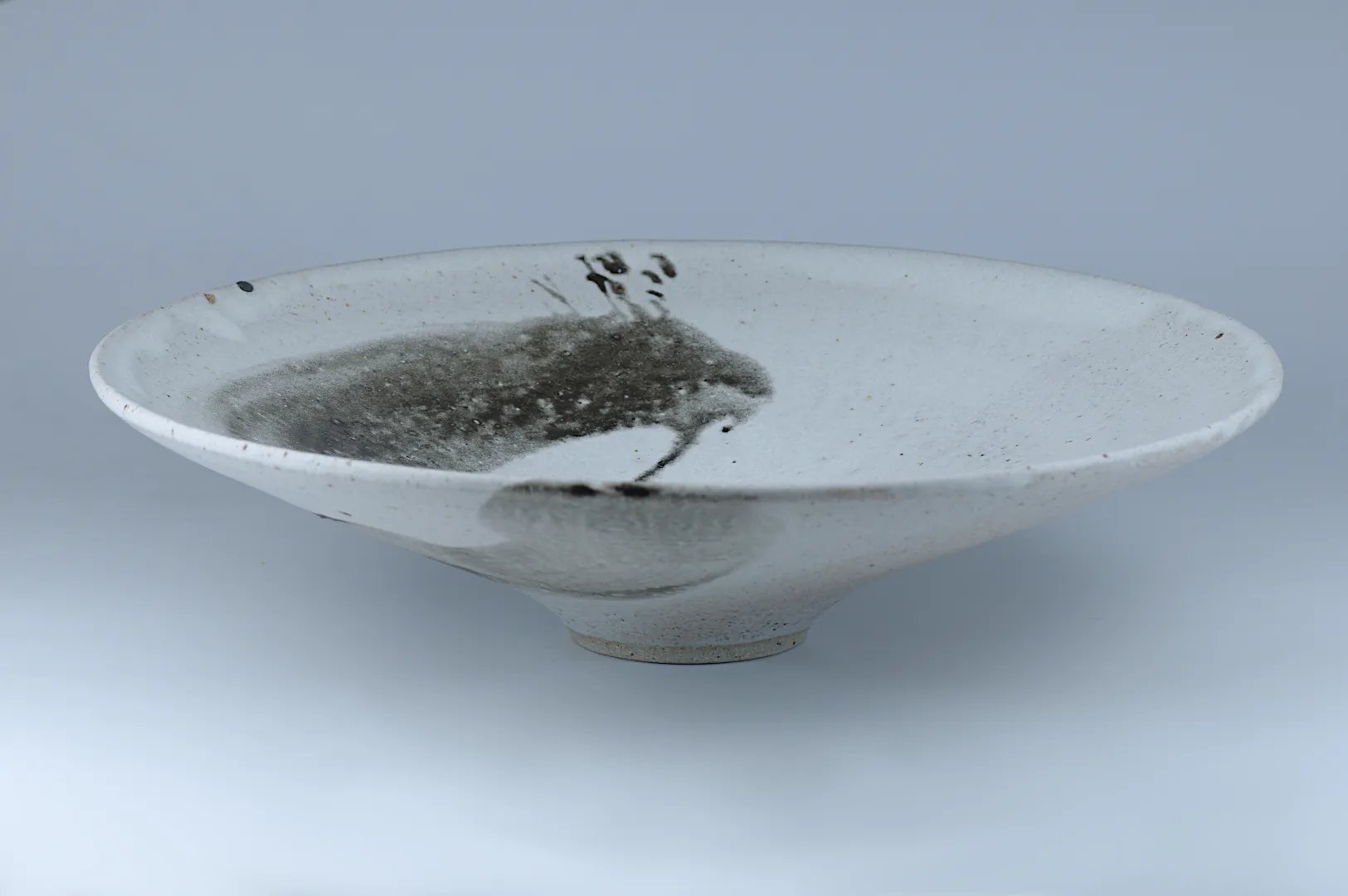
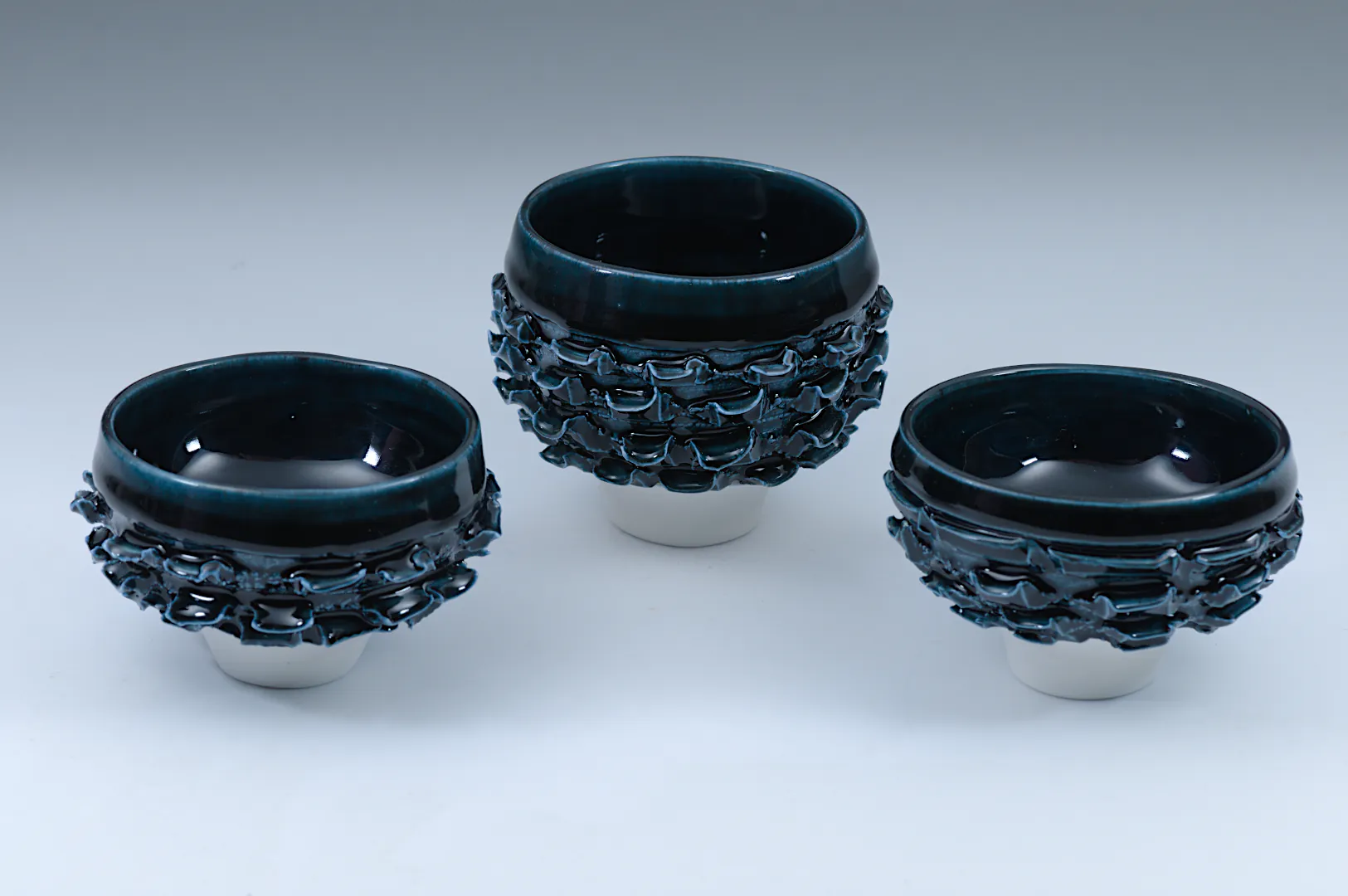
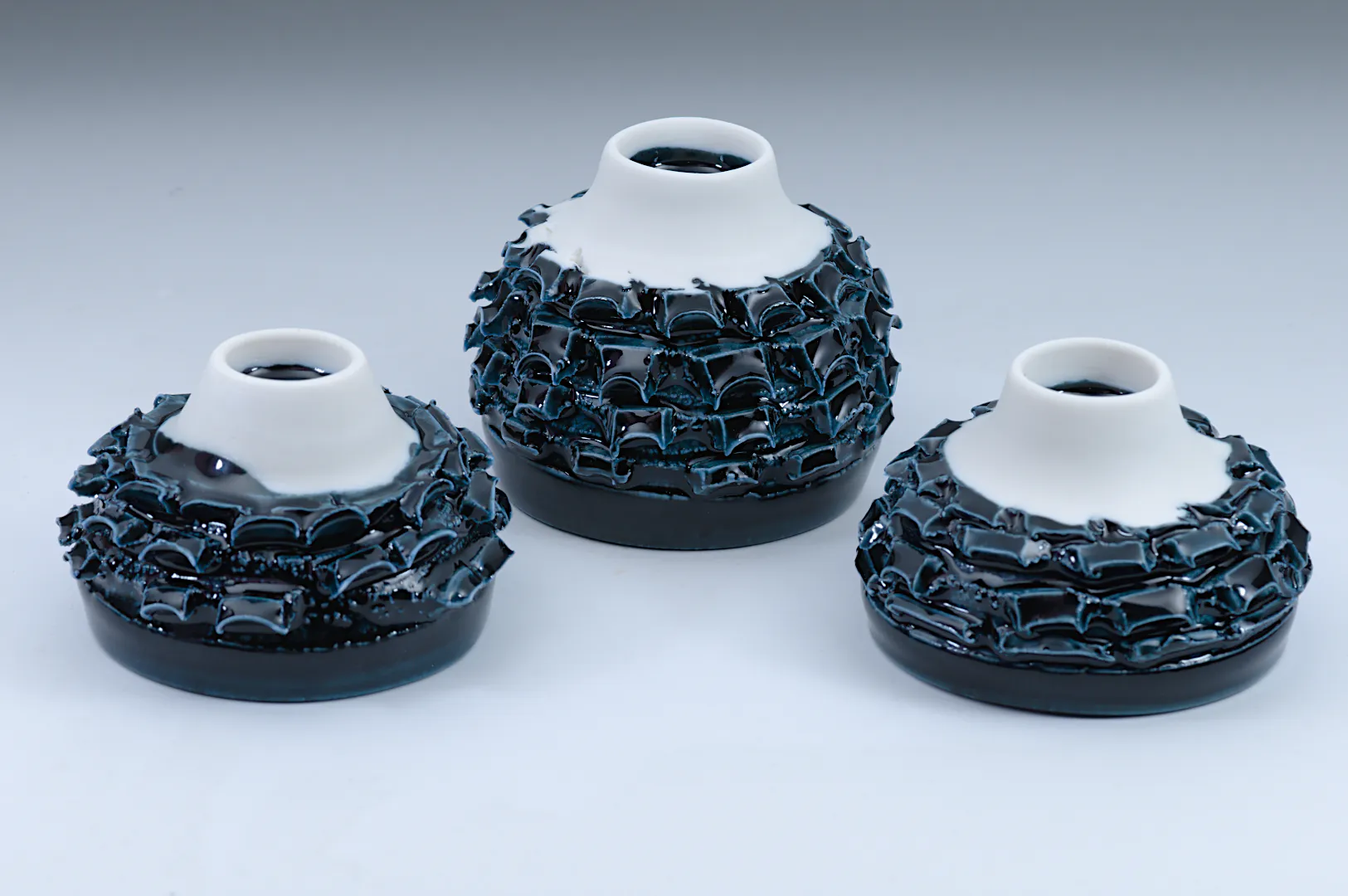
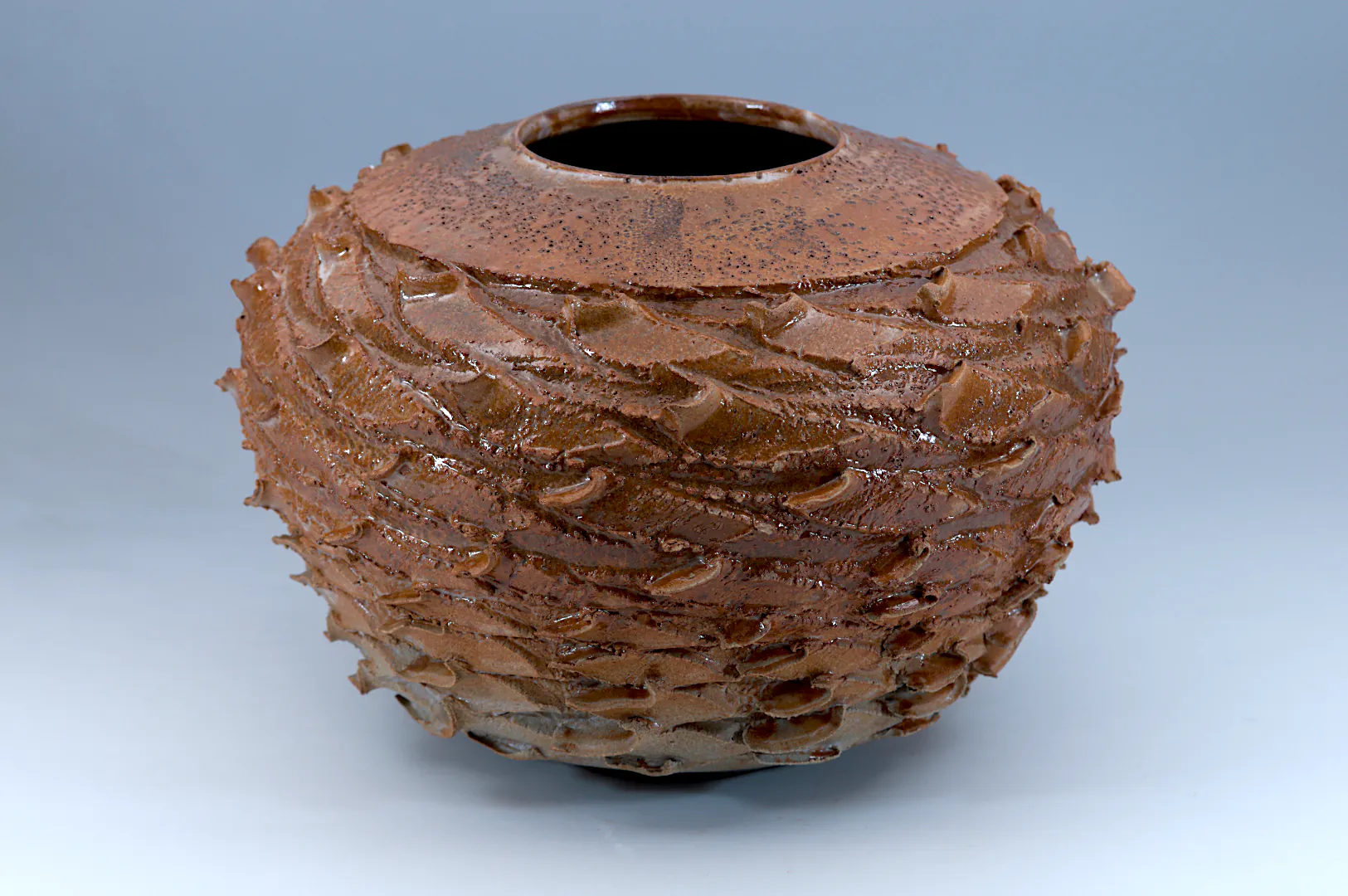
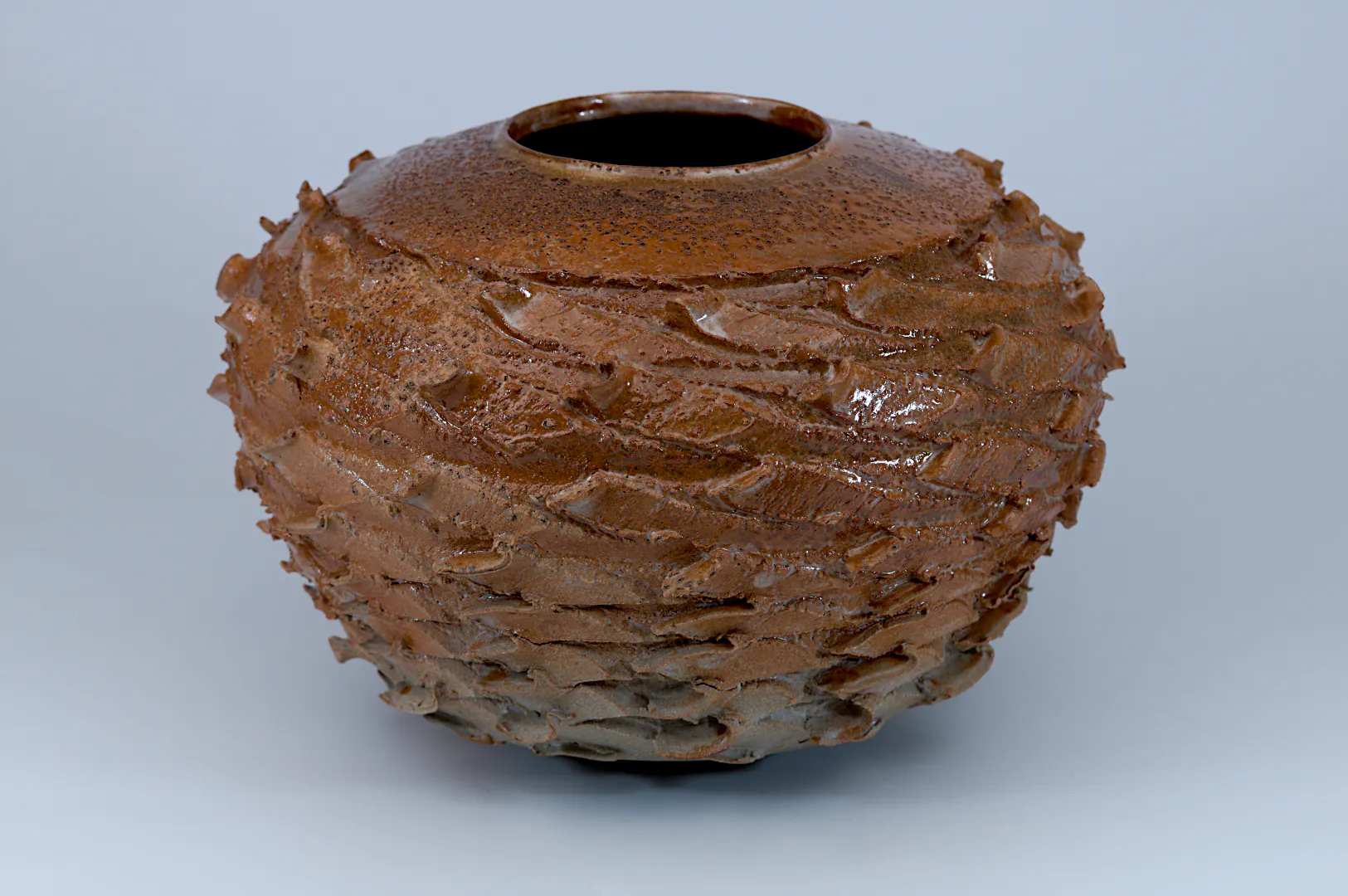
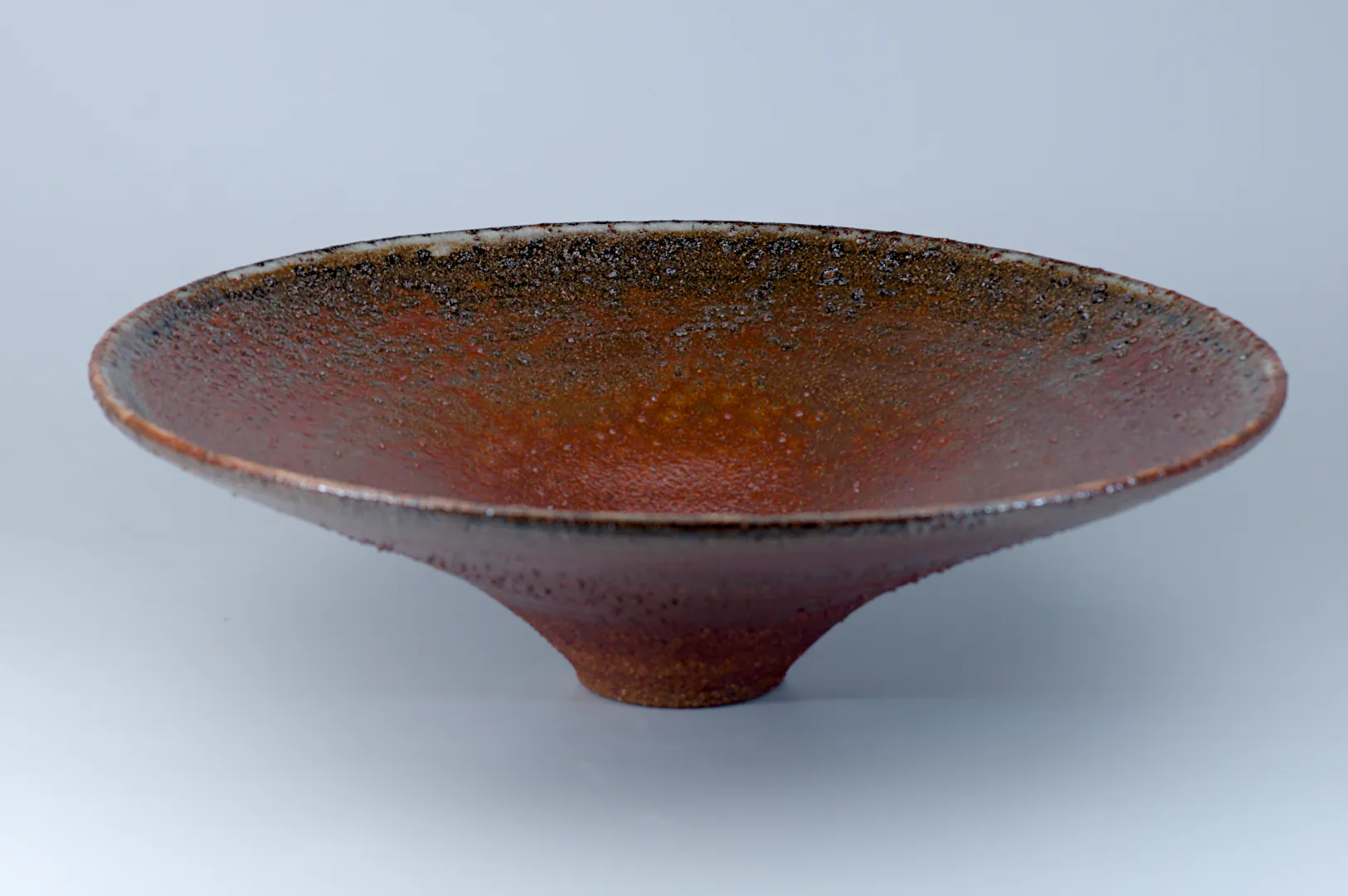
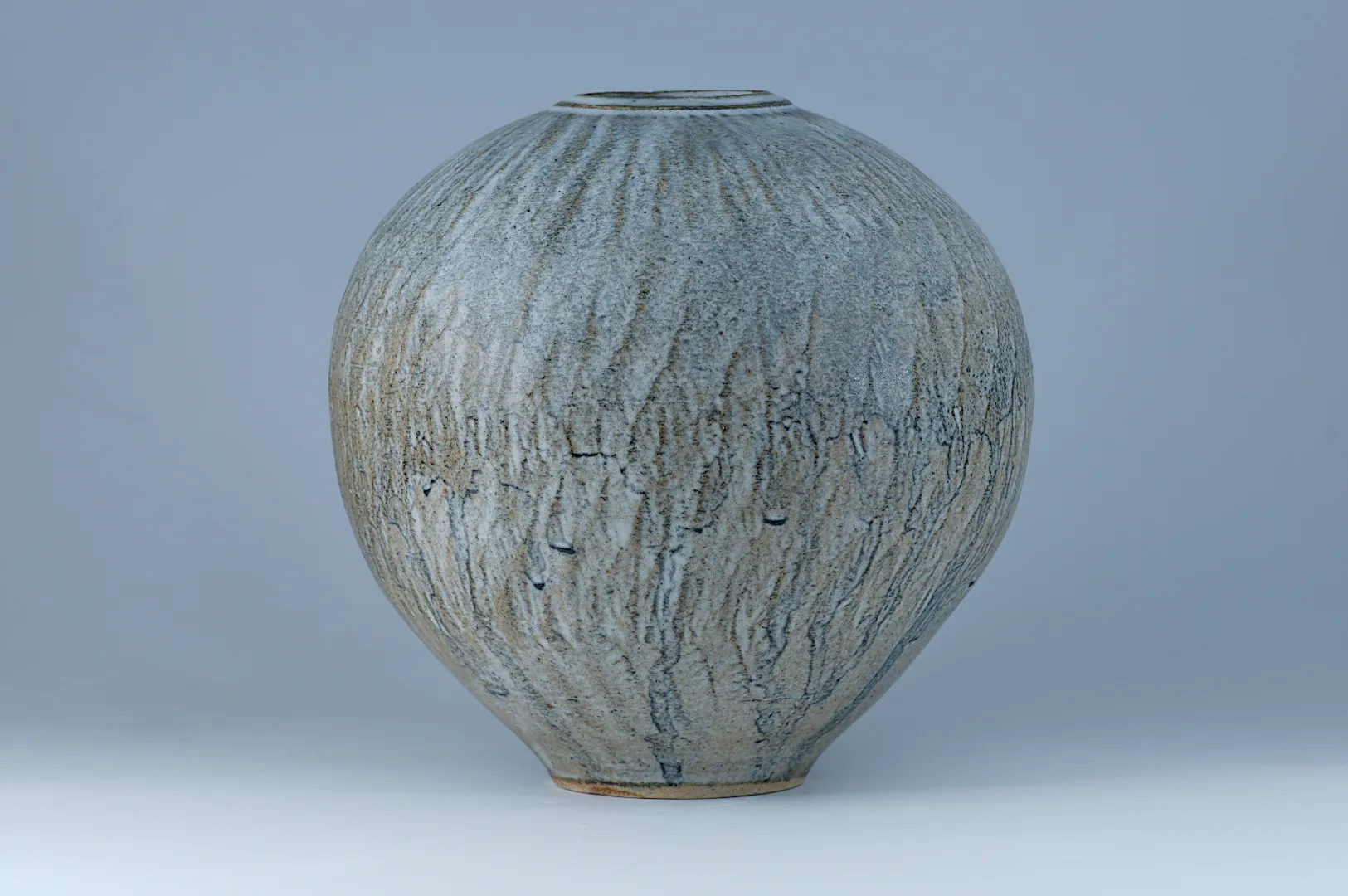
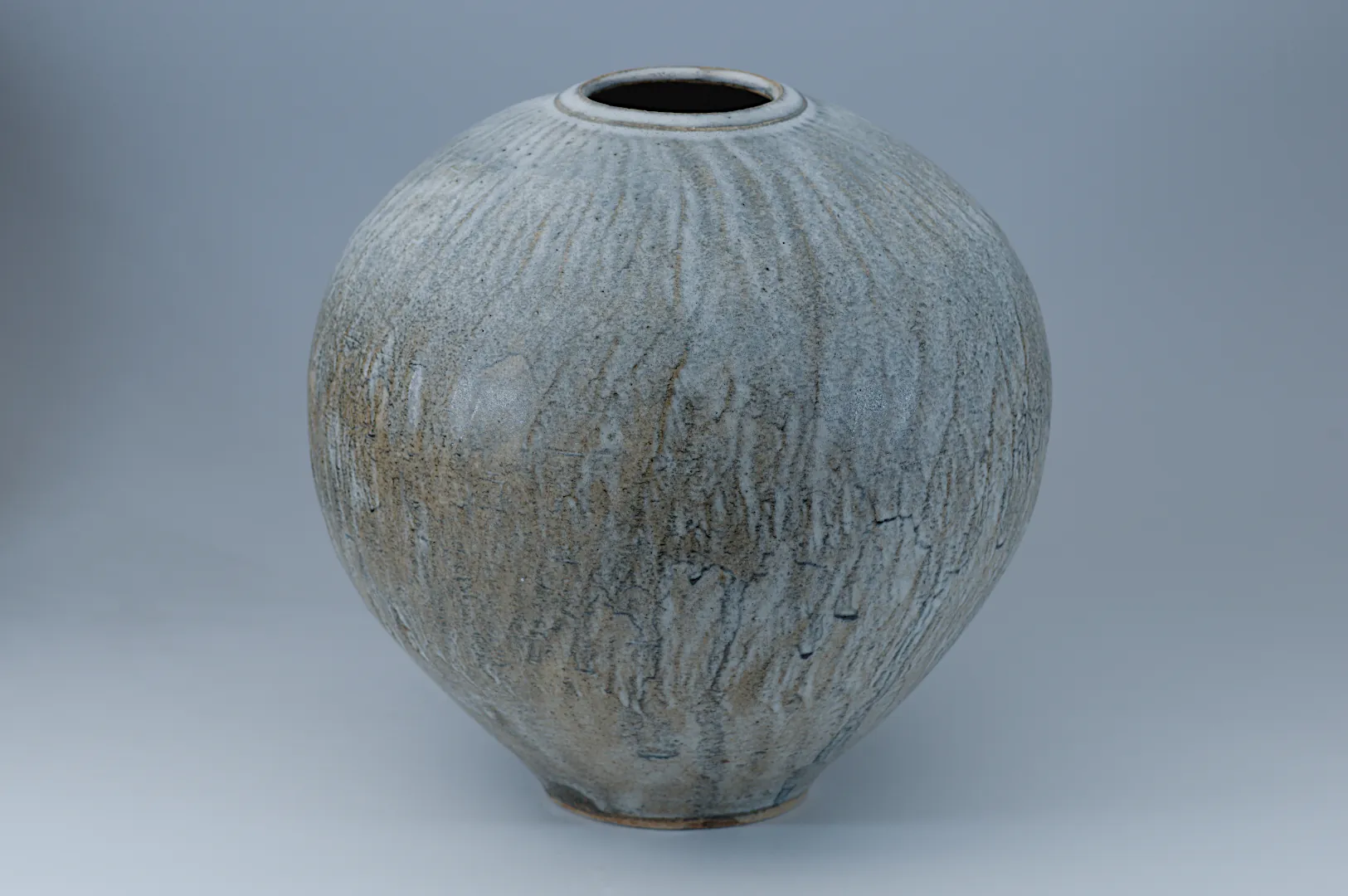
Mesh presented two contrasting series of works; a collection of hand built geometric sculptural vessels constructed using a coarse white stoneware clay fired in oxidation in an electric kiln and a collection of shino glazed or unglazed wheel thrown vessels fired in strong reduction in a gas kiln using coarse or finer iron-rich clays. Some of the works are deeply textured or have multiple layers of glaze achieved through several firings. I continue to explore the deep almost regular textural patterns possible by leveraging the torque from a spinning mass of clay on the wheel.
Deep Texture
The deeply textured walls of the vessels are achieved by leveraging the torque from a spinning mass of clay on the wheel while throwing and the outcome is thus somewhat unpredictable. There is no carving or clay additions applied and no post processing of the walls once the piece has been formed on the wheel. Throwing like this is challenging since the outside of the wall cannot be touched.
Ikebana
The exhibition features work-specific ikebana arrangements by Sogetsu ikebana teacher Vernisher Wooh and by Peter Biddulph, who did the arrangements with reeds in the foyer.
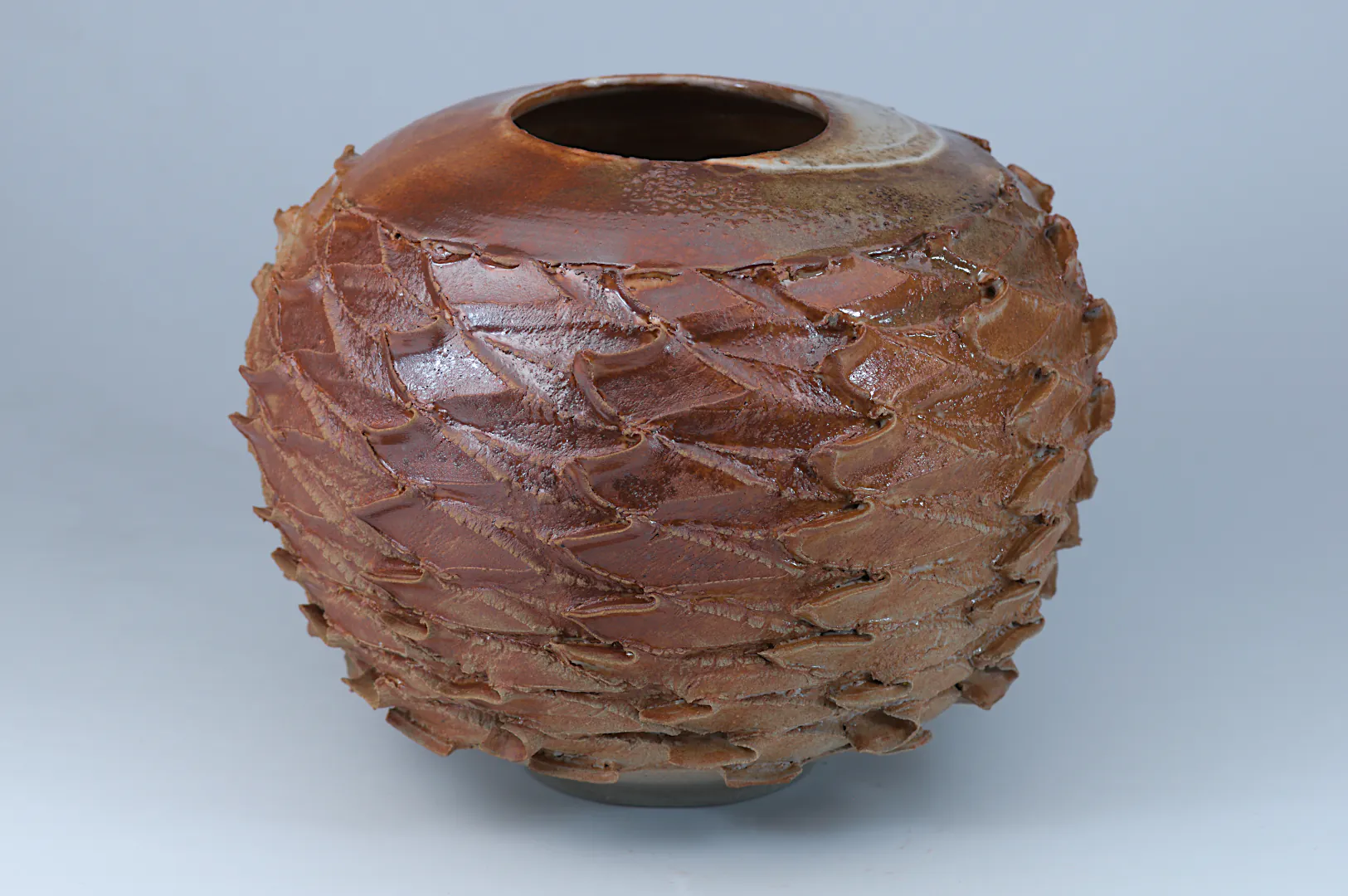
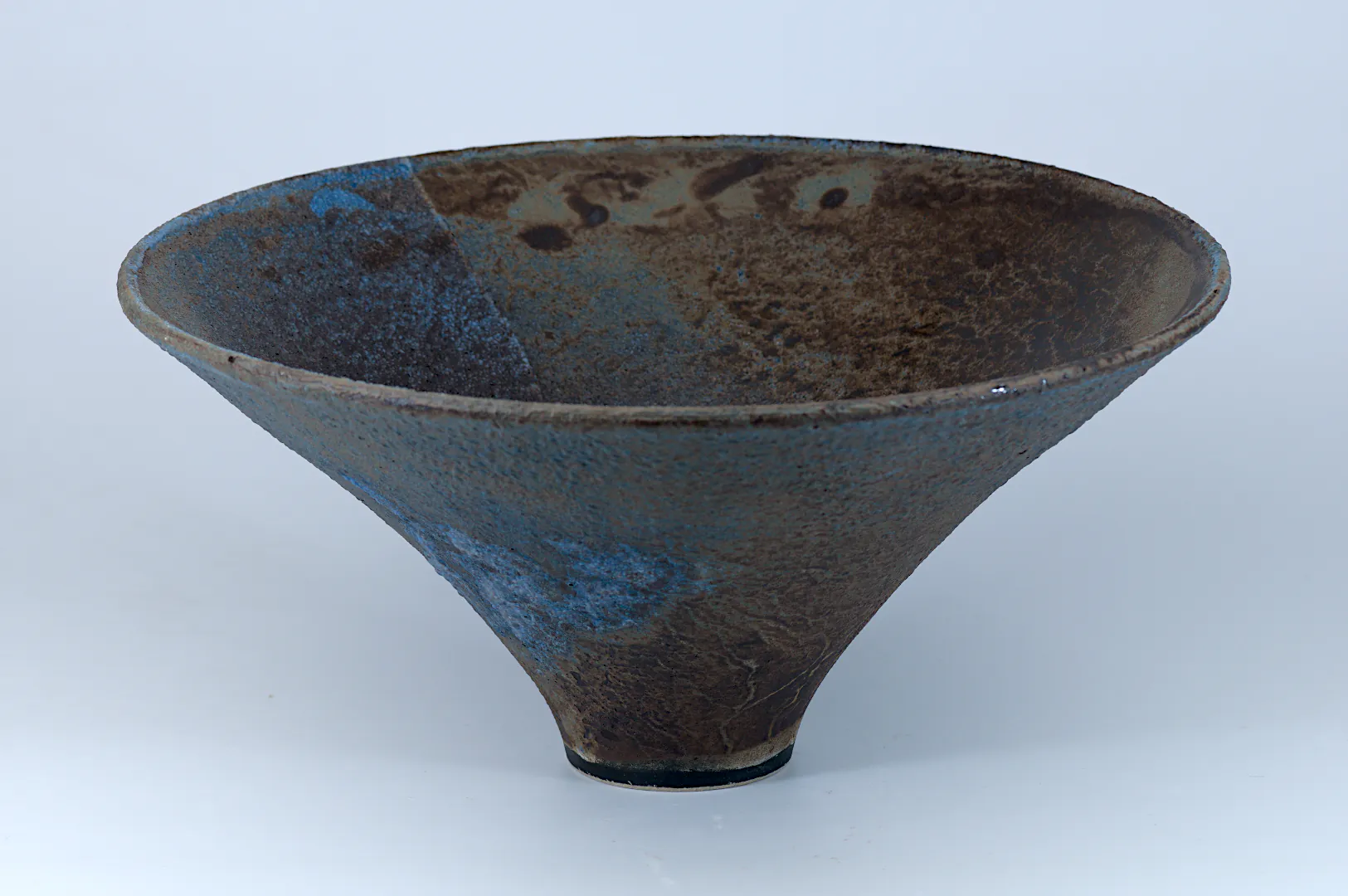
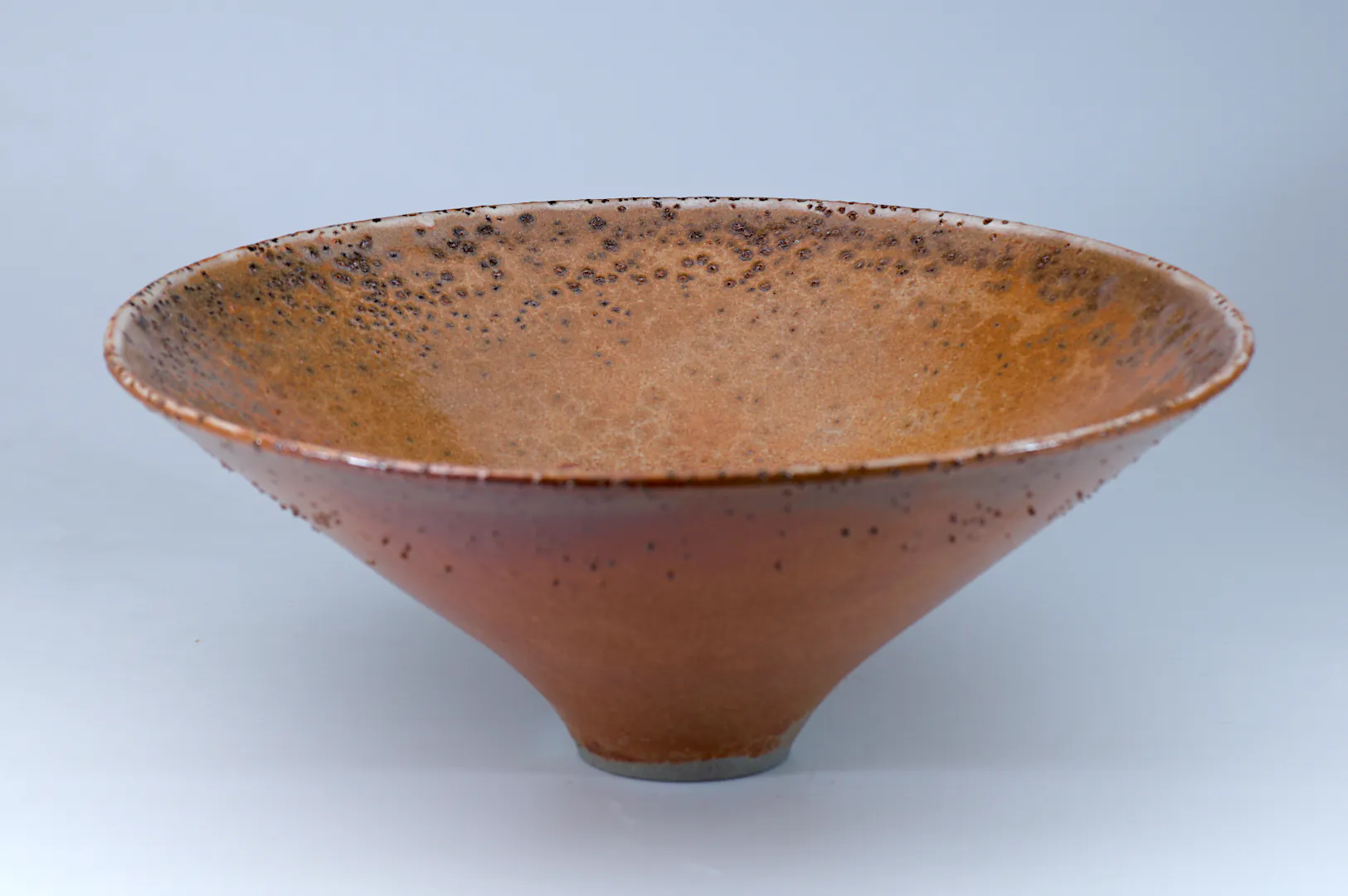
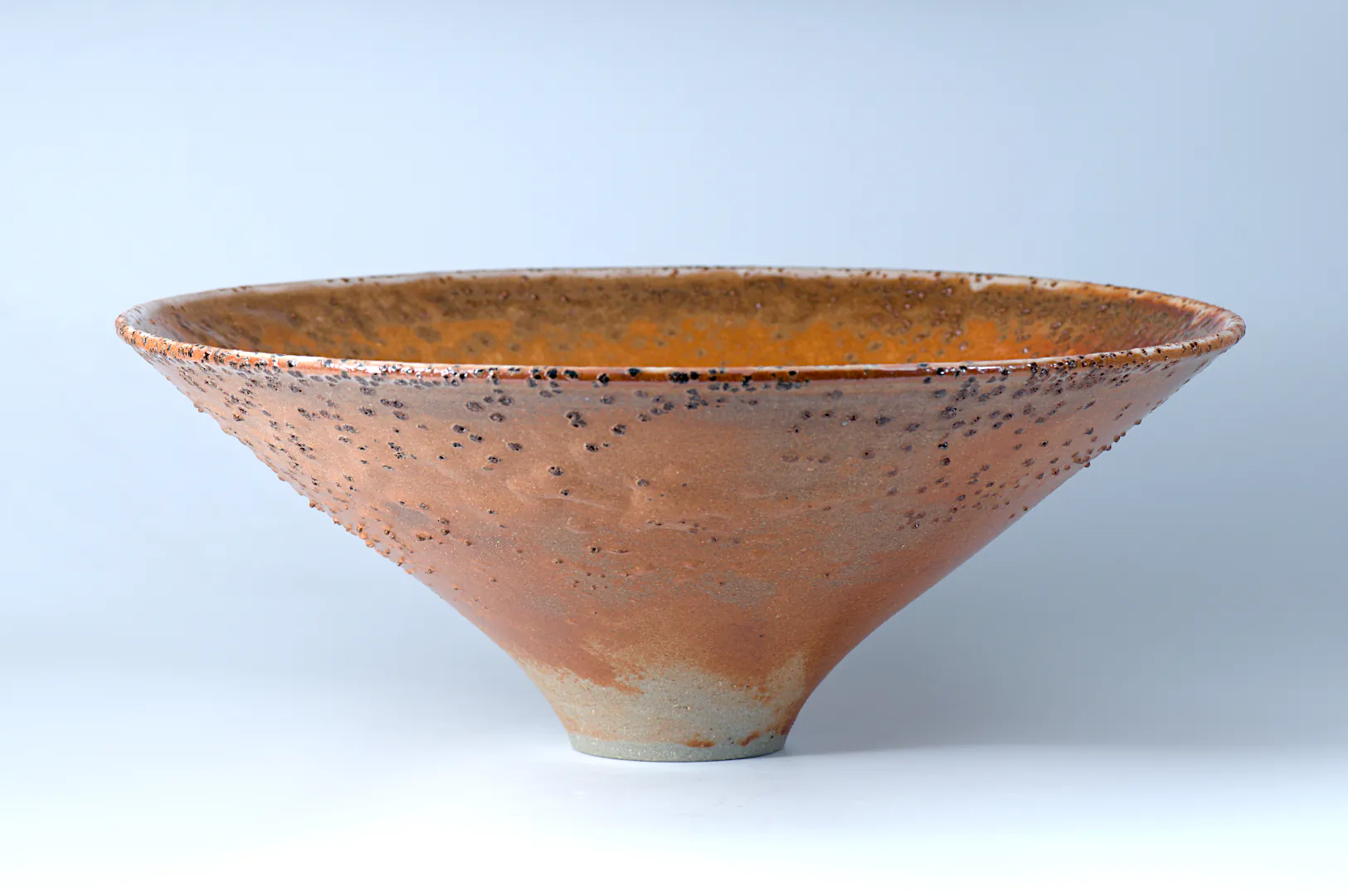
Tieguanyin II : : Wheel Thrown Vessel 14 x 19 cm
Surface Treatments
Hand Built Works
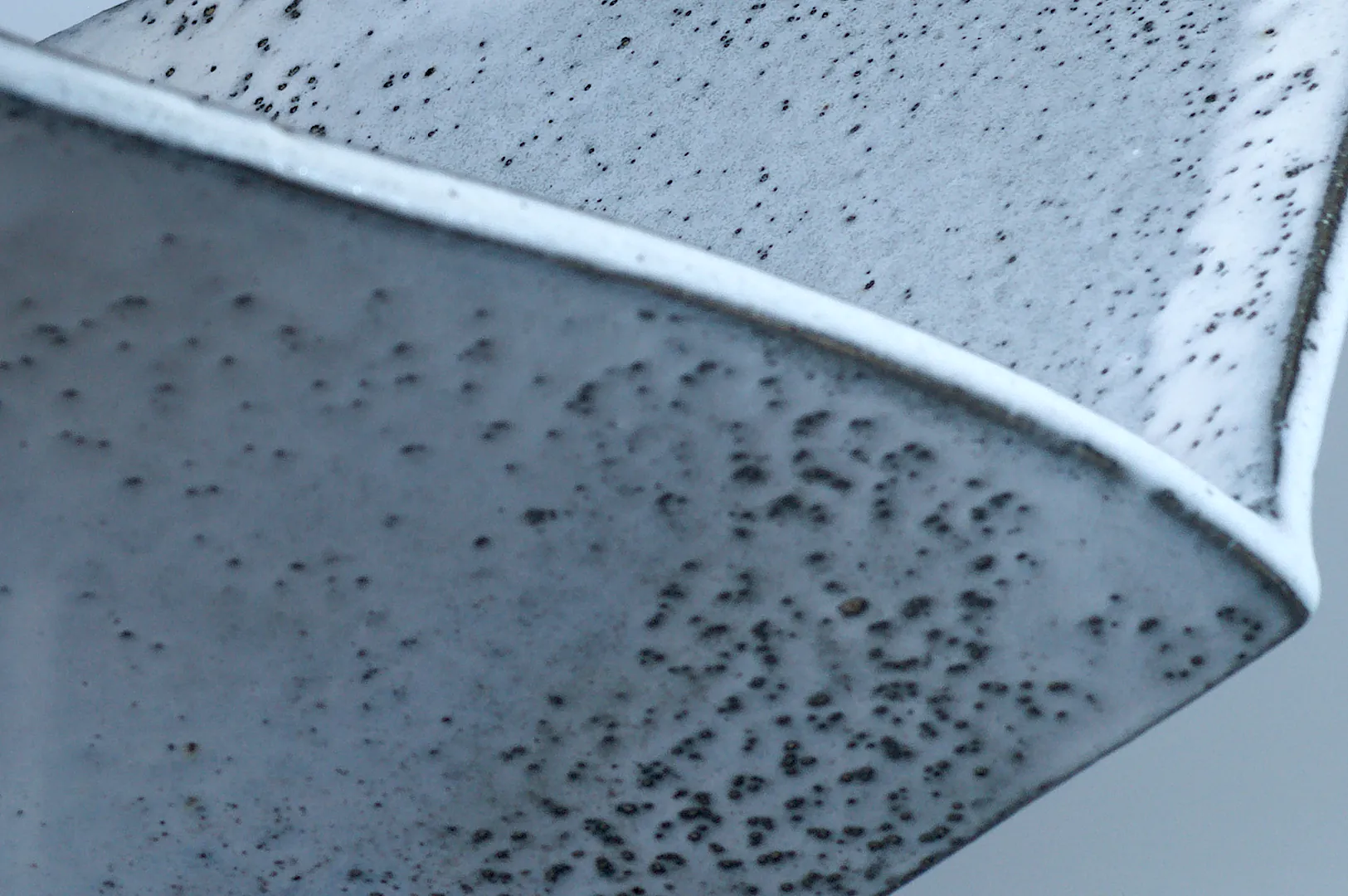
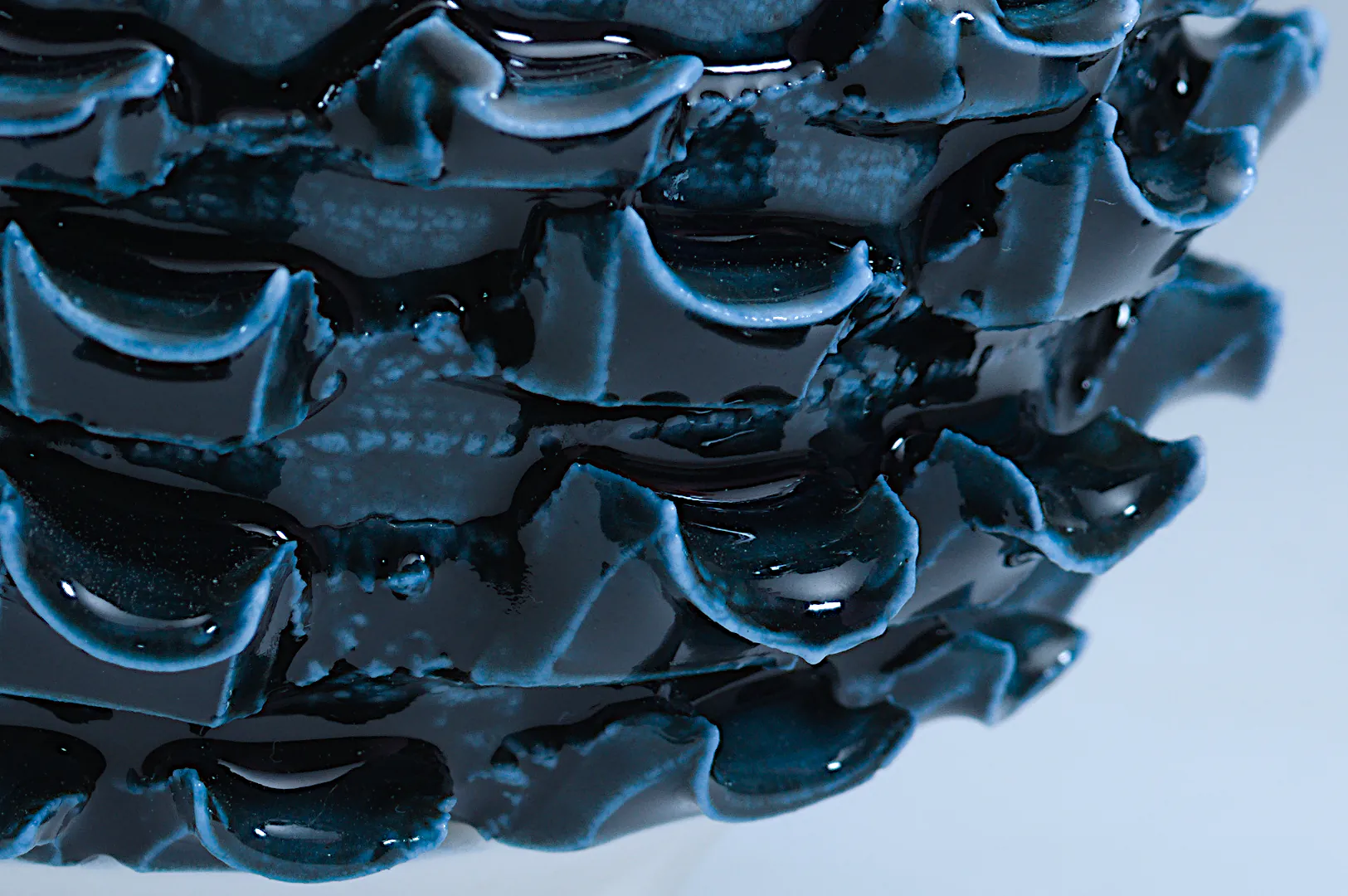
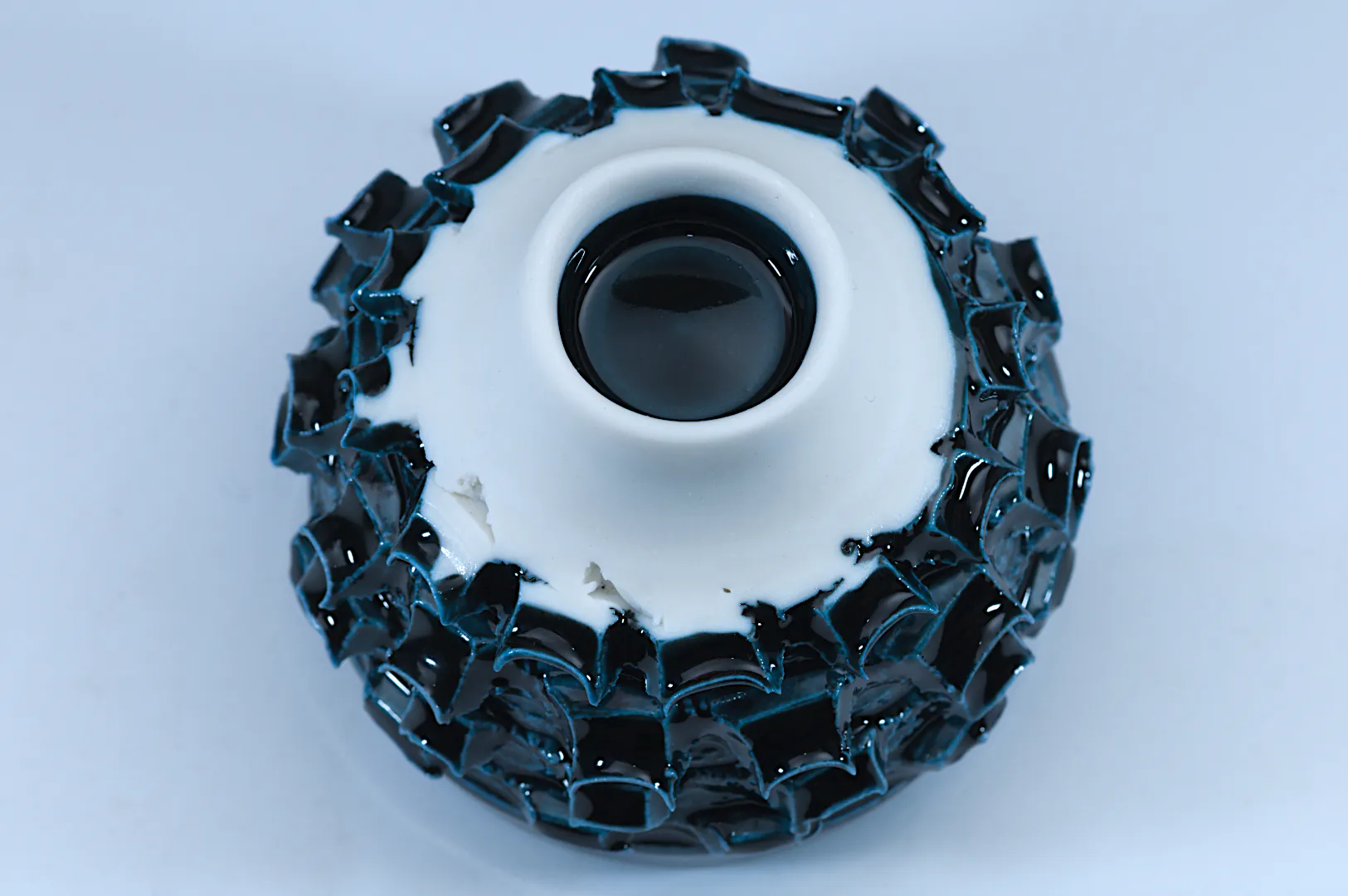
The geometric hand built forms are finished in a white dry matte or satin matte glaze. The works have been fired several times with multiple layers of glaze and engobes to achieve the different surface effects.
Iron
Iron is represented on the periodic table with the chemical symbol Fe derived from the Latin Ferrum meaning "holy metal". The Etruscan word for 'gods', aisar, may have been the origin of the word Iron. The German word for Iron is Eisen, which is morphologically similar to the Anglo-Saxon terms Iren, Isern or Isen.
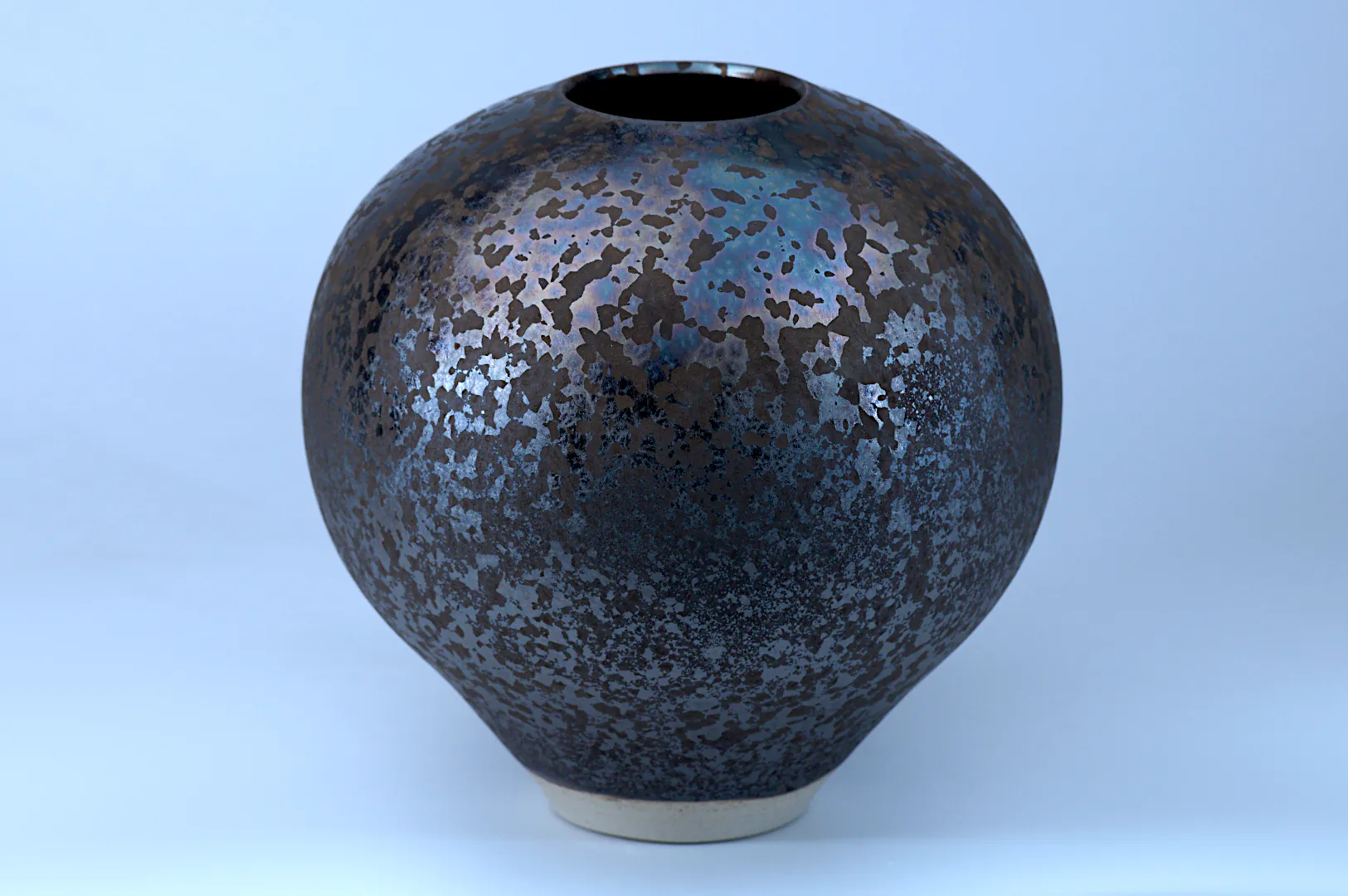
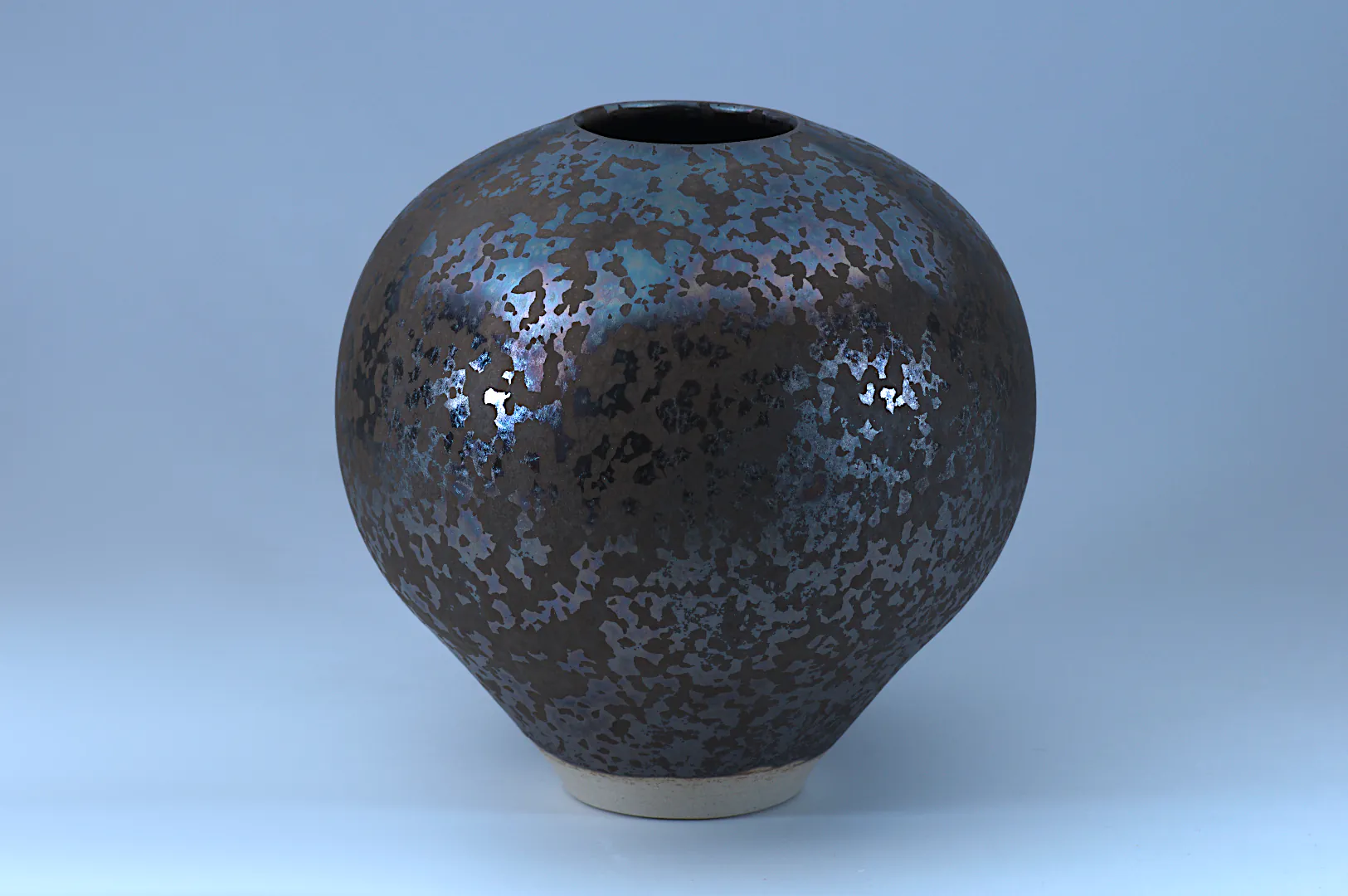
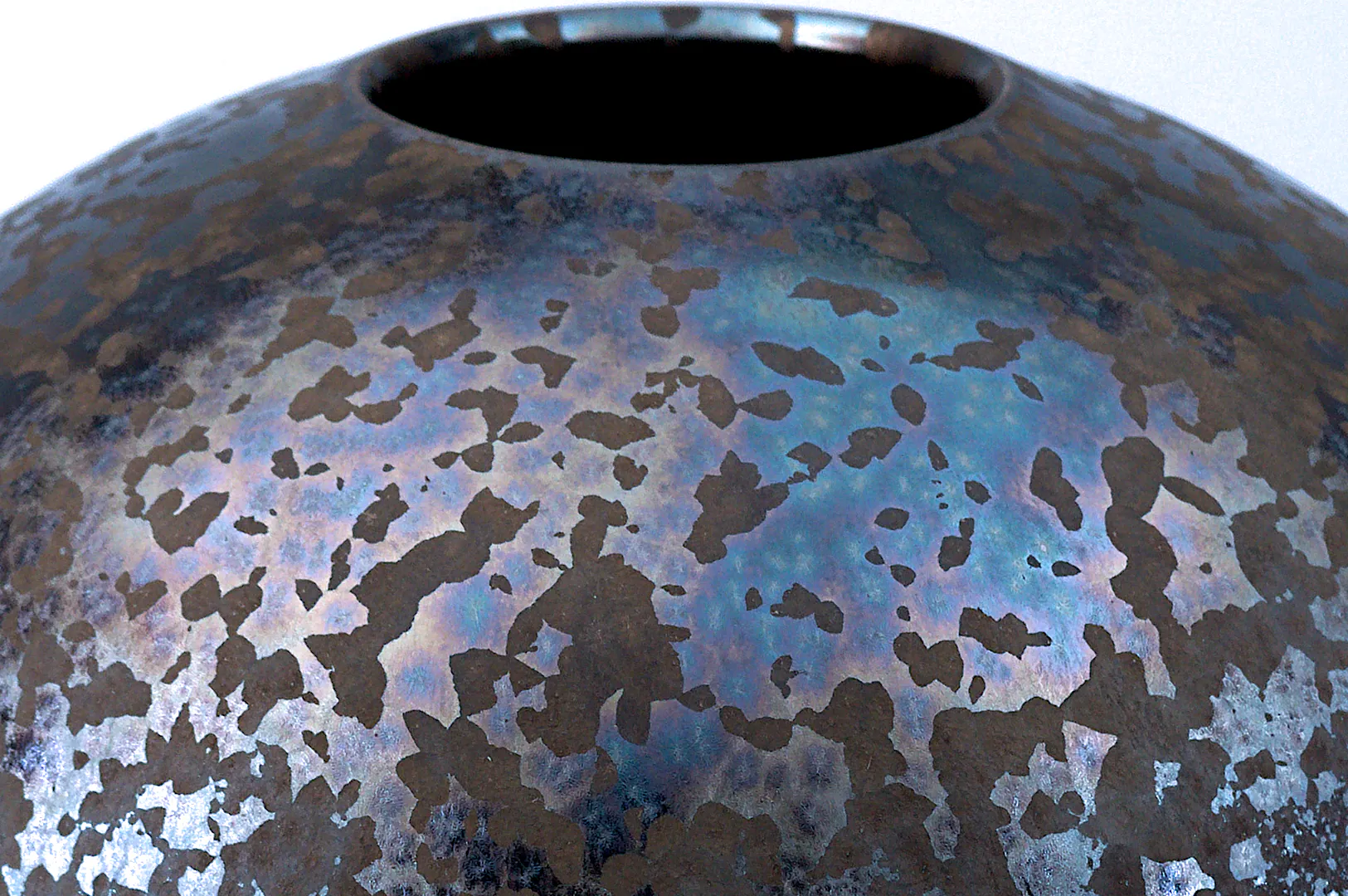
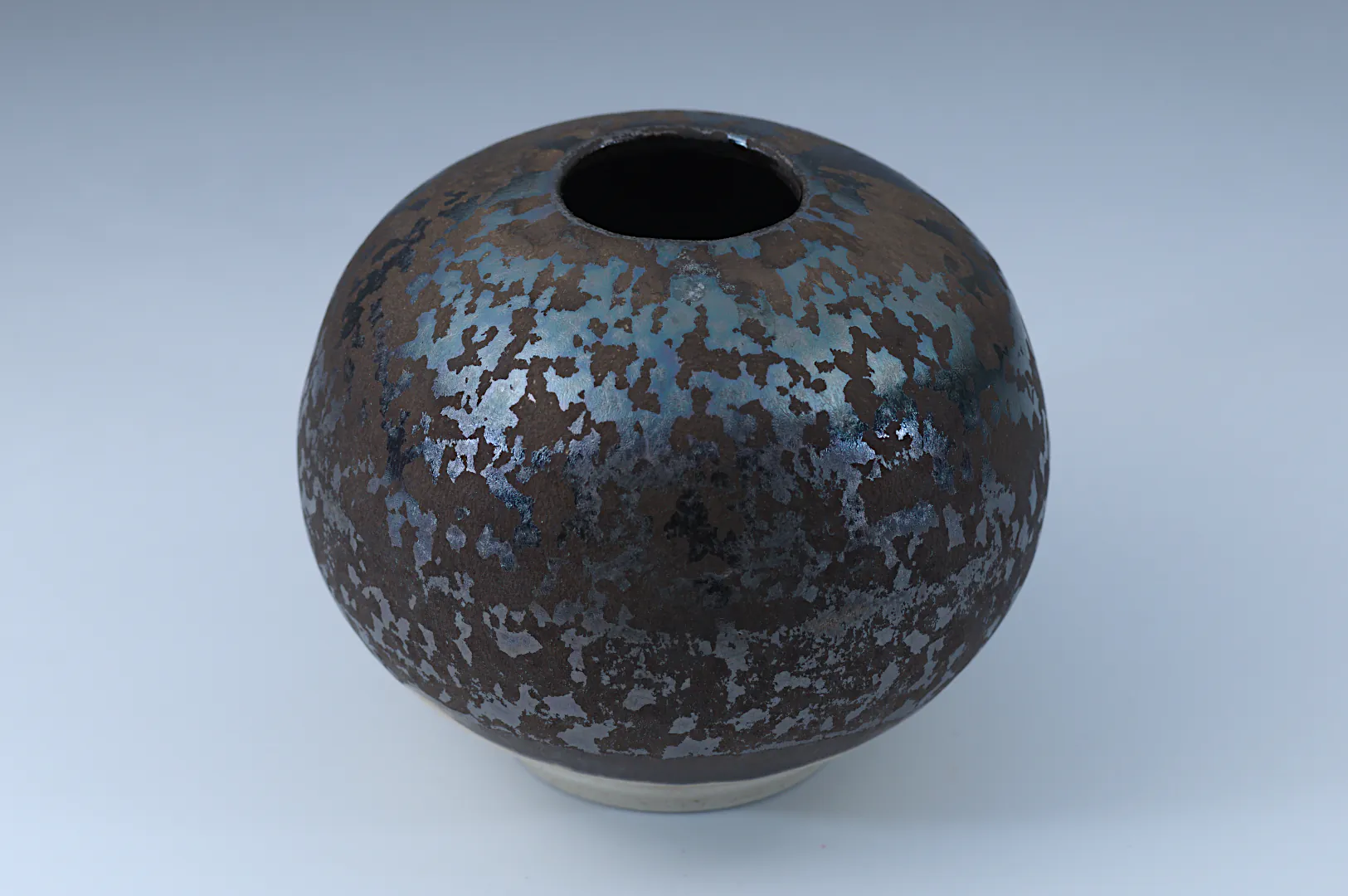
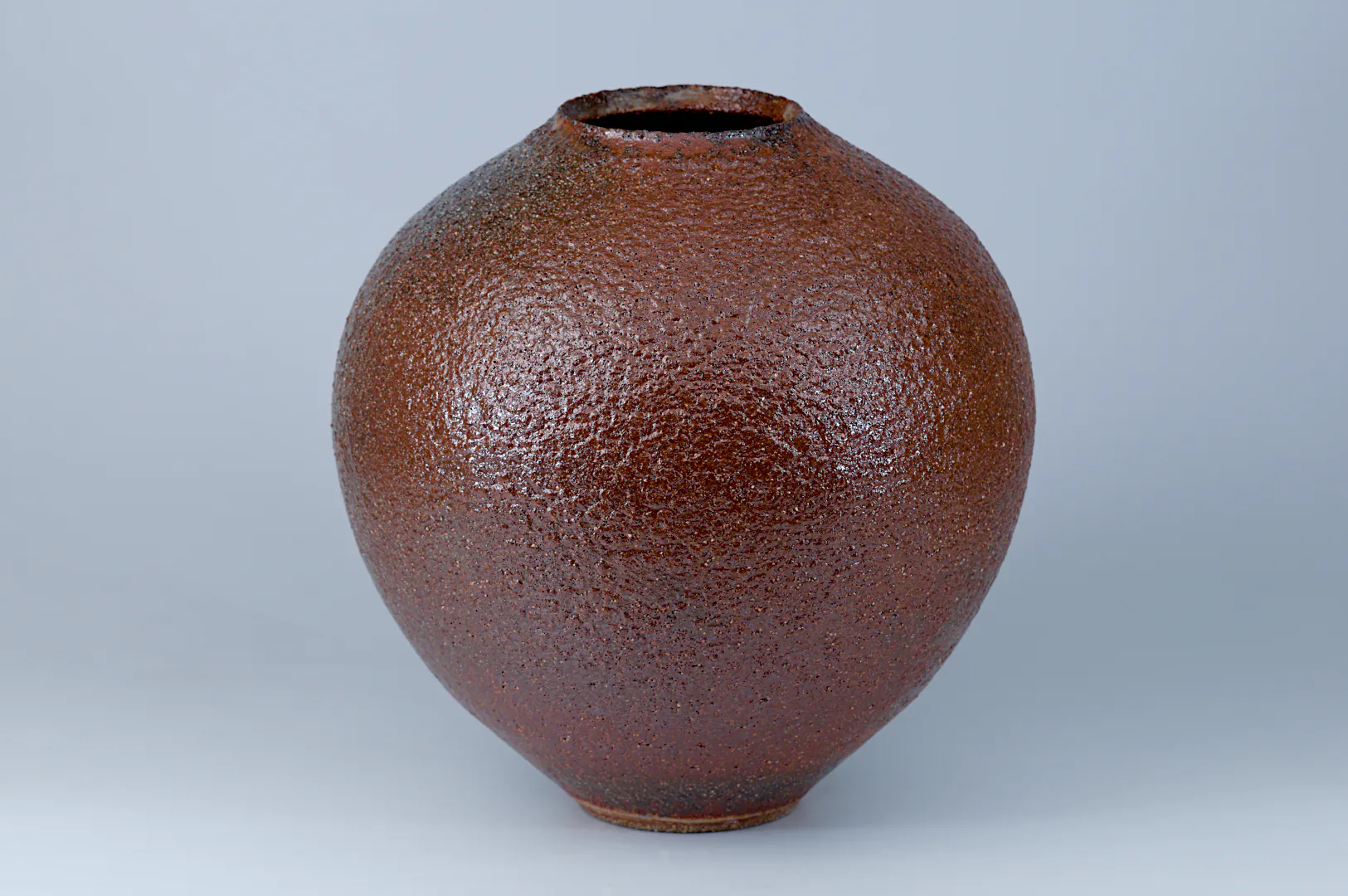
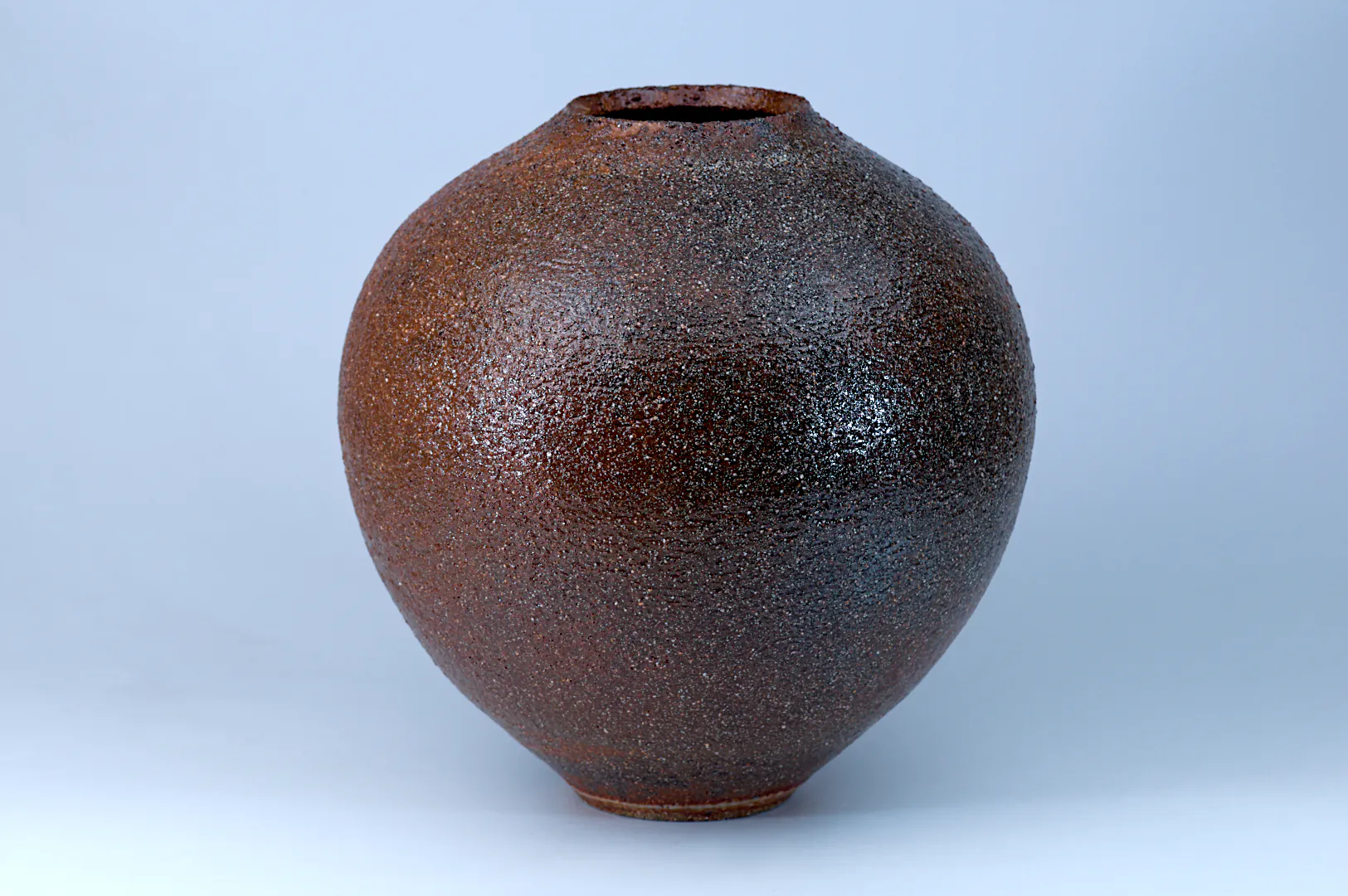
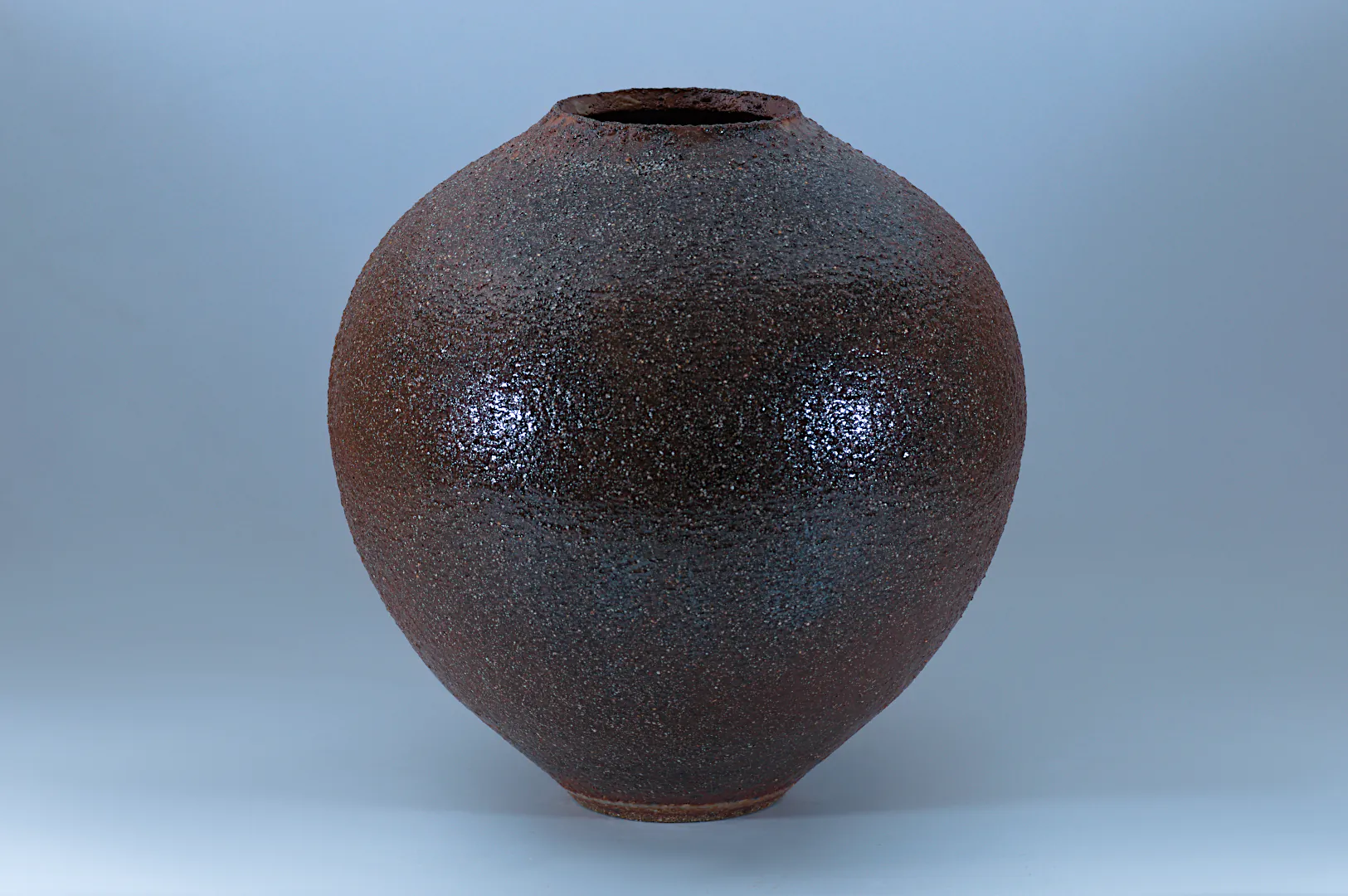
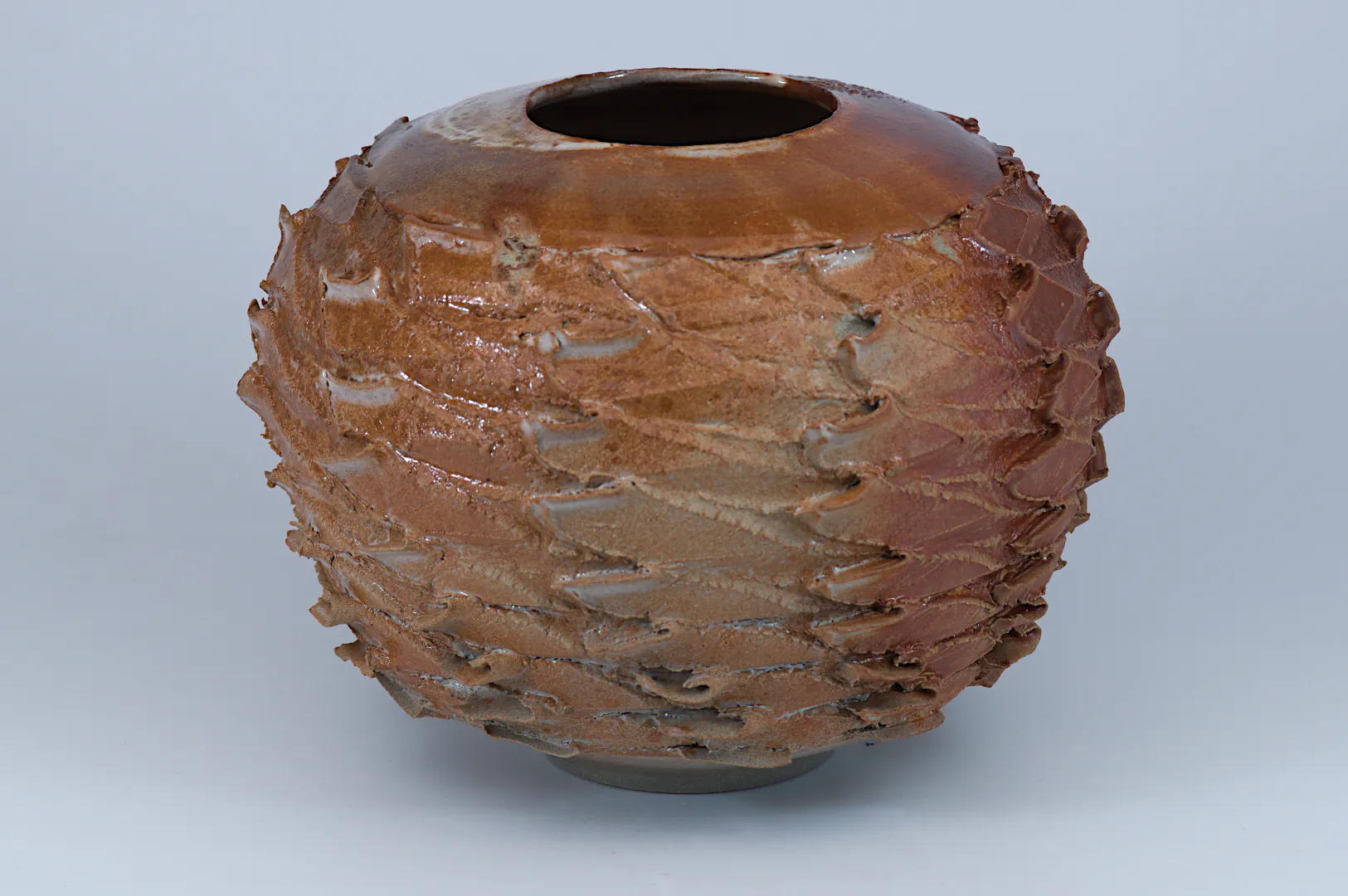
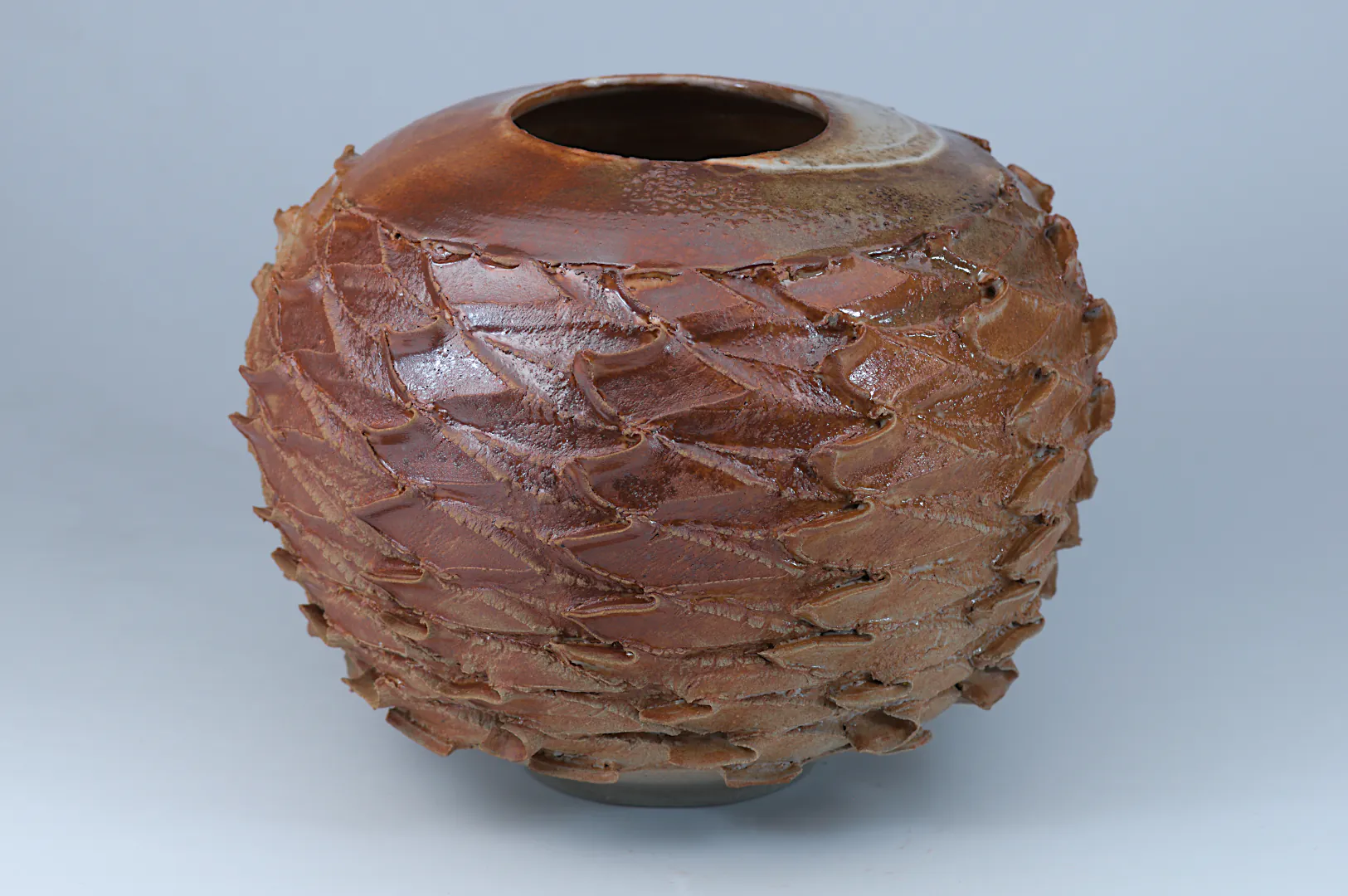
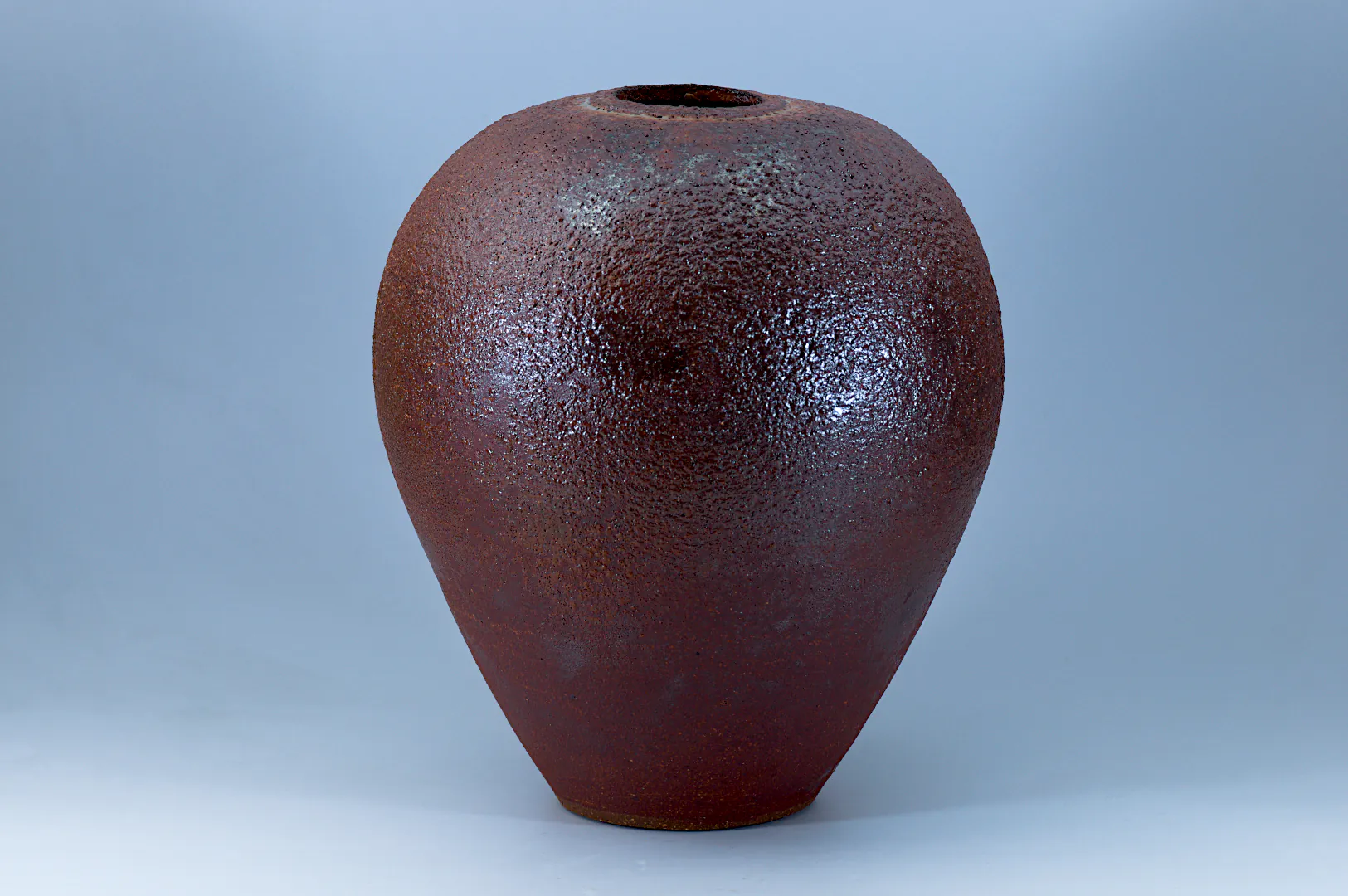
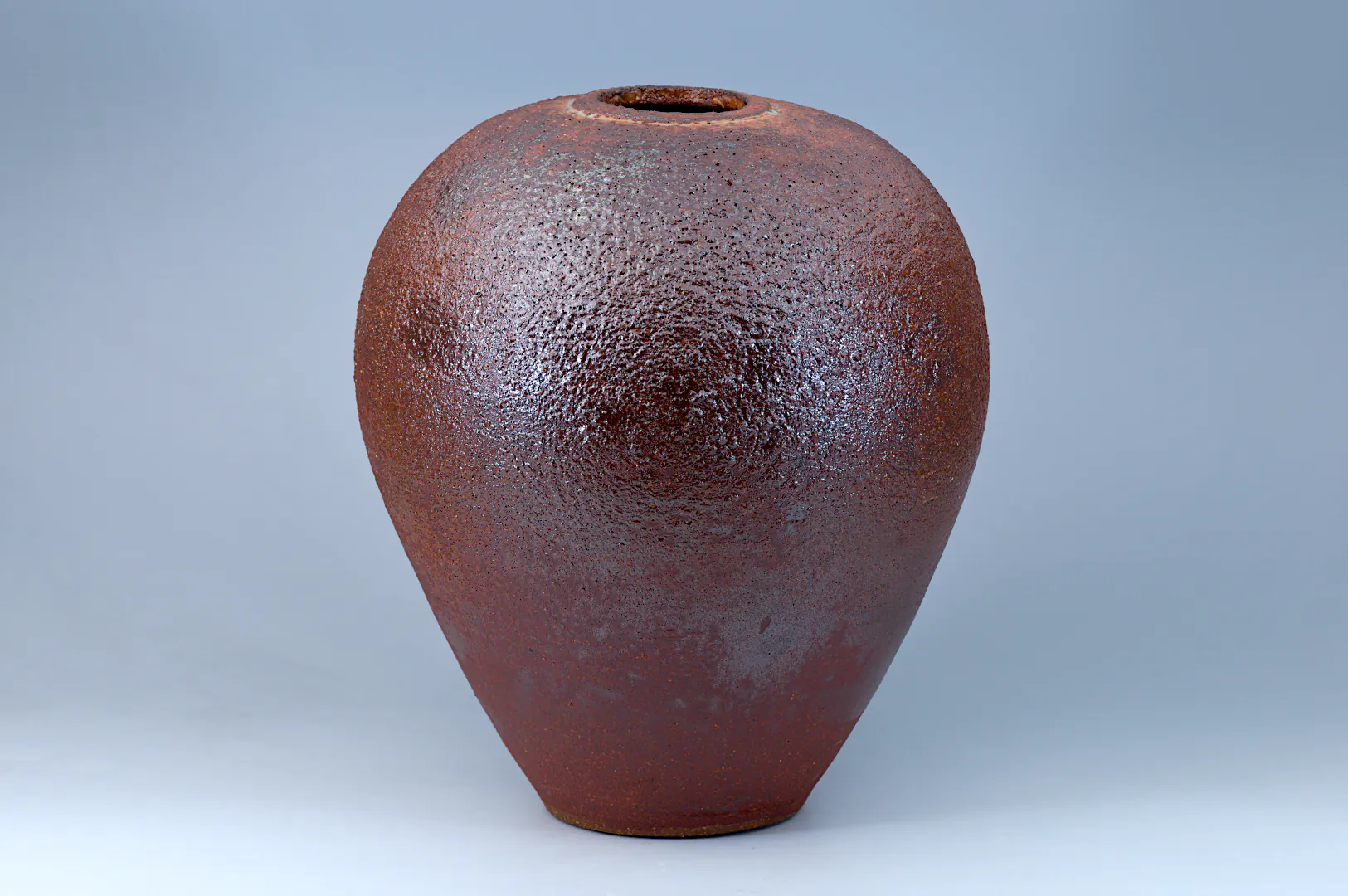
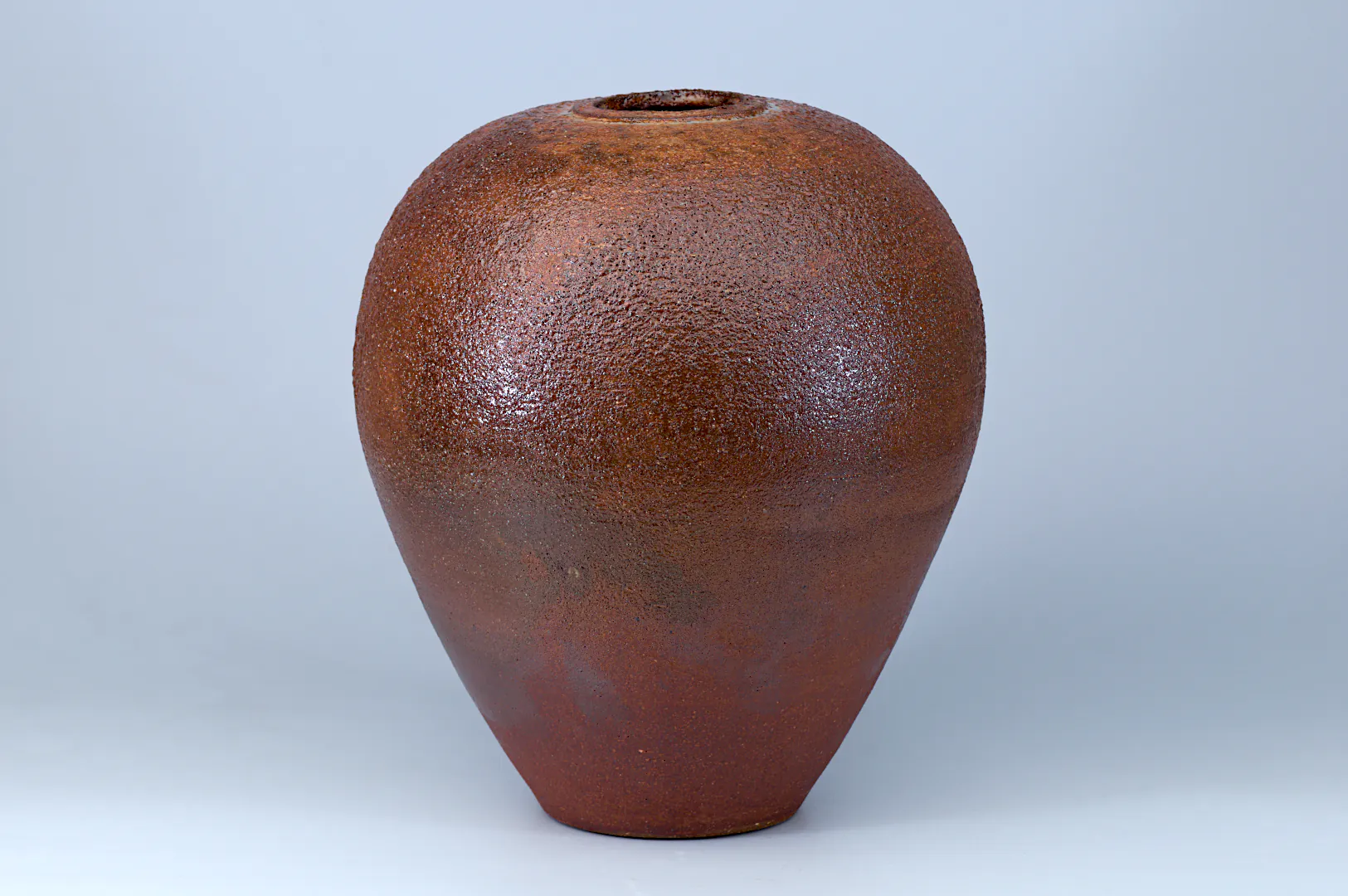
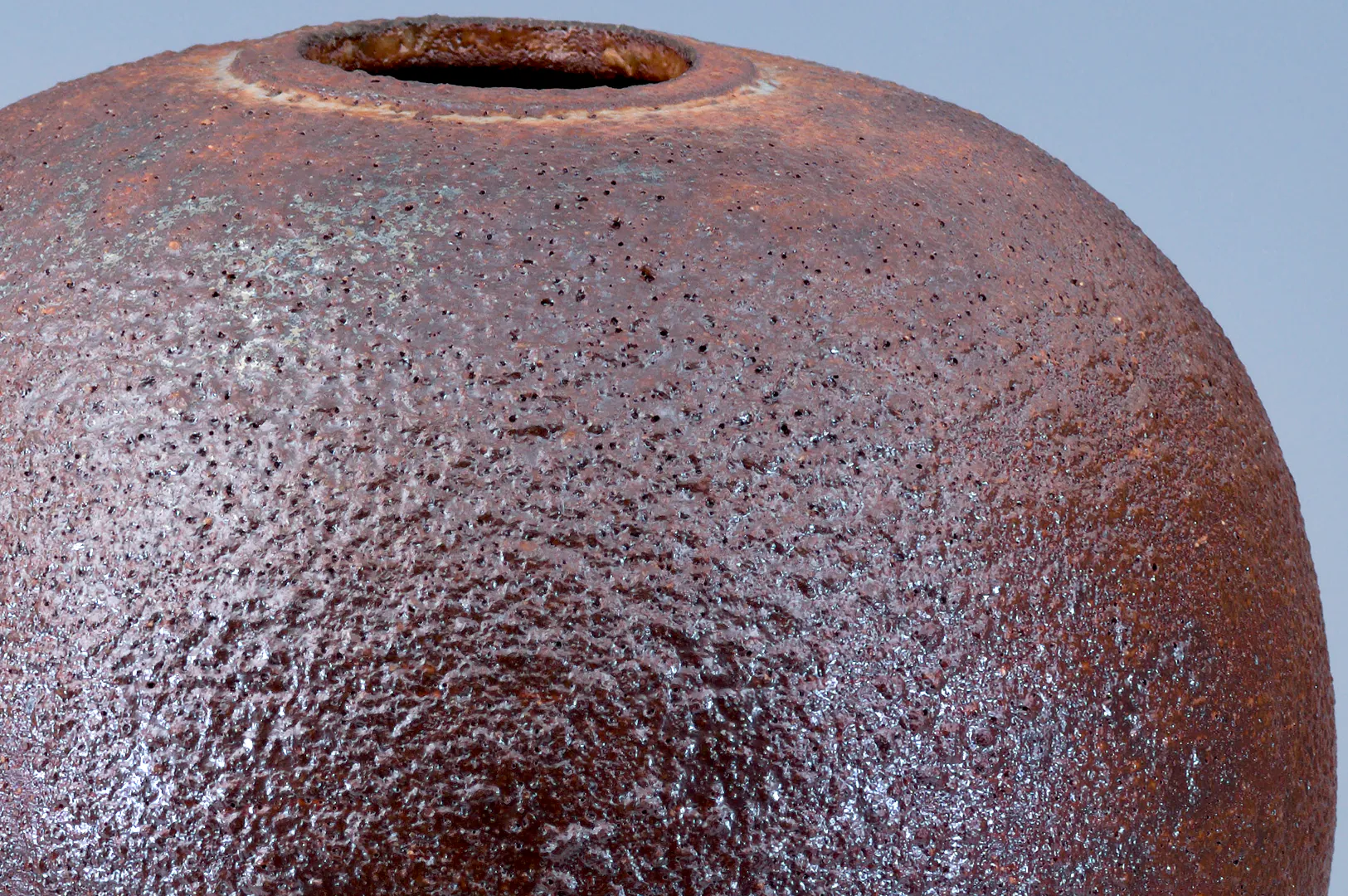
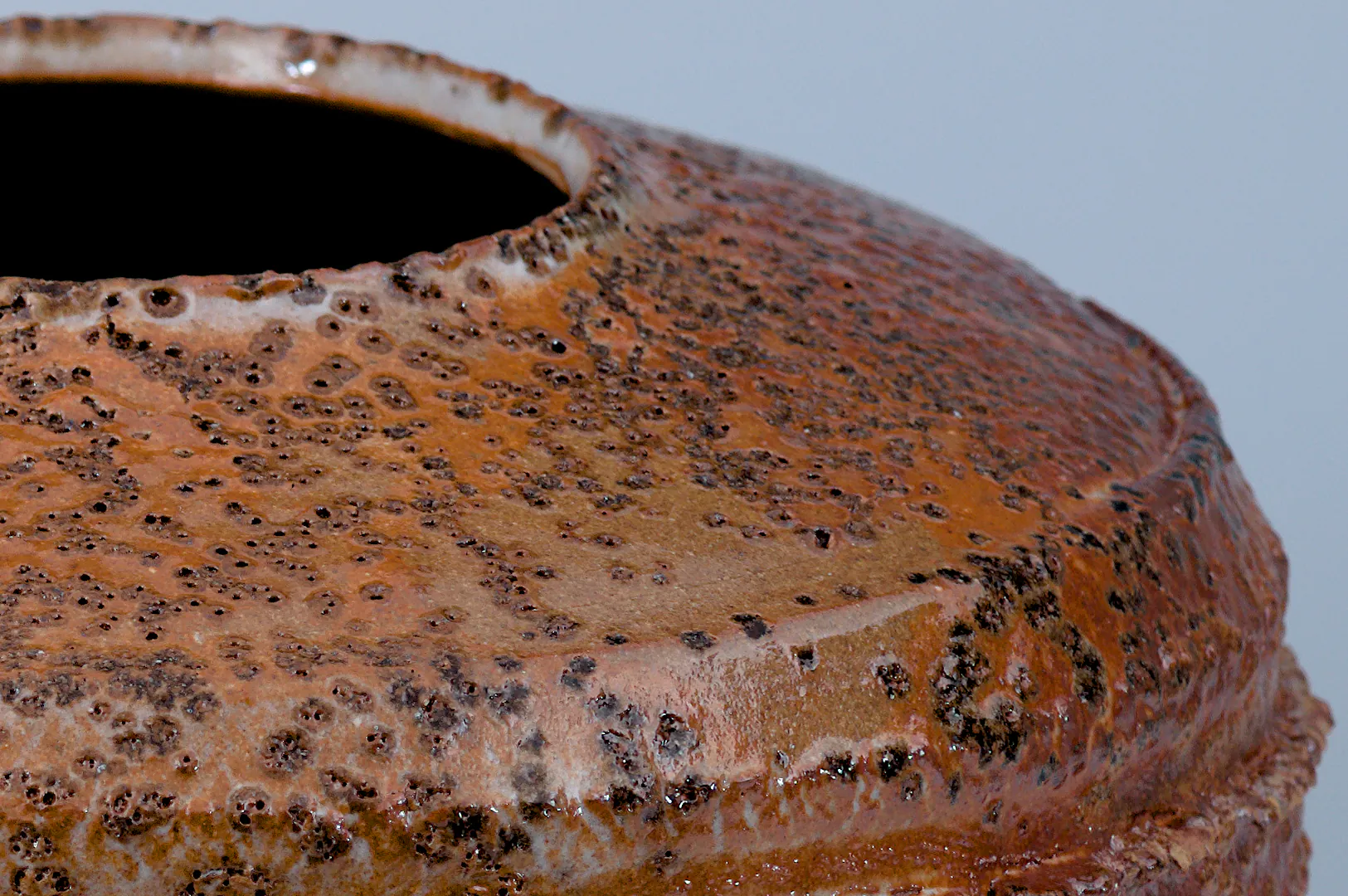
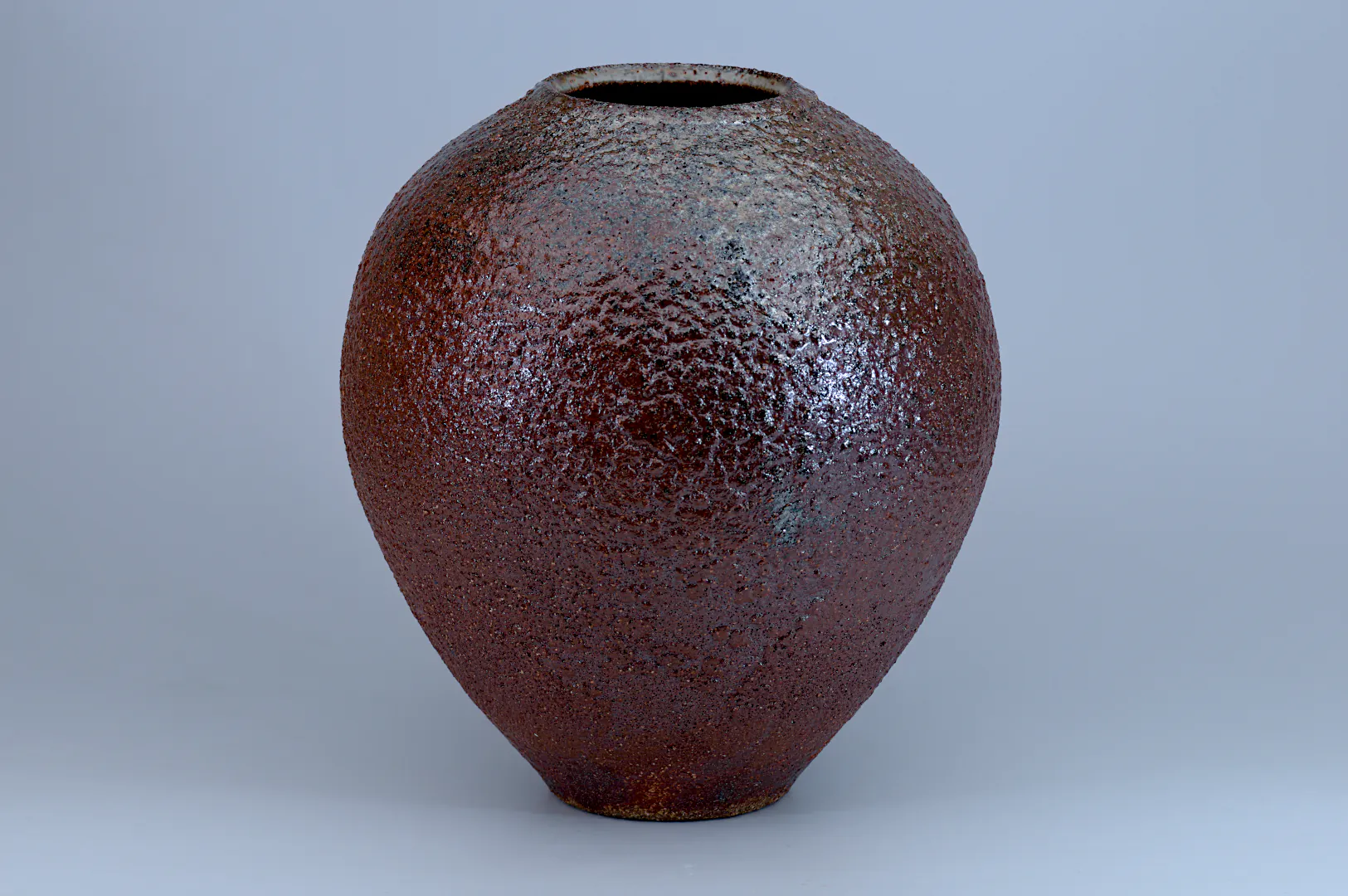
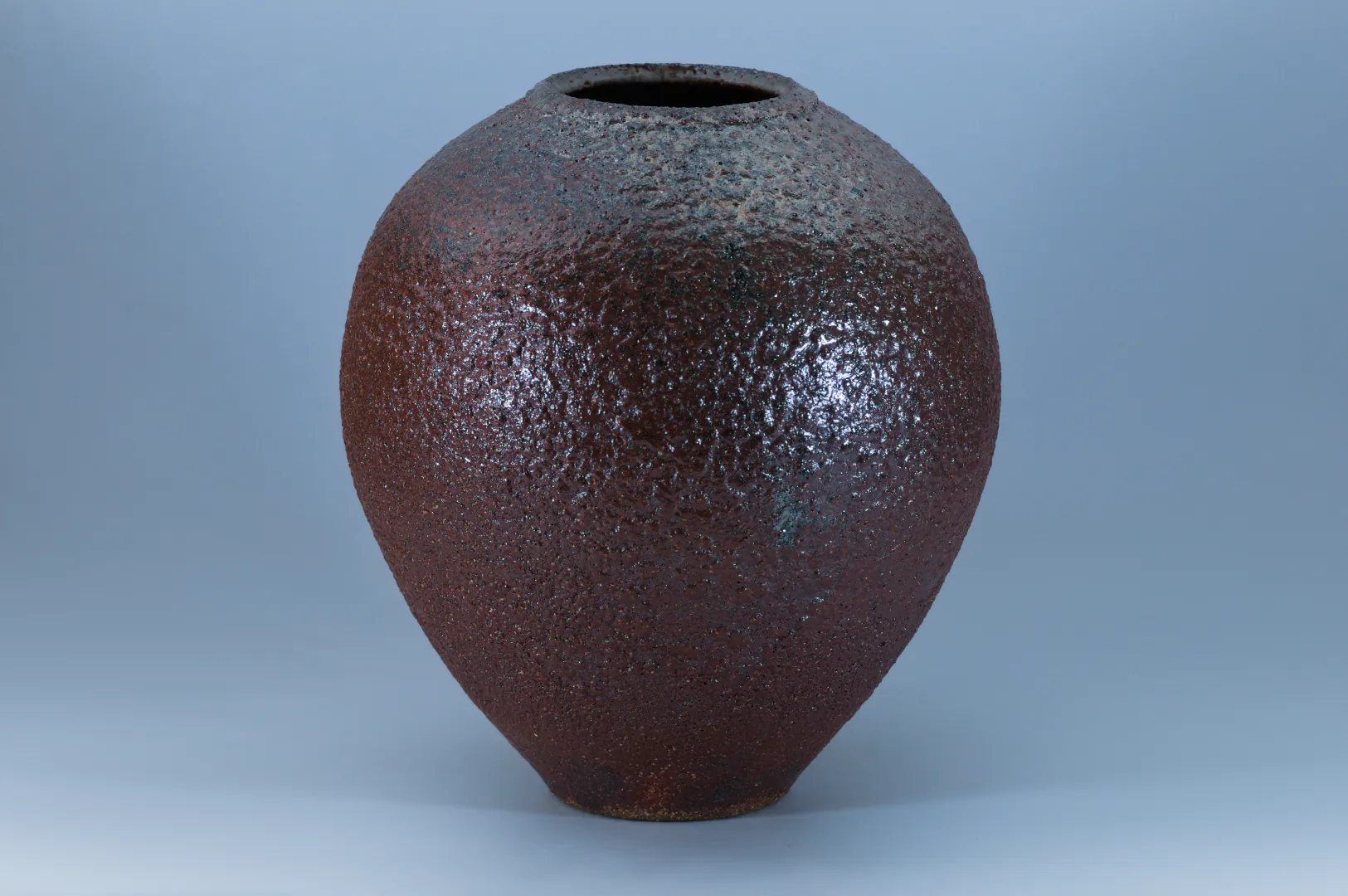
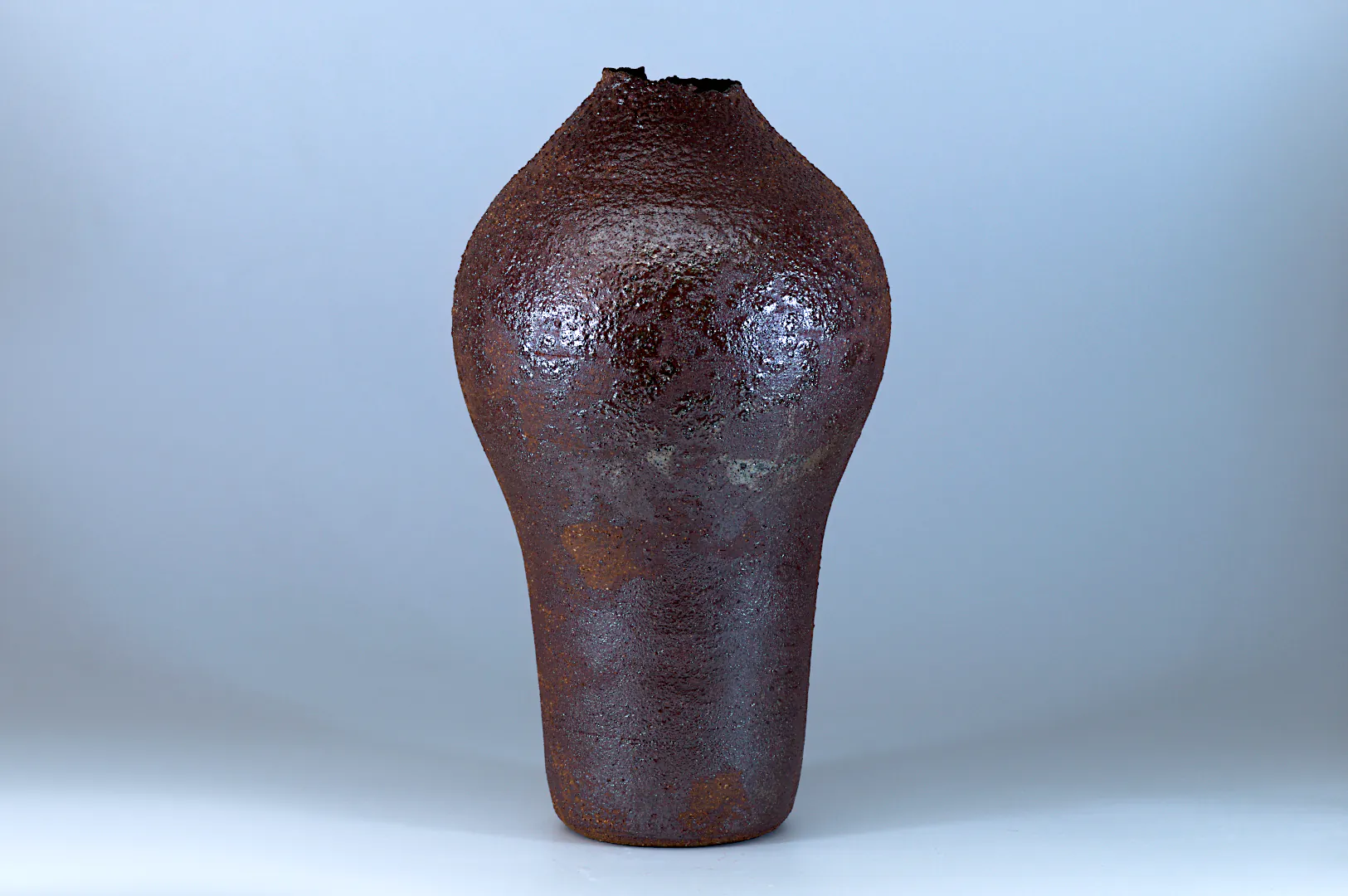
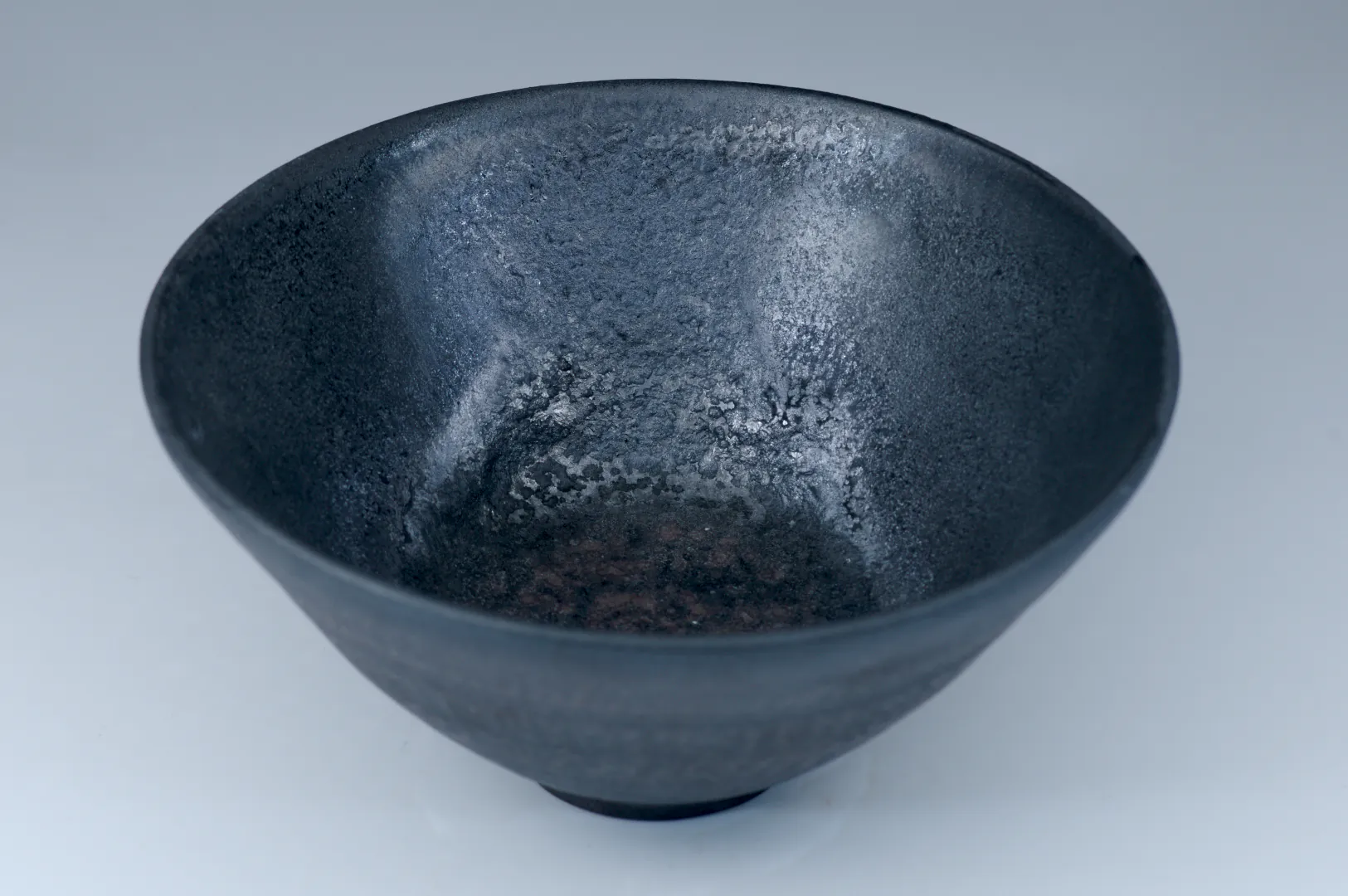
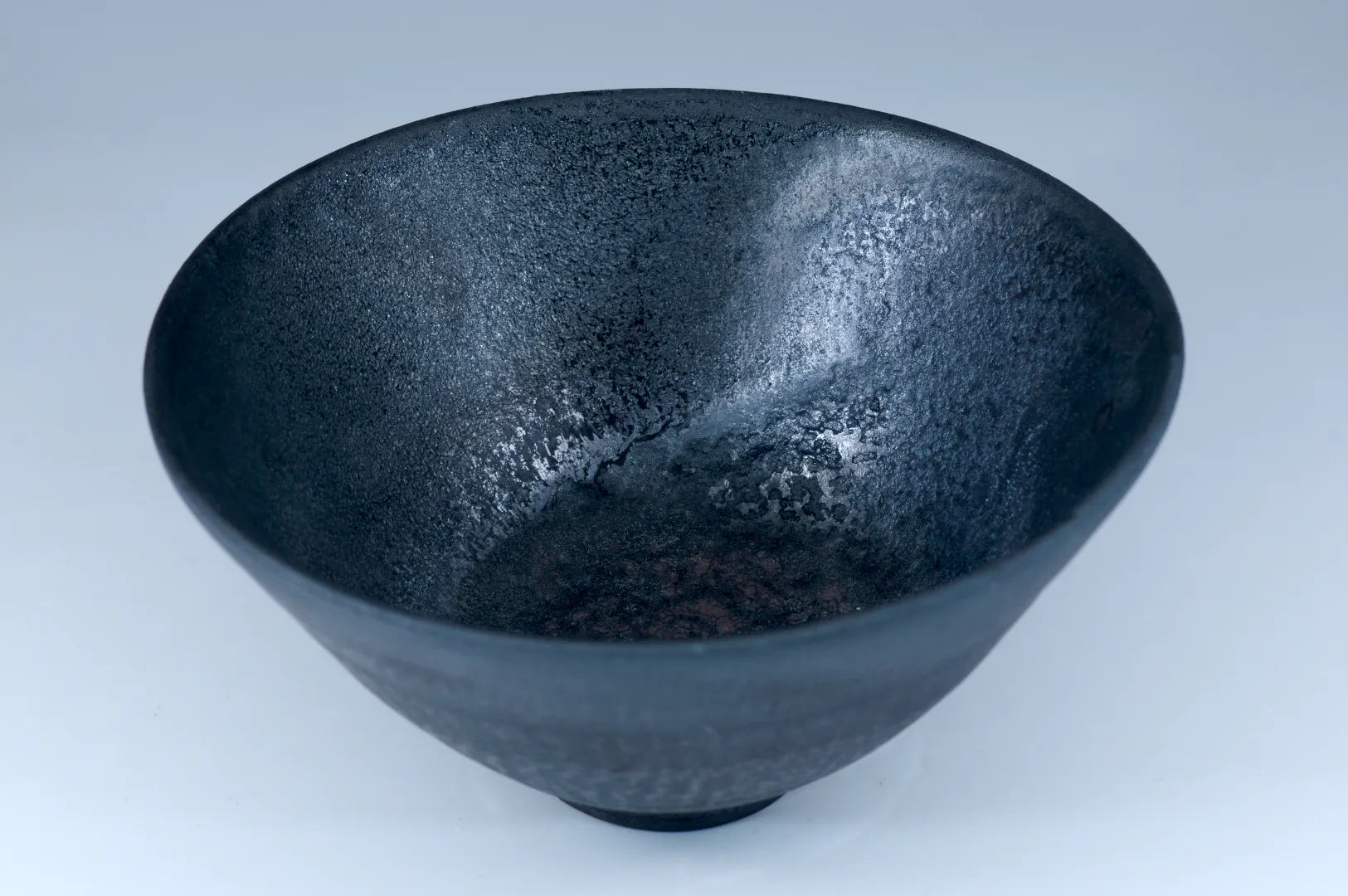
Iron is used in both clays and glazes. It exists in several forms from the saturated dark red of iron oxide Fe2O3 to the black form of iron oxide, Fe3O4. The clay bodies of many of the wheel thrown works contain high percentages of iron, which, when fired in the dynamic reducing atmosphere of a gas kiln can produce many effects from shiny iridescent blacks to rich deep reds on the same work as evidenced on the vessel Aisar, for example.
Iron in a glaze can exhibit many effects and strikingly different colours depending on the other materials in the glaze, the type of clay body to which it is applied, the firing technique and the type of kiln it is fired in.
Shino Glaze
A shino glaze fired in strong reduction in a gas kiln may exhibit a great variation in colour, texture and sheen, sometimes with iridescence. The spherical vessel Aisar is an example of this with the path of the flame and the dynamic atmosphere of a reduction firing being responsible for the silvery black on one side and the deep rich red on the other.
Porcelain
For more images and further information on the nature, origins and qualities of porcelain, including Southern Ice porcelain, see the Southern Ice porcelain page.
